
The Tool Desk
Outbyte Driver Updater FREEScan for outdated or missing drivers - takes under a minuteDriver Scan →Outbyte PC Repair FREERepair Windows errors before they cause bigger problemsFix Now →iTechGuides is reader-supported. When you buy through links on our site, we may earn an affiliate commission. As an Amazon Associate I earn from qualifying purchases. Learn more
There is no universal winner. AMD Instinct MI455X is the stronger specification fit when a model’s weights and KV cache are limited by memory capacity or bandwidth. NVIDIA Vera Rubin is the lower-risk operational choice for teams that depend on CUDA, TensorRT, NVIDIA’s interconnects and a broad validated deployment ecosystem. Peak FP4 figures are not directly comparable, so the right decision comes from testing your model, quantization, context length, batch size and concurrency on complete systems.
What the comparison actually covers
“NVIDIA Rubin” generally refers to the Vera Rubin generation, while the AMD part used for a direct comparison is the Instinct MI455X. They target large-scale AI training and inference rather than desktop graphics. A GPU specification can indicate capacity and theoretical capability, but it cannot by itself predict tokens per second, first-token latency, tail latency or cost per generated token for your application.
The most important distinction is that the headline numbers use different datatypes and measurement methods. NVIDIA quotes up to 50 PFLOPS of NVFP4 inference for Rubin. AMD’s comparison lists up to 40 PFLOPS of OCP MXFP4 for MI455X and 35 PFLOPS of FP4 for Vera Rubin. NVFP4, MXFP4 and FP4 are not interchangeable labels; sparsity assumptions, tensor definitions and implementation details can change the result substantially. Treat each number as a qualified peak figure, not a common benchmark scale.
At-a-glance specifications
| Specification | AMD Instinct MI455X | NVIDIA Vera Rubin |
|---|---|---|
| Memory | 432 GB HBM4 | 288 GB HBM4 |
| Peak memory bandwidth | 23.3 TB/s theoretical | 22.0 TB/s theoretical |
| Vendor-comparison inference figure | Up to 40 PFLOPS OCP MXFP4 | 35 PFLOPS FP4 in AMD’s comparison |
| NVIDIA headline inference figure | Not provided in the cited specification | Up to 50 PFLOPS NVFP4 |
| Scale-up interconnect | Helios rack-scale design; full topology matters | NVLink 6, up to 3,600 GB/s scale-up bandwidth |
| Host and die links | Helios uses AMD EPYC CPUs and Pensando networking | NVLink-C2C up to 1,800 GB/s; PCIe Gen 6 up to 256 GB/s |
AMD states that MI455X provides 50% more memory capacity and 6% more memory bandwidth than Vera Rubin. Those percentages are AMD Performance Labs calculations based on the published specifications, not an independent head-to-head test.
#1 Best Overall

- NVIDIA Volta GV100 Architecture — 4,608 CUDA Cores, 640 1st-Gen Tensor Cores delivering 14 TFLOPS FP32 and 112 TFLOPS deep learning performance for AI training, inference, HPC, and scientific computing workloads
- 32GB HBM2 ECC Memory — 900 GB/s Bandwidth — High-bandwidth memory on a 4096-bit bus with ECC error correction provides the memory capacity and throughput required for the largest AI models, simulations, and datasets
- PCIe 3.0 x16 Interface — 250W TDP — Standard PCIe Gen3 connectivity with passive cooling designed for enterprise rack server deployment in HPE ProLiant, Dell PowerEdge, and Supermicro platforms with adequate chassis airflow
- NVLink — Scale to 96GB Unified Memory — Connect two V100 GPUs via NVLink at 300 GB/s bi-directional bandwidth to scale GPU memory from 32GB to 96GB for larger AI training and HPC workloads
- Multi-Precision Computing — Supports FP64 (7 TFLOPS), FP32 (14 TFLOPS), FP16 (112 TFLOPS) and INT8 precision modes for flexible deployment across training, inference, and scientific simulation workloads
Memory capacity: the clearest MI455X advantage
Why 432 GB can change the system design
MI455X provides 432 GB of HBM4 per GPU, compared with 288 GB for Rubin. That is a 144 GB difference on each accelerator. For a large language model, the extra space can hold more quantized weights, a larger KV cache, or more runtime workspace before you have to distribute the model across additional GPUs or move data to another memory tier.
Whether a model fits depends on more than parameter count. Weight precision, activation and temporary buffers, context length, concurrent sequences, batching policy, tokenizer and runtime overhead all consume memory. A model that fits at a short context and low concurrency can exceed the limit when a production service accepts long prompts or maintains many active conversations.
When capacity reduces GPU count
If a model requires just over 288 GB after quantization and runtime overhead, Rubin may need tensor parallelism across two or more GPUs while one MI455X could hold the working set. Fewer GPUs can simplify communication, reduce synchronization points and avoid some offload traffic. The benefit is workload-specific: a model that already fits comfortably on either device gains little from the extra capacity.
What’s actually slowing this PC down?
Pick the symptom - the matching free tool is one click away.
Bandwidth and memory-bound decoding
Autoregressive decoding repeatedly reads model weights and KV-cache data. In memory-bound workloads, bandwidth can matter more than peak arithmetic throughput. MI455X is specified at up to 23.3 TB/s of theoretical HBM4 bandwidth, versus 22.0 TB/s for Rubin. The difference is modest compared with the capacity gap, and neither number guarantees application throughput. Kernel efficiency, cache behavior, quantization format and inter-GPU traffic determine how much of the theoretical bandwidth a serving stack can use.
Compute and precision: why PFLOPS cannot decide the winner
Rubin’s NVFP4 claim
NVIDIA describes Rubin as delivering up to 50 PFLOPS of NVFP4 inference performance. The generation includes 224 streaming multiprocessors, 896 Tensor Cores, 336 billion transistors and a third-generation Transformer Engine. NVIDIA also claims up to 10 times more agentic throughput per unit of energy than Blackwell. That is a vendor comparison against the preceding NVIDIA generation, not an independent Rubin-versus-MI455X result.
MI455X’s OCP MXFP4 figure
AMD lists up to 40 PFLOPS using OCP MXFP4/FP4 for MI455X. AMD’s side-by-side table assigns 35 PFLOPS of FP4 to Vera Rubin. Because the formats and counting conventions differ, subtracting 40 from 50 and declaring a winner would be misleading. Ask vendors to disclose datatype, sparsity, tensor operation definition, clock assumptions and whether the value is peak theory or measured application throughput.
Use measured workload metrics
For an inference service, collect at least:
- Time to first token and time per output token at your target prompt lengths.
- Tokens per second for a single request and for the production concurrency range.
- p50, p95 and p99 latency, including queueing and synchronization.
- Accuracy at the exact quantization and kernel configuration you intend to deploy.
- Power draw and cost per generated token at the utilization you can sustain.
A peak FP4 number is useful for understanding architectural intent, but it is not a substitute for those measurements.
Quick wins for a faster PC:
Scan for outdated or missing drivers - takes under a minuteDriver Scan →Repair Windows errors before they cause bigger problemsFix Now →Rank #2
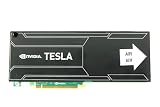
- Bulk Pack without retail box
Real published throughput evidence
NVIDIA reports 1,183,327 tokens per second on a 72-GPU Vera Rubin NVL72 system running DeepSeek R1 in the offline MLPerf Inference v6.1 test, at 99% of FP16 accuracy. This is a large, rack-scale result, not a single-GPU score. “Offline” allows the benchmark harness to process a workload batch rather than enforcing interactive request arrival, so it should not be read as a guaranteed conversational latency result.
The result is valuable because it identifies a complete 72-GPU configuration, a named model, a benchmark version and an accuracy target. It still does not establish how MI455X performs on the same test, nor how either platform behaves with your context length, service-level objective, quantization or traffic pattern. A fair bake-off must reproduce the same model, dataset, accuracy threshold, batch policy and software versions on both systems.
Interconnect and scale-up architecture
Rubin NVL72 topology
Rubin systems use NVLink 6 with up to 3,600 GB/s of scale-up bandwidth. NVIDIA specifies NVLink-C2C at up to 1,800 GB/s for chip-to-chip connectivity and PCIe Gen 6 host connectivity up to 256 GB/s. These links are relevant when tensor-parallel or expert-parallel inference requires frequent exchange of activations, attention state or routing information.
Those figures describe links in the platform, not an application-level guarantee. Effective bandwidth depends on topology, message size, collective implementation, contention and the software path used by the model server. A single Rubin card should not be compared with a fully configured NVL72 rack as though they were equivalent products.
Free tools Windows power users keep installed
One-click scans. No signup required.
AMD Helios
AMD presents Helios as a rack-scale design built around 72 MI455X GPUs, AMD EPYC CPUs and Pensando networking. The relevant comparison is therefore a complete Helios topology against a complete Rubin NVL72 or another defined Rubin configuration. Count GPU-to-GPU links, switch bandwidth, CPU attachment, network adapters, storage and cooling when estimating scale-out performance.
For models that fit on one accelerator, interconnect may be secondary. For models split across many devices, communication can dominate decode time. Profile the proportion of each request spent in attention, matrix multiplication, all-reduce, all-to-all, KV-cache movement and host or network transfers before selecting a topology.
Software: CUDA and TensorRT versus ROCm
Why NVIDIA can be the safer operational choice
Rubin is designed around NVIDIA’s CUDA ecosystem, TensorRT-oriented inference tooling and Transformer Engine. A team with existing CUDA kernels, container images, profilers, monitoring, model servers and deployment automation can reuse more of its operational knowledge. That lowers migration risk, particularly when a service relies on custom fused kernels or third-party libraries that have only been validated on NVIDIA hardware.
Rank #3

- Item Package Dimension -14.7L X 8.8W X 3.4H Inches
- Item Package Weight - 2.4 Pounds
- Item Package Quantity - 1
- Product Type - Video Card
NVIDIA’s early Rubin ecosystem includes expected deployments from AWS, Google Cloud, Microsoft, Oracle Cloud Infrastructure and NVIDIA Cloud Partners. NVIDIA says Rubin is in full production, with partner products and first cloud deployments expected in the second half of 2026. “In production” describes the vendor’s product status; an orderable instance still depends on a named cloud SKU, region, quota and delivery schedule.
Recommended Free Tools
Where ROCm is attractive
AMD emphasizes ROCm, the RCCL collective-communication library, KV-cache optimizations, compute/communication overlap and open standards. ROCm can be a strong choice when your team wants an open software stack, has portability requirements, or can validate the exact models and kernels it needs. The MI455X memory configuration may also make a ROCm deployment simpler by keeping a larger working set on each GPU.
Open tooling does not remove the need for validation. Check support for your model architecture, quantization method, attention implementation, speculative decoding path, custom operators, checkpoint format, observability stack and orchestration platform. A theoretical feature is not equivalent to a production-ready kernel for your workload.
A practical migration test
- Inventory every CUDA-specific dependency, including custom extensions, communication calls and profiling hooks.
- Run the model with the intended ROCm or CUDA inference engine at identical precision and context settings.
- Compare numerical output and task accuracy before comparing speed.
- Measure first-token latency, steady-state token rate, tail latency and memory consumption at several concurrency levels.
- Record engineering work required to replace unsupported kernels or alter deployment images.
Include migration labor and ongoing maintenance in the economics. A small theoretical speed advantage can disappear if a team must maintain separate kernels or wait for a missing library feature.
Earlier-generation context: MI350X and MI355X
AMD’s preceding MI350X and MI355X generation is specified at up to 288 GB of HBM3E and 8 TB/s of bandwidth. Those figures provide context for the jump to MI455X: MI455X doubles the cited bandwidth and adds 144 GB of capacity over the 288 GB level. Do not use the MI350X or MI355X specifications as a substitute for an MI455X benchmark; they are a previous generation with different memory technology and system characteristics.
Crashes, No Sound, or Screen Glitches?
Random freezes, missing sound and display glitches usually trace back to one bad driver. Find and replace yours safely.Free scan · under a minuteWindows Errors? Fix Them Before They Spread
Repair common Windows errors and clear accumulated junk for a smoother, more stable PC - no reinstall needed.Free scan · no reinstallAvailability and procurement
Rubin timing
NVIDIA says Rubin is in full production. It expects partner products and initial cloud deployments in the second half of 2026. Before committing, request the exact accelerator or server SKU, shipment window, region, power and cooling requirements, support terms and software image. A roadmap announcement is not the same as a system that can be reserved for your deployment date.
MI455X timing
AMD’s MI455X material describes the product and Helios architecture but does not give a firm general retail purchase date in the cited information. Obtain a written lead time from the system vendor, confirm whether the quote is for a complete Helios rack or individual GPUs, and verify ROCm support for the release you will operate.
Rank #4

- Discrete graphics card memory 40 GB
- Memory bandwidth (max) 1555 GB/s
- Graphics processor family NVIDIA
- Graphics processor A100
Questions to put in a purchase request
- Which exact GPU, board, server or rack configuration is being quoted?
- How much HBM is usable by the inference runtime after system reservation?
- What sustained power, liquid-cooling and facility requirements apply?
- Which ROCm or CUDA, TensorRT, driver and firmware versions are supported?
- What benchmark conditions produced the quoted tokens-per-second figure?
- What are the delivery date, replacement policy and escalation path?
How to choose for your inference workload
Choose MI455X when capacity is the constraint
Favor MI455X when 432 GB per GPU materially reduces tensor-parallel degree, keeps the KV cache local, or avoids CPU and network offload. The case is strongest for large models, long contexts and high concurrency where 288 GB would force an additional GPU or memory tier. Confirm that ROCm supports every required kernel before treating the capacity advantage as decisive.
Choose Rubin when software and ecosystem are decisive
Favor Rubin when your organization already depends on CUDA, TensorRT, NVIDIA monitoring and validated deployment images, or when you need an early cloud path supported by NVIDIA’s named partners. NVLink 6 and the NVL72 platform may also fit workloads that have been tuned around NVIDIA’s collective-communication stack.
Do these 3 things before closing this tab:
1Clear out junk files and repair common Windows errors2Fix the driver behind crashes, sound loss and screen glitches3Repair Windows errors before they cause bigger problemsBenchmark both when latency is the product requirement
If your service-level objective is interactive latency, neither vendor’s peak PFLOPS number answers the question. Test the production model with representative prompt and completion lengths, realistic concurrency, the selected quantization, admission control and failure recovery. Include cold-start behavior if autoscaling or cloud bursting is part of the design.
Compare total economics, not card prices
Calculate cost per generated token at sustained utilization. Include accelerator count, host CPUs, interconnects, networking, memory capacity, power, cooling, rack integration, cloud premiums, software migration and engineering support. A GPU that reduces device count may lower infrastructure overhead; a GPU with better software reuse may lower engineering cost. Both effects belong in the same model.
A decision checklist
- Size the working set. Calculate weights, KV cache, activations and runtime buffers for every target context and concurrency level.
- Map software dependencies. List CUDA/TensorRT or ROCm requirements, custom kernels, model-server integrations and observability tools.
- Define the topology. Compare a complete Rubin NVL72 design with the complete AMD Helios configuration you can actually procure.
- Set measurable targets. Specify accuracy, first-token latency, steady-state tokens per second, p99 latency, power and availability.
- Run matched tests. Keep model weights, quantization, prompts, batch policy and benchmark harness constant.
- Price the delivered service. Convert infrastructure and engineering costs into cost per generated token over the expected utilization period.
- Verify delivery. Confirm SKU, region, lead time, support, power and cooling before signing a purchase order.
Verdict
MI455X is the better specification fit when 432 GB of HBM4 and 23.3 TB/s of bandwidth let your model avoid extra GPUs or offload. Rubin is the safer operational choice when CUDA/TensorRT compatibility, NVLink-based systems, validated NVIDIA tooling and near-term cloud availability carry more weight than raw memory capacity.
The honest answer to “which is faster?” is workload-dependent. NVIDIA’s 50-PFLOPS NVFP4 figure, AMD’s 40-PFLOPS OCP MXFP4 figure and the 1,183,327-token-per-second Rubin benchmark describe different conditions. Use them to narrow the candidates, then select the platform that meets your measured accuracy, latency, capacity, reliability and cost-per-token targets.
Quick Recap
Product prices and availability are accurate as of the date/time indicated and are subject to change. Any price and availability information displayed on Amazon at the time of purchase will apply.

