
NVIDIA has the better-established software ecosystem and a substantial performance advantage in the dated comparison available here, but there is no universal winner for every workload or buyer. Huawei Ascend is expanding its software support and Huawei is promoting large, tightly coupled systems; neither fact proves that Ascend matches NVIDIA on a particular model. A fair choice depends on measured workload performance, software-porting effort, system design, reliability, and what can legally and practically be procured in the buyer’s location.
What the comparison can—and cannot—tell you
“Domestic Chinese AI accelerators” is not one product category with one architecture. This comparison focuses on Huawei Ascend because it is the best-documented Chinese alternative in the available material. Other Chinese vendors and chips should be assessed individually rather than treated as interchangeable with Ascend.
The most specific direct comparison cited is a Mitsui & Co. Global Strategic Studies Institute report. Labeled a June 2025 monthly report and published as a PDF in 2026, it discusses events through January 2026 and says NVIDIA’s H200 retains a decisive performance advantage over domestic Chinese GPUs. That is a dated analysis, not a reproducible, workload-matched benchmark of every current NVIDIA and Chinese accelerator.
At the time described by that report, the H200 was already one generation behind NVIDIA’s B200. The comparison therefore should not be read as a current ranking of each company’s newest products. The available public material does not establish controlled, like-for-like performance parity between the latest NVIDIA products and current Chinese accelerators.
Do these 3 things before closing this tab:
1Scan for outdated or missing drivers - takes under a minute2Repair Windows errors before they cause bigger problems3Fix the driver behind crashes, sound loss and screen glitches#1 Best Overall

- System Compatibility Note: This 2-slot card measures 271 x 112 x 39 mm and requires a single 12V-2x6-pin power connector. Please verify chassis and PSU compatibility before purchase.
- Dedicated Support: Please contact us directly through Amazon for any product questions or assistance you may require.
- Professional Intel Arc Pro B70 GPU: Built on the Intel Xe2-HPG architecture, it features 32 Xe cores and 256 XMX engines, designed to accelerate AI, rendering, and complex visualization workloads.
- Massive 32GB GDDR6 VRAM: Equipped with 32GB of high-speed GDDR6 memory on a 256-bit bus, running at 19 Gbps, which allows for handling large AI models and complex datasets locally.
- High-Performance Engine Clock: Delivers an engine clock of 2540 MHz, providing the compute power needed for demanding professional applications and AI inference.
How to compare performance fairly
A peak-compute figure, a system’s aggregate capacity, and the throughput a team gets on a real model are different measurements. Before treating two numbers as comparable, check that they refer to the same level of hardware and the same workload conditions.
- Workload: Compare the same model and task—training or inference—rather than extrapolating from one to the other.
- Configuration: Match batch size, sequence length, precision, number of accelerators, and software versions.
- System scale: Separate a single accelerator’s specification from a multi-chip system’s aggregate claim. Scaling depends on memory, interconnect topology, and communication overhead.
- Result: Ask for achieved throughput and, where relevant, time to train, numerical correctness, and reliability—not just theoretical peak arithmetic.
Without those controls, a vendor’s headline compute number cannot show which system will finish a buyer’s job faster.
Rank #2

- NVIDIA Volta GV100 Architecture — 4,608 CUDA Cores, 640 1st-Gen Tensor Cores delivering 14 TFLOPS FP32 and 112 TFLOPS deep learning performance for AI training, inference, HPC, and scientific computing workloads
- 32GB HBM2 ECC Memory — 900 GB/s Bandwidth — High-bandwidth memory on a 4096-bit bus with ECC error correction provides the memory capacity and throughput required for the largest AI models, simulations, and datasets
- PCIe 3.0 x16 Interface — 250W TDP — Standard PCIe Gen3 connectivity with passive cooling designed for enterprise rack server deployment in HPE ProLiant, Dell PowerEdge, and Supermicro platforms with adequate chassis airflow
- NVLink — Scale to 96GB Unified Memory — Connect two V100 GPUs via NVLink at 300 GB/s bi-directional bandwidth to scale GPU memory from 32GB to 96GB for larger AI training and HPC workloads
- Multi-Precision Computing — Supports FP64 (7 TFLOPS), FP32 (14 TFLOPS), FP16 (112 TFLOPS) and INT8 precision modes for flexible deployment across training, inference, and scientific simulation workloads
NVIDIA and Ascend: what the published evidence says
| Comparison point | NVIDIA | Huawei Ascend |
|---|---|---|
| Performance evidence | The Mitsui institute report says the H200 retained a decisive advantage over domestic Chinese GPUs in its dated analysis; it is not a controlled benchmark across current workloads. | No matched current NVIDIA-versus-Ascend benchmark is established in the cited material. |
| Software stack | CUDA is described by Mitsui as an industry-standard AI development platform. Moving established CUDA workloads requires code porting and performance work. | Huawei’s CANN stack and Ascend support are developing. Huawei reported support for more than 90 third-party open-source projects and native pretraining of more than 40 models on Ascend/CANN in September 2026. |
| System-scale claim | A comparable NVIDIA system figure is not stated in the cited material. | Huawei announced Atlas 960E SuperPoD design figures of up to 4,096 NPUs, 8 EFLOPS FP8, and up to one petabyte of HBM. These are company-stated system specifications, not independently measured results. |
| Deployment evidence | No matching NVIDIA deployment study is stated in the cited material. | A July 2026 preprint describes two inference workloads on a 16-device Ascend 910 system and reports software patches, feature workarounds, and reliability safeguards for that setup. |
| Price and total cost | A like-for-like price or total-cost comparison is not stated in the cited material. | A like-for-like price or total-cost comparison is not stated in the cited material. |
Why CUDA remains a practical advantage
NVIDIA’s advantage is not only a question of silicon. CUDA, its libraries, and its development tools are part of the environment many AI teams already know. As Mitsui notes, moving a CUDA workload involves porting code and optimizing performance; framework-level support on another platform does not guarantee that every operator, performance characteristic, or runtime behavior will match.
Huawei says the Ascend ecosystem is growing. In its September 2026 keynote, the company reported more than 90 supported third-party open-source projects, more than 40 models natively pretrained on Ascend and CANN, and over 5,200 monthly active CANN developers. These are Huawei’s figures. They indicate activity, but do not establish equivalent operator coverage, documentation, developer tooling, production reliability, or performance for a buyer’s application.
Recommended Free Tools
Rank #3

- Powered by Radeon AI PRO R9700 - Supercharge you workflow with the cutting-edge RDNA 4 Architecture and 2nd-gen AI Accelerators.
- 32GB GDDR6 with 256-bit memory bus - Tackle larger, more complex projects without limits.
- PCIe Gen 5 - Unlock lightning-fast data transfers with PCIe Gen 5 support.
- GIGABYTE TURBO Fan Cooling System - Indented metal cover and blower fan increase airflow intake, while the vapor chamber, all copper heat sink, and metal frame offer efficient heat dissipation. Optimized airflow design allows for easy multi-GPU scalability.
- Double Ball Bearing Fan - Delivers superior heat resistance and rotational efficiency for better performance and a longer lifespan compared to conventional sleeve fans.
There are also signs of continued efforts to reduce migration friction. An October 1, 2026 report says DeepSeek and Huawei released open-source compute and chip-to-chip communication libraries, and describes Ascend support for TileLang as an addition to CANN. Those developments are evidence of ongoing ecosystem work—not proof that porting is now effortless or that the software gap has closed.
What an Ascend deployment can involve
A July 2026 arXiv preprint offers a concrete, bounded view of deployment work. Its authors ran two large-model inference workloads on a 16-device Ascend 910 system using CANN and vLLM-Ascend. They report making twelve source-level patches to the inference plugin, disabling some high-throughput features to preserve numerical correctness, and adding safeguards for recurring device-level failures.
Rank #4
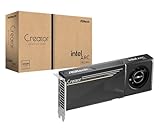
- System Compatibility Note: 2-slot card, 271x112x39mm, single 8-pin power, 200W TDP. Verify chassis clearance and PSU capacity before purchase.
- Dedicated Support: Please contact us directly through Amazon for any product questions or assistance you may require.
- 24GB GDDR6 on 192-Bit Bus: Massive 24GB memory with 456 GB/s bandwidth – ideal for LLMs, AI inference, 3D rendering, and generative design.
- Intel Xe2-HPG Architecture: Built on Intel's next-gen architecture with 20 Xe cores and 160 XMX engines for AI acceleration (197 INT8 TOPS).
- PCIe 5.0 Support: PCI Express 5.0 x16 interface for maximum bandwidth with the latest workstation platforms.
The authors also describe issues involving operator and feature support, parallelism, numerical faults, graph compilation, scalability, observability, and ecosystem fragmentation. This is an operational case study of two workloads and one configuration, not a verdict on every Ascend product or deployment. For a prospective buyer, its practical lesson is to budget for integration, testing, and operations work rather than assuming that a model which runs on Ascend will behave like its CUDA deployment.
Independent reader supportYour contribution helps us test, update, and keep practical guides available for everyone.System claims are not chip benchmarks
Huawei’s September 2026 keynote announced Atlas 960E SuperPoD design figures of up to 4,096 NPUs, 8 EFLOPS FP8, and up to one petabyte of HBM. These figures describe a company-stated system configuration and should not be compared directly with a single GPU’s peak throughput. The keynote also reported over 5,200 monthly active CANN developers; that is a Huawei-reported ecosystem figure, not a measure of system performance.
Best Value

- Professional AI & Creator Workstation: AMD Radeon AI PRO R9700 GPU with 32GB GDDR6 is engineered for AI development, professional content creation, and compute-intensive workloads.
- Massive 32GB Memory Capacity: 32GB of GDDR6 memory on a 256-bit bus provides ample bandwidth for large AI models, 8K video editing, and complex 3D rendering.
- Advanced RDNA 4 with AI Accelerators: 64 Compute Units with 3rd Gen Ray Tracing and dedicated 2nd Gen AI Accelerators for groundbreaking AI performance and visual computing.
- Professional Blower Cooling: Efficient single blower design exhausts heat directly out of the chassis, ideal for multi-GPU workstation and server configurations.
- Enterprise-Grade Thermal Solution: Vapor chamber heatsink with industrial Honeywell PTM7950 thermal interface material ensures reliable cooling under sustained professional loads.
The Associated Press reported Huawei’s introduction of Atlas 960 SuperPoD and its plans for Ascend 970 and 980 series in 2028 and 2029. Those future dates are roadmap statements and could change. The AP also reported that advanced Chinese model training still often uses U.S. chips, including NVIDIA, according to analysts. That observation is a reminder that Chinese accelerator development and deployment are not the same as full replacement of foreign hardware across every training workload.
Availability depends on location and timing
Mitsui’s report describes a period in which H200 exports to China were approved subject to conditions, followed by reported suspension of customs clearance and instructions to halt orders in January 2026. This is a historical account, not current legal guidance. Export controls, import restrictions, supplier allocation, and actual system availability can change; buyers need to verify the rules and procurement conditions that apply in their jurisdiction at the time of purchase.
The cited Huawei and AP material establishes active Ascend and Atlas development, but does not establish global availability, pricing, delivery lead times, or uniform access for international buyers. A product announcement alone is not evidence that a qualified system can be purchased or supported in a particular market.
What a buyer should request before choosing
Because the available evidence does not provide a matched total-cost comparison, organizations need to evaluate their own workload and operating conditions. Ask vendors or integrators for measurements on the intended model and deployment configuration, and include engineering and facility costs alongside accelerator performance.
Windows Errors? Fix Them Before They Spread
Repair common Windows errors and clear accumulated junk for a smoother, more stable PC - no reinstall needed.Free scan · no reinstallOutdated Drivers Are Slowing You Down
One free scan finds every outdated or missing driver and matches the right update for your exact hardware.Free scan · exact hardware match- Measured training or inference results for the same model, precision, batch size, sequence length, and software versions.
- Memory capacity and bandwidth, interconnect details, system size, and scaling efficiency at the proposed configuration.
- Operator and feature coverage for the actual application, plus the effort required to port, optimize, debug, and validate it.
- Evidence of numerical correctness, failure handling, monitoring, and recovery procedures under sustained operation.
- Expected utilization, facility power and cooling, networking, software labor, service, and support costs.
- Written confirmation of local product availability, delivery, and applicable export or import permissions.
Until those measurements exist for the buyer’s workload, NVIDIA’s better-established software stack and the dated H200 performance assessment favor NVIDIA where that hardware is available and suitable. Ascend is a credible, developing option to evaluate where its systems and support are accessible, especially when the buyer can validate the complete deployment rather than relying on peak figures or ecosystem counts.
Quick Recap
Product prices and availability are accurate as of the date/time indicated and are subject to change. Any price and availability information displayed on Amazon at the time of purchase will apply.

