
Fission splits heavy atomic nuclei; fusion joins light ones. Today’s commercial nuclear power plants use fission, which depends on a controlled neutron-driven chain reaction. Fusion machines instead work to maintain extreme conditions so light nuclei can fuse; when those conditions are lost, the fusion reaction stops. That distinction changes the hazards, but fusion is not risk-free or waste-free, and it has not yet become a commercial power technology.
How do fission and fusion reactions differ?
In fission, a heavy nucleus—such as uranium or plutonium—splits. The reaction releases energy and additional neutrons; those neutrons can trigger more fissions, creating a chain reaction. Power plants use that chain reaction to produce heat, which can be converted into electricity. Operators and engineered systems must keep the reaction under control. The U.S. Nuclear Regulatory Commission (NRC) explains the distinction in its overview of fission and fusion technologies.
In fusion, light nuclei combine. A commonly discussed approach uses the hydrogen isotopes deuterium and tritium. Because nuclei repel one another, a fusion machine must create and sustain extreme conditions for them to fuse. The NRC describes magnetic-confinement machines such as tokamaks and stellarators, as well as inertial-confinement approaches that use lasers or particle beams. Unlike fission, fusion does not depend on a self-sustaining chain reaction: the machine must keep the required conditions in place, and the reaction stops when those conditions are lost. See the NRC’s fusion overview and fusion FAQs.
What are the practical differences between the reactors?
| Comparison | Fission | Fusion |
|---|---|---|
| Reaction | Splits heavy nuclei, such as uranium or plutonium. | Combines light nuclei; deuterium and tritium are a commonly discussed fuel pair. |
| What sustains it | A controlled neutron-driven chain reaction. | A machine maintains extreme conditions; there is no self-sustaining chain reaction. |
| Waste and materials | Spent fuel contains radioactive materials, including long-lived radionuclides. | High-energy neutrons can activate surrounding structures; tritium also requires management. Waste depends on design and materials. |
| Power-plant status | Used for commercial electricity generation. | Still in research and development; commercial challenges remain. |
Is fusion safer than fission?
Fusion avoids one particular fission hazard: it cannot sustain a fission-style runaway chain reaction. If a fusion machine loses the conditions needed for fusion, the reaction stops. This changes the kinds of accident scenarios operators must plan for, but it does not make a fusion facility hazard-free. Safety still depends on the machine’s design, materials, fuel handling, radiation controls and other facility systems.
Quick wins for a faster PC:
Fix the driver behind crashes, sound loss and screen glitchesFind Drivers →Repair Windows errors before they cause bigger problemsFix Now →Scan for outdated or missing drivers - takes under a minuteDriver Scan →#1 Best Overall

- Accurate WWII Replica : A 1/12 scale model of the U.S. Little Boy atomic bomb, metal model kits for adults, crafted from aluminum alloy for durability
- Heavy Weight : Thickened aluminum alloy sheet, Solid main body with a dedicated display stand
- Complete Assembly Tools : Includes an assembly guide, screwdriver, sanding rod, and decals for a rewarding build experience, with minimal glue(not include) needed
- Easy to Assemble : With a detailed manual, you can follow the steps to sand and assemble, quickly achieving your very own masterpiece
- Perfect for Collectors : Innovative full-metal nuclear bomb model, a must-have for history enthusiasts and collectors interested in WWII memorabilia
Fission safety must account for controlling the chain reaction and managing heat, radiation and spent fuel. Spent fuel includes radioactive materials that can remain hazardous for a long time, so isolation and long-term management are central concerns.
Fusion has a different waste profile, not an absence of radioactive waste. High-energy neutrons can activate reactor structures, and tritium is radioactive and must be contained and managed. The U.S. Department of Energy (DOE) identifies solutions for activated waste, including storage and recycling, as issues for fusion development. The volume and lifetime of waste depend on the design and materials; they should not be assumed to be the same for every fusion concept. DOE discusses these challenges in its fusion energy overview, while the ITER Organization describes fusion’s safety and environmental considerations.
Rank #2

- The illustration presents a detailed patent-style breakdown, showing mechanical components arranged in precise, labeled views. Its technical layout highlights how each part fits within the overall device.
- Clean linework and structured diagram panels give it a vintage engineering aesthetic. The composition emphasizes clarity and symmetry, mirroring classic instructional schematics.
- Dual wall insulated: keeps beverages hot or cold
- Stainless Steel, BPA Free
- Leak proof lid with clear slider
Why is fusion fuel supply a challenge?
Deuterium-tritium (D-T) fusion is a leading approach in many designs, but tritium availability is a significant fuel-cycle constraint. The NRC says a D-T fusion reactor is expected to consume hundreds of kilograms of tritium per year, far exceeding current production capacity. This estimate applies to the D-T reactor case the NRC describes; it should not be treated as a fuel requirement for every fusion concept. The NRC covers the issue in its fusion FAQs.
Fuel is only one part of the engineering challenge. A practical power plant must sustain the required conditions, handle fuel and radioactive materials, manage neutron-activated structures, and provide a workable route to electricity generation. DOE’s 2024 Fusion Energy Strategy executive summary identifies fuel supply, waste pathways, commercialization and nonproliferation alongside outstanding science and technology work.
Rank #3

- HOBBY MODEL KIT – Unassembled model packed in an envelope with easy to follow instructions. Ideal for ages 14 and up
- NO GLUE OR SOLDER NEEDED – Parts can be easily clipped from the metal sheets. Tweezers are the recommended tool for bending and twisting the connection tabs.
- F4U CORSAIR – 1 Sheet Model with an easy difficulty level. Assembled Size: 4.49 x 3.71 x 1.48 inches.
- FROM STEEL SHEETS TO 3D – Pop out the pieces and connect using tabs and holes. Includes illustrated instructions.
- HIGHLY DETAILED ETCHED MODEL – Display your 3D model once completed - collect and build them all.
Which technology is ready to generate commercial power?
Fission is an established technology used in operating commercial power plants. Fusion remains in research and development. A result demonstrating technical gain in an experiment is not, by itself, a complete grid-connected power plant or proof of commercial readiness. DOE describes foundational science, enabling technology and facility work as continuing priorities through its Office of Fusion.
Independent reader supportYour contribution helps us test, update, and keep practical guides available for everyone.What is the current U.S. regulatory status of fusion machines?
This is a U.S.-specific and time-sensitive snapshot. The NRC says the 2024 ADVANCE Act brought radioactive material produced by fusion machines within the byproduct-material definition. Its rulemaking tracker reports that a proposed rule was published on February 26, 2026, with comments due May 27, 2026. As of October 4, 2026, the cited status is proposed rulemaking, not a final rule. The NRC’s fusion machine rulemaking tracker provides the status; regulatory arrangements elsewhere may differ.
Quick Recap
Best Value

- The namesake of the Nimitz class,the U.S. NAVY's most modern aircraft carriers,
- ship is powered by two A4W nuclear reactors.
Rank #4
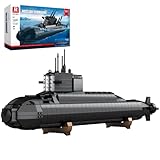
- 1498-Piece Nuclear Submarine Build – Create a detailed military submarine model designed for teens and adult builders who enjoy advanced brick building projects.
- LED Lighted Display Model – Includes a lighting kit and display stand, turning the finished submarine into a striking home, office, shelf, or collector’s display piece.
- Opening Side Panels & Interior Details – Features a radar antenna, sonar system, torpedo tubes, missiles, reactor area, and segmented compartments for a more realistic building experience.
- Challenging STEM Building Project – Encourages patience, spatial reasoning, problem-solving, and hands-on engineering exploration through a rewarding 14+ model kit.
- Gift for Military and Model Enthusiasts – A strong gift choice for birthdays, holidays, Father’s Day, Christmas, and collectors who enjoy military models, submarine toys, and technical building sets.
Product prices and availability are accurate as of the date/time indicated and are subject to change. Any price and availability information displayed on Amazon at the time of purchase will apply.

