
Free tools Windows power users keep installed
One-click scans. No signup required.
iTechGuides is reader-supported. When you buy through links on our site, we may earn an affiliate commission. As an Amazon Associate I earn from qualifying purchases. Learn more
Yes—you can keep a compatible Nest Cam powered while preventing it from seeing the room by placing a physical cover over its lens. A published Cults3D design targets the wired indoor Google Nest Cam and uses a hinged shutter that you open for monitoring and close for privacy. It is a printable STL file, not a verified retail accessory or proof of fit on every Nest model.
Before printing, identify your exact camera. Google’s settings and hardware warnings differ by model: the indoor wired design is not evidence for outdoor cameras, and Google specifically warns against covering Nest Cam Outdoor units because sensors, performance, and warranty coverage may be affected.
What does a physical Nest Cam cover actually change?
A closed cover blocks the lens itself, so the camera cannot capture a usable image of whatever is behind the shutter. The camera remains powered and connected, however. A cover is therefore a visual privacy barrier, not the same thing as disabling the camera, microphone, cloud storage, or network access.
| Action | What it prevents | What it does not necessarily change |
|---|---|---|
| Close a physical shutter | Line of sight through the lens while the shutter is closed | Power, network connection, microphone, audio recording, account access, or previously stored video |
| Use a camera on/off control | Camera operation where that model and app expose the control | Availability of the setting on other Nest models |
| Turn the microphone off | Audio streaming and recording while the microphone is off | Video capture or saved video history |
| Turn off video history | Saved history and snapshots for the models covered by Google’s setting | Every live-stream or camera function; Google says saved history and snapshots are deleted |
That distinction matters if your goal is a quiet room rather than a dark image. If you need to stop sound, use the audio controls as well as, or instead of, a lens cover. If you need to remove stored footage, use the video-history controls and read the deletion warning before confirming.
Popular on Amazon

- Compatible Model: Camera lens cover designed compatible with Google Nest Cam (Indoor Wired) camera models.
- Instant Privacy Control: Flip-style cover allows quick lens blocking or opening as needed.
- Tool-Free Installation: Slides on easily with no screws, glue, or permanent modification.
- Smooth Flip Handle: Integrated handle enables effortless one-touch operation.
- Unobstructed Functionality: Designed to avoid interference with sound output and power cable.
Which Nest Cam does the printable design fit?
The published design is explicitly described for the wired indoor Google Nest Cam. The listing does not establish compatibility with battery models, indoor generations with different housings, doorbells, or outdoor cameras. Measure and identify your hardware before committing filament or modifying the camera.
The design, titled Nest cam privacy cover by tcomben, was published on March 13, 2022. It contains two STL files and describes a cover that opens and closes. The listing is a maker’s design specification, not an independent fit test or a guarantee that a print from every printer will align perfectly. See the original files and stated target at Cults3D.
Why outdoor models need a separate decision
Do not transfer the indoor design’s description to an outdoor Nest Cam. In its guidance for protecting Nest Cam Outdoor (wired, first and second generation) against tampering and theft, Google says: “Important: Do not paint or cover the camera. This can affect its sensors and performance, and may void the warranty.” Read the complete qualification in Google’s Nest camera tampering and theft guidance. The warning is written for that outdoor camera context; it still means an outdoor owner should not assume a printed shutter is safe or supported.
Recommended Free Tools
How do I print and assemble the indoor privacy cover?
Follow the designer’s published setup as a starting point, while treating the settings as unverified instructions rather than guaranteed results. You will need a 3D printer, one of the listed filament types, the STL files, and a way to trim or melt a short hinge pin.
- Confirm the target camera. Verify that your device is the wired indoor Google Nest Cam named by the design listing. If the housing differs, stop and look for a design made for that exact model instead of forcing the part.
- Download both STL files. The Cults3D page lists two files for the opening-and-closing cover. Keep the files together so you do not accidentally print only one half of the assembly.
- Choose a listed filament. The designer lists PLA, PETG, ABS, or nylon. No independent testing in the listing establishes that one material is safest or strongest for every room, printer, or climate.
- Use the listed slicer settings. The designer specifies 5% infill and no supports, with a raft marked optional. Those are the author’s settings, not a laboratory-validated profile; inspect the preview for thin walls, bridging, and any first-layer problems before printing.
- Print the parts and remove temporary material. Let the parts cool, remove the raft if you used one, and clean strings or rough edges. Do not sand or trim in a way that changes the shutter’s alignment or puts debris near the lens.
- Install the hinge. The listing suggests using a small piece of 1.75 mm filament as the hinge pin. After inserting it, melt the ends enough to keep the pin from sliding out. Work away from the camera and avoid heat, molten plastic, or tools touching the housing.
- Test movement off the camera. Open and close the shutter repeatedly before mounting it. It should move without binding, scraping, or springing loose. If the hinge is tight, correct the printed part rather than pressing the cover against the lens.
- Fit it gently and check the view. Install the cover without adhesive that could leave residue or prevent removal. With the shutter open, confirm that the camera’s normal field of view is not clipped; with it closed, confirm that the shutter stays in place without pressing on the camera.
Because the design page does not report printer models, dimensional tolerances, or independent durability results, a poor fit is a manufacturing or model-mismatch problem until proven otherwise. Re-slice or reprint the part rather than enlarging the camera housing opening with a tool.
Can I turn a Nest camera off in the app instead?
Sometimes, but not universally. Google says available settings depend on the camera model and the app used during setup: newer cameras generally use the Google Home app, while cameras first set up in the Nest app may retain most of their controls there. Google documents a manual Camera On/Off control for applicable cameras in Nest settings, but it does not promise that every Nest Cam has that switch.
Also popular on Amazon
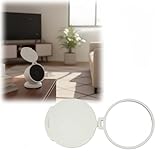
- Important Note: This is a third-party replacement part, Brand names are used only to indicate Compatible with Google, This product is not affiliated with or endorsed by any brand owner
- Tool-free installation – the slide-in design requires no tools or permanent modifications and can be installed in seconds
- Designed for privacy protection – features a flip-up lens cover that instantly blocks the camera when privacy is needed
- Convenient flip-up design – easily opens or closes for quick monitoring or privacy protection
- Includes one protective cover – the package contains only one privacy cover; camera is not included
Open your camera’s settings in the app you actually use and look for a Camera On/Off control. If it is absent, do not assume a hidden toggle exists or that a different app will add one. Google’s Nest camera or doorbell settings reference explains why menus vary by model and app.
The Tool Desk
Outbyte PC Repair FREEClear out junk files and repair common Windows errorsFree Scan →Outbyte Driver Updater FREEFix the driver behind crashes, sound loss and screen glitchesFind Drivers →Home app versus Nest app
- Newer models set up in Google Home: Use the Home app’s camera settings and the controls shown for that specific device.
- Older cameras set up in Nest: Continue checking the Nest app, where Google says most settings may remain available and where an applicable Camera On/Off control can appear.
- Mixed households: If you have several generations of cameras, expect different controls and do not use one model’s menu as evidence about another.
A software switch can be more complete than a shutter when the model supports it, but it is also reversible through the app and account. A closed cover gives you a visible, physical state that anyone in the room can verify.
How do audio and video-history controls differ from covering the lens?
Google separates microphone, audio-recording, and video-history settings. These controls address data collection and storage, while a shutter addresses the camera’s line of sight.
| Setting | Documented effect | Important qualification |
|---|---|---|
| Microphone off | The camera does not stream or record audio while the microphone is off. | Video can remain available. |
| Audio recording off | Changes whether audio is recorded. | Depending on configuration, sound may still be available in the live stream. |
| Video history off | For the listed camera models, saved video history and snapshots are deleted. | This is not simply a pause; deletion is part of the documented result. |
| Physical lens cover | Blocks the image while physically closed. | Does not by itself alter audio, storage, power, or account permissions. |
Use Google’s audio settings instructions for microphone and recording choices. For history, read Google’s video-history and snapshot deletion instructions before switching the feature off, because the documented outcome includes deletion of saved material.
Which privacy method should I choose?
Choose based on what you need to stop and how quickly you need to reverse it. The following comparison keeps physical blocking separate from software disablement.
Quick wins for a faster PC:
Fix the driver behind crashes, sound loss and screen glitchesFind Drivers →Repair Windows errors before they cause bigger problemsFix Now →| Method | Best for | Trade-offs |
|---|---|---|
| 3D-printed indoor shutter | A visible, immediate barrier to the lens while leaving the camera mounted and powered | Requires the exact wired indoor target, a printer, and a successful fit; it does not disable audio or storage |
| Camera On/Off setting | Models that expose a documented software switch | Availability varies by model and app; the state is controlled through the account and app |
| Microphone off | Rooms where sound is the privacy concern | Does not block video and may not change every audio path unless recording and live-stream settings are configured separately |
| Video history off | Users who do not want saved history on supported models | Google documents deletion of saved history and snapshots, so it has a different consequence from pausing future capture |
| Physical switch on a Nest Hub Max | People using that display’s built-in camera | This is a different device and mechanism, not a Nest Cam cover; Google documents the Nest Hub Max privacy switch separately |
Google explains the Nest Hub Max’s physical privacy switch in its streaming-camera guidance. Do not treat that switch as evidence that an external Nest Cam has the same hardware control.
Also popular on Amazon

- Quick Privacy Control – Slide on this privacy shade when you want to pause video recording while keeping camera power connected
- Simple Snap-On Installation – No tools needed to attach this accessory, just place it over the camera body in seconds
- Lightweight and Compact – Made from durable materials, this protector cap adds no bulk to your camera setup
- Does Not Block Camera Functions – Open design leaves speaker, mic, and motion sensor fully uncovered for normal operation
- Disclaimer: This product is a third-party accessory. It is not an official accessory and is not authorized or endorsed by them. Brands mentioned are for compatibility purposes only.
What should I check before closing the shutter?
Make a short routine so privacy does not depend on memory or an ambiguous app status.
- Confirm that the shutter is intended for your exact camera and that it moves freely.
- Close the shutter fully rather than leaving a gap at the lens edge.
- Check whether the microphone is still enabled if conversations are the concern.
- Decide whether saved video history should remain; a lens cover does not erase existing clips.
- Tell other household members or visitors what the open and closed positions mean.
- Reopen the shutter before relying on motion alerts or live monitoring.
Google’s privacy material says processing depends on the camera features and settings you enable. If you choose video storage, footage may be stored, and local notice or consent duties can apply depending on where you live and how the camera is used. Review the Google Home and Nest Privacy Hub and follow the rules applicable to your household, workplace, or rental property.
What can go wrong, and how do I fix it?
The cover does not fit the camera
Stop and verify the camera name and generation. The listing targets the wired indoor Google Nest Cam; a different shell, stand, or battery model can have different dimensions. Do not force the STL onto the device or drill into the housing.
Do these 3 things before closing this tab:
1Scan for outdated or missing drivers - takes under a minute2Repair Windows errors before they cause bigger problems3Fix the driver behind crashes, sound loss and screen glitchesThe shutter binds or falls open
Inspect the hinge hole, remove strings, and check that the 1.75 mm filament pin is straight. Reprint the affected part with cleaner first-layer adhesion or corrected orientation instead of gluing the shutter permanently.
The app still shows a live image
That is expected if you only closed the physical cover: the camera is still powered and connected. If you require software disablement, check whether your model exposes Camera On/Off; if it does not, use the shutter and configure audio or history separately for the privacy goal you have.
Sound is still present
A lens cover cannot mute a microphone. Turn the microphone off, and review audio-recording and live-stream behavior in Google’s audio settings documentation before assuming that one audio switch controls every path.
Also popular on Amazon
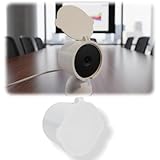
- Important Note: This is a third-party replacement part, Brand names are used only to indicate Compatible with Google, This product is not affiliated with or endorsed by any brand owner
- Privacy protection: Provides a simple way to cover the lens when privacy is needed at home or in the office
- Easy to open and close: Simply flip the protective cover to cover or reveal the camera lens in seconds
- No tools required: Easy installation without drilling or any permanent modifications to the camera
- Everyday convenience: Ideal for use during breaks, meetings, or whenever the camera is not in use
The camera is outdoors
Do not use the indoor STL as a default outdoor solution. Google’s outdoor guidance warns that covering the camera can affect sensors and performance and may void the warranty. Choose a manufacturer-supported method for that exact outdoor model instead.
The cover blocks part of the image when open
Remove it and inspect alignment. A shutter that intrudes into the field of view is not a successful fit; reprint or adjust the design only for the documented indoor target, and avoid modifications that contact the lens or sensors.
Independent reader supportYour contribution helps us test, update, and keep practical guides available for everyone.Is a ready-made privacy cover available?
The documented matching option is a printable file, not a confirmed finished product. A search for phrases such as “3D printed Nest Cam Indoor privacy cover” may surface sellers or print services, but the available evidence does not verify a particular retail listing, dimensions, or seller quality.
Do not confuse a generic sliding webcam shutter with a Nest accessory. For example, a separate Cults3D listing describes a parametric cover for laptop and monitor webcams, not Nest cameras; its category and design do not establish Nest fit. See that listing at Cults3D’s sliding webcam cover page.
If you order a print from someone else, provide the exact camera model and ask for a fit check before installation. A finished part should still be removable, leave the lens unobstructed when open, and avoid pressure on sensors or the camera shell.
Windows Errors? Fix Them Before They Spread
Repair common Windows errors and clear accumulated junk for a smoother, more stable PC - no reinstall needed.Free scan · no reinstallOutdated Drivers Are Slowing You Down
One free scan finds every outdated or missing driver and matches the right update for your exact hardware.Free scan · exact hardware matchDoes this fix replace unplugging?
For the wired indoor Nest Cam that the design targets, a hinged cover can replace the repeated act of unplugging when your requirement is simply to block the image on demand. It does not replace unplugging, software disablement, microphone controls, or deletion when you need to stop power, audio, storage, or account connectivity.
Also popular on Amazon

- 🔄 Flip-Style Lens Shield: The flip lens cover allows manual opening and closing, providing a simple way to cover the camera lens when privacy is preferred.
- 🛠️ Tool-Free Installation: The slide-on camera cover installs without tools or glue, offering a straightforward setup and convenient removal when needed.
- 🔌 Unobstructed Access: Designed to leave the camera speaker and power cord clear, this security camera accessory supports convenient everyday use without blocking these areas.
- 👋 Convenient Opening Handle: The integrated handle makes the privacy shield easier to open and close. This lens privacy accessory is designed for practical use in home monitoring environments.
- 🔒 Compatible Camera Design: Designed as a privacy cover for Google Nest Cam Outdoor Battery 2nd Gen, this camera accessory provides a physical lens shield when camera viewing is not desired.
The practical decision is therefore narrow: print the documented indoor design if you want a reversible physical shutter and can verify the model; use Google’s model-specific controls when your privacy requirement concerns audio, saved history, or camera operation; and treat outdoor cameras as a separate compatibility and warranty question.
Frequently Asked Questions
Will closing the shutter stop someone from accessing my Nest account?
No. The shutter changes what the lens can see but does not revoke account access or remove the camera from your network. Use the account’s security controls and review who has permission to view the device if remote access is the concern.
Can I use the indoor STL on a battery-powered or outdoor Nest Cam?
There is no documented fit for those models in the design listing. The published target is the wired indoor Google Nest Cam, while Google’s outdoor guidance warns against covering outdoor units, so treat other models as unsupported unless their manufacturer documentation says otherwise.
What happens to the status light when the cover is closed?
A physical shutter does not itself define the camera’s indicator behavior. The light can still reflect power, streaming, or privacy settings, so do not use an unchanged indicator as proof that the camera is or is not recording.
What if I do not own a 3D printer?
The design is distributed as STL files, so you can ask a local makerspace or print service whether it can produce the parts. Give the service the exact wired indoor model and inspect the finished hinge and lens clearance before attaching it.
Quick Recap
Product prices and availability are accurate as of the date/time indicated and are subject to change. Any price and availability information displayed on Amazon at the time of purchase will apply.

