
What’s actually slowing this PC down?
Pick the symptom - the matching free tool is one click away.
PRIMA is NASA’s first mission selected for its new Probe Explorer astrophysics class. The planned far-infrared observatory will survey the universe to investigate how planets form, how galaxies and their black holes evolve, and how cosmic dust and heavy elements accumulate. It is not the first space telescope or the first infrared observatory: its distinction is being the inaugural mission in this new class.
What makes PRIMA “first of its kind”
PRIMA stands for Probe far-Infrared Mission for Astrophysics. NASA selected it as the first Probe Explorer mission, a new class within the agency’s long-running Explorers Program. Probe Explorers are intended to occupy a middle ground between flagship missions and smaller-scale missions. NASA’s September 23, 2026 announcement says PRIMA is advancing to Phase B.
The distinction is about the mission class, not a new kind of telescope. NASA’s 2024 explanation of the Probe Explorer competition described PRIMA and AXIS as candidates for 12-month concept studies, with one expected to proceed. NASA’s later announcement selected PRIMA.
What PRIMA will look for in far-infrared light
NASA says PRIMA’s 5.9-foot (1.8-meter) telescope is designed to conduct deep, sensitive surveys in far-infrared light. This wavelength region helps scientists study radiant energy associated with material and processes that can be difficult to investigate in other parts of the spectrum. NASA describes PRIMA as bridging existing infrared observatories such as the James Webb Space Telescope and radio telescopes; it is meant to complement those observatories, not replace them.
#1 Best Overall

- ICONIC NASA ARTEMIS I ROCKET MODEL KIT - Recreate the historic Artemis I mission with this highly detailed 1:144 scale Space Launch System (SLS)—a must-have for space enthusiasts, collectors, and model builders.
- AUTHENTIC MULTI-STAGE DETAILING - Features twin solid rocket boosters, detailed core stage with external hydrogen lines, separate stage assembly, and four RS‑25 engines for a realistic, true-to-life build.
- IMPRESSIVE 28" DISPLAY CENTERPIECE - Standing nearly 28 inches tall, this model delivers a striking vertical display that commands attention in any room, office, or collection.
- SKILL LEVEL 4 – ADVANCED BUILD EXPERIENCE - Designed for experienced hobbyists ages 12+ seeking a challenging, rewarding project with intricate parts and detailed assembly.
- READY FOR CUSTOM PAINT FINISH - Molded in light gray plastic so you can paint and detail to your exact preferences for a museum-quality appearance. (Paint & glue required, not included.)
How planets form
One central science question is how exoplanets form and how their atmospheres originate. Observations in the far-infrared can contribute evidence about the environments and material involved in planet formation.
How galaxies and black holes evolve
PRIMA’s planned surveys will also investigate how the stellar masses of galaxies and the black holes at their centers co-evolve over cosmic time. Observing across the far-infrared gives researchers another way to examine galaxies’ development over the history of the universe.
Rank #2

- Authentic NASA Spacecraft Replica – Detailed 1/300 scale model of the legendary Space Shuttle Atlantis featuring realistic NASA markings and spacecraft detailing.
- Premium Die-Cast Metal Construction – Crafted from durable die-cast metal for a high-quality collectible feel and long-lasting display value.
- Historic Space Exploration Collectible – Honors the iconic reusable orbital spacecraft that helped shape modern human spaceflight history.
- Includes Display Stand – Comes complete with a plastic stand for easy and dynamic display on desks, shelves, or collector cabinets.
- Designed for Adult Collectors – Recommended for ages 14 and up; ideal for NASA enthusiasts, space exploration fans, and aerospace collectors alike.
How dust and heavy elements build up
A third focus is the buildup of interstellar dust and metals in galaxies. “Metals” in astronomy generally means elements heavier than hydrogen and helium. Tracking dust and these elements helps scientists understand how galaxies accumulate and redistribute the ingredients from which later generations of stars and planets can form.
NASA Associate Administrator for the Science Mission Directorate Nicky Fox described the ambition this way: “The PRIMA mission is humanity’s next window into the deep universe. It will unveil the obscure across cosmic time to better understand the formation of planets, stars, black holes, and even how water on Earth came to be.”
Rank #3

- Highly Detailed Replica: Expertly crafted in 1:25 scale, this Apollo 11 Capsule model is an authentic replica made out of resin and its design for collectors ages 14+.
- Resin Construction: Crafted from resin with intricate detailing, creating a distinctive collectible model for display.
- Display Stand Included: Comes with a high quality display stand that will elevate your aviation collection.
- Detailed Scale Model: The size of this piece makes it the perfect model to display anywhere. Measures approximately 6.25 inches wide and 5 inches tall.
- Executive Series by Daron: Part of the Executive Series by Daron, featuring highly detailed historical replicas made of resin. Made for both space and military aviation collectors and enthusiasts.
What the telescope and instruments are designed to do
The concept includes a cryogenically cooled 1.8-meter telescope and two instruments: FIRESS, the Far-InfraRed Enhanced Survey Spectrometer, and the PRIMA Imager, also called PRIMAger. Together, their planned capabilities include hyperspectral imaging and broadband imaging polarimetry.
Technical descriptions give different wavelength ranges, so these figures should be read as concept-stage descriptions rather than finalized flight specifications:
Rank #4
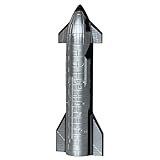
- Durable materials: This 1/400 scale SpaceX spaceship is lightweight and durable. The main body of the spaceship is made of pp and precision aluminum alloy. It is very suitable for desktop display
- Exquisite Details: The height of the rocket model is 4.9 inches and the diameter is 1.81 inches. It precisely reproduces the launch configuration of the rocket and captures every real detail of the authentic interstellar spacecraft
- Perfect Display or Gift: This complete rocket launch model brings the real space flight scene to life, making it an ideal choice for a desk or display stand. It creates a charming atmosphere for space enthusiasts and is the perfect gift for any space lover
- The Package Includes: This Starship model set includes a 1/400 scale Starship Rocket Model. Gift packaging is available. The complete kit vividly recreates the scene of the Starship
- Note: This model is suitable for desktop display and has fulfilled the dreams of every enthusiast. It is not applicable to children's toys
| Source and status | Instrument or telescope description | Reported range or capability |
|---|---|---|
| NASA Technical Reports Server concept abstract (2024) | 1.8-meter telescope cooled to 4.5 K; FIRESS and PRIMA Imager | 24–261 μm overall range; hyperspectral imaging and broadband polarimetry |
| PRIMA project site concept description | FIRESS | 24–235 μm coverage |
| PRIMA project site concept description | PRIMAger | Hyperspectral imaging from 25–84 μm; imaging polarimetry in four bands from 90–235 μm |
The detailed ranges are attributed to the sources that describe them: the NASA Technical Reports Server concept abstract and the PRIMA project site. The difference between the abstract’s overall range and the project site’s instrument-level ranges is a reason not to treat every design number as final.
Independent reader supportYour contribution helps us test, update, and keep practical guides available for everyone.When PRIMA could launch, and what remains undecided
Phase B is the stage for preliminary design and technology development; it is not authorization to begin full implementation. NASA says a confirmation review will assess technical, programmatic, and cost performance before deciding whether the mission can move into Phase C implementation.
Free tools Windows power users keep installed
One-click scans. No signup required.
Best Value

- Authentic NASA Licensed Model – Faithfully replicates the iconic Space Shuttle Discovery (OV-103), the most flown spacecraft in NASA history, with 39 missions and over 365 days in space.
- Inspiring and Educational Display Piece – Ideal for collectors and space enthusiasts, this model celebrates historic milestones such as the deployment of the Hubble Telescope and John Glenn’s return to space.
- Compact Display Dimensions – The 1:300 scale die-cast replica measures approximately 4 3/4 inches long with a 3 1/8 inch wingspan, perfect for desktops, shelves, or display cases.
- Premium Materials and Construction – Made of high-quality die-cast metal with a durable plastic base, featuring precision detailing and a sturdy stand for lasting presentation.
- Celebrate Space Exploration Legacy – Part of the Daron Postage Stamp Collection, this collectible model honors America’s pioneering spirit in spaceflight. Recommended for adult collectors and ages 14+.
- Launch: NASA’s September 2026 target is 2033; it is a goal, not a confirmed launch date.
- Mission duration: NASA describes a planned five-year mission.
- Cost: If the mission passes confirmation, its project cost is capped at $1.2 billion. That figure excludes launch and other non-project costs.
These schedule and cost terms remain conditional on the confirmation process. The planned mission duration and launch target should not be read as settled operational outcomes.
Quick Recap
Product prices and availability are accurate as of the date/time indicated and are subject to change. Any price and availability information displayed on Amazon at the time of purchase will apply.

