
Free tools Windows power users keep installed
One-click scans. No signup required.
iTechGuides is reader-supported. When you buy through links on our site, we may earn an affiliate commission. As an Amazon Associate I earn from qualifying purchases. Learn more
As of October 4, 2026, the CKA exam page says the exam is based on Kubernetes v1.35—even though the Kubernetes project lists v1.37 as its newest maintained minor release. The Linux Foundation says the exam environment generally moves to a newly released Kubernetes minor version within about four to eight weeks, so the version candidates encounter can lag the newest release. Check the official CKA page near your exam date for the current version and curriculum.
What version of Kubernetes is on the CKA exam?
The Linux Foundation’s CKA page currently identifies Kubernetes v1.35 as the exam version. The Kubernetes project’s release listing, checked October 4, 2026, shows v1.37, v1.36 and v1.35 as its three maintained minor branches. In other words, the exam version and newest maintained release are not necessarily the same.


The provider says the exam environment is generally aligned with a newly released Kubernetes minor version within approximately four to eight weeks of that release. That is a general update window, not a guaranteed change date. Do not assume a release immediately changes the exam, or infer when the next update will happen; verify the version on the CKA exam page shortly before testing.
Current Kubernetes release context
According to the Kubernetes release listing, the latest patch releases for the maintained branches were v1.37.1, v1.36.5 and v1.35.9, each dated September 15, 2026. The project listed these end-of-life dates for the minor branches:
Popular on Amazon
| Kubernetes branch | Latest patch listed | End of life listed |
|---|---|---|
| v1.37 | v1.37.1, September 15, 2026 | October 28, 2027 |
| v1.36 | v1.36.5, September 15, 2026 | June 28, 2027 |
| v1.35 | v1.35.9, September 15, 2026 | February 28, 2027 |
The project says Kubernetes v1.19 and later receive approximately one year of patch support. It also listed v1.34 support as ending October 27, 2026, shortly after the date of this status check. Release versions and lifecycle dates change, so consult the live release page for current status.
Is the CKA exam updated when Kubernetes releases a new version?
Not immediately, based on the provider’s stated update approach. The Linux Foundation says the environment generally aligns with a newly released minor version within approximately four to eight weeks. The practical implication is that exam preparation should follow the version and competencies published for the CKA, rather than automatically switching to whichever Kubernetes version was released most recently.
Also popular on Amazon
Release notes help explain how the platform changes, but they do not establish that a feature appears on the CKA. For example, the Kubernetes v1.37 release article, published August 26, 2026, reports 67 enhancements: 16 promoted to Stable, 23 to Beta and 27 entering Alpha, plus one deprecation or removal. Among the stable highlights were resilient watch-cache initialization and improvements to SELinux mount behavior. Those are release-cycle facts, not a list of CKA exam questions or tested features. See the Kubernetes v1.37 release announcement for the release details.
What changed in the CKA exam?
The Linux Foundation’s published program-change notice says a competency update took effect for exams sat on or after February 18, 2025. The five domain names remained the same, but competencies within them received additions, deletions and wording changes. Familiar domain headings therefore do not guarantee that an older checklist covers the current objectives.
Also popular on Amazon
Use the current competency descriptions on the official CKA page as your study map. The effective date and domain continuity are described in the CKA program changes notice.
What are the CKA exam domains and weights?
The official CKA page publishes five weighted domains. Troubleshooting has the largest share, while Storage has the smallest. Use the weights to allocate practice time, but do not treat them as a promise about the number of tasks: the published information gives domain percentages, not a fixed task count for each domain.
Also popular on Amazon
| Domain | Weight | Published competency areas |
|---|---|---|
| Troubleshooting | 30% | Clusters, nodes, components, services and networking; resource-use monitoring; container output management and evaluation. |
| Cluster Architecture, Installation & Configuration | 25% | RBAC, underlying infrastructure, kubeadm, cluster lifecycle, highly available control planes, Helm, Kustomize, extension interfaces, CRDs and operators. |
| Services & Networking | 20% | Pod connectivity, NetworkPolicies, service types and endpoints, Gateway API, Ingress controllers and resources, and CoreDNS. |
| Workloads & Scheduling | 15% | Deployments and rollbacks, ConfigMaps and Secrets, autoscaling, resilient deployments, pod admission and scheduling. |
| Storage | 10% | Storage classes, dynamic provisioning, volume types, access modes, reclaim policies, PersistentVolumes and PersistentVolumeClaims. |
These percentages and competency areas are from the official CKA curriculum. Gateway API’s presence in the Services & Networking domain is a useful reminder to check the current objectives rather than rely solely on older study notes.
Quick wins for a faster PC:
Scan for outdated or missing drivers - takes under a minuteDriver Scan →Clear out junk files and repair common Windows errorsFree Scan →Fix the driver behind crashes, sound loss and screen glitchesFind Drivers →Is the CKA exam hands-on?
Yes. The Linux Foundation describes the CKA as a two-hour, online, proctored, performance-based exam. Candidates complete tasks from a command line in a Kubernetes environment. Preparation should therefore emphasize doing and troubleshooting the published competency work, not just recognizing terms or memorizing definitions.
Also popular on Amazon
The provider page also lists certification validity of two years, a 12-month eligibility window and one retake. These are exam-program terms, not Kubernetes release facts; check the current CKA page before purchasing or scheduling because terms can change.
Independent reader supportYour contribution helps us test, update, and keep practical guides available for everyone.How to prepare when the exam version may lag Kubernetes
- Check the exam version and objectives. Use the live CKA exam page as the authority for the current Kubernetes version and competencies, and check it again close to your test date.
- Plan practice around the published weights. Give Troubleshooting and Cluster Architecture, Installation & Configuration substantial attention because they account for 30% and 25% respectively. Cover every domain; the lower-weight sections still form part of the curriculum.
- Practice tasks at the command line. Rehearse performing and diagnosing the listed operations in a Kubernetes environment. A tutorial can teach useful concepts without matching the current CKA objectives, so compare its coverage against the official competency list.
- Use release notes for context, not as an exam blueprint. A new feature or release highlight is not evidence that the CKA tests it. Follow the published exam objectives for scope.
- Recheck the version and exam terms before scheduling. Minor releases, exam alignment, eligibility windows and retake terms can change; rely on the provider’s current page rather than an older guide.
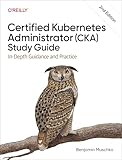
The Linux Foundation’s CKA page provides its official preparation resources. If you use another study guide, check that its edition covers the current published competencies instead of assuming that a recent publication date means alignment.

