
Quick wins for a faster PC:
Repair Windows errors before they cause bigger problemsFix Now →Fix the driver behind crashes, sound loss and screen glitchesFind Drivers →In 2023, vulnerabilities in the J-Web management interface on Juniper SRX firewalls and EX switches could be combined to achieve remote code execution without authentication. Public proof-of-concept (PoC) code increased the practical risk; a later PoC showed that CVE-2023-36845 alone could achieve RCE without the earlier file-upload step. Administrators should identify exposed J-Web interfaces, apply the fixed Junos release for each affected branch, and restrict or disable J-Web until patching is possible.
What happened in the 2023 Juniper J-Web incident?
Juniper disclosed multiple vulnerabilities affecting J-Web on SRX and EX devices on 29 August 2023. J-Web is a web-based device management interface, so the exposure was specific to devices running the affected Junos branches with the interface reachable—not a flaw in every Juniper product or a generic vulnerability in all Junos deployments.



CERT-EU said the vulnerabilities “could potentially be chained together to allow unauthorised remote code execution (RCE) on SRX and EX series devices.” The chain involved flaws that could be combined across file upload and command execution behavior. CERT-EU reported a combined CVSS score of 9.8, Critical, in its 19 September 2023 update. That score describes the combined issue as reported by CERT-EU, not a score for every individual CVE.
Why the PoCs changed the risk
A proof of concept demonstrates how a vulnerability can be exploited; it is not by itself proof that every exposed device was attacked. But working public exploit code can lower the effort needed to test or exploit vulnerable systems. CERT-EU reported that on 18 September 2023 a VulnCheck researcher released another PoC that used CVE-2023-36845 alone, bypassing the need to upload files while still achieving RCE. That removed a step from the earlier exploit approach and made it unsafe to assume that blocking only the upload stage would address the exposure.
#1 Best Overall
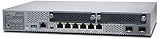
![Juniper Networks SRX300 Services Firewall Gateway Security Appliance w/ AC Adapter [No Rack Kit] (Renewed)](https://m.media-amazon.com/images/I/315JfzQKo0L._SL160_.jpg)
- Item Package Quantity - 1
- Product Type - NETWORKING ROUTER
- Memory - 4000. GB
- Accessories may not be original, but will be compatible and fully functional. Product may come in generic box.
Government tracking adds a separate reason for urgency: CISA describes CVE-2023-36846 as a missing-authentication flaw allowing arbitrary file upload through J-Web, which could enable chaining with other vulnerabilities. A joint government advisory listed CVE-2023-36845 among vulnerabilities routinely exploited in 2023. These statements establish exploitation-related concern for the CVE family, but do not establish that every incident used the same chain or that every affected device was compromised.
How the Juniper J-Web advisories differ
Later J-Web advisories should not be conflated with the 2023 PoC-driven incident. They concern separate vulnerabilities, with distinct impact and exploitation evidence.
| Issue | Vulnerability class and access | PoC or exploitation evidence | Scope and response |
|---|---|---|---|
| 2023 J-Web vulnerabilities, including CVE-2023-36845 and CVE-2023-36846 | Multiple flaws could be chained for unauthenticated RCE. CISA characterizes CVE-2023-36846 as missing authentication for arbitrary file upload. | CERT-EU reported a chain and a later PoC using CVE-2023-36845 alone. CISA and partner-agency tracking identify related exploitation; a joint advisory listed CVE-2023-36845 as routinely exploited in 2023. | Juniper SRX and EX devices on affected Junos branches. Apply the fixed release for the affected branch; restrict or disable J-Web if patching is delayed. |
| CVE-2024-21591, January 2024 | CERT-EU described a critical J-Web vulnerability that could cause denial of service or RCE. | The cited CERT-EU advisory does not state a public PoC or exploitation status. | Affected SRX and EX Junos branches were listed by CERT-EU. Use the relevant Juniper advisory for branch-specific fixed releases and workarounds. |
| CVE-2025-6549, 9 July 2025 | Incorrect authorization could expose J-Web on additional interfaces when Juniper Secure Connect or multiple J-Web interfaces were configured. Juniper assigned CVSS 3.1 6.5. | Juniper SIRT said it was not aware of malicious exploitation of this vulnerability when the advisory was published. | SRX J-Web authorization exposure issue. Review Juniper’s advisory for affected configurations and the applicable remedy. |
| Juniper advisories, 14 January 2026 | The Canadian Centre for Cyber Security reported advisories affecting multiple Juniper products, including Junos OS on SRX and EX series. | The cited summary does not establish that these advisories were part of the 2023 campaign. | Review the individual advisories against the organization’s product and Junos inventory. |
What administrators should do
- Inventory SRX and EX devices. Record device family, Junos release and branch, and whether J-Web is enabled. Check both intended management interfaces and any additional interfaces where the service may be reachable.
- Prioritize reachable management interfaces. Treat an internet-exposed J-Web interface as the most urgent exposure to remove. Use firewall filtering to block access from untrusted networks and allow management only from trusted hosts and networks.
- Install the fixed Junos release for the affected branch. Juniper’s advisories contain the branch-specific affected versions and fixed releases. Verify the exact advisory and device configuration before selecting an upgrade; the evidence summarized here does not establish a universal fixed version applicable to every SRX or EX model.
- Disable J-Web if patching must wait. If the interface is not needed, disable it. If operations require it temporarily, restrict access to trusted management hosts and enforce filtering at the relevant interfaces. A workaround reduces exposure but is not a substitute for the fixed release.
- Recheck later advisories as part of patch governance. The 2024, 2025, and January 2026 notices cover distinct issues or broader Juniper product advisories. Match each notice against the deployed device family, configuration, and Junos branch rather than treating the 2023 fix as proof that later exposure is resolved.
What the public evidence does—and does not—show
The 2023 disclosures establish a pre-authentication J-Web route to RCE on affected SRX and EX deployments, a published PoC that simplified exploitation, and government tracking of related exploitation. They do not establish that all Juniper devices were vulnerable, that every attack used identical techniques, or that a particular organization was compromised. CVE-2025-6549 is a separate authorization exposure issue; Juniper said it had no known malicious exploitation of that vulnerability when it published its advisory.
Quick Recap
Best Value
Product prices and availability are accurate as of the date/time indicated and are subject to change. Any price and availability information displayed on Amazon at the time of purchase will apply.

