
Free tools Windows power users keep installed
One-click scans. No signup required.
For most buyers who are comfortable with either platform, the iPhone 17 Pro Max is the stronger all-round pick: it led the cited comparison’s performance and battery tests and is the better fit for video and Apple-device continuity. The Galaxy S25 Ultra is the more capable specialist if you want dedicated 3x and 5x telephoto cameras, an integrated S Pen, Android customization, or Samsung DeX.
Price can change the decision. In the U.S., launch prices were $1,199 for the iPhone with 256GB and $1,299.99 for the Galaxy with 256GB. Samsung’s store has also shown a temporary $999.99 price for some 256GB colors. Treat that as a dated promotion, not a permanent price; check equal storage and the live offer before buying.
Quick comparison
| Feature | iPhone 17 Pro Max | Galaxy S25 Ultra |
|---|---|---|
| U.S. launch price, 256GB | $1,199 | $1,299.99 |
| Storage options | 256GB, 512GB, 1TB, 2TB | 256GB, 512GB, 1TB |
| Display | 6.9-inch OLED, 2868 × 1320, 460ppi, up to 120Hz | 6.9-inch AMOLED, 3120 × 1440, up to 120Hz |
| Processor | Apple A19 Pro | Snapdragon 8 Elite for Galaxy |
| Rear cameras | 48MP main, 48MP ultrawide, 48MP telephoto | 200MP main, 50MP ultrawide, 10MP 3x telephoto, 50MP 5x telephoto |
| Weight | 233g | 218g |
| Thickness | 8.75mm | 8.2mm |
| Water resistance | IP68 | IP68 |
| Wired / wireless charging | Up to 35W / up to 25W in the cited comparison | Up to 45W / up to 15W in the cited comparison |
| Built-in stylus / desktop mode | No / no direct DeX equivalent | S Pen / Samsung DeX |
| Update policy | No fixed support end date stated here | Samsung states seven years of OS and security updates |
Specifications are from Apple and Samsung. Charging figures are those reported in the cited Tom’s Guide comparison; actual charging varies with adapter, cable, temperature, and battery level.
Price, storage, and value
The iPhone 17 Pro Max launched in the U.S. at $1,199 for 256GB. Samsung’s U.S. list prices were $1,299.99 for 256GB, $1,419.99 for 512GB, and $1,659.99 for 1TB on the cited store page. A separate Samsung offer showed $999.99 for select 256GB colors; promotions vary by color, stock, and timing. Check the Apple buying page and Samsung buying page for current terms rather than treating launch or promotional prices as today’s quote.
Do these 3 things before closing this tab:
1Fix the driver behind crashes, sound loss and screen glitches2Repair Windows errors before they cause bigger problems3Scan for outdated or missing drivers - takes under a minute#1 Best Overall

- This phone is unlocked and compatible with any carrier of choice on GSM and CDMA networks (e.g. AT&T, T-Mobile, Sprint, Verizon, US Cellular, Cricket, Metro, Tracfone, Mint Mobile, etc.).
- Please check with your carrier to verify compatibility.
- When you receive the phone, insert a SIM card from a compatible carrier. Then, turn it on, connect to Wi-Fi, and follow the on screen prompts to activate service.
- The device does not come with headphones or a SIM card. It does include a generic (Mfi certified) charger and charging cable.
- Tested for battery health and guaranteed to have a minimum battery capacity of 80%.
Choose storage for the way you shoot
Both phones lack expandable storage. Apple offers 256GB, 512GB, 1TB, and 2TB; Samsung offers 256GB, 512GB, and 1TB. Large libraries of high-resolution video, ProRes or RAW files, offline media, and frequent 4K/120 or 8K recording can consume 256GB quickly. For lighter app, photo, and streaming use, the base tier may be adequate; creators should estimate their working storage and backup needs before choosing.
Compare the actual deal, not just the sticker
Compare unlocked prices at the same storage tier and include trade-in eligibility, carrier requirements, and any financing conditions. Manufacturer trade-in estimates are not guaranteed cash values: they depend on device model and condition, timing, and offer terms. Neither phone includes expandable storage, and Samsung’s cited U.S. store listing says a charger is not included. Budget for a compatible charging adapter if you do not already have one. Case, protection-plan, external-storage, and cloud-storage costs can also change the total cost of ownership.
Design and handling
The two phones are nearly the same height and width, but the iPhone is 15g heavier and 0.55mm thicker. Samsung’s 218g weight may feel easier during long reading or gaming sessions; the iPhone weighs 233g. The iPhone uses an aluminum unibody, while the Galaxy has a titanium frame. Material choice alone does not establish which phone will survive a drop better.
The iPhone has more rounded sides; the Galaxy’s flatter profile suits a writing surface and may appeal to users who prefer squared edges. Both have prominent rear camera hardware, so a case affects how each sits on a table and feels in hand. Try the shape with a case if possible, especially if one-handed use matters. Both carry an IP68 rating, but water resistance is not a guarantee against liquid damage and can diminish with wear. Check repair and accidental-damage coverage terms before relying on either rating.
Recommended Free Tools
Dimensions and weights are listed by Apple and in Samsung’s environmental report.
Display: sharper on Samsung, close in size and smoothness
Both screens measure 6.9 inches and support refresh rates up to 120Hz, which makes scrolling and supported animations look smoother than on a conventional 60Hz panel. Samsung’s QHD+ resolution of 3120 × 1440 is higher than the iPhone’s 2868 × 1320, so the Galaxy is sharper on paper. For ordinary viewing, the difference may matter less than text size, viewing distance, brightness, reflections, and personal preference.
In Tom’s Guide’s side-by-side comparison, measured brightness was close and the iPhone showed less glare in that test. Those results describe that publication’s conditions, not every room or outdoor situation. Both offer OLED HDR viewing, but the content and app determine which HDR format or presentation you actually see. The Galaxy’s flat screen is useful for writing and drawing with its S Pen; the iPhone’s Dynamic Island and Samsung’s camera cutout also differ in how they occupy the top of the display. If you are sensitive to flicker or glare, try both in person: the supplied comparison does not establish a universal comfort winner.
Panel specifications are listed by Apple and Samsung; the brightness and glare observation is from Tom’s Guide’s comparison.
The Tool Desk
Outbyte Driver Updater FREEFix the driver behind crashes, sound loss and screen glitchesFind Drivers →Outbyte PC Repair FREERepair Windows errors before they cause bigger problemsFix Now →Performance: iPhone led the cited tests
The iPhone uses Apple’s A19 Pro; the Galaxy uses the Snapdragon 8 Elite for Galaxy. Tom’s Guide recorded higher Geekbench 6 scores, faster video transcoding, and an advantage in its 3DMark Solar Bay result for the iPhone 17 Pro Max. Those are results under that publication’s test conditions, not a guarantee that every app or game will run faster on iPhone.
Rank #2
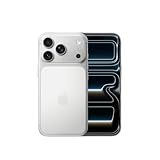
- This phone is unlocked and compatible with any carrier of choice on GSM and CDMA networks (e.g. AT&T, T-Mobile, Sprint, Verizon, US Cellular, Cricket, Metro, Tracfone, Mint Mobile, etc.).
- Please check with your carrier to verify compatibility.
- When you receive the phone, insert a SIM card from a compatible carrier. Then, turn it on, connect to Wi-Fi, and follow the on screen prompts to activate service.
- The device does not come with headphones or a SIM card. It does include a generic (Mfi certified) charger and charging cable.
For routine messaging, browsing, and streaming, both are flagship-class devices. Performance differences matter more for heavy games, video exports, and other sustained workloads, where app optimization, graphics settings, heat, and test duration all affect results. A synthetic benchmark does not predict camera processing, modem behavior, or battery life perfectly. Game selection and settings also vary between iOS and Android, so do not infer a universal gaming winner from one score.
Tom’s Guide’s benchmark and transcoding results are reported in its seven-round comparison. Apple does not market iPhone RAM in the same manner as Samsung, so RAM figures should not be treated as directly comparable performance scores.
Cameras: Samsung has more native zoom choices; iPhone suits video-first users
Camera resolution is not a stand-in for image quality. Sensor size, lenses, stabilization, processing, focus, and the scene all matter. The iPhone has three 48MP rear cameras. Apple describes optical-quality zoom ranges up to 8x in and a 16x optical-quality zoom range; that wording is not the same as a dedicated optical lens at every magnification. Samsung combines a 200MP main camera and 50MP ultrawide with separate 10MP 3x and 50MP 5x telephoto cameras, giving it more native focal-length options.
| Shooting need | Better fit | Why |
|---|---|---|
| Distant subjects and framing variety | Galaxy S25 Ultra | Separate 3x and 5x telephoto cameras provide more native focal-length flexibility. |
| Video-first capture and pro workflow | iPhone 17 Pro Max | It is the stronger choice in the cited comparison’s video assessment; Apple’s pro formats and stabilization-oriented workflow also suit creators. |
| Group selfies and changing orientation | iPhone 17 Pro Max | Its 18MP Center Stage front camera can automatically reframe groups and support different orientations. |
| Manual shooting controls and modes | Galaxy S25 Ultra | Samsung offers more camera-app flexibility and a wider set of shooting modes. |
| Low-light consistency | No universal winner | Tom’s Guide favored iPhone in some low-light comparisons, while Samsung won its overall camera category on zoom, ultrawide, and shooting flexibility. |
Main, ultrawide, and close-up photos
Samsung’s 200MP main camera does not automatically produce better everyday photos than Apple’s 48MP main camera; image processing and scene conditions determine the result. The same applies to the 50MP versus 48MP ultrawide comparison. Tom’s Guide’s overall camera category went to Samsung, citing zoom, ultrawide performance, and shooting modes, while it favored the iPhone in some low-light and selfie comparisons. That is a category-specific judgment, not a guarantee for every scene.
Zoom and portraits
If you regularly photograph children on a field, stage performances, wildlife, or architectural detail from a distance, the Galaxy’s separate 3x and 5x cameras are a practical advantage. At other magnifications, processing and cropping play a larger role; compare samples at the framing you actually use rather than relying only on the maximum zoom label. Portrait edge detection and moving-subject focus also deserve a real-world check, since the specs alone cannot establish which will deliver more keepers.
Video, selfies, and creative control
The iPhone is the safer choice for video-first buyers prioritizing consistent color, stabilization, and creator-oriented workflows. Samsung supports 4K/120 video capture and provides extensive shooting modes and manual controls. Apple’s 18MP Center Stage front camera offers flexible framing, while Samsung lists a 12MP selfie camera. Megapixels alone do not settle selfie detail or skin-tone preference. For either phone, test walking stabilization, HDR playback, audio and wind handling, close focus, and the camera app features you will use.
Camera hardware and video specifications are listed in Apple’s technical specifications and Samsung’s spec sheet. Independent category judgments are from Tom’s Guide.
Battery life and charging
In Tom’s Guide’s battery test, the iPhone 17 Pro Max lasted 17 hours 54 minutes, compared with 14 hours 27 minutes for the Galaxy S25 Ultra. This is a result from that publication’s test setup, not a forecast of every owner’s screen-on time: brightness, cellular signal, refresh rate, apps, and software version all influence endurance. It is more useful than comparing Samsung’s stated 5,000mAh capacity with an Apple video-playback estimate, because those figures are not equivalent measurements.
Samsung supports up to 45W wired charging and topped up faster in the cited short-term recharge test. The iPhone’s reported wired maximum was 35W in that comparison, while its up-to-25W wireless charging and MagSafe/Qi2.2 accessory support make magnetic charging more integrated. The Galaxy’s wireless maximum was 15W in the same comparison. Samsung’s 45W rate requires a compatible adapter and cable; actual speeds vary with charger, temperature, and charge level. Battery health also declines with use, heat, and charging habits.
Rank #3

- This phone is unlocked and compatible with any carrier of choice on GSM and CDMA networks (e.g. AT&T, T-Mobile, Sprint, Verizon, US Cellular, Cricket, Metro, Tracfone, Mint Mobile, etc.).
- Please check with your carrier to verify compatibility.
- When you receive the phone, insert a SIM card from a compatible carrier. Then, turn it on, connect to Wi-Fi, and follow the on screen prompts to activate service.
- The device does not come with headphones or a SIM card. It does include a generic (Mfi certified) charger and charging cable.
- Tested for battery health and guaranteed to have a minimum battery capacity of 80%.
Battery-test and charging comparisons are from Tom’s Guide.
Independent reader supportYour contribution helps us test, update, and keep practical guides available for everyone.Software, AI, and ecosystem switching
iPhone: continuity with Apple devices
iOS is the natural fit if your daily setup includes a Mac, iPad, Apple Watch, or AirPods. Features such as Face ID, iMessage workflows, and continuity across Apple devices reduce friction for people already invested in that ecosystem. Apple Intelligence availability depends on supported languages, region, account, and device/software requirements; verify the features you intend to use in your market.
Crashes, No Sound, or Screen Glitches?
Random freezes, missing sound and display glitches usually trace back to one bad driver. Find and replace yours safely.Free scan · under a minuteWindows Errors? Fix Them Before They Spread
Repair common Windows errors and clear accumulated junk for a smoother, more stable PC - no reinstall needed.Free scan · no reinstallGalaxy: flexibility and productivity
Samsung’s Android software offers more home-screen and launcher customization, flexible file handling and default-app choices, split-screen multitasking, Google services, Galaxy AI features, DeX, and S Pen integration. AI availability can vary by country, language, account, software version, and whether a feature uses cloud connectivity. Samsung states seven years of OS and security updates for the S25 series; Apple has not supplied a fixed support end date in the cited sources, so an exact iPhone end date should not be assumed.
Switching has costs beyond moving photos
Moving between platforms can involve messages and group-chat behavior, password-manager data, app purchases or subscriptions, cloud storage, and accessories. RCS support and behavior depend on software and carrier support. An Apple Watch requires an iPhone, so an Apple Watch owner moving to Samsung should plan for a different watch. Galaxy Watch features and compatibility should likewise be checked before moving to iPhone. Confirm cellular-band and eSIM compatibility with your carrier, especially for travel or an international model.
Samsung’s update commitment appears in its official S25 series spec sheet.
S Pen, DeX, and productivity
The Galaxy’s built-in S Pen is a decisive difference if you take handwritten notes, annotate PDFs, sign documents, make precise edits, or want to mark up a screenshot without using a finger. Some remote-camera or Air Actions functions may depend on Bluetooth and specific support, so check the feature details for the tasks you expect to use.
Samsung DeX can turn the phone into a desktop-style workspace with a compatible display and peripherals, while split-screen tools support side-by-side phone tasks. The iPhone can work with keyboards, controllers, displays, and USB-C accessories, but it has neither an integrated stylus nor a direct DeX equivalent. This is a workflow distinction: if pen input and a desktop-like interface are central to your routine, Samsung saves steps; if not, those capabilities may not justify switching ecosystems.
Who should buy each phone?
Choose iPhone 17 Pro Max if
- You already rely on a Mac, Apple Watch, iPad, AirPods, or iPhone-specific messaging and app workflows.
- You shoot a lot of video and value the cited comparison’s video and performance results.
- You want the longer battery result in Tom’s Guide’s test.
- You prefer Face ID and a more consistent iOS app experience.
- You need a 2TB storage option.
Choose Galaxy S25 Ultra if
- You frequently use 3x and 5x zoom or photograph distant subjects.
- You will use the S Pen for notes, annotation, or precision editing.
- You want DeX, split-screen multitasking, Android customization, or flexible file handling.
- You prefer a QHD+ display and camera-app controls.
- You find a meaningful discount or trade-in offer at the storage tier you need.
Neither is a good fit if
- You want a compact phone: both have 6.9-inch displays and are large devices.
- You require expandable storage or a headphone jack.
- You need an included charging adapter, low-cost repairs, or a phone chosen primarily for low price.
- You want a foldable design or a dedicated gaming phone.
Before you buy
- Compare equal configurations. Match storage, unlocked status, color availability, and carrier conditions before deciding which offer is better.
- Check the live price and generation. These phones launched in February 2025 (Galaxy S25 Ultra) and September 2025 (iPhone 17 Pro Max). Promotions change, and a newer Galaxy Ultra may be available; compare that model and its current pricing if buying now.
- Confirm network compatibility. Check carrier bands, SIM/eSIM arrangements, and international roaming support for the exact regional model.
- Plan the switch. Verify watch compatibility, messaging, password transfer, app purchases, cloud costs, and accessories before leaving your current platform.
- Budget the full setup. Include charger, case, protection plan, storage, and repair exposure—not only the phone price.
For another view of the matchup’s camera and performance context, see TechRadar’s comparison.
Quick Recap
Product prices and availability are accurate as of the date/time indicated and are subject to change. Any price and availability information displayed on Amazon at the time of purchase will apply.

