
Quick wins for a faster PC:
Fix the driver behind crashes, sound loss and screen glitchesFind Drivers →Clear out junk files and repair common Windows errorsFree Scan →Scan for outdated or missing drivers - takes under a minuteDriver Scan →IoT Tech Expo brings Edge AI, IoT connectivity and embedded engineering together around one architectural idea: collect data in connected devices, interpret it near its source, then coordinate equipment and operations across networks and software. Its agenda applies that model to factories, supply chains, infrastructure, security and physical AI.
What does IoT Tech Expo mean by convergence?
The convergence is not simply putting AI, IoT and embedded technology in the same product. It is connecting their roles in an operational system:
- Sensors and embedded devices measure conditions and control equipment. Their limited power, memory and processing capacity shape what they can do locally.
- Edge processors analyze data close to where it is produced. Local inference can support decisions without waiting for a cloud round trip, which matters when response time or connectivity is a concern.
- Networks and cloud services connect devices, coordinate fleets and support broader analysis. Protocol choices involve trade-offs among power consumption, range, throughput and interoperability.
- Industrial software turns sensor readings and model outputs into automation, maintenance and safety decisions.
The official IoT Tech Expo agenda describes the wider shift this way: “AI is undergoing a fundamental paradigm shift from centralized cloud computing to distributed intelligence at the edge and ultimately to Physical AI, where intelligence is embedded directly within the physical world.” The practical question is how much intelligence belongs in a device, at an edge system or in cloud services—and how those layers work together.
How does Edge AI fit into industrial IoT?
In an industrial IoT system, connected equipment can generate data about its condition and operation. Edge processing can interpret selected signals locally, while networked and cloud systems coordinate information across sites or fleets. That can support predictive maintenance, production automation and workflow optimization. Whether a particular deployment improves uptime, cost or safety depends on its implementation; the event materials do not provide comparable performance measurements.
Do these 3 things before closing this tab:
1Repair Windows errors before they cause bigger problems2Fix the driver behind crashes, sound loss and screen glitches3Clear out junk files and repair common Windows errors#1 Best Overall
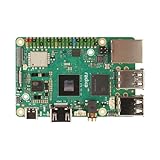
- POWERFUL COMPUTING: Advanced single board computer featuring high-speed LPDDR5 memory for superior processing capabilities and edge AI computing performance
- CONNECTIVITY: Multiple USB ports, HDMI output, and Ethernet connectivity provide versatile interface options for various applications
- COMPACT DESIGN: Space-efficient circuit board layout integrates powerful computing components in a single compact form factor
- DEVELOPMENT READY: Ideal platform for edge AI development, programming, and prototyping with comprehensive hardware interfaces
- EXPANDABILITY: Features multiple GPIO pins and standard connectors enabling extensive hardware expansion possibilities
EE Times described IoT Tech Expo Global 2026 panels addressing autonomous factories, AI-driven automation, predictive maintenance and workflow optimization. The organizations named in that coverage included Analog Devices, BMW, Merck Life Science, Saint-Gobain, AstraZeneca, Rolls-Royce and Thermo Fisher Scientific. These are examples of the industries and companies represented in the program, not evidence that every organization uses the same architecture or achieved a particular result.
What does embedded intelligence add?
Embedded systems are the computing and control layer built into devices and equipment. Adding intelligence there can make an IoT endpoint do more than transmit raw readings: it can help interpret local conditions or participate in a time-sensitive control loop. The constraints are equally important. Compute capacity and energy are limited in many embedded devices, and software must be built, deployed and secured across the device lifecycle.
The official agenda includes sessions on agentic tools that write, compile, flash and debug microcontroller software, as well as cloud-to-physical AI and embedded-device security. These topics link development workflows to the physical devices that must ultimately run the software; they do not remove the engineering need to validate and secure that software.
Rank #2

- [High performance] Quad-core ARM SoC up to 1. 8GHz with 3GB RAM- The Tinker Edge R features the Rockchip RK3399Pro SoC and Mali - T764 GPU along with 2GB of Dual Channel LPDDR4 memory for system, 1 GB LPDDR3 memory for NPU and 16GB eMMC flash
- [Gigabit Class networking]Tinker Edge R features a high speed GB LAN port for true Gigabit Class networking throughput along with 3x USB3.2 Gen1 Type-A. It also features onboard Wi-Fi & Bluetooth for robust IoT & Network connectivity
- [Open-source]The board will come with fully open-source kernel and support for multiple APIs, including OpenGL, Vulkan, OpenCL, OpenVX, TensorFlow Lite, Android NN, and Caffe
- [HD Audio & UHD video support] It supports 192/24bit HD Audio playback with automatic Audio jack detection as well as accelerated HD & UHD ( 4K ) video playback and supports HDMI CEC for seamless power on & off configurations
- [WiKi]For more information please refer to the product description, any technical issues after purchase please contact with our tech-support team: click "WayPonDEV" and ask a question. Package Content: 1x Tinker Edge R (3GB+16G eMMC); 2x Wi-FiVBT antenna cable; 1x Stand offset(4xScrew+4xHex); 2x Camera MIPI Convert cable (22P to 15P); 1 x Shielding bag; 1 x Quick start guide
Which IoT Tech Expo tracks cover digital twins and physical AI?
The official North America program groups the convergence across several connected subjects:
What’s actually slowing this PC down?
Pick the symptom - the matching free tool is one click away.
- Edge Computing and AIoT Driving Real-Time Intelligence focuses on distributed processing and AI-enabled connected systems.
- Industrial IoT & Digital Twins connects industrial data and digital representations of equipment or processes.
- Embedded Systems in Action addresses the device-level engineering that puts computation into products and infrastructure.
- The Future of IoT Connectivity, Infrastructure & Security covers networks, connected-system foundations and protection.
- Physical AI considers intelligence embedded in systems that interact with the physical world.
Related connectivity sessions extend the discussion to 5G Advanced and future 6G, hybrid satellite-terrestrial networks, deterministic infrastructure for autonomous buildings and cognitive-city architectures. These are agenda themes, not a guarantee that every technology will be demonstrated or deployed at the event.
What real-world settings illustrate the agenda?
Factories and supply chains
The Global 2026 program, as reported by EE Times, connected AI-driven automation and predictive maintenance with factory and supply-chain workflows. The architectural challenge is to turn data from equipment and processes into timely decisions while coordinating systems beyond an individual machine.
Rank #3

- Supports access to online large model platforms and includes Edge Impulse object detection demo for real-time multi-object recognition
- Equipped with Xtensa dual-core LX7 processor (up to 240MHz), 8MB PSRAM, 16MB Flash, and dual-mode WF + BT LE
- Dual-microphone array with noise reduction and echo cancellation for high-quality voice processing
- Integrated audio input and output module, supporting AI speech interaction and voice recognition applications
- Onboard camera interface (DVP) and SPI / QSPI display interface for image capture, recognition, and external display connection
Embedded devices and physical AI
Microcontroller software sessions show one route from AI tools to physical systems: software must be created, compiled, flashed to a device and debugged. Cloud-to-physical AI sessions address the broader connection between centralized services and systems acting in the physical environment.
Connectivity where conventional links are difficult
EE Times’ event preview cited Airbus Helicopters on airborne connectivity, Bluetooth tracking labels from Blecon and low-Earth-orbit satellite networks from MTN. Together, these examples point to different connectivity needs: communicating from aircraft, tracking items with labels and extending network reach through satellite links.
Secure and autonomous infrastructure
Security sessions include kernel-level protection for connected devices, hardware roots of trust, secure boot and encryption. Other agenda topics include autonomous buildings and cognitive-city systems. These subjects meet at a lifecycle problem: infrastructure must remain connected and capable while resisting compromise from device startup through ongoing operation.
Rank #4
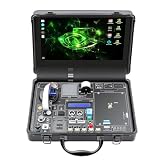
- 30-in-1 No-Solder Sensor Board, Plug and Play: Integrates 30 functional sensors including temperature & humidity, ultrasonic ranging, gas and motion sensors. Innovative common board design requires no soldering or complex wiring, and comes with a full set of accessories like 128G SD card, adapter board and acrylic mounting plates for zero-threshold experiments
- 8MP Gimbal Camera & Dual Servos for Professional Visual AI: The Starter Kit is equipped with an IMX219 8MP monocular camera and a dual-servo gimbal, supporting face and target tracking, and is ideal for AI edge computing scenarios such as intelligent monitoring, robot navigation, and automated recognition
- 38 Step-by-Step Python Tutorials, From Beginner to Practical Application: The Jetson Orin Nano Starter Kit comes with 38 well-designed Python tutorials progressing from basic programming to vision practice, covering all key knowledge of sensor control, embedded development and AI visual recognition for both beginners and advanced learners
- 11.6-inch IPS HD Screen & AI Voice Interaction System: Built-in 1366*768 resolution IPS screen eliminates the need for an external monitor, enabling one-device experimentation and visual feedback. The exclusive AI voice interaction system supports intelligent Q&A and voice command control for natural human-computer dialogue
- Rich Expansion Interfaces & Portable All-in-One Design: Features 2x I2C, 1x UART and 2 IO expansion interfaces to meet personalized experiment expansion needs; a custom carrying case integrates all components (11.81×7.87×3.94 inch), allowing AI experiments and demonstrations anytime and anywhere
How should organizations compare edge, cloud and connectivity choices?
There is no single best placement for every workload. A useful evaluation starts with the system’s response requirements and constraints, then checks how the design behaves at fleet scale.
| Decision axis | What to assess |
|---|---|
| Latency | Whether the system can wait for a cloud round trip or needs local inference and response. |
| Power and compute | Whether the device or edge processor has enough energy and processing capacity for its assigned work. |
| Connectivity resilience | How operations behave when a network link is intermittent, unavailable or costly to maintain. |
| Interoperability | Whether selected protocols fit the required power consumption, range and throughput while working with the rest of the system. |
| Security lifecycle | How devices are protected at startup, during operation and as software is updated or maintained. |
| Deployment scale | Whether provisioning, monitoring and maintenance remain manageable across many devices and sites. |
| Operational outcome | Which measurable result—such as a maintenance, production or safety objective—would demonstrate that the system is useful. |
Which edition is next?
IoT Tech Expo dates vary by region and edition. As of October 3, 2026, the two 2026 dates below have passed; the official agenda presents a later North America edition in June 2027.
| Edition | Dates and venue | Status as of October 3, 2026 |
|---|---|---|
| Global 2026 | February 4–5, 2026, at London Olympia | Past; scheduled dates reported by EE Times. |
| North America 2026 | May 18–19, 2026, at the San Jose McEnery Convention Center | Past; announced by the EDGE AI FOUNDATION and also listed by an event directory. |
| North America 2027 | June 16–17, 2027 | Presented on the official agenda page; confirm venue and registration details with the organizer. |
For registration, exhibition or sponsorship, use the official IoT Tech Expo/TechEx event site and check the region and edition before acting. The agenda’s named speakers include Mark Vena, CEO and Principal Analyst at SmartTech Research; Sungho Kim, CEO of Hyundai Global Software Centre; Vivek Jain, Head of Wireless Sensor and Embedded Systems at Bosch Research; and Ed Doran, VP of Strategy at the EDGE AI FOUNDATION.
The Tool Desk
Outbyte Driver Updater FREEScan for outdated or missing drivers - takes under a minuteDriver Scan →Outbyte PC Repair FREEClear out junk files and repair common Windows errorsFree Scan →Quick Recap
Product prices and availability are accurate as of the date/time indicated and are subject to change. Any price and availability information displayed on Amazon at the time of purchase will apply.

