
iTechGuides is reader-supported. When you buy through links on our site, we may earn an affiliate commission. As an Amazon Associate I earn from qualifying purchases. Learn more
Short answer: An inverter air conditioner uses an electronic drive to vary compressor speed, while a non-inverter model normally runs a fixed-speed compressor that switches fully on and off. Variable-speed control can follow the room’s changing heat load, generally giving steadier temperatures, lower noise at part load and better efficiency during long operating periods. A non-inverter unit can still be the sensible choice for short, occasional use or a tightly limited budget.
The right decision depends on more than the word “inverter.” Correct capacity, the efficiency metric used in your country, installation quality, electricity tariffs and expected hours of operation determine whether the higher purchase price is worthwhile.
What is the difference between inverter and non-inverter AC?
The compressor is the key difference. It is the component that raises refrigerant pressure so the system can move heat from indoors to outdoors.
| Characteristic | Inverter AC | Non-inverter AC |
|---|---|---|
| Compressor control | Electronic drive varies motor speed and cooling output | Fixed-capacity compressor controlled by start-stop cycling |
| Part-load operation | Slows down as the room approaches the set temperature | Runs at full capacity, then shuts off until the thermostat calls again |
| Temperature behavior | Usually steadier, with smaller fluctuations | Wider swings around the set point are more likely |
| Noise | Often quieter when operating at reduced speed | Full-speed operation and repeated starts can be more noticeable |
| Upfront price | Often higher, depending on market and model | Often lower, depending on market and model |
| Typical fit | Long runtimes, bedrooms and comfort-sensitive spaces | Short or occasional use, or a budget-first replacement |
Both types use the same basic refrigeration cycle: indoor and outdoor coils, refrigerant, fans, controls and heat transfer. Improvements in the compressor, fan motors, heat-transfer surfaces and controls all affect efficiency, so “inverter” is not a substitute for checking the complete specification.
#1 Best Overall

- Multi-Season Comfort - Midea 8000 BTU window air conditioner with heat is better than standard ac units. It will beat the heat in summer with powerful cooling and dehumidification and keep you warm through the fall with supplemental heat. Best for large rooms up to 350 square feet. NOTE: heat pump function works when outside temp> 41°F.
- Easy To Use – This air conditioner and heat unit comes with an LED display, 5 Modes (Heat, Auto, Cool, Dry, Fan), 3 speed settings (Auto/H/M/L), 24-hr Timer, and ECO energy saver. The Swing button adjusts the louvers up/down to direct the airflow. Wireless control enabled window ac with heat unit from anywhere with the SmartHome App, or with your voice via Alexa and Google Assistant. All functions can be set via the control panel, remote control, and app or voice assistant.
- Save Energy Being Cool – Save on energy costs and enjoy ultimate comfort with this energy star certified unit. This energy efficient air conditioner unit is engineered with variable-speed inverter technology that will quickly cool your bedroom or apartment space while using considerably less electricity; up to 35% energy savings compared to the Energy Conservation Standard. Washable filter is easily accessed from front panel for regular cleaning to maintain peak performance.
- Ultra Low Noise Performance – This ac window unit operates at a noise level as low as 45 dBA. It’s such a quiet air conditioner that you will barely notice it, even when it’s on high. Enjoy your Zoom call, watch your favorite TV show, have a conversation. This ac unit for bedroom also creates just the right amount of white noise so you can get some rest.
- Install Specs – This window air conditioner is designed to fit double hung windows with opening widths of 24 to 38.5 inches. Lower sash must open sufficiently to allow a clear vertical opening of 14.5 inches. AC window unit measures 19.41"W x 22.17"D x 13.9"H. Included components: 8000 btu window air conditioner, remote control, installation kit. This ac heater combo window unit is as a close as you can get to a mini split a/c. You may like it so much you just might buy two!
How an inverter compressor works
An inverter drive changes the electrical frequency supplied to the compressor motor. When the room is hot or the door has been opened repeatedly, the compressor can ramp up to remove heat quickly. Once the load falls, it can slow to maintain the set point instead of stopping completely. The lower-speed state avoids many abrupt restarts and lets capacity track demand more closely.
How a non-inverter compressor works
A conventional compressor has essentially two states: on at its rated capacity or off. The thermostat starts it when the room rises above the control band and stops it after the target is reached. Singapore’s National Environment Agency defines a non-inverter split air conditioner as one that varies compressor output by start-stop operation. The compressor therefore delivers the same large burst of cooling each time, even when the room needs only a small amount.
Does an inverter AC really save electricity?
It can, particularly when the air conditioner runs for many hours or spends much of that time maintaining an already-cool room. A variable-speed compressor avoids some of the losses associated with repeatedly starting and stopping a full-capacity compressor and can operate at an efficient low output once the initial heat load is gone.
That mechanism does not produce one universal savings percentage. Actual consumption depends on outdoor temperature, humidity, insulation, sun exposure, thermostat setting, airflow, room size, maintenance and how long the unit runs. A poorly sized inverter can use more electricity than a correctly sized conventional unit, and a non-inverter used for only a few short sessions may never provide enough operating hours for an inverter’s purchase premium to matter.
Use ratings instead of headline percentages
Compare the efficiency metric required in your market and for your equipment type. The U.S. Department of Energy identifies SEER2 as the current seasonal metric for central air-conditioning testing. Room-unit labels and metrics vary by jurisdiction and product category, so read the local label rather than converting a number from another country.
Seasonal ratings are useful because they represent performance over a range of conditions, not just one laboratory point. They still are not a promise of your household’s bill. To make a practical estimate, note the rated annual or hourly energy use, multiply it by realistic operating hours and apply your electricity tariff. Use a range of hours if your schedule changes by season.
A qualified example of a bill figure
ENERGY STAR and the U.S. Environmental Protection Agency used an assumption in 2020 that a certified room air conditioner would save about $7 per year compared with a non-certified room unit over an average nine-year life. That figure compares certified and non-certified room ACs; it is not an inverter-versus-non-inverter average, is not a measured result for every household and is not a guarantee. Treat it as a program example, not a payback calculation for a specific purchase.
Do these 3 things before closing this tab:
1Repair Windows errors before they cause bigger problems2Fix the driver behind crashes, sound loss and screen glitches3Clear out junk files and repair common Windows errorsWhich AC gives better comfort?
Temperature stability
Inverter control can make a room feel more even because the compressor trims output as the target is approached. Instead of a sequence of cold bursts followed by a warm drift, the system can spend longer periods at a low capacity. This is particularly noticeable in bedrooms, nurseries, offices and rooms where occupants dislike frequent temperature swings.
Humidity removal
Humidity control depends on coil temperature, airflow, runtime and the controls used by a particular model. A variable-speed system that runs steadily can have more opportunity to remove moisture, but no inverter label guarantees a dry room. Capacity selection is critical: an oversized unit may cool the air rapidly and shut off before removing enough moisture, leaving the room damp or clammy. ENERGY STAR warns that an oversized air conditioner costs more, wastes energy and does not provide better cooling.
Rank #2
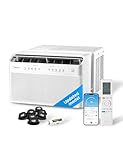
- ULTRA QUIET - The U-shape design of Midea U Smart Inverter air conditioner uses your window to block noise outside. The highly-efficient inverter system warrants ultra-low noise and vibration, 10x quieter than traditional units with operation as low as 32 dBA. Cooling Watts: 710W, Rated Cooling Amps (AHAM): 8.78.Airflow (CFM) Roomside (hi low): 215/150. Refrigerant: R32.
- MORE THAN 37% ENERGY SAVINGS - With the advanced DC Inverter technology, Midea U window air conditioner achieves over 35% energy savings compared to other traditional units. It is the first window AC to obtain the ENERGY STAR Certification.
- SMART CONTROL - Midea U Smart Inverter air conditioner is Wi-Fi enabled and can be controlled from anywhere using the SmartHome app on iOS or Android. You can also use voice commands throughout your house, office, or apartment using Alexa or Google Assistant devices.
- FLEXIBLE WINDOW OPENING - The U-shaped design allows your window to open, bringing fresh air into your home and maintaining more of your view when the window air conditioner is installed. When the window is closed, the Anti-Theft Mechanism locks the window for added safety.
- ROBUST INSTALLATION - Install the included quick-snap bracket, set the air conditioner on the bracket, and secure the sidearms. Then you are all done and ready to enjoy. Available for single-hung or double-hung windows with width 22"-36", minimal height at 13.75".
Noise
Inverter models are often quieter at low output because the compressor and outdoor fan can slow down after the initial pull-down. Non-inverter units may be more noticeable when the compressor starts at full speed, stops, and starts again. Indoor fan settings, mounting, vibration isolation, building construction and the specific sound rating can outweigh the compressor type, so check the published indoor and outdoor noise figures when available.
How do you choose the right AC size?
Capacity should be selected from the room’s heat load, not from a rule such as “bigger is always safer.” Measure floor area and consider ceiling height, window area and direction, direct sun, insulation, number of occupants, appliances and the climate. Use a qualified sizing calculation where possible.
The Tool Desk
Outbyte Driver Updater FREEFix the driver behind crashes, sound loss and screen glitchesFind Drivers →Outbyte PC Repair FREERepair Windows errors before they cause bigger problemsFix Now →- Measure the space. Record length, width and ceiling height, and note whether the room is open to adjacent areas.
- Assess heat sources. Count regular occupants and heat-producing equipment, and identify large sun-exposed windows or uninsulated walls.
- Check the manufacturer’s capacity range. For an inverter, look at both rated and minimum output; for a non-inverter, use the rated capacity and the recommended room range.
- Account for humidity and climate. A hot, humid location may need different sizing and control behavior than a dry climate with the same floor area.
- Have the installer verify the selection. Ask what assumptions were used and whether doors, adjoining spaces and ventilation were included.
An oversized unit can reach the thermostat quickly, then cycle off before it has removed enough latent heat. An undersized unit may run continuously and still fail to reach the target on the hottest days. Inverter modulation helps an appropriately sized system handle changing loads; it does not correct a fundamentally wrong capacity.
What should you compare on the energy label?
Start with the label and test standard that apply where you live. For central systems in the United States, SEER2 is the current seasonal metric identified by the Department of Energy. Other regions may use different seasonal or annual measures, and room air conditioners may have a separate label format. Compare like with like: the same equipment category, voltage, climate assumptions and test method.
Certification and directory checks
Where available, verify the exact model in the ENERGY STAR product listings and the Air-Conditioning, Heating, and Refrigeration Institute directory. A directory check can confirm that the tested combination and efficiency claim correspond to the model number you were quoted. Do not assume that two units with similar marketing names have identical ratings.
Read the fine print
- Confirm whether the stated efficiency is seasonal or a single-point value.
- Check whether the rating applies to a complete matched system or only one component.
- Note the rated voltage, frequency and operating conditions.
- Look for minimum and maximum outdoor-temperature limits.
- Check standby or off-mode consumption if the unit remains connected continuously.
Is an inverter AC worth the extra money?
There is no universal payback period because purchase premiums, electricity prices and usage patterns differ by market. The premium is easier to justify when the unit operates for long daily periods, electricity is expensive, stable temperature matters or the room is occupied overnight. A lower-priced non-inverter can be economically sensible in a guest room, workshop or rental where cooling is brief and irregular.
Calculate a local break-even estimate
- Write down the installed prices of comparable inverter and non-inverter models, including brackets, piping, wiring, drainage, labor and any electrical upgrades.
- Record each model’s rated or estimated annual energy use from the applicable label.
- Multiply the difference in annual kilowatt-hours by your current tariff. Use low, typical and high operating-hour scenarios.
- Divide the installed-price difference by the estimated annual bill difference. Present the result as a range, not a guaranteed date.
- Test the result against non-financial factors such as noise, comfort and expected maintenance access.
Do not use a generic claim such as “inverters save 30 percent” as a substitute for this calculation. The percentage can change substantially with climate, runtime and load.
When is a non-inverter AC the better choice?
- Short, occasional operation: If cooling is needed for a few hours on isolated days, the operating-energy advantage may be too small to recover a higher purchase price.
- Strict upfront budget: A conventional unit may leave more room for correct installation, wiring and drainage, which are essential to safe operation.
- Simple replacement: If an existing installation and electrical supply are compatible, a fixed-speed model may reduce initial complexity, subject to local code and installer advice.
- Availability concerns: In a location where qualified technicians or replacement parts for variable-speed electronics are difficult to obtain, confirm service support before buying.
These are decision factors, not a claim that non-inverter units are inherently unreliable or inefficient. Compare the actual ratings and warranty terms of the models available to you.
Independent reader supportYour contribution helps us test, update, and keep practical guides available for everyone.When should you favor an inverter AC?
- Long daily runtimes: A system that runs through most of the afternoon or overnight has more opportunity to benefit from efficient part-load operation.
- Bedrooms and quiet rooms: Lower-speed operation can reduce the prominence of compressor starts and full-speed cycling.
- Stable comfort: Variable output is useful when occupants are sensitive to temperature swings.
- Variable heat loads: Rooms that move from high afternoon sun to a light evening load can benefit from capacity that follows demand.
Choose a model whose minimum output, controls and humidity behavior suit the room; an inverter badge alone does not establish those details.
Rank #3

- ULTRA QUIET - The U-shape design of Midea U Smart Inverter AC uses your window to block noise outside. The highly-efficient inverter system warrants ultra-low noise and vibration, 9x quieter than traditional units with operation as low as 32 dBA.
- MORE THAN 37% ENERGY SAVINGS - With the advanced DC Inverter technology, Midea U window air conditioner achieves over 37% energy savings compared to other traditional units. It is the first window AC to obtain the ENERGY STAR Certification.
- SMART CONTROL - Midea U Smart Inverter air conditioner is Wi-Fi enabled and can be controlled from anywhere using the SmartHome app on iOS or Android. You can also use voice commands throughout your house, office, or apartment using Alexa or Google Assistant devices.
- FLEXIBLE WINDOW OPENING - The U-shaped design allows your window to open, bringing fresh air into your home and maintaining more of your view when the window air conditioner is installed. When the window is closed, the Anti-Theft Mechanism locks the window for added safety.
- ROBUST INSTALLATION - Install the included quick-snap bracket, set the air conditioner on the bracket, and secure the sidearms. Then you are all done and ready to enjoy. Available for single-hung or double-hung windows with width 22"-36", minimal height at 13.75".
Installation costs and practical requirements
Compare complete installed quotations rather than appliance prices alone. Ask each installer to itemize refrigerant pipe length, insulation, brackets or supports, condensate drainage, electrical cable and protection, wall penetrations, sealing, commissioning and removal of the old unit. A high-efficiency appliance can lose much of its expected performance if the refrigerant circuit is incorrectly sized, poorly insulated or improperly charged.
What’s actually slowing this PC down?
Pick the symptom - the matching free tool is one click away.
Electrical and drainage checks
- Confirm that the circuit, breaker and isolator meet the unit’s voltage and current requirements.
- Ensure outdoor airflow is not blocked by a wall, enclosure or debris.
- Provide a continuous, correctly sloped condensate drain or approved pump arrangement.
- Seal penetrations against rain, insects and air leakage.
- Have the installer test operating pressures, temperatures, drain flow and controls before sign-off.
Maintenance and operating practices
Clean or replace filters at the interval specified for your dust level and usage. Restricted airflow makes the fan work harder, reduces heat transfer and can cause coils to freeze. ENERGY STAR notes that filter reminders can help keep equipment operating efficiently. Keep outdoor coils clear, inspect the drain and arrange professional service when the manufacturer requires it.
Set a realistic temperature rather than trying to cool the room instantly. Keep doors and windows closed while cooling, shade sun-exposed windows where practical and use the fan setting that provides adequate comfort without unnecessary airflow. Do not cover or obstruct the outdoor unit.
Common buying mistakes and how to avoid them
Choosing by inverter label alone
Two inverter models can have different seasonal ratings, minimum outputs, noise levels and control features. Compare the complete label and published specifications.
Oversizing “for faster cooling”
Excess capacity can produce short cycles, poor dehumidification and higher purchase cost. Ask for a load-based recommendation instead.
Recommended Free Tools
Ignoring installation quality
Incorrect piping, inadequate insulation, blocked airflow or a weak drain can undermine efficiency and comfort. Select an installer who documents commissioning checks.
Assuming a laboratory rating equals a household bill
Seasonal metrics provide a consistent comparison under defined conditions. Your weather, thermostat, insulation and operating schedule determine actual consumption.
Using an old efficiency metric without checking the date
Testing rules change. For U.S. central equipment, use current SEER2 information rather than an outdated SEER figure, and follow the label rules in your own jurisdiction.
Decision guide: which type fits your situation?
| Your situation | More suitable starting point | Why |
|---|---|---|
| Bedroom used every night | Inverter | Long runtime, steadier temperature and potentially lower low-load noise |
| Living room cooled most afternoons | Inverter, if the installed premium is reasonable | Repeated part-load operation creates an opportunity for efficiency gains |
| Guest room used a few times a month | Non-inverter may be adequate | Short runtime may not justify a higher initial price |
| Very humid climate | Correctly sized model of either type; evaluate controls carefully | Humidity removal depends on sizing, coil operation and runtime, not the label alone |
| Uncertain electrical supply or service support | Whichever model has verified local installation and parts support | Reliability depends on a maintainable, code-compliant installation |
Bottom line
Buy an inverter AC when you expect long or frequent operation and value quiet, stable comfort; its variable-speed compressor can reduce part-load energy use. Choose a non-inverter when use is brief or occasional and the lower installed price matters more. In either case, size the unit correctly, compare the current local efficiency label, verify the exact model in recognized directories where available, and include installation and maintenance in the decision.
Quick Recap
Product prices and availability are accurate as of the date/time indicated and are subject to change. Any price and availability information displayed on Amazon at the time of purchase will apply.

