
“Intel’s latest 22nm Xeon” refers to a 2013-era expansion of Intel’s data-center processor lineup, not to a current Xeon generation. Intel named the Xeon E3 v3 family in that announcement and said it planned to refresh Xeon families across the data center on 22nm. The headline does not identify one specific processor SKU.
What Intel announced in 2013
Intel’s 2013 product information described a broader move to 22nm data-center processors. The Xeon E3 v3 family was one of the named product lines. A related Intel announcement said the company planned to refresh Xeon processor families across the data center on 22nm, with better performance per watt and additional features.
That wording records Intel’s launch plan and positioning at the time. It is not evidence that every Xeon model, specification, or performance claim applied to one particular E3 v3 processor.
Which processor does “22nm Xeon” identify?
No single model can be identified from the headline alone. “Intel Xeon E3 v3 processor” is the most direct historical family description supported by the 2013 announcement. A purchase decision would still require the exact model number, socket, firmware support and system configuration.
Free tools Windows power users keep installed
One-click scans. No signup required.
#1 Best Overall

- Intel Xeon E5-2699 V4 Docosa-core (22 Core) 2.20 Ghz Processor - Socket Lga 2011-v3 - 5.50 Mb - 55 Mb Cache - 64-bit Processing - 14 Nm - 145 W
Why the model number matters
- Different E3 v3 models can have different core counts, clock speeds, cache sizes and thermal limits.
- The server or workstation must support the processor’s socket, chipset, memory type and firmware revision.
- Historical stock and compatibility vary by OEM system; neither current retailer inventory nor a universal compatibility list is established here.
Is a 22nm Xeon still Intel’s latest?
No. The 22nm Xeon announcement is historical context. Intel’s current catalog includes Xeon 6 E-core processors intended for high-density, throughput-oriented workloads, with examples reaching up to 144 cores. Those processors belong to a much newer platform and should not be treated as versions of the 22nm E3 v3 family.
How later Xeon generations compare
| Family or reference point | Launch or catalog context | Process/generation wording | Core and memory information | What the evidence establishes |
|---|---|---|---|---|
| Xeon E3 v3 | 2013 product announcement | 22nm-era Xeon family | Exact values depend on the specific SKU; not stated in the announcement summary | Intel named the family among its new data-center product information |
| 5th Gen Xeon (Emerald Rapids) | Intel launch announcement, 2023 | Later Xeon generation, not 22nm E3 v3 | Up to 64 cores per CPU; eight DDR5 memory channels; DDR5 up to 5,600 MT/s | Intel’s stated platform reference point for this generation |
| Xeon 6 E-core | Current Intel catalog, accessed 2026 | Current Xeon 6 catalog family | Catalog examples reach up to 144 cores | Intel positions these processors for high-density and throughput-oriented workloads |
The table compares product eras, not interchangeable processors. Core counts, memory support and platform requirements cannot be used to upgrade an older E3 v3 system without checking the complete server design.
Rank #2
![Intel Xeon Silver [3rd Gen] 4310 Dodeca-core [12 Core] 2.10 GHz Processor - OEM Pack](https://m.media-amazon.com/images/I/31KUwTUW75L._SL160_.jpg)
What “out of the gate” meant for data centers
Intel’s 22nm expansion was intended to move more of its data-center portfolio onto the newer process technology available at the time. Intel associated the refresh with performance-per-watt improvements and other features, but the cited announcement does not provide an independent, apples-to-apples Xeon benchmark for a specific E3 v3 SKU.
Later Intel performance statements should be kept separate. For example, the company’s 5th Gen Xeon material describes AI, cloud, network and edge workloads and quotes Intel executives about performance and total cost of ownership. Those are vendor claims about Emerald Rapids-era products, not test results for 22nm Xeon E3 v3 processors.
Rank #3
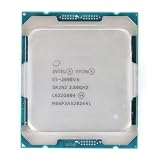
- Total Cores 14
- Total Threads 28
- Processor Base Frequency 2.60 GHz
- Max Turbo Frequency 3.50 GHz
- Sockets Supported LGA2011-3
How to evaluate a historical E3 v3 system
- Identify the exact processor. Record the full Xeon E3 v3 model number rather than relying on “22nm Xeon.”
- Check the server or workstation model. Use the manufacturer’s processor-support list and required BIOS or firmware version.
- Verify the platform. Confirm socket, chipset, supported memory, maximum capacity, storage interfaces and expansion requirements.
- Match the workload. E3 v3 systems may fit legacy services, small virtualization deployments or compatible workstation tasks, but they lack the memory and core-density characteristics of current Xeon platforms.
- Check supply before buying. Historical processors may be used or refurbished, and listing condition, warranty and return terms can differ substantially.
When a newer Xeon is the better choice
Choose a current platform when the deployment needs substantially more parallel compute, modern DDR5 memory, current security and management features, or a supported upgrade path. Intel’s 5th Gen Xeon reference point offers up to 64 cores per CPU, eight DDR5 channels and up to 5,600 MT/s DDR5; current Xeon 6 E-core catalog entries extend density further, with examples up to 144 cores.
A 22nm E3 v3 can still make sense only when its lower acquisition cost and existing system compatibility outweigh the limits of an older platform. Compare the complete server, not just the processor label: power draw, memory capacity, storage, remote management, software support and replacement availability determine the practical value.
Quick Recap
Best Value

- Part Number Identification: CD8069504194501 for easy reference and compatibility verification
- CPU Series Specification: 2nd Generation Intel Xeon Scalable processor from the Gold 6000 series
- Processor Frequency: 3.10GHz base clock speed with 18 cores for high-performance computing tasks
- Package Type: OEM tray processor without retail packaging
- Cooling Device Notice: Processor only, cooling device not included and must be purchased separately
Rank #4

- Manufacturer: Intel CPU Frequency: 2.20 GHz CPU Max Turbo Frequency: 3.60 GHz Number of Cores: 22 Threads: 44 Cache: 55 MB Intel Smart Cache Number of UPI Links: 0 Lithography: 14 nm Thermal Design Power: 145 W Memory Types: DDR4 1600/1866/2133/2400 Max Memory Size: 1.5 TB Max # Memory Channels: 4 Sockets Supported: FCLGA2011-3 E5-2699v4
Product prices and availability are accurate as of the date/time indicated and are subject to change. Any price and availability information displayed on Amazon at the time of purchase will apply.

