
Quick wins for a faster PC:
Repair Windows errors before they cause bigger problemsFix Now →Scan for outdated or missing drivers - takes under a minuteDriver Scan →Clear out junk files and repair common Windows errorsFree Scan →Intel XeSS 3 combines AI upscaling, frame generation and Xe Low Latency. Its headline “up to 4×” figure refers to displayed frames: Multi-Frame Generation (MFG) can insert as many as three AI-generated frames between rendered frames. It does not mean a graphics card renders four times as much game content, and it is not a guaranteed fourfold increase in native performance.
What Intel XeSS 3 includes
XeSS 3 is a group of graphics features rather than a single upscaler. Intel’s developer documentation describes three parts:
| Feature | What it does |
|---|---|
| XeSS Super Resolution | Uses AI upscaling to reconstruct an image for display from a lower-resolution rendered input. |
| XeSS Frame Generation | Generates intermediate frames between rendered frames. |
| Xe Low Latency | Provides a low-latency component for supported XeSS implementations. |
XeSS 3’s distinguishing addition is Multi-Frame Generation on Intel hardware. Intel says the feature can generate up to three frames for each rendered frame. XeSS components may be available on compatible non-Intel devices where supported, but Intel identifies MFG as an Intel-hardware feature.
What “up to 4×” means
With one game-rendered frame followed by three generated frames, the display can show four frames over the interval in which the GPU rendered one. Intel’s Gaming Access description calls this “up to 4× the frames,” and Intel’s Arc gaming-technologies explanation describes inserting up to three generated frames between two rendered frames—moving from a 1:1 to a 3:1 generated-to-rendered ratio.
#1 Best Overall

- Next-Gen Intel Arc Graphics: Powered by Intel Arc A580 GPU with Intel Xe HPG microarchitecture, featuring 384 XMX engines for enhanced AI acceleration and content creation.
- High-Performance Memory: 8GB GDDR6 on a 256-bit interface running at 16 Gbps, delivering excellent bandwidth for 1440p gaming and creative workloads.
- Factory Overclocked: Engine clock set at 2000 MHz out of the box, providing optimized performance for smooth gameplay and multimedia tasks.
- Advanced Dual-Fan Cooling: Features a dual-fan design with striped axial fans and an ultra-fit heatpipe for efficient thermal management. 0dB Silent Cooling stops fans completely at low temperatures for silent operation.
- Durable Construction: Includes a stylish metal backplate for enhanced PCB rigidity and a premium aesthetic, backed by ASRock's Super Alloy components for long-term reliability.
| Intel’s figure | What it describes | What it does not establish |
|---|---|---|
| Up to 3 AI-generated frames per rendered frame | The maximum generated-frame count Intel states for XeSS 3 MFG. | That every game, GPU or settings combination will reach that maximum. |
| Up to 4× the frames | Displayed frame output when three generated frames are added for each rendered frame. | A fourfold increase in native rendering performance or in the amount of newly rendered scene data. |
| 3:1 generated-to-rendered ratio | The generated frames inserted relative to rendered frames in Intel’s description. | A guarantee of a particular frame rate, latency or image quality in a specific game. |
Generated frames can make motion appear smoother, but they are not equivalent to frames the game engine rendered from new input and scene updates. The displayed output number therefore should not be read as a direct measure of responsiveness or native GPU throughput. The actual result depends on the supported game, hardware, driver and settings.
Which hardware can use XeSS 3 MFG?
Intel says XeSS runs most efficiently on Arc A-Series and B-Series discrete graphics cards and on Core Ultra processors with Arc integrated graphics. For frame generation, Intel’s developer guide specifies compatible Intel Arc graphics with XMX. Intel’s materials distinguish MFG from XeSS components that may work on compatible non-Intel devices: support for other XeSS features does not by itself mean a device can use MFG.
Rank #2

- System Compatibility Note: This 2-slot card measures 271 x 112 x 39 mm and requires a single 12V-2x6-pin power connector. Please verify chassis and PSU compatibility before purchase.
- Dedicated Support: Please contact us directly through Amazon for any product questions or assistance you may require.
- Professional Intel Arc Pro B70 GPU: Built on the Intel Xe2-HPG architecture, it features 32 Xe cores and 256 XMX engines, designed to accelerate AI, rendering, and complex visualization workloads.
- Massive 32GB GDDR6 VRAM: Equipped with 32GB of high-speed GDDR6 memory on a 256-bit bus, running at 19 Gbps, which allows for handling large AI models and complex datasets locally.
- High-Performance Engine Clock: Delivers an engine clock of 2540 MHz, providing the compute power needed for demanding professional applications and AI inference.
Arc B580
The Arc B580 is a relevant option for someone specifically seeking Intel Arc hardware for XeSS 3. An Intel support response about the B580 says supported titles can scale to 3× or 4× frame outputs. That makes the card a direct hardware match for the feature, but it does not establish how well a particular game will run or guarantee that its MFG controls are available. Confirm the game’s support and the card’s current driver before buying or configuring around MFG; prices, availability and card variants can change.
Requirements and recommended input frame rate
Intel’s XeSS Frame Generation Developer Guide specifies these requirements for the documented frame-generation path:
Rank #3
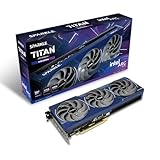
- OC Edition Boost Clock: 2760MHz
- TORN Cooling 2.0
- Metal Backplate
- Blue Breathing Light
- Graphic card sag bracket
- DirectX 12.
- Windows 10 or Windows 11, 64-bit.
- Compatible Intel Arc graphics with XMX.
- A sufficiently recent graphics driver.
Intel recommends a 60 FPS rendered-input target for the best latency experience and describes 40 FPS as a minimum for adequate reconstruction. These are guidance points, not a promise that generated output will feel identical to that input rate. MFG can raise the displayed frame count, but it does not turn a low rendered-input rate into the same responsiveness as rendering every displayed frame natively.
Does XeSS 3 work in every game?
No universal, every-game switch is established by Intel’s published support information. XeSS features require support in the game, and the available features and controls are title-specific. Intel maintains a XeSS-enabled-games catalogue; check the listing and the game’s patch notes to see whether XeSS 3 and the desired MFG setting are exposed.
Rank #4

- System Compatibility Note: 2‑slot ITX card, 169.9x123.5x39.2mm, single 8‑pin power, recommended 500W PSU. Verify chassis clearance before purchase.
- Dedicated Support: Please contact us directly through Amazon for any product questions or assistance you may require.
- Intel Arc A380 GPU: Powered by Intel Xe architecture with 6GB GDDR6 on 96‑bit bus – ideal for compact gaming, HTPC, and media builds.
- 2250MHz GPU Clock: Factory overclocked core delivers solid performance for esports titles and everyday creative tasks.
- Small Form Factor ITX Design: Compact 2‑slot card fits easily into mini‑ITX and small form factor cases without sacrificing performance.
In a June 2026 Intel support exchange about the Arc B580, Intel discussed 3× or 4× output in supported titles and said it had not announced a universal driver-level frame-generation mode at that time. So having compatible hardware and a suitable driver is not enough on its own: the game must support the feature. A listing for XeSS should also not be taken as proof that every XeSS component, including MFG, is available in that title.
Independent reader supportYour contribution helps us test, update, and keep practical guides available for everyone.How to assess XeSS 3 against DLSS or FSR
A meaningful comparison needs to be made feature by feature and game by game. Intel’s published material establishes XeSS’s stated frame-generation capability and requirements, but it does not provide controlled head-to-head image-quality results against DLSS or FSR. Consider these factors rather than treating a maximum multiplier as a complete comparison:
- Generated-frame count and output: compare the stated maximum and how a specific game implements it.
- GPU support: check which graphics families can use the particular upscaling, frame-generation and latency features.
- Game integration: verify that the title supports the feature you want, not merely another component of the same software family.
- Input latency and frame pacing: a higher displayed frame count alone does not show how responsive or consistent gameplay will feel.
- Image artifacts: evaluate image quality in the same game and conditions; the published XeSS figures do not settle this comparison.
- Software requirements and game coverage: confirm the API, operating system, driver and supported-title list for the implementation you plan to use.
What Intel’s published figures can—and cannot—tell you
Intel’s developer documentation states the up-to-three-generated-frames capability, while its XeSS-enabled-games page states up to four times the frames. Intel’s January 26, 2025 driver release notes describe the 3:1 generated-to-rendered relationship. Its CES 2026 Core Ultra Series 3 launch deck includes an MFG 4× benchmark mode and says results are relative and vary by configuration. These figures explain Intel’s terminology; they are not a guarantee of a particular game’s performance. The 60 FPS input recommendation comes from Intel’s XeSS-FG Developer Guide.
Quick Recap
Product prices and availability are accurate as of the date/time indicated and are subject to change. Any price and availability information displayed on Amazon at the time of purchase will apply.

