
The Tool Desk
Outbyte PC Repair FREERepair Windows errors before they cause bigger problemsFix Now →Outbyte Driver Updater FREEScan for outdated or missing drivers - takes under a minuteDriver Scan →Intel’s K suffix means the desktop CPU is unlocked for conventional CPU multiplier overclocking. A non-K model is normally locked against that kind of overclocking. K models often also have higher stock turbo targets and higher power ratings, but the suffix alone does not guarantee a better buy—or even a large performance difference.
Choose K if its stock performance or tuning headroom is worth the added cost of cooling and a suitable motherboard. Choose non-K for a simpler, often lower-power and quieter build. Compare exact processor models and total platform cost, not just the CPU price.
What do Intel K and non-K mean?
Intel describes K processors as unlocked. They allow more control over settings such as core frequency, voltage, and power; conventional non-K desktop models generally have a locked CPU multiplier. That is the central distinction, not a promise that every K CPU is faster in every task. Intel explains the difference between unlocked and locked processors, and its processor suffix guide identifies K as unlocked.
Non-K does not mean that every setting is fixed. Depending on the processor, motherboard, firmware, and memory, you may still be able to use Intel Turbo Boost, enable XMP memory profiles, adjust supported power limits, or use other tuning features. XMP or memory tuning is not the same as unlocking the CPU multiplier.
Do these 3 things before closing this tab:
1Repair Windows errors before they cause bigger problems2Scan for outdated or missing drivers - takes under a minute3Clear out junk files and repair common Windows errors#1 Best Overall

- 10 cores (6 P-cores plus 4 E-cores) and 16 threads
- Performance hybrid architecture integrates two core microarchitectures, prioritizing and distributing workloads to optimize performance
- Up to 4.7 GHz unlocked. 20MB Cache
- Compatible with Intel 600-series (with potential BIOS update) and 700-series chipset-based motherboards
- PCIe 5.0 and 4.0 support. DDR4 and DDR5 Memory support. RM1 thermal solution included. Discrete graphics required.
Suffix conventions, socket compatibility, and chipset features vary by generation. Check the exact SKU and compatible motherboard before buying; a newer non-K chip may outperform an older K model.
How do the suffixes differ?
| Suffix | What it indicates | Practical consideration |
|---|---|---|
| K | Unlocked desktop processor | Useful for CPU multiplier tuning; confirm the motherboard supports the controls you want. |
| Non-K | Typically locked against conventional CPU multiplier overclocking | Often a better fit for a straightforward build; other supported settings may still be adjustable. |
| F | No usable integrated graphics | Requires a discrete graphics card or another display-capable adapter. |
| KF | Unlocked and no usable integrated graphics | Combines K tuning capability with F’s graphics limitation. |
| T | Power-optimized desktop design target | Check performance and price as well as the lower nominal power target; actual consumption varies. |
| KS | Higher-end unlocked variant where offered | Treat it as a distinct premium SKU and verify generation-specific availability and specifications. |
K and graphics are separate naming dimensions: K by itself does not tell you whether a processor has usable integrated graphics. In current desktop naming, KF denotes an unlocked CPU without usable integrated graphics; verify the precise product listing. A non-F model with integrated graphics can provide a display output for troubleshooting when a discrete graphics card is absent or has failed, and may support integrated-media workflows that some applications use. Intel’s suffix guide describes the K and F designations.
Is a K CPU faster if you leave it at stock settings?
Often, a same-tier K model has a higher advertised maximum turbo frequency and can be faster at stock, but the size of the difference depends on the exact pair, workload, motherboard settings, and cooling. A headline maximum turbo frequency is not an all-core sustained clock, and a lightly threaded task may behave differently from a long rendering or compilation job.
Intel’s Core Ultra desktop comparison sheet gives current Core Ultra Series 2 examples:
Windows Errors? Fix Them Before They Spread
Repair common Windows errors and clear accumulated junk for a smoother, more stable PC - no reinstall needed.Free scan · no reinstallOutdated Drivers Are Slowing You Down
One free scan finds every outdated or missing driver and matches the right update for your exact hardware.Free scan · exact hardware matchRank #2

- Get ultra-efficient with Intel Core Ultra desktop processors that improve both performance and efficiency so your PC can run cooler, quieter, and quicker.
- Core and Threads 24 cores (8 P-cores plus 16 E-cores) and 24 threads. Integrated Intel Graphics included
- Performance Hybrid Architecture Integrates two core microarchitectures, prioritizing and distributing workloads to optimize performance
- Performance Unlocked Up to 5.7 GHz unlocked. 40MB Cache
- Compatibility Compatible with Intel 800 series chipset-based motherboards
| Processor | Maximum frequency listed by Intel | Processor base power listed by Intel |
|---|---|---|
| Core Ultra 9 285K | Up to 5.7 GHz | 125 W |
| Core Ultra 9 285 | Up to 5.6 GHz | 65 W |
| Core Ultra 7 265K | Up to 5.5 GHz | 125 W |
| Core Ultra 7 265 | Up to 5.3 GHz | 65 W |
These figures are Intel’s specifications for those specific desktop models, not a rule for every generation or a measure of wall-socket draw. Compare core and thread count, cache, graphics, maximum turbo power, memory support, and platform requirements alongside frequency. Intel lists processor base power and maximum turbo power separately in its desktop processor comparison sheet.
What motherboard and cooler does a K CPU need?
Motherboard and overclocking
A compatible K processor can often run at stock settings in a compatible non-Z motherboard. To use CPU multiplier overclocking, however, the platform must expose the relevant controls. Chipset rules and BIOS requirements differ across generations, so do not assume that every K chip needs the same board.
If you are paying extra for a K specifically to overclock, check the motherboard maker’s specifications for CPU-overclocking support for that socket and generation. Intel’s current 200S Boost profile is one specific example: Intel lists compatible K-series processors, Z890 motherboards, and appropriate XMP memory as requirements. Those requirements should not be generalized to every Intel platform. See Intel’s 200S Boost details.
Cooling
A K CPU does not automatically require liquid cooling. A capable tower air cooler can suit many systems, while the right choice depends on the exact CPU, sustained workload, motherboard power behavior, case airflow, room temperature, and noise target. An undersized cooler can lead to more fan noise or lower sustained performance if the CPU reaches thermal limits.
Recommended Free Tools
Rank #3

- Game Without Compromise. Play harder and work smarter with Intel Core 14th Gen processors
- 20 cores (8 P-cores plus 12 E-cores) and 28 threads. Integrated Intel UHD Graphics 770 included
- Up to 5.6 GHz with Turbo Boost Max Technology 3.0 gives you smooth game play, high frame rates, and rapid responsiveness
- Compatible with Intel 600-series (with potential BIOS update) or 700-series chipset-based motherboards
- DDR4 and DDR5 platform support cuts your load times and gives you the space to run the most demanding games
Do not assume a boxed K or KF desktop CPU includes an Intel stock cooler: Intel lists those suffixes among boxed desktop processors shipped without a fan heatsink. Non-K CPUs still need cooling, but their rated power targets and typical workload can make a quieter or less costly cooler sufficient. Check the specific box contents and cooler compatibility. Intel’s boxed-processor cooling documentation covers included fan heatsinks.
Does a K CPU use more power?
K models often have higher processor base-power ratings than comparable non-K models, as the Core Ultra examples above show. Those ratings are specifications, not promises about total system or wall-socket consumption. Actual CPU draw depends on workload, boost duration, firmware power limits, and cooling; total system draw also includes the graphics card and other components.
Motherboard defaults matter: some boards allow aggressive power behavior, so a nominally 65 W CPU can exceed 65 W during boost. A K CPU can likewise run hotter than expected if its board settings are unrestricted. To make a fair comparison, check the BIOS power limits and sustained workload conditions rather than treating base power as a maximum.
Is a K CPU worth it for gaming?
It is most compelling when a powerful graphics card, high-refresh display, and CPU-limited games make the processor a constraint—especially if you want unusually high frame rates or intend to tune the system. There is no dependable fixed gaming uplift for the K suffix: resolution, game engine, graphics settings, memory, GPU, and background tasks can change the result.
Quick wins for a faster PC:
Repair Windows errors before they cause bigger problemsFix Now →Scan for outdated or missing drivers - takes under a minuteDriver Scan →Clear out junk files and repair common Windows errorsFree Scan →Rank #4

- 4 Cores / 8 Threads
- 3.60 GHz up to 4.20 GHz Max Turbo Frequency / 8 MB Cache. Sockets Supported: FCLGA1151, Max Memory Size: 64 GB, Memory Types: DDR4-2133/2400, DDR3L-1333/1600 at 1.35V
- Compatible only with Motherboards based on Intel 100 or 200 Series Chipsets
- Intel Optane Memory Supported
- Intel UHD Graphics 630
- High-refresh competitive gaming: A K model may help when testing shows the game is CPU-limited and the rest of the system can use the extra performance.
- Mainstream gaming: If a midrange GPU or higher resolution makes the system GPU-limited, a non-K CPU may feel much the same in play. Put money toward the graphics card if it is the limiting component.
- GPU-limited 4K or entry-level builds: The extra CPU headroom is less likely to improve frame rates enough to justify a more expensive CPU, board, and cooler.
Is a K CPU better for productivity?
For sustained rendering, encoding, compilation, simulation, or other CPU-heavy work, a well-cooled K model may deliver higher sustained performance and offers tuning headroom. But the suffix is not enough to choose a workstation CPU: check exact core and thread counts, architecture, cache, application scaling, power limits, and cooling.
A non-K system may be the better fit when its performance is sufficient and lower power, noise, or platform cost matters more than peak throughput. For a particular application, compare representative benchmarks run with disclosed power settings and cooling; a short test with unrestricted motherboard settings may not represent sustained performance or Intel’s base-power specification.
Is overclocking worth doing?
Overclocking can raise performance in some CPU-bound workloads and gives enthusiasts control over clock, voltage, and power behavior. The gains depend on the processor, workload, silicon, cooling, and tuning; they can be modest, and buying a faster CPU may be simpler than spending time seeking a small uplift.
- Potential benefits: More performance in suitable workloads, tuning control, and experimentation.
- Trade-offs: More heat and power, greater cooling and motherboard demands, time spent stabilizing settings, and possible instability or component stress.
Warranty terms depend on the exact processor and tuning method. Intel says its supported 200S Boost profile has specific limited-warranty coverage for compatible processors, while damage to non-Intel components is not covered. That is a program-specific statement, not a blanket warranty rule for manual overclocking or other generations. Read Intel’s 200S Boost terms and the warranty for your processor before tuning.
Best Value
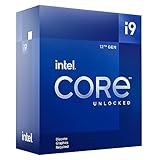
- Built for the Next Generation of Gaming. Game and multitask without compromise powered by Intel’s performance hybrid architecture on an unlocked processor.
- Discrete graphics required
- Compatible with Intel 600 series and 700 series chipset-based motherboards
- The processor features Socket LGA-1700 socket for installation on the PCB
- 30 MB of L3 cache memory provides excellent hit rate in short access time enabling improved system performance
When should you choose each model?
Choose K when
- You want the strongest stock performance in a specific product tier, or you plan to use CPU multiplier overclocking.
- Your workload or high-refresh gaming can benefit from additional CPU performance.
- You have budgeted for suitable cooling and a motherboard with the features you need.
- The K model’s actual price premium is small enough to make sense for your build.
Choose non-K when
- You want a simpler system and do not need CPU multiplier overclocking.
- Lower heat, noise, and platform cost matter more than peak performance.
- Your games are primarily GPU-limited, or your workload does not need the K model’s extra headroom.
- The combined price of a K CPU, suitable board, and cooler is hard to justify.
Choose KF only when
- You will definitely have a discrete graphics card and the KF price is meaningfully better for your build.
- You accept losing the integrated display adapter for backup and troubleshooting, and your workflow does not depend on an integrated-media feature.
Consider T when
- A power-optimized design target suits a compact, quiet, or specialized desktop.
- You have checked the exact model’s price and performance rather than assuming a T suffix guarantees lower real-world consumption or better value.
How to compare the total build cost
Compare the complete platform, not just the processor’s sticker price. A K build may need a more capable cooler, a motherboard with CPU-tuning support, and better airflow. A KF build also needs a discrete graphics card. A non-K build may allow a less expensive compatible board and more modest cooling, depending on the CPU and workload.
Use this calculation with current local prices:
Total K premium = CPU price difference + cooler cost difference + motherboard cost difference + any case or power-supply upgrade − discounts.
There is no universal dollar premium that makes K worthwhile: sales, parts you already own, and the value of extra performance change the answer. If you already have a compatible board and cooler, a small CPU price gap can favor K; if those parts must be upgraded, non-K may cost substantially less as a complete build.
Before buying: verify the exact CPU and platform
- Match the exact models. Compare within the same generation and product tier where possible; K is not a substitute for checking architecture, core and thread counts, cache, and graphics.
- Confirm socket and BIOS support. Check the processor and motherboard support lists for the exact board revision and BIOS.
- Check tuning support. If overclocking matters, confirm the chipset and board expose CPU controls. Check memory and XMP support separately.
- Check power and cooling details. Compare processor base power and maximum turbo power, cooler inclusion, case clearance, and the board’s power settings.
- Confirm graphics needs. Look for F before assuming the processor can provide display output without a graphics card.
- Price the whole platform. Include CPU, motherboard, cooler, and any required graphics card, then weigh the resulting cost against your actual workload.
Intel’s current Core Ultra Series 2 desktop examples use LGA1851, but do not assume that socket applies to older generations or all Intel desktop families; consult the Intel comparison sheet and the exact CPU support page.
Free tools Windows power users keep installed
One-click scans. No signup required.
Quick Recap
Common mistakes to avoid
- Assuming K always means faster: It means unlocked; performance depends on exact SKU, generation, limits, cooling, and workload.
- Assuming every K needs a Z board or liquid cooler: Requirements vary by generation, and air cooling can be suitable. Verify the platform and workload.
- Reading base power as maximum wall power: CPU boost draw and total system consumption are different measures.
- Assuming K means integrated graphics: Check for F; KF lacks usable integrated graphics.
- Comparing CPU prices alone: A board and cooler can change which processor is the better value.
- Assuming a non-K CPU cannot be tuned at all: The multiplier is the key distinction; other settings may remain available on the specific platform.
Product prices and availability are accurate as of the date/time indicated and are subject to change. Any price and availability information displayed on Amazon at the time of purchase will apply.

