
Does comparing Intel’s EyeQ 5 with NVIDIA’s Xavier make sense? Only if you compare complete, matched automotive platforms. The 2017 argument treated different TOPS figures, chip architectures and power boundaries as though they were one benchmark. They were not. EyeQ 5 and Xavier addressed overlapping automated-driving needs with different compute designs, software and system responsibilities, so an isolated TOPS-per-watt winner cannot be established from the public claims.
What the 2017 dispute actually compared
EE Times reported the debate on December 6, 2017. Mobileye initially announced EyeQ 5 as delivering “12 tera operations per second at power consumption below 5W.” Intel later described another configuration as “24TOPS at 10W.” Intel said multiple EyeQ 5 SKUs were planned, and its spokeswoman said the comparison included “the 12TOPs SKU announced previously and the 24TOPS SKU we compared to the Nvidia Xavier product.” The report did not establish how the 24-TOPS figure was produced architecturally.
Intel characterized NVIDIA Drive PX Xavier as “30 watts of power consumption at 30 trillion operations per second.” NVIDIA automotive executive Danny Shapiro disputed that boundary, saying the figure was “for the entire system, CPU, GPU and memory, as opposed to just deep learning cores as in the EyeQ 5.” In other words, the companies were not demonstrably reporting the same combination of accelerator, processor, memory and platform power.
These were vendor statements and trade-press accounts, not results from an independent, apples-to-apples test. Mike Demler of the Linley Group summarized the proper priority: “Then you look at the power, because if you don’t have the performance, it really doesn’t matter.”
Windows Errors? Fix Them Before They Spread
Repair common Windows errors and clear accumulated junk for a smoother, more stable PC - no reinstall needed.Free scan · no reinstallOutdated Drivers Are Slowing You Down
One free scan finds every outdated or missing driver and matches the right update for your exact hardware.Free scan · exact hardware match#1 Best Overall

- The Nvidia Jetson Xavier Nx Developer Kit Includes A Power-Efficient, Compact Jetson Xavier Nx Module For Ai Edge Devices. It Benefits From New Cloud-Native Support And Accelerates The Nvidia Software Stack In As Little As 10 W With More Than 10X The Performance Of Its Widely Adopted Predecessor, Jetson Tx2. The Capability To Develop And Test Power-Efficient, Small Form-Factor Solutions With Accurate, Multi-Modal Ai Inference Opens The Door For New Breakthrough Products.
- Developers Can Now Take Advantage Of Cloud-Native Support To Transform The Experience Of Developing And Deploying Ai Software To Edge Devices. Pre-Trained Ai Models From Nvidia Ngc, Together With The Nvidia Transfer Learning Toolkit, Provide A Faster Path To Inference With Optimized Ai Networks, While Containerized Deployment To Jetson Devices Allows Flexible And Seamless Updates.
- The Developer Kit Is Supported By The Entire Nvidia Software Stack, Including Accelerated Sdks And The Latest Nvidia Tools For Application Development And Optimization. When Combined With Jetson Xavier Nx, This Powerful Stack Helps You Create Innovative Solutions For Manufacturing, Logistics, Retail, Service, Agriculture, Smart City, Healthcare And Life Sciences, And More.
- Ease Of Development And Speed Of Deployment—Together With A Unique Combination Of Form-Factor, Performance, And Power Advantage—Make Jetson Xavier Nx The Most Flexible And Scalable Platform To Get To Market Fast And Continuously Update Over The Lifetime Of A Product.
The figures are historical claims, not a benchmark table
| Figure | What it represented | How to read it |
|---|---|---|
| 12 tera operations per second, below 5 W | Mobileye’s initial EyeQ 5 announcement, as reported by EE Times in 2017 | Reported launch claim for an announced SKU; not an independent measurement |
| 24 TOPS at 10 W | Intel’s later EyeQ 5 description, reported by EE Times in 2017 | Another announced configuration; the report did not explain the architecture behind the 24-TOPS figure |
| 30 W at 30 trillion operations per second | Intel’s characterization of Drive PX Xavier, reported by EE Times in 2017 | NVIDIA disputed the measurement scope as a whole-system figure |
| 30 trillion operations per second | NVIDIA’s Xavier specification in its 2019 DRIVE AutoPilot announcement | Historical product specification inside a software stack, not validation of the 2017 comparison |
| 320 TOPS | Pegasus platform maximum cited in the 2017 EE Times article | An analyst’s platform contrast, not a measured Xavier result |
TOPS also depends on the operation definition, numerical precision, model and utilization. Peak arithmetic throughput does not say how quickly a production perception model runs, what latency it achieves, or how much power the complete vehicle computer consumes.
EyeQ 5 and Xavier used different compute architectures
EyeQ 5: specialized automotive vision processing
The EyeQ 5 description centered on proprietary computer-vision, signal-processing and machine-learning cores. Intel’s later reporting described it as a fifth-generation automotive SoC, with automotive operating-system and SDK support, used in Mobileye test vehicles at the time of that 2021 report. Its specialization can improve efficiency for supported vision pipelines, but a TOPS number alone does not reveal which operations are accelerated, how flexible the programming model is, or what external processors a vehicle still needs.
Xavier: CPU, GPU and deep-learning acceleration
Xavier combined CPU resources with a GPU and deep-learning accelerator (DLA). That heterogeneous design exposes different software and performance trade-offs from EyeQ 5’s vision-focused engines. A workload may run on the DLA, GPU or CPU, and the relevant result depends on the model, compiler, memory traffic and scheduling—not simply the maximum advertised operations.
Rank #2

- Newly updated version with an additional 16GB of memory for a total of 32GB of 256-bit wide LPDDR4X memory.
- NVIDIA Jetson Xavier is an AI computer for Autonomous Machines with the performance of a GPU workstation in under 30W
- The Jetson Xavier Developer Kit with Jetson Xavier module and reference carrier board is the fastest way to start prototyping with robots, drones and other autonomous machines
- Visit the NVIDIA Jetson developer site for the latest software, documentation, sample applications, and developer community information
- System Ram Type: Ddr Dram
Why a chip is not an autonomous-driving system
Automated-driving capability is delivered by a platform. It includes sensors, image and signal processing, main compute, memory, networking, storage, operating software, safety mechanisms and the interfaces to vehicle control. Intel’s filings describe EyeQ 5 as part of an automotive platform and camera-based surround-sensing architecture, rather than a complete vehicle by itself.
Jim McGregor of Tirias Research captured the 2017 problem: “nobody is comparing a platform to a platform today” in autonomous-vehicle solutions. A fair evaluation therefore asks how many chips are installed, which chip handles each perception or planning function, what sensor bandwidth and I/O are supported, and who integrates the software and safety case.
The comparison axes that actually matter
1. Workload and driving target
Define the functions first: camera perception, radar or lidar processing, localization, prediction, planning and vehicle control. Then specify the intended assistance or automation level and the required latency, accuracy and environmental coverage. A chip optimized for surround-view perception is not automatically the best choice for a platform that also performs intensive planning or sensor fusion.
Rank #3
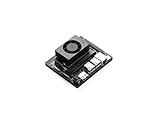
- The NVIDIA Jetson Orin Nano Developer Kit sets a new standard for creating entry-level AI-powered robots, smart drones, and intelligent cameras,and simplifies getting started with the Jetson Orin Nano series. Compact design, lots of connectors and up to 40 TOPS of AI performance make this developer kit perfect for transforming your visionary concepts into reality. With up to 80X the performance of Jetson Nano, it can run all modern AI models, including transformer and advanced robotics models.
- The developer kit comprises a Jetson Orin Nano 8GB module and a reference carrier board that can accommodate all Orin Nano and Orin NX modules, providing an ideal platform for prototyping your next-gen edge AI product. The Jetson Orin Nano 8GB module features an Ampere GPU and a 6-core ARM CPU, enabling multiple concurrent AI application pipelines and high-performance inference. The carrier board boasts a wide array of connectors, including two MIPI CSI connectors supporting camera modules with up to 4-lanes, allowing higher resolution and frame rate than before.
- Jetson runs the NVIDIA AI software stack, with available use-case-specific application frameworks, including NVIDIA Isaac for robotics, DeepStream for vision AI, and Riva for conversational AI. You can save significant time with NVIDIA Omniverse Replicator for synthetic data generation (SDG), and with NVIDIA TAO Toolkit for fine-tuning pretrained AI models from the NGC catalog.
- Ecosystem partners offer additional AI and system software, developer tools, and custom software development. They can also help with cameras and other sensors, as well as carrier boards and design services for your product.
- Jetson Orin modules are unmatched in performance and efficiency for robots and other autonomous machines, and give you the flexibility to create the next generation of AI solutions with the latest NVIDIA technology. Together with the world-standard NVIDIA AI software stack and an ecosystem of services and products, your road to market has never been faster.
2. Measurement boundary
State whether the number covers an accelerator, a SoC, a board or the entire vehicle computer. Include CPUs, memory, regulators, cooling and supporting chips, and distinguish peak from sustained power. Without that boundary, “TOPS per watt” can reward a narrow accelerator claim over a more complete system claim.
3. Architecture and software mapping
Record supported precisions and operations, compiler maturity, model libraries, memory bandwidth and fallback paths when a model cannot run on the preferred engine. Compare measured latency and accuracy on the same networks, not just nominal arithmetic throughput.
4. Whole-platform integration
Count sensors, I/O, networking, storage and the number and role of compute devices. A lower-power SoC can require additional chips or a more complex integration effort; a larger SoC can consolidate functions but increase thermal and electrical demands.
Rank #4

- 512-Core Volta GPU with Tensor Cores
- 8-Core ARM 64-Bit CPU
- 16 GB 256-Bit LPDDR4 memory
5. Safety and redundancy
Assess fault detection, isolation, watchdogs, independent monitoring and redundant computation at system level. Functional-safety claims cannot be inferred from TOPS, process node or a single accelerator specification.
6. Power and cost in context
Energy use affects thermal design and the vehicle’s electrical architecture, but it must be weighed against achieved capability, sensor count, redundancy, software effort and total system cost. A lower chip rating is not automatically a lower-cost or lower-energy vehicle solution.
Independent reader supportYour contribution helps us test, update, and keep practical guides available for everyone.What later documentation changes—and does not change
NVIDIA’s 2019 DRIVE AutoPilot announcement placed Xavier inside a DRIVE software stack and listed 30 trillion operations per second. That later specification provides product context, but it does not convert the 2017 exchange into a controlled comparison.
What’s actually slowing this PC down?
Pick the symptom - the matching free tool is one click away.
Best Value
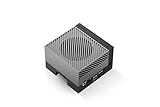
- The NVIDIA Jetson AGX Orin 64GB Developer Kit makes it easy to get started with Jetson Orin. Compact size, lots of connectors, and up to 275 TOPS of AI performance make this developer kit perfect for prototyping advanced AI-powered robots and other autonomous machines.
- The developer kit includes a Jetson AGX Orin 64GB module, and can emulate all the Jetson Orin modules. It supports multiple concurrent AI application pipelines with the NVIDIA Ampere GPU architecture, next-generation deep learning and vision accelerators, high-speed IO and fast memory bandwidth. Now you can develop solutions using your largest and most complex AI models to solve problems such as natural language understanding, 3D perception, and multi-sensor fusion.
- Jetson runs the NVIDIA AI software stack, and use-case specific application frameworks are available, including Isaac for robotics, DeepStream for vision AI, and Riva for conversational AI. You can save significant time with NVIDIA Omniverse Replicator for synthetic data generation (SDG), and by using NVIDIA TAO toolkit to fine-tune pretrained AI models from the NGC catalog.
- Jetson ecosystem partners offer additional AI and system software, developer tools, and custom software development. They can also help with cameras and other sensors, as well as carrier boards and design services for your product.
- With the computing capability of more than 8 Jetson AGX Xavier systems in a developer kit that integrates the latest NVIDIA GPU technology with the world’s most advanced deep learning software stack, you’ll have the flexibility to create tomorrow’s AI solution as well as today’s.
Intel’s 2021 reporting described EyeQ 5 as commercially available for vehicles and active in Mobileye test vehicles at that reporting date. The reviewed material does not establish its current production status, present design wins or current vehicle availability.
NVIDIA now presents Xavier documentation as an archive. Its developer page dates DRIVE OS 5.2.6 to October 20, 2021 and identifies DRIVE OS 5.2.6 and DriveWorks 4.0 Linux as the final software releases for Xavier/Pegasus XT. An archive does not demonstrate that Xavier hardware is currently sold new or available as a consumer product.
How to run a defensible EyeQ 5-versus-Xavier evaluation
- Freeze the configurations. Name the exact EyeQ 5 SKU, Xavier module or board, memory and companion chips.
- Define representative workloads. Use identical perception, fusion and planning models, input resolutions, precisions and batch settings.
- Publish the power boundary. Report accelerator, SoC, board and complete-system power separately, with peak and sustained values.
- Measure useful outcomes. Record end-to-end latency, throughput, accuracy, thermal throttling, memory use and safety-monitor overhead.
- Account for integration. Include sensors, networking, software licensing, development effort, redundancy and vehicle electrical requirements.
- Report uncertainty. Identify vendor-supplied figures, test conditions and any unavailable data instead of presenting estimates as measured results.
Bottom line on the “wrong debate”
EyeQ 5 versus Xavier is a useful historical case study in why automotive AI chips cannot be ranked by a headline TOPS-per-watt figure. The 2017 numbers referred to changing EyeQ 5 SKUs and disputed Xavier power boundaries; the processors used different architectures; and neither chip specification described a complete automated-driving platform. The meaningful question is which fully specified system delivers the required workload, safety, software support and vehicle-level power at an acceptable total cost.
Quick Recap
Product prices and availability are accurate as of the date/time indicated and are subject to change. Any price and availability information displayed on Amazon at the time of purchase will apply.
Free tools Windows power users keep installed
One-click scans. No signup required.

