
What’s actually slowing this PC down?
Pick the symptom - the matching free tool is one click away.
Intel traced instability in some 13th- and 14th-generation desktop Core processors to elevated voltage and, later, to a clock-tree circuit vulnerable to aging under elevated voltage and temperature. BIOS updates containing newer microcode reduce conditions that can contribute to the problem, but a crash alone does not prove a CPU is affected or establish that an update will resolve an already unstable system. Owners should use Intel Default Settings, install a motherboard BIOS with microcode 0x12F or later, and contact Intel support if instability continues.
What Intel says causes the instability
On July 22, 2024, Intel told Notebookcheck that its analysis of returned 13th- and 14th-generation desktop processors implicated elevated operating voltage in some instability cases. Intel said a microcode algorithm had made incorrect voltage requests to the processor.
In a root-cause post dated September 25, 2024, Intel localized what it calls “Vmin Shift Instability” to a clock-tree circuit within the IA core. Intel said the circuit is particularly vulnerable to reliability aging under elevated voltage and temperature; the resulting shift in clock duty cycle can cause system instability.
These statements describe a specific issue Intel identified in some desktop processors. They do not establish that every crash, freeze, or application error on a 13th- or 14th-generation system has this cause. Intel has not published a prevalence statistic in the cited materials, so there is no supported percentage of processors known to be affected.
Free tools Windows power users keep installed
One-click scans. No signup required.
#1 Best Overall

- Game without compromise. Play harder and work smarter with Intel Core 14th Gen processors
- 24 cores (8 P-cores plus 16 E-cores) and 32 threads. Integrated Intel UHD Graphics 770 included
- Leading max clock speed of up to 6.0 GHz gives you smoother game play, higher frame rates, and rapid responsiveness
- Compatible with Intel 600-series (with potential BIOS update) or 700-series chipset-based motherboards
- DDR4 and DDR5 platform support cuts your load times and gives you the space to run the most demanding games
Which operating conditions Intel identified
Intel identified four contributing scenarios. They involve motherboard settings and processor microcode behavior; they are not four separate symptoms that let an owner diagnose a CPU from a crash alone.
| Scenario | What Intel identified |
|---|---|
| Motherboard power settings | Some motherboard power-delivery settings exceeded Intel guidance. |
| High-temperature performance behavior | An eTVB microcode algorithm let 13th- and 14th-generation i9 desktop processors remain in higher performance states at high temperatures. |
| High-voltage requests at damaging conditions | An SVID algorithm could request high voltage for combinations of frequency and duration that Intel described as damaging. |
| Idle or light activity | Microcode and BIOS behavior could request elevated core voltage while the processor was idle or lightly loaded. |
The list explains why Intel’s response included both processor microcode changes and motherboard BIOS updates: the relevant behavior involved voltage requests, performance behavior, and board settings.
Rank #2

- Get ultra-efficient with Intel Core Ultra desktop processors that improve both performance and efficiency so your PC can run cooler, quieter, and quicker.
- Core and Threads 24 cores (8 P-cores plus 16 E-cores) and 24 threads. Integrated Intel Graphics included
- Performance Hybrid Architecture Integrates two core microarchitectures, prioritizing and distributing workloads to optimize performance
- Performance Unlocked Up to 5.7 GHz unlocked. 40MB Cache
- Compatibility Compatible with Intel 800 series chipset-based motherboards
What the microcode updates changed
Intel’s documented mitigation sequence introduced changes over several releases. Motherboard manufacturers distribute the relevant microcode in BIOS updates, so the update available to an owner depends on the board maker and model.
| Microcode | Documented role |
|---|---|
| 0x125 | Addressed the eTVB algorithm issue; Intel announced it in June 2024. |
| 0x129 | Addressed high-voltage requests from the processor; Intel announced it in August 2024. |
| 0x12B | Combined those changes and targeted elevated voltage during idle or light activity. |
| 0x12F or later | Intel’s support article, last reviewed July 21, 2026, recommends a BIOS containing this microcode or later alongside Intel Default Settings. Intel says 0x12F further improves system conditions that can contribute to Vmin Shift Instability; it does not change Intel’s root-cause determination. |
A newer BIOS is a mitigation, not a guarantee that an unstable system will become stable. The update addresses conditions Intel identified; it does not by itself establish whether a particular processor has degraded or whether an individual system’s instability has another cause.
The Tool Desk
Outbyte PC Repair FREEClear out junk files and repair common Windows errorsFree Scan →Outbyte Driver Updater FREEScan for outdated or missing drivers - takes under a minuteDriver Scan →Rank #3
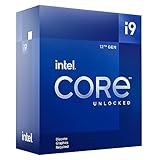
- Built for the Next Generation of Gaming. Game and multitask without compromise powered by Intel’s performance hybrid architecture on an unlocked processor.
- Discrete graphics required
- Compatible with Intel 600 series and 700 series chipset-based motherboards
- The processor features Socket LGA-1700 socket for installation on the PCB
- 30 MB of L3 cache memory provides excellent hit rate in short access time enabling improved system performance
Which processors are in scope
Intel’s current support article lists selected 13th- and 14th-generation desktop Core i5, i7, and i9 processors as affected-product families. The fact that a processor belongs to one of those broad families is not enough to confirm eligibility: check the exact model against Intel’s affected-product list.
Intel separately said that 13th- and 14th-generation mobile processors, as well as the future Lunar Lake and Arrow Lake client families, are not affected by this Vmin Shift issue. That qualification concerns this specific issue, not every possible cause of instability in those products.
Rank #4

- Game without compromise. Play harder and work smarter with Intel Core 14th Gen processors
- 24 cores (8 P-cores plus 16 E-cores) and 32 threads. Discrete graphics required
- Leading max clock speed of up to 6.0 GHz gives you smoother game play, higher frame rates, and rapid responsiveness
- Compatible with Intel 600-series (with potential BIOS update) or 700-series chipset-based motherboards
- DDR4 and DDR5 platform support cuts your load times and gives you the space to run the most demanding games
What owners should do
- Check the exact processor model. Compare it with the affected-product list in Intel’s support article. Distinguish a desktop processor from a mobile one, and verify the full model rather than relying only on its generation or Core tier.
- Find the latest BIOS for the exact motherboard. Use the motherboard maker’s support page and release notes to identify an available BIOS containing microcode 0x12F or later. Follow that maker’s installation instructions; BIOS menus and update methods vary by board.
- Use Intel Default Settings. After updating, select Intel Default Settings in the BIOS if the option is available. Avoid assuming that a board’s previous enhanced or overclocked power settings match Intel’s guidance.
- Check whether instability continues. If the system remains unstable after the BIOS and settings changes, document the processor model, motherboard model, BIOS version, and the circumstances in which the problem occurs. Those details can help support assess the case, but they are not a substitute for Intel’s eligibility determination.
- Contact Intel support if the issue persists. Intel directs owners with continuing instability to contact support about their affected processor and warranty options.
Warranty extension and replacement questions
Intel says eligible affected processors receive a two-year warranty extension, for up to five years of total coverage from the original purchase date. The extension applies to eligible products, not automatically to every 13th- or 14th-generation processor. Confirm the exact model and coverage with Intel support.
If instability continues, an owner can ask Intel support whether the processor qualifies for warranty service. A system crash by itself does not confirm CPU failure or guarantee an RMA; eligibility and next steps depend on Intel’s support assessment and warranty terms.
Do these 3 things before closing this tab:
1Scan for outdated or missing drivers - takes under a minute2Clear out junk files and repair common Windows errors3Fix the driver behind crashes, sound loss and screen glitchesQuick Recap
What the evidence does not establish
- Intel has not provided a percentage or total count of affected CPUs in the cited material.
- The identified issue applies to some selected desktop 13th- and 14th-generation processors; it is not evidence that every CPU in those generations is defective.
- A BIOS update with the recommended microcode mitigates identified contributing conditions, but the cited guidance does not promise that it will fix every unstable computer.
Product prices and availability are accurate as of the date/time indicated and are subject to change. Any price and availability information displayed on Amazon at the time of purchase will apply.

