
The Tool Desk
Outbyte PC Repair FREERepair Windows errors before they cause bigger problemsFix Now →Outbyte Driver Updater FREEScan for outdated or missing drivers - takes under a minuteDriver Scan →Young AI founders can strengthen a first fundraising pitch by making a specific claim verifiable, testing the product with a real operating partner, publishing inspectable results, and then offering reporters a documented milestone. That sequence is practical advice from AceIt Agency founder and CEO and Entrepreneur contributor; it is not evidence that patents, pilots, or press cause funding. The entrepreneur’s company SensoRy AI is an AceIt Agency client, a relevant disclosure when considering the case below.
What counts as proof before a first funding round?
Investors and other outsiders need evidence tied to the risk they are assessing. A patent filing may document an application; a pilot can show that an organization was willing to test a product; usage data or payment can say more about demand. None alone establishes product-market fit.



Choose evidence that fits the business rather than collecting credentials for their own sake. Georgia Tech’s January 5, 2026 account of Greptile describes founders who entered the CREATE-X program with an AI shopping-assistant concept, then pivoted toward software development after customer discovery. The university reported more than 2,000 customers and $30 million in total capital raised at the time of publication. The example illustrates learning from customers, not a repeatable recipe for reaching those figures. Georgia Tech’s account.
Make the technical claim concrete and accurately labeled
Write down what the product does, what is novel about it, and what evidence supports the claim. A patent application is one possible record, but it is not the same as an issued patent or proof that the invention has commercial value. Other documentary records may include a provisional application, a registered trademark, or a published technical specification; these establish different things and should not be described interchangeably.
#1 Best Overall
- Use the exact status: provisional application, pending application, issued patent, registered trademark, or published specification.
- Keep the application or registration record and identify the specific claim it supports.
- Ask qualified intellectual-property counsel about protectability, ownership, filing strategy, and jurisdiction before making legal or exclusivity claims.
A filing can show that an application was submitted. It does not, by itself, show that the product works, that customers want it, or that an investor will fund it.
Ask an operating partner for a narrow pilot
Approach the organization that actually operates the system or serves the intended users. Propose a limited, low-risk test with a clear request for feedback. Before deployment, agree on the pilot’s scope, duration, success criteria, data handling, and whether the partner may be named publicly. A partner’s willingness to test is useful evidence, but it is not necessarily an endorsement or a purchase.
Rank #2
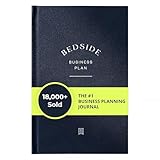
- TURN IDEAS INTO REALITY – Feeling stuck with your idea and not sure where to start? This guided journal helps you write a complete business plan so you can gain clarity and move forward with confidence as an entrepreneur.
- SIMPLE DAILY PRACTICE – 13 guided journaling sections with over 100+ business planning prompts. Make this business planner part of your routine to build momentum and work toward your business goals in just 5 minutes a day.
- BUSINESS PLANNER FOR ENTREPRENEURS – Use this guided journal to define your vision, understand your customers, evaluate competitors, plan expenses, and create a clear roadmap for launching your business.
- PERSONAL GROWTH – Designed as a personal growth workbook to help you reconnect with your purpose, prioritize well-being, and build a business plan centered around meaningful impact.
- PREMIUM ECO-FRIENDLY JOURNAL – Crafted with 100% FSC-certified recycled paper, a recycled cardboard cover, and wrapped in luxurious linen. This entrepreneur planner blends sustainability with thoughtful design.
Where possible, make the result observable: usage, a defined technical outcome, feedback from users, or payment. Entrepreneur contributor advice favors a small pilot before broad claims; it does not guarantee that an agency or company will accept one.
There are examples of young ventures obtaining early validation in different ways. In a retrospective account, a founder in the gBETA program described securing a paid logistics pilot before raising a $100,000 pre-seed round. MIT News also reported that 21 startups enrolled in its 2017 delta v summer cohort; milestones included customer revenue, paid pilots, prototype iterations, and partnerships. One example, Octant, earned more than $100,000 in customer revenue during that program. These are individual, time- and program-specific cases, not a rule that a pilot or a particular revenue level is required before fundraising. The gBETA founder account and MIT News on the 2017 delta v cohort.
Free tools Windows power users keep installed
One-click scans. No signup required.
Publish results that another person can inspect
Turn a completed test into a real-data white paper, repeatable benchmark, or customer-approved case study. State the method, relevant conditions, limitations, and what the result does not establish. If customer data or identity is involved, obtain the customer’s review and permission before publication. Independent review or reproducibility adds credibility; a polished document without accessible evidence does not.
SensoRy AI provides a wildfire-monitoring example, with an important attribution caveat. One Earth reports that the system was deployed by the Orange County Fire Authority in Irvine and describes Irvine and OCFA as partners in a pilot, with the system selected for further monitoring use. The Entrepreneur contributor’s agency identifies SensoRy AI as a client, so the case is not independent validation of system performance. OCFA Fire Chief Brian Fennessy’s statement about early detection describes its general value to firefighting, not a measured assessment of SensoRy AI. One Earth’s account.
Make press claims easy to verify
Press coverage is easier to substantiate when the milestone is public and documented, but editorial decisions remain outside a founder’s control. Prepare a claim-by-claim evidence inventory before pitching:
- Write each factual claim in plain language.
- Beside it, record the original document or data, who owns it, its date, and any limitation.
- Remove claims without support, qualify them, or obtain the missing evidence before pitching.
- Distinguish an application from an issued patent, a pilot from a sale, and a partner’s general support for a problem from an evaluation of your product.
This makes it easier for a reporter to check the story and reduces the risk that a pitch overstates what the evidence shows.
Use competitions and programs as opportunities, not proof of a formula
Startup and student programs can provide structure, feedback, visibility, or funding, but their headline figures should not be mistaken for startup success rates. The Earth Prize had reached more than 15,000 students across 163 countries and awarded $500,000 in funding to top teams, according to The Earth Foundation as reported by One Earth. XPRIZE describes its Wildfire competition as an $11 million, four-year competition; its page says five finalist teams advanced from more than 300 global registrants. Those are competition reach and selection figures, not evidence that an individual startup will win a pilot or raise money. The Earth Prize coverage and XPRIZE’s Wildfire competition page.
Other examples show that student founders can access established programs, without proving that selection is reproducible or that funding must follow a particular order. Rose-Hulman reported on April 20, 2026, that student founders Agnay Srivastava and Pulkit Gupta received $500,000 in Y Combinator funding for Tsenta. Rose-Hulman’s announcement.
Connect each piece of evidence to the next funding question
In a pitch, explain what each artifact demonstrates and what remains uncertain. A patent application supports a claim about filing; a pilot supports a claim about testing with a partner; a repeatable result supports a technical claim; a payment or sustained use may provide evidence of demand. Ask the investor’s underlying question directly: “Do you have evidence of real customer demand?” Bill Aulet, managing director of MIT’s Martin Trust Center, framed the distinction in MIT News this way: “The concept is great, but did the customer buy it?” MIT News.
The sources offer examples and practitioner advice, not a measured probability that patents, pilots, or press lead to fundraising. Use the sequence as a way to reduce specific uncertainties, then make the funding case from the evidence your own business can actually produce.
Quick wins for a faster PC:
Repair Windows errors before they cause bigger problemsFix Now →Scan for outdated or missing drivers - takes under a minuteDriver Scan →Clear out junk files and repair common Windows errorsFree Scan →Quick Recap
Product prices and availability are accurate as of the date/time indicated and are subject to change. Any price and availability information displayed on Amazon at the time of purchase will apply.

