
Recommended Free Tools
Amazon Bedrock token streaming lets an application display generated response content as it arrives instead of waiting for the complete answer. That can make an interactive app feel responsive sooner, but it does not by itself make the model generate faster or reduce total completion time. For direct inference, the main choices are the model-specific InvokeModelWithResponseStream API and the message-oriented ConverseStream API.
How does token streaming work in Amazon Bedrock?
A non-streaming invocation returns its response after generation is complete. A streaming invocation instead returns a sequence of response events or chunks while output is being produced. Your client can read those events in order, extract the relevant text or content block, append it to the in-progress answer, and update the interface before the full response is ready.
“Token streaming” does not necessarily mean that the application receives one event for each tokenizer token. The API delivers chunks or events, and their contents and granularity depend on the model and interface. Some events may carry metadata or other non-text content, so handle the documented event structure rather than treating every event as plain text.
AWS describes the InvokeModelWithResponseStream response simply: “The response is returned in a stream.” The same incremental-display pattern applies to ConverseStream, using the message API.
#1 Best Overall

- Your favorite music and content – Play music, audiobooks, and podcasts from Amazon Music, Apple Music, Spotify and others or via Bluetooth throughout your home.
- Alexa is happy to help – Ask Alexa for weather updates and to set hands-free timers, get answers to your questions and even hear jokes. Need a few extra minutes in the morning? Just tap your Echo Dot to snooze your alarm.
- Keep your home comfortable – Control compatible smart home devices with your voice and routines triggered by built-in motion or indoor temperature sensors. Create routines to automatically turn on lights when you walk into a room, or start a fan if the inside temperature goes above your comfort zone.
- Do more with device pairing – Fill your home with music using compatible Echo devices in different rooms, or create a home theatre system with Fire TV.
- Say goodbye to drop-offs and buffering - With eero Built-in, Echo Dot doubles as a mesh wifi extender, adding up to 1,000 sq. ft. of wifi coverage to your existing eero network.
Does streaming make an LLM response faster?
Streaming changes when output becomes visible, not necessarily when generation finishes. Without streaming, the interface may show nothing until the whole response has arrived. With streaming, it can show the first available content while later content is still being generated. That earlier feedback can improve perceived latency—the user’s experience of how soon useful progress appears—even if total completion time is unchanged.
Keep these measurements distinct when evaluating an application:
Rank #2

- Your favorite music and content – Play music, audiobooks, and podcasts from Amazon Music, Apple Music, Spotify and others or via Bluetooth throughout your home.
- Alexa is happy to help – Ask Alexa for weather updates and to set hands-free timers, get answers to your questions and even hear jokes. Need a few extra minutes in the morning? Just tap your Echo Dot to snooze your alarm.
- Keep your home comfortable – Control compatible smart home devices with your voice and routines triggered by built-in motion or indoor temperature sensors. Create routines to automatically turn on lights when you walk into a room, or start a fan if the inside temperature goes above your comfort zone.
- Do more with device pairing – Fill your home with music using compatible Echo devices in different rooms, or create a home theatre system with Fire TV.
- Say goodbye to drop-offs and buffering - With eero Built-in, Echo Dot doubles as a mesh wifi extender, adding up to 1,000 sq. ft. of wifi coverage to your existing eero network.
- Time to first token: first-output responsiveness. Bedrock defines its CloudWatch
TimeToFirstTokenmetric as the elapsed time from sending a request until receiving the first token forConverseStreamandInvokeModelWithResponseStream. See AWS’s Bedrock CloudWatch metrics documentation. - Output token rate: how quickly subsequent output is generated. It is relevant to the time spent waiting after the first content appears.
- Invocation latency or completion time: the duration of the overall operation. A faster first visible chunk does not prove that the full response completed sooner.
- Perceived latency: how quickly the user sees useful progress. It depends partly on whether the application renders arriving content promptly and whether that early content is useful.
AWS publishes metric definitions and diagnostic guidance, not a universal percentage or millisecond reduction attributable to streaming. Measure your own requests rather than treating the user-interface benefit as proof of lower total latency.
What happens before and after the first output?
AWS’s latency guidance distinguishes two stages that help explain why streaming cannot remove all waiting:
Rank #3

- Your favorite music and content – Play music, audiobooks, and podcasts from Amazon Music, Apple Music, Spotify and others or via Bluetooth throughout your home.
- Alexa is happy to help – Ask Alexa for weather updates and to set hands-free timers, get answers to your questions and even hear jokes. Need a few extra minutes in the morning? Just tap your Echo Dot to snooze your alarm.
- Keep your home comfortable – Control compatible smart home devices with your voice and routines triggered by built-in motion or indoor temperature sensors. Create routines to automatically turn on lights when you walk into a room, or start a fan if the inside temperature goes above your comfort zone.
- Do more with device pairing – Fill your home with music using compatible Echo devices in different rooms, or create a home theatre system with Fire TV.
- Say goodbye to drop-offs and buffering - With eero Built-in, Echo Dot doubles as a mesh wifi extender, adding up to 1,000 sq. ft. of wifi coverage to your existing eero network.
- Prefill: the model processes the input prompt and produces the first output token. AWS says this stage scales primarily with input length and is the main driver of
TimeToFirstToken. - Decode: the model generates subsequent output tokens sequentially. AWS says total decode duration scales with output-token count.
As a result, a long prompt can delay the first visible output even when streaming is enabled, while a long requested answer can continue arriving for some time after the first chunk. These are diagnostic patterns, not guaranteed timings for a particular model. AWS recommends considering InvocationLatency, OutputTokenCount, and TimeToFirstToken in its output-tokens-per-second (OTPS) diagnostic guidance. Interpret measurements for the model, prompt mix, Region, and request path you actually use.
Should I use ConverseStream or InvokeModelWithResponseStream?
Both are direct Bedrock streaming paths, but they fit different request styles. AWS presents Converse as a consistent message interface for models that support messages; Invoke uses the request and response formats expected by a particular model.
Rank #4
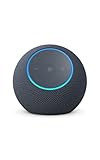
- Meet Echo Dot Max: Experience rich room-filling sound that automatically adapts to your space and fine-tunes playback. Features a built-in smart home hub and Omnisense technology for highly personalized experiences.
- Music to your ears: With nearly 3x the bass versus Echo Dot (2022 release), it fits beautifully in any space, delivering your personal sound stage with deep bass and enhanced clarity. Listen to streaming services, such as Amazon Music, Apple Music, Spotify, and SiriusXM. Encore!
- Do more with device pairing: Connect compatible Echo smart speakers and smart displays in different rooms, or pair with a second Echo Dot Max to enjoy even richer sound. Pair your Echo Dot Max with compatible Fire TV devices to create a home theater system that brings scenes to life.
- Simple smart home control: Set routines, pair and control lights, locks, and thousands of smart home devices that work with Alexa without needing a separate smart home hub. With Omnisense technology, you can activate routines via temperature or presence detection.
- Say goodbye to drop-offs and buffering - With eero Built-in, Echo Dot Max doubles as a mesh wifi extender, adding up to 1,000 sq. ft. of wifi coverage to your existing eero network.
| Decision | InvokeModelWithResponseStream |
ConverseStream |
|---|---|---|
| Request style | Model-specific Invoke request body. | Common message-oriented request structure, with optional common or model-specific settings. |
| Support to check | Model streaming support and compatibility with the model’s Invoke format. | Model support for the message API and streaming. |
| Response handling | Parse model-specific response chunks and events. | Parse Converse stream events and content blocks. |
| Required permission | bedrock:InvokeModelWithResponseStream. |
bedrock:InvokeModelWithResponseStream. |
| AWS CLI | Streaming operations are not supported by the AWS CLI. | Streaming operations are not supported by the AWS CLI. |
Choose based on the interface and request format your application needs, not an assumption that one API is universally faster. See AWS’s Converse inference guide and API compatibility overview for the distinctions among inference patterns.
How do I check model support and implement a stream?
- Check model and Region availability. Streaming support varies. Use
GetFoundationModelto inspectresponseStreamingSupported, or consult AWS’s supported foundation models listing. Confirm the intended model is available for your account and Region and supports the chosen API. - Select the API and permission. Use
InvokeModelWithResponseStreamfor a model-specific Invoke request, orConverseStreamfor a message-oriented request with a model that supports messages. Ensure the calling identity has the documented streaming permission,bedrock:InvokeModelWithResponseStream. - Read events according to the API schema. For Invoke, extract payload chunks and interpret them using the chosen model’s response format. For Converse, handle the stream’s documented message events and content blocks. Do not assume each event contains displayable text.
- Render partial output deliberately. Append received text to the in-progress response and update the interface as events arrive. Distinguish a normally completed stream from an interrupted one so the UI does not present partial output as a finished answer.
- Handle failures and decide retry behavior. The Invoke reference documents stream errors as well as timeouts, service unavailability, throttling, and validation errors. If output has already been shown, decide whether retrying could duplicate or contradict that partial answer.
- Measure both first output and completion. Track Bedrock’s
TimeToFirstTokenalongside overall invocation timing and output volume so you can tell whether a change improves first-output responsiveness, completion time, or both.
AWS documents the Invoke inference endpoint and support-check guidance. Streaming operations are not supported by the AWS CLI, so use a supported SDK or another compatible client for these calls.
Outdated Drivers Are Slowing You Down
One free scan finds every outdated or missing driver and matches the right update for your exact hardware.Free scan · exact hardware matchPC Slower Than It Used to Be?
A free scan shows the junk files, broken settings and background clutter dragging Windows down - then fixes them in one click.Free scan · Windows 10 & 11Best Value

- MEET ECHO SPOT - A sleek smart alarm clock with Alexa and big vibrant sound. Ready to help you wake up, wind down, and so much more.
- CUSTOMIZABLE SMART CLOCK - See time, weather, and song titles at a glance, control smart home devices, and more. Personalize your display with your favorite clock face and fun colors.
- BIG VIBRANT SOUND - Enjoy rich sound with clear vocals and deep bass. Just ask Alexa to play music, podcasts, and audiobooks. See song titles and touch to control your music.
- EASE INTO THE DAY - Set up an Alexa routine that gently wakes you with music and gradual light. Glance at the time, check reminders, or ask Alexa for weather updates.
- KEEP YOUR HOME COMFORTABLE - Control compatible smart home devices. Just ask Alexa to turn on lights or touch the screen to dim. Create routines that use motion detection to turn down the thermostat as you head out or open the blinds when you walk into a room.
Why might a Bedrock streaming response still feel delayed?
- The prompt takes time to prefill. A long input can hold up the first output; streaming cannot display content the model has not produced.
- The chosen model or Region does not support the path. Verify
responseStreamingSupported, message API compatibility where relevant, and current model availability. - The application buffers events. A server, proxy, or client that waits to collect chunks before forwarding or rendering them removes much of the user-visible benefit. Check that each received event is handled promptly.
- The response is long or decode is slow. Streaming may bring forward the first output while the rest of a long answer continues to generate.
- Guardrail checks delay delivery. When streaming responses are filtered by guardrails, synchronous processing can buffer and scan one or more chunks before sending them onward.
How do guardrails change the latency and safety trade-off?
AWS describes synchronous and asynchronous guardrail processing for streaming responses. The choice affects when content reaches the user and what can be known before it does.
| Mode | Delivery behavior | Practical trade-off |
|---|---|---|
| Synchronous | Guardrails buffer and scan one or more chunks before sending them to the user. | Checks happen before delivery, but waiting for those checks adds latency. |
| Asynchronous | Chunks are sent as they become available while guardrail scanning happens in the background. If inappropriate content is detected, subsequent chunks are blocked. | Earlier chunks may already have appeared before a later block. AWS says this mode does not support sensitive-information masking. |
AWS’s statement that asynchronous delivery has “no latency impact” refers to guardrail scanning not delaying chunks; it does not mean the entire request has zero end-to-end latency. Select a mode based on the consequences of showing a disallowed partial response and whether masking is required. If a later block occurs, the application must account for text already delivered.
See AWS’s streaming response filtering guidance for the documented modes and their constraints.
How does streaming work for Agents for Amazon Bedrock?
Agent responses use a separate configuration path; do not assume direct inference settings apply. By default, InvokeAgent returns the completed response in a chunk. AWS says enabling streamFinalResponse returns multiple smaller chunks and decreases latency of the initial response. Agent streaming also has execution-role permission requirements. When a guardrail is configured, applyGuardrailInterval affects how often outgoing characters are checked and therefore the chunking cadence. See AWS’s guide to invoking an agent from an application.
Quick Recap
Product prices and availability are accurate as of the date/time indicated and are subject to change. Any price and availability information displayed on Amazon at the time of purchase will apply.

