
Quick wins for a faster PC:
Repair Windows errors before they cause bigger problemsFix Now →Scan for outdated or missing drivers - takes under a minuteDriver Scan →Clear out junk files and repair common Windows errorsFree Scan →Use cron to run a small restart script on a schedule; let the script—not cron—identify and restart only the FFmpeg process that sends your stream to YouTube. First confirm the stream URL and key in YouTube Live Control Room, test the FFmpeg command manually, then schedule the script and verify the result in YouTube. A daily 03:00 user-crontab example is 0 3 * * * /absolute/path/restart-stream.sh; change the time and paths for your system.
What cron does—and what it does not do
Cron runs a command at specified times. It does not track which FFmpeg process belongs to your stream, detect whether that process is healthy, or restart it automatically when it fails. Those responsibilities belong in your script or another process-management approach.
A scheduled restart can help with a process that becomes stuck or with a planned periodic refresh. It also causes an interruption each time it runs. If the problem is only a temporary network-output failure, FFmpeg’s FIFO output recovery may be a better fit; it addresses a different failure mode than restarting the whole process. See the FFmpeg FIFO muxer documentation.
Get the YouTube output details
- Open YouTube Live Control Room and select or create the stream you intend to use. YouTube’s encoder setup instructions explain how to set up a live stream.
- Copy the current server URL and stream key shown for that stream. FFmpeg needs both to send its output to YouTube.
- Treat the stream key like a credential. Keep it out of public scripts, shared screenshots, and logs. If you reset the key in YouTube, update your encoder configuration to match.
YouTube documents RTMP and RTMPS settings and recommends RTMPS where supported. Confirm which protocol and server URL apply to your stream in Live Control Room and follow YouTube’s live encoder settings, bitrates, and resolutions; do not assume one codec, resolution, frame rate, keyframe interval, or bitrate suits every stream.
#1 Best Overall
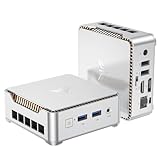
- 【Ryzen 5 3500U Processor】KAMRUI Essenx E2 Mini PC is equipped with AMD Ryzen 5 3500U (4-cores/8-threads, up to 3.7GHz) with integrated Radeon Vega 8 Graphics(1200MHz, 8 Core). The 3500U CPU operates at a base frequency of 2.1 GHz and a Boost frequency of 3.7 GHz. This DDR supports upgradable up to 32GB, SSD supports up to 2TB.(NOT INCLUED), KAMRUI E2 3500U Mini PC is ideal for light office work and home entertainment. KAMRUI E2 3500U is more than 35% more powerful and smoother in operation than the Intel N150, 33% faster than Intel N95, 28% performance boost over Intel i3-10110U, and 42% stronger processing power than AMD Ryzen 3 3200U.
- 【16GB DDR4 & 256GB SSD】The KAMRUI E2 mini computers is equipped with 16GB DDR4(Expandable up to 32GB) for faster multitasking and smooth application switching. 256GB M.2 SSD ensures fast startup times,fast file transfers and plenty of storage space,eliminating slow loading times and ensuring fast responsiveness.Storage space can RAM supports up to 32 GB, SSD supports up to 2TB (Not included)make file storage easier.
- 【4K Dual Display & USB 3.2 Type-A Port】KAMRUI E2 3500U mini desktop pc is equipped with an HDMI 2.0+DP 1.4 interfaces for faster transmission, Support Dual 4K@60Hz Display, E2 mini desktop computers is ideal for visual home entertainment, home office, conference rooms, etc. USB3.2 Gen1 Type-A Port×2 with a transfer speed of up to 5Gbps (10 times faster than USB 2.0) for efficient data transfer. The RJ45 1000M Gigabit Ethernet Port ensures a stable network connection.
- 【WiFi+Bluetooth stable connection】The Kamrui E2 micro pc have reliable and stable wireless connection, open websites in seconds, watch movies without buffering and download files smoothly, connect your monitor from WiFi or Ethernet, use a wireless keyboard and mouse through bluetooth, which will be powerful workstation for you.
- 【Versatile Ports】This KAMRUI E2 Small pc is equipped with HDMI 2.0×1(4K@60Hz)、DP1.4×1(4K@60Hz)、Gigabit Ethernet Port (RJ45, 10/100/1000Mbps) ×1、USB3.2 Gen1 Type-A Port×2(5Gbps)、USB2.0 Type-A Port×2、3.5mm Audio Jack ×1、DC In ×1、Power Button ×1
Test the FFmpeg command before scheduling it
Use the same input and output configuration that the scheduled script will use, but do not expose a real stream key in a public example or log. This schematic command shows where the destination belongs; replace the input, encoding options, URL, and key with values appropriate to your setup:
/usr/bin/ffmpeg -nostdin -re -i /absolute/path/input.mp4 [encoding options] -f flv 'rtmps://YOUR_YOUTUBE_SERVER/YOUR_STREAM_KEY'
The bracketed text is explanatory, not a literal FFmpeg option. Consult FFmpeg’s command-line documentation for valid options and your YouTube settings for the expected output format.
Rank #2
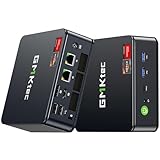
- Office Gaming Mini PC - UPGRADED GMKtec Nucbox M5 Ultra Series is equipped with the powerful AMD Ryzen 7 7730U processor, 8 Cores/16 Threads, Base 2.00GHz (Power Saving Quiet Mode) with Turbo Boost up to 4.50GHz (Performance Mode) in BIOS settings, Based on the ZEN 3+ architecture, this small but powerful mini pc delivers satisfying results in productivity, office work, and gaming. 35% Performance increase over AMD Ryzen 5 7430U/ Ryzen 7 5700U, 5600U, 5560U, 5500U.
- 16GB DDR4 RAM & 256GB PCIe SSD - Installed with DDR4 16GB RAM (1x16GB), the Nucbox M5 Ultra mini pc support expansion to 64GB RAM. Featured with 256GB M.2 2280 PCIe 3.0 SSD, support dual slot expansion to 4TB SSD. (Upgrades not included)
- DUAL NIC LAN 2.5G RJ45 - Fast Network Speeds: Enjoy up to 2500Mbps data transmission speed without worrying about lagging. Ideal for working, gaming, and surfing the internet. Great for Untangle, Pfsense or as a server office PC.
- Mini Desktop Computer with 4K Triple Screen Display - Nucbox M5 Ultra integrates AMD Radeon Graphics 8 Cores 2000 MHz GPU to deliver powerful graphics processing power to easily handle the demands of complex design software, 4K@60Hz UHD video editing, and playback. It can connect to 3 display screens simultaneously.
- Fast Internet WiFi 6E + BT5.2 Connection - GMKtec Mini PC with WiFi-6E Wireless, have 2.5G/5G/6G triple band, more faster and lower latency. Bluetooth 5.2 allowing you more quickly to connect other wireless devices (headset, mouse, keyboard, etc.) Interface features 2*USB3.2 ports, 2*USB2.0 ports, 1*HDMI 2.0 port(4K@60Hz), 1*USB-C port(PD/DP/DATA), 1*DP Port, 1*Audio 3.5mm (HP&MIC), 1*DC Power Port.
-nostdinprevents FFmpeg from handling console input, which is useful for unattended or background operation. See FFmpeg’s background-operation FAQ.-rereads input at its native frame rate. It can pace a file for live streaming, but FFmpeg warns against using a low read rate on actual live inputs because it can cause packet loss. Do not add it blindly to a live capture or network feed. See FFmpeg’s documentation on input options.- Use absolute paths for FFmpeg and input files. Cron has a limited environment compared with an interactive shell, so do not rely on your usual shell path or working directory.
Run the command manually first and check that YouTube receives it. YouTube’s encoder settings guidance and live streaming tips cover configuring and testing the encoder.
Build a restart script that targets one stream
There is no universal safe restart script for every Linux distribution or deployment: the right process identity method depends on how FFmpeg is launched. Prefer a service manager or a PID file created and maintained by the stream process. If you use process matching, make the match specific to this stream and verify it before terminating anything; a broad command that kills every FFmpeg process can interrupt unrelated work.
The following is a structure, not a drop-in script. Replace the clearly marked process-management section with a method tested for your system, and put the complete, tested FFmpeg command in the start section. Keep secrets in a protected configuration file or other suitable secret store rather than writing the key into a world-readable script.
Rank #3

- 【AMD Ryzen 3 5300U CPU: Outperforms N150 & 3500U】 BOSGAME E5 mini PC is powered by the TSMC 7nm FinFET architecture AMD Ryzen 3 5300U processor (4 Cores, 8 Threads, up to 3.8GHz boost, 6MB total cache). Compared to low-end Intel N150 or 3500U chips which only have 4 single threads and throttle under load, the 5300U delivers over 30% faster multi-core speed. Run 30+ browser tabs, large Excel sheets, and Zoom meetings simultaneously without system lag.
- 【8GB DDR4 RAM & 256GB NVMe SSD Storage】 Installed with high-speed 8GB DDR4 dual-channel memory and a fast 256GB M.2 2280 SSD, eliminating slow boot times and application loading delays. To accommodate growing data requirements, the upgradeable hardware design features dual SODIMM slots that allow you to expand memory up to 64GB RAM, ensuring smooth operation during heavy multitasking.
- 【High-Capacity Dual M.2 SSD Storage Expansion】 Never worry about running out of space for your business files. In addition to the pre-installed 256GB system drive, the motherboard houses an extra empty internal M.2 2280 NVMe PCIe 3.0 slot. This allows you to easily add a second solid-state drive for up to an additional 2TB of storage capacity (upgrades not included) without needing to remove or reinstall the original operating system.
- 【Radeon 6-Core Graphics & Triple 4K Displays】 Integrated with official AMD Radeon Graphics (6 Graphics Cores, 1500 MHz frequency) for casual gaming, photo editing, and crisp 4K media decoding. Featuring 1x HDMI 2.0 port, 1x DisplayPort, and 1x Full-Function Type-C port, the E5 outputs true 4K@60Hz resolution to three monitors at once. This multi-screen setup eliminates constant window-switching for traders, programmers, and office workers.
- 【Dual 2.5GbE LAN Ports for Advanced Networking】 Experience fast wired network transmission speeds up to 2500Mbps without lagging or buffering. The integration of dual 2.5 Gigabit Ethernet ports (powered by Realtek RTL8125 controller) makes this compact computer an exceptional hardware choice for tech enthusiasts. Easily configure it into software routers, hardware firewalls (pfSense, OpnSense), home NAS servers, or local homelabs.
#!/bin/sh
set -eu

LOG=/absolute/path/stream-restart.log
{
  printf 'n[%s] Restart requestedn' "$(date -Is)"

  # Stop only this stream using your verified PID-file,
  # service-manager, or process-identity method.
  # Wait for it to exit; do not kill unrelated FFmpeg jobs.

  # Start the configured FFmpeg command with -nostdin.
  # Redirect its diagnostic output to a protected log.

  printf '[%s] Start command issuedn' "$(date -Is)"
} >> "$LOG" 2>&1
Make the script executable with chmod 750 /absolute/path/restart-stream.sh, and ensure its owner and permissions prevent other users from reading any secret-bearing configuration. The example logs the restart request and outcome markers only; add meaningful start and stop diagnostics in your implementation. Avoid logging a command line containing the unredacted stream key.
Schedule the restart with cron
- Install the entry in the account that owns the FFmpeg process: run
crontab -eto edit that user’s crontab. - Add a five-field schedule followed by the absolute script path. For example,
0 3 * * * /absolute/path/restart-stream.shruns daily at 03:00 according to the cron daemon’s local time. - Save the crontab, then confirm the entry with
crontab -l. - Check your system’s cron logs or the script’s own log after the scheduled time. Cron checks entries each minute; day-of-month and day-of-week matching rules can affect schedules that specify both fields. See the Debian crontab reference for syntax and scheduling behavior.
Choose a time when a short stream interruption is acceptable. Account for the cron system’s local time and daylight-saving changes rather than assuming the schedule is UTC. The exact behavior can depend on the cron implementation and system configuration.
The Tool Desk
Outbyte PC Repair FREERepair Windows errors before they cause bigger problemsFix Now →Outbyte Driver Updater FREEScan for outdated or missing drivers - takes under a minuteDriver Scan →Verify delivery in YouTube, not just the process
A running FFmpeg process proves only that the process exists; it does not prove that video and audio are reaching YouTube correctly. After a manual or scheduled restart:
Rank #4

- 12th Intel Alder Lake N95 Processor – The GMKtec G3 S Mini PC is powered by the 12th Gen Intel N95 processor with 4 cores, 4 threads, 6MB cache and a burst frequency up to 3.4GHz. Compared with N100/N5105/N5100/N5095, the N95 delivers up to 36% overall performance improvement. Perfect for routine tasks, office work, and home entertainment, this compact mini desktop is more convenient than traditional bulky PCs.
- 8GB RAM & 256GB SSD Storage – Pre-installed with 8GB DDR4 memory and a fast 256GB M.2 2242 SSD, the G3 S mini desktop offers quicker startup, smoother multitasking, and faster file transfers. Enjoy seamless performance whether you’re working on multiple applications, browsing, or streaming content.
- Rich Interfaces & Connectivity – The G3 S mini computer comes equipped with USB 3.2 (up to 10Gbps), dual HDMI 2.0 (4K@60Hz), and a 3.5mm audio jack. With support for WiFi 5, Bluetooth 5.0, and Gigabit Ethernet (RJ45 1000MbE), it connects easily with monitors, projectors, printers, office equipment, and other peripherals, making it versatile for both home and business use.
- Dual 4K Display Support – Featuring upgraded Intel UHD Graphics (up to 1000MHz), the G3 S supports 4K video playback and AV1 decoding for a smooth viewing experience. With dual HDMI outputs, you can connect two 4K@60Hz displays simultaneously, enabling efficient multitasking for work and entertainment.
- GMKtec WARRANTY - GMKtec offers a 1-year limited GMKtec's warranty for each mini PC, starting from the date of the purchase. All defects due to design and workmanship are covered. With a professional after sales team always ready to attend to your needs, you can simply relax and enjoy your mini PC.
- Inspect the script and FFmpeg logs for errors, while confirming they do not reveal the stream key.
- Check the stream preview and health indicators in YouTube Live Control Room.
- Confirm that the intended audio and video are present and that the configured resolution, frame rate, keyframe interval, and available upload bitrate are appropriate for the stream.
- Check from a viewer’s perspective that the stream is available after the restart.
YouTube recommends testing the encoder and monitoring stream health; see its live streaming tips and encoder settings guidance.
Independent reader supportYour contribution helps us test, update, and keep practical guides available for everyone.Choose between a scheduled restart and error recovery
| Situation | Approach to consider | Trade-off |
|---|---|---|
| FFmpeg is stuck or needs a planned refresh | A cron-triggered script that safely restarts the identified stream process | Restarts at scheduled times, even if the stream is healthy; each restart interrupts delivery. |
| Output encounters a temporary network failure | FFmpeg FIFO output recovery | Designed to attempt recovery from temporary output trouble rather than restart the entire process. Configure and test it for your FFmpeg build and output. |
| FFmpeg exits unexpectedly and should be brought back promptly | A process supervisor or service manager configured to restart the specific service | Behavior depends on the manager and service configuration; a fixed cron schedule alone does not watch for exits. |
These approaches solve different problems. Decide whether you need a fixed-time restart or recovery only after an error, whether the input is a file or live feed, and how much interruption is acceptable. FFmpeg documents FIFO recovery in its FIFO muxer documentation; cron’s role is time-based command execution, as described in the crontab reference.
Troubleshoot common failures
- The scheduled job does not run: Confirm the entry with
crontab -l, use an absolute script path, check file permissions and cron logs, and make sure the entry is installed for the intended user. - The script runs interactively but fails under cron: Use absolute paths for commands and files, avoid relying on shell startup settings, and record standard output and errors in a protected log.
- The restart terminates the wrong process: Stop using broad FFmpeg process matching. Identify the stream with a dedicated PID file, service unit, or sufficiently specific process identity, then test the stop behavior without risking other streams.
- FFmpeg starts but YouTube receives no stream: Recheck the current server URL, stream key, output protocol, and format. Verify the key was not reset and confirm the command works manually.
- A file plays too quickly or a live input drops packets: For file input intended to be sent in real time, consider
-re. Do not use that guidance blindly for live inputs; FFmpeg warns that low-rate reading of actual live inputs can cause packet loss. - The process is running but playback is unhealthy: Review FFmpeg diagnostics and YouTube Live Control Room health indicators, then check the actual audio/video and encoder settings rather than relying on process status alone.
Or let it run in the cloud
If your goal is to keep uploaded videos playing on a YouTube channel without maintaining a Linux machine and cron setup, StreamNeo is a cloud option: upload a recording or build a playlist, add your YouTube stream key, and go live. It streams uploaded videos to YouTube, not from a camera. Nothing has to stay on at home; each slot streams the video as uploaded, up to 4K 60fps, at one flat price per slot, with automatic recovery if YouTube drops the stream. The first day is free with no card. Monthly pricing is $9.99 per month. Start your free day with StreamNeo.
Quick Recap
Product prices and availability are accurate as of the date/time indicated and are subject to change. Any price and availability information displayed on Amazon at the time of purchase will apply.

