
Quick wins for a faster PC:
Fix the driver behind crashes, sound loss and screen glitchesFind Drivers →Clear out junk files and repair common Windows errorsFree Scan →Scan for outdated or missing drivers - takes under a minuteDriver Scan →Before buying laptop RAM, confirm that your exact laptop model supports an upgrade and check the module type, generation, capacity, and slot layout it accepts. Some laptops have soldered memory or no user-accessible upgrade path, so a memory stick that looks right is not enough. Use the manufacturer’s service documentation as the authority, then cross-check the intended configuration with a model-specific compatibility tool.
1. Identify the exact laptop model
Find the full model name and product number, not just the broad family name printed on the lid. Laptop configurations can differ within the same product line, and that can affect whether memory is removable and which upgrades are supported.
Look for the model information on the laptop’s label, in its system information, or in the manufacturer’s support pages. Use that exact identifier when searching the maker’s specifications and service documentation.
2. Confirm whether the RAM can be upgraded
Check the manufacturer’s service manual or specifications to determine whether memory is socketed, soldered, or a mix of both. Also check whether the case is designed to be opened for memory service and whether any upgrade limits apply to your configuration. Kingston recommends checking compatibility against the laptop model and explains that upgrade options depend on the system (Kingston memory support; Kingston memory search).
#1 Best Overall

- A-Tech 16GB RAM Module, DDR4 SO-DIMM 260-Pin, 3200MHz PC4-25600 (PC4-3200AA)
- Non-ECC Unbuffered, JEDEC DDR4 Standard 1.2V Operating Voltage
- Compatible with select Laptop, Notebook, Mini PC, and All-in-One (AIO) systems. Please verify your system's memory type, form factor, and maximum supported capacity before purchasing
- Not compatible with desktop DIMM, non DDR4 memory, or ECC memory types such as RDIMM, LRDIMM, and ECC UDIMM
- Increases available memory capacity to enhance system responsiveness, application performance, and multitasking capabilities.
A model-specific memory finder is a useful cross-check, but it should not override the laptop maker’s service documentation. If the manufacturer does not establish a user-accessible upgrade path, do not assume that an available slot or compatible-looking module will work.
3. Check slots, installed modules, and capacity limits
Before deciding what to buy, establish how many memory slots the laptop has, how many are occupied, and whether any memory is soldered. Check the supported maximum total capacity and per-slot capacity for your exact model. Windows Task Manager can show memory use and may report slot information, but use the manufacturer’s documentation to confirm supported configurations (Kingston’s laptop RAM upgrade guide).
Rank #2
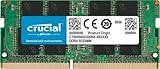
- Boosts System Performance:16GB DDR4 laptop memory that operates at 3200MHz to improve multitasking and system responsiveness for smoother performance
- Easy Installation: Upgrade your laptop RAM with ease—no computer skills required Follow step-by-step how-to guides available at Crucial for a smooth, worry-free installation
- Compatibility Guaranteed: Ensure seamless compatibility with your laptop by using the Crucial System Scanner or Crucial Upgrade Selector—get accurate recommendations for your specific device
- Trusted Micron Quality: Backed by 42 years of memory expertise, this DDR4 RAM is rigorously tested at both component and module levels, ensuring top performance and reliability for your Mac system
- ECC Type = Non-ECC, Form Factor = SODIMM, Pin Count = 260-pin, PC Speed = PC4-25600, Voltage = 1.2V, Rank and Configuration = 1Rx8 or 2Rx8
- An open compatible slot: You may be able to add a module, subject to the model’s supported configuration.
- All slots occupied: Upgrading may require replacing one or more existing modules.
- Soldered memory: A laptop may have no removable RAM, or only limited socketed memory in addition to soldered RAM.
Adding a module and replacing existing modules are different upgrade paths. Check the manufacturer’s recommended arrangement, including whether it specifies a particular combination for the memory channels, before choosing between them (Kingston memory search).
4. Match the full memory specification
Capacity alone does not establish compatibility. Compare the proposed module with the laptop’s documented requirements across all of these characteristics:
Rank #3

- Boosts System Performance:64GB DDR4 laptop memory RAM kit (2x32GB) that operates at 3200MHz, 2933MHz, or 2666MHz to improve multitasking and system responsiveness for smoother performance
- Easy Installation: Upgrade your laptop RAM with ease—no computer skills required Follow step-by-step how-to guides available at Crucial for a smooth, worry-free installation
- Compatibility Guaranteed: Ensure seamless compatibility with your laptop by using the Crucial System Scanner or Crucial Upgrade Selector—get accurate recommendations for your specific device
- Trusted Micron Quality: Backed by 42 years of memory expertise, this DDR4 RAM is rigorously tested at both component and module levels, ensuring top performance and reliability
- ECC Type = Non-ECC, Form Factor = SODIMM, Pin Count = 260-pin, PC Speed = PC4-25600, Voltage = 1.2V, Rank and Configuration = 2Rx8
- Memory generation: Match the supported generation, such as DDR4 or DDR5. Different generations are not interchangeable.
- Form factor: Check the physical module type. Laptop SO-DIMMs and desktop DIMMs are not interchangeable.
- Capacity: Stay within the laptop’s documented total and per-slot limits.
- Speed and electrical specification: Confirm the supported speed and voltage or other relevant specification for the model.
- Module density and platform support: Some older platforms may not support newer, higher-density modules. Some newer DDR5 modules may also depend on chipset or BIOS support (Kingston memory support).
Use the laptop maker’s specifications and a reputable model-specific memory finder together. Do not choose the fastest advertised speed or the largest capacity unless the exact laptop supports that configuration.
5. Decide whether to add RAM or replace it
If a supported slot is free, adding a compatible module may be an option. If the slots are full, you may need to replace existing modules; the correct choice depends on the system’s supported capacity and arrangement. Kingston describes both adding memory to an empty slot and replacing existing modules as possible upgrade paths, depending on the computer (Kingston memory search).
Rank #4
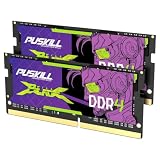
- Smooth 3200MHz Gaming Performance: Give your gaming laptop the speed it deserves. With 3200MHz frequency and CL22-22-22-52 timing, this DDR4 SODIMM kit delivers responsive gameplay in AAA titles and faster level loading compared to stock 2666MHz laptop memory.
- Massive 32GB Dual-Channel Kit (2×16GB): Run your game, Discord, streaming software, and browser tabs simultaneously without stutter or lag. 32GB is the sweet spot for today's most demanding titles. Dual-channel architecture maximizes your laptop CPU's memory bandwidth for smoother multitasking.
- True Plug-and-Play Laptop Upgrade: No BIOS settings. No manual tuning. Just install the two SODIMM modules into your laptop's memory slots, power on, and it runs at 3200MHz automatically. The easiest performance upgrade you'll ever make.
- Cost-Effective Performance Boost: Get premium 32GB capacity and 3200MHz speed at a price that makes sense. Whether you're upgrading an older gaming laptop or building out a new one, PUSKILL delivers the performance you need without breaking your budget.
- What You Get: PUSKILL 32GB DDR4 3200MHz SODIMM Kit (2×16GB), quick-install guide, lifetime warranty, and responsive customer support. Each module is burn-in tested for guaranteed laptop compatibility and stability.
Compare configurations by supported total capacity, per-slot limits, generation, form factor, speed, and density. Follow any manufacturer guidance on module pairing or channel arrangement rather than assuming that a particular number or combination of modules is always best.
Independent reader supportYour contribution helps us test, update, and keep practical guides available for everyone.6. Install a SO-DIMM using the model’s service instructions
The following is general handling guidance for a removable SO-DIMM, not a substitute for the laptop’s service manual. Case access, fasteners, battery handling, and installation order vary by model. Kingston’s laptop-memory instructions advise disconnecting power, using anti-static precautions, inserting a module at an angle, and lowering it until the latches engage (Kingston memory installation instructions).
Best Value

- A-Tech 8GB RAM Module, DDR4 SO-DIMM 260-Pin, 2666MHz / 2667MHz PC4-21300 (PC4-2666V)
- Non-ECC Unbuffered, JEDEC DDR4 Standard 1.2V Operating Voltage
- Compatible with select DDR4 SODIMM capable Laptop, Notebook, Mini PC, and All-in-One (AIO) computer systems. Please verify your system's memory type, form factor, and maximum supported capacity before purchasing
- Not compatible with desktop (DIMM), DDR2, DDR3, DDR5, ECC Registered (RDIMM), ECC Load Reduced (LRDIMM), or ECC Unbuffered (ECC UDIMM) memory types
- Increases available memory capacity to enhance system responsiveness, application performance, and multitasking capabilities.
- Shut down the laptop and disconnect the power adapter. Remove a battery only if it is removable and the manufacturer’s service procedure calls for it.
- Work on a stable surface. Use an earthed anti-static wrist strap or touch unpainted grounded metal before handling the module.
- Open the memory access panel or case according to the manufacturer’s instructions.
- If removing a SO-DIMM, release its side clips and let the module rise before pulling it from the socket.
- Align the new module’s notch with the socket key. Insert it at about a 30-degree angle, then rotate it down until the retaining tabs engage.
- Reassemble the laptop, reconnect power, and confirm that the system recognizes the expected memory.
7. Verify recognition and troubleshoot carefully
After installation, check the system’s reported memory amount. If the laptop will not boot or reports less memory than expected, power it down and verify that the module is compatible and fully seated. Then follow the manufacturer’s installation order and troubleshooting guidance.
A BIOS update may resolve some memory-recognition issues, but it is not a first step to take casually. Kingston recommends following the laptop manufacturer’s instructions for BIOS updates (Kingston memory support).
8. Decide whether an upgrade addresses your performance problem
More RAM can help when a workload is running short of physical memory, for example when several programs or memory-intensive tasks need to remain active. It is not a guaranteed speed upgrade for every task: Kingston states that additional memory will not necessarily improve computer performance (Kingston memory support). Check your actual memory use and the work you want to improve before buying.
Quick Recap
Product prices and availability are accurate as of the date/time indicated and are subject to change. Any price and availability information displayed on Amazon at the time of purchase will apply.
What’s actually slowing this PC down?
Pick the symptom - the matching free tool is one click away.

