
Recommended Free Tools
The most practical SSD upgrade for a ThinkPad X41 is an X40/X41-compatible 1.8-inch IDE adapter with a small mSATA SSD, configured for the bay’s 3.3V power. It is a reversible, lower-risk installation, but it does not bypass the motherboard’s SATA-to-PATA bridge. A direct SATA conversion can use the X41’s native SATA connection, but requires delicate board-level rework and is best left to experienced electronics hobbyists.
Why a standard SSD swap may not speed up the X41
The X41 is a 2005-era system built around Intel’s 915GM chipset and ICH6-M. Although the platform supports SATA at 1.5 Gbit/s, the motherboard routes the drive connection through a Marvell 88SA8040 SATA-to-PATA bridge so it can use the original 1.8-inch PATA drive. That means an SSD connected through the existing drive path still communicates with the system over PATA.

As Hackaday editor Mike Szczys put it, “But simply dropping in an SSD isn’t going to make things faster.” An SSD may still offer practical benefits over an aging mechanical drive, but the available reports do not provide a controlled comparison that quantifies those benefits for the X41. An mSATA drive in an IDE adapter is a compatibility-focused replacement, not a native-SATA conversion.
Choose the upgrade path that fits your skills and goal
| Consideration | mSATA-to-IDE adapter | Direct SATA modification |
|---|---|---|
| What it changes | Replaces the 1.8-inch PATA drive with an mSATA SSD and an IDE/PATA adapter; keeps the motherboard bridge. | Removes the Marvell bridge and wires the SSD to the motherboard’s SATA pads. |
| Soldering skill | No motherboard-level soldering is described for the adapter installation. | Requires hot-air bridge removal and fine wiring of SATA differential pairs. |
| Reversibility | The motherboard bridge remains in place, making this the more reversible route. | Bridge removal and board wiring make the modification difficult to reverse. |
| Power and fit | Requires an X40/X41-compatible 1.8-inch IDE adapter designed for 3.3V power and a physical fit in the bay. | Requires a suitable internal SSD mounting arrangement and a power connection; one reported build took +5V from a USB connector. |
| Link and performance evidence | Uses the bridged PATA path. The adapter installation report did not publish CrystalDiskMark results. | Uses the native SATA path. One modified X41 reported 811.90 MB/sec cached reads and 119.00 MB/sec buffered disk reads in Linux hdparm -tT; these are not a controlled comparison or a guarantee of application or boot-time improvement. |
| BIOS work | No custom BIOS requirement is stated for the reported adapter installation. | A custom BIOS was reported as necessary to remove Error 2010 for non-IBM hard drives; that BIOS also removes the WLAN whitelist. |
| Physical and board risk | Requires opening the machine to reach the recessed connector; the upper cover and fingerprint-sensor cable require care. | High risk of board damage during hot-air removal and wiring, in addition to chassis installation work. |
Option 1: Install an mSATA SSD with a 3.3V IDE adapter
Check the adapter before opening the laptop
Buy an adapter explicitly intended for the X40/X41 or for Hitachi 1.8-inch IDE wiring. Confirm that its voltage switch or regulator is set for 3.3V, and check the board, connector, and mounting hardware against the X41 bay. A generic 2.5-inch SATA-to-IDE adapter should not be assumed to fit electrically or mechanically. Ordinary 2.5-inch 5V drives are not drop-in replacements for this 3.3V bay.
What’s actually slowing this PC down?
Pick the symptom - the matching free tool is one click away.
#1 Best Overall

- Effortlessly upgrade your laptop with this converter, allowing a mSATA SSD to function as a 1.8-inch 44-pin IDE SSD. Designed specifically for 3.3V Mini PCIe SSD (mSATA module), it breathes new life into older systems like the ThinkPad X40 and X41.
- This adapter features a 44-pin standard male IDE connector, ensuring a secure and compatible connection. Please note it is designed solely for mSATA SSD; Mini PCIe PATA or SSDs are not supported.
- Built for broad compatibility, this converter works seamlessly with a wide range of operating systems including DOS, 3.1, NT4, 98SE, ME, 2000, , Vista, UNIX, and , making it a versatile solution hardware.
- Convert your 1.8-inch IDE hard drive to a more reliable and faster mSATA SSD. This card is specifically engineered for mSATA SSDs and compatible devices such as mSATA series, X40/X41T, PM800 series, and mSATA SSDs.
- The card supports only 1.8-inch 3.3V IDE interfaces. It should not be connected to a 2.5-inch IDE interface to prevent damage. The compact size (approx. 57mm x 41.5mm) makes it an ideal fit for ultra-portable laptops.
A 2013 installation report used a Plextor PX-64M5M mSATA SSD with an adapter labeled “Hitachi 1.8” IDE 3.3V”; the X41 recognized the assembly. That report establishes one successful combination, not universal compatibility across SSD capacities, controllers, BIOS versions, or operating systems.
Install it carefully
- Back up the existing drive and prepare recovery media before disassembly.
- Remove the keyboard and upper cover to reach the recessed IDE connector. Work carefully around the upper cover and fingerprint-sensor cable.
- Set the adapter for 3.3V power, if it has a switch or configurable regulator. Verify the setting before connecting the SSD.
- Fit the mSATA SSD to the adapter, then connect the adapter to the X41’s drive connector without forcing or twisting it.
- Check clearance beneath the palmrest, secure the assembly, and insulate any exposed board or connector areas that could short against the chassis.
- Reassemble the laptop and check that the BIOS and operating system recognize the drive. Confirm the operating system can boot before relying on the machine.
The installation account does not publish a benchmark, so treat this as a way to replace the legacy drive with solid-state storage while retaining the bridged interface—not as proof of a particular speed increase.
Rank #2
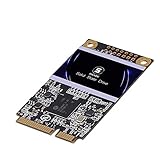
- 【Excellent Performance】 SSD hard disk gets good performance at fast read and write speed, and its continuous read and write speed is greatly improved. With such an excellent solid state disk, file transfer and software startup will be faster.
- 【High Stability】 The multifunctional internal ssd supports bad block managements, TRIM command, garbage collection technology, S.M.A.R.T monitor system and ECC technology (error checking and correction), which greatly enhancing the stability of data read-write and transmission.
- 【Data Safety】The sata ssd product adopts original flash memory chip and has passed broad compatibility and reliability tests. With industry-leading 1.75M MTTF (Mean Time To Failure) and various error correction technologies, the portable ssd can protect your data safety well.
- 【Three-year Warranty】Compared the 1-2 year warranty of other ssd products, we provide 3-year warranty because we are confident in the high-quality ssd product.
- 【Economical Choice】 Our company has over ten years manufacturing experience and good reputation in this field of ssd products, which guarantees the product quality.
Option 2: Bypass the bridge for a direct SATA connection
This is a board modification, not a simple drive swap. The reported method removes the Marvell 88SA8040 with hot air, connects SATA differential pairs to exposed motherboard pads, and mounts a SATA SSD inside the chassis. The builder used thin magnet wire, matched the lengths of the differential-pair wires, added a 22 µF 10 V electrolytic capacitor, and drew +5V from a USB connector. The report says the Linux kernel showed no SATA errors and recommends using the original SATA cable where possible.
Those construction details describe one successful build; they are not a validated wiring plan for every X41 board. SATA signal routing and fine-pitch component removal are unforgiving. A mistake can damage the motherboard, and the finished drive still needs secure mounting and insulation from conductive surfaces.
Rank #3

- 3D NAND Flash Memory: Utilizes advanced 3D NAND technology to increase storage density and reliability.
- High-Speed Data Transfer: Supports the SATA III 6Gb/s interface, delivering read speeds up to 560 MB/s and write speeds up to 500 MB/s, ensuring quick data access and reduced load times.
- Advanced Reliability Features: Incorporates Global Wear-Leveling and Block Management technologies to prolong the drive's lifespan, along with built-in Low-Density Parity Check (LDPC) Error Correction Code (ECC) to maintain data integrity.
- Enhanced Functionality Support: Supports advanced features such as Garbage Collection, S.M.A.R.T. function, Security Command, TRIM, and NCQ commands, contributing to optimal performance and drive health.
- Three-year Limited Warranty
Plan BIOS work as a separate risk
The direct-SATA report says a custom BIOS is needed to remove Error 2010 for non-IBM hard drives. The same BIOS also removes the WLAN whitelist. BIOS flashing is a separate, recovery-sensitive operation: have a verified BIOS image and a recovery plan before proceeding, rather than treating the flash as an incidental step in the soldering work.
Interpret the reported performance carefully
Michał Słomkowski’s 2016 modified-X41 build reported these Linux hdparm -tT results:
- 811.90 MB/sec cached reads.
- 119.00 MB/sec buffered disk reads.
These are measurements from one modified X41, one SSD, and one Linux configuration. They show that the native SATA connection was used in that build, but they are not a controlled stock-versus-upgrade test and do not establish a boot-time or application-speed multiplier.
Independent reader supportYour contribution helps us test, update, and keep practical guides available for everyone.Compatibility and preparation checklist
- Confirm that the replacement and adapter match the X41 or X41 Tablet’s 1.8-inch bay and connector geometry.
- For the adapter route, verify the 3.3V setting and the adapter’s intended X40/X41 or Hitachi 1.8-inch IDE wiring.
- Check physical clearance under the palmrest and prevent exposed hardware from contacting the chassis.
- Check that the chosen SSD’s capacity and controller work with the legacy BIOS and operating system you plan to use; compatibility is not established for every drive.
- Back up data and prepare recovery media before opening the laptop. For direct modification, separately prepare a verified BIOS image and recovery plan before flashing.
Compatibility-first alternatives
If the priority is a simpler replacement rather than native SATA, a 1.8-inch PATA SSD or a CompactFlash-to-IDE adapter may be alternatives. They retain the bridged PATA path, so they are not direct SATA conversions. The available reports do not establish comparative performance, capacity limits, or compatibility for every such device.
The Tool Desk
Outbyte Driver Updater FREEScan for outdated or missing drivers - takes under a minuteDriver Scan →Outbyte PC Repair FREERepair Windows errors before they cause bigger problemsFix Now →Quick Recap
Best Value
- [COMPATIBILITY] Designed to allow MSATA SSD to be used as a 1.8-inch 44pin IDE SSD, perfect for thinkpad x40 x41
- [EASY PLUG & PLAY] No complicated installation required, simply plug in and start using
- [STABLE PERFORMANCE] Ensures reliable data transfer with support for 3.3V Mini PCI E SSD
- [WIDE APPLICATION] Compatible with DOS, , UNIX, , making it versatile for various systems
- [DURABLE MATERIAL] Constructed with PCB material for long-lasting use
Product prices and availability are accurate as of the date/time indicated and are subject to change. Any price and availability information displayed on Amazon at the time of purchase will apply.

