
Recommended Free Tools
When Chrome runs out of memory during a Selenium screenshot job, first determine which part of Chrome is growing: JavaScript and DOM objects, native or GPU allocations, or another process-level resource. A heap snapshot can expose retained page objects, but it cannot account for all Chrome memory. Record the failure conditions, verify the browser-driver versions, then compare measurements while changing one factor at a time.
Record the conditions around the failure
Before changing flags or increasing memory limits, capture enough detail to reproduce the issue. The measurements below are diagnostic, not a universal capacity formula; the reviewed documentation does not establish a safe RAM allocation or concurrency ceiling for all Selenium screenshot workloads.
- Chrome version and ChromeDriver version, including their major versions.
- Operating system and any container or process memory limits.
- Whether Chrome runs headless and the actual Chrome binary and command-line arguments used.
- Screenshot viewport and resulting image dimensions; note whether captures are viewport or full-page.
- Number of concurrent browser sessions and capture frequency.
- Whether memory rises after each navigation, screenshot, or repeated page action, and whether it falls after a clean-state reset or session restart.
Compare a single session with the failing concurrency, keeping the page and capture dimensions consistent. This helps distinguish a per-page retention pattern from resource pressure that appears only when work is parallelized.
Verify Chrome and ChromeDriver setup
Selenium’s Chrome-specific guidance says Chrome and ChromeDriver should have matching major versions. It also states that Selenium 4 is compatible with Chrome v75 and greater; compatibility guidance can change, so check the live page and the versions actually installed in your environment.
#1 Best Overall

- [Color] PCB color may vary (black or green) depending on production batch. Quality and performance remain consistent across all Timetec products.
- DDR3L / DDR3 1600MHz PC3L-12800 / PC3-12800 240-Pin Unbuffered Non-ECC 1.35V / 1.5V CL11 Dual Rank 2Rx8 based 512x8
- Module Size: 16GB KIT(2x8GB Modules) Package: 2x8GB ; JEDEC standard 1.35V, this is a dual voltage piece and can operate at 1.35V or 1.5V
- For DDR3 Desktop Compatible with Intel and AMD CPU, Not for Laptop
- Guaranteed Lifetime warranty from Purchase Date and Free technical support based on United States
- Log the installed Chrome and ChromeDriver versions from the same machine or container that runs the job.
- Confirm their major version numbers match. If they do not, install a compatible pair before drawing conclusions from memory tests.
- Inspect the Selenium configuration to confirm the Chrome binary and arguments being passed. Selenium documents Chrome options including
--headless=newand--user-data-dir=.... - Repeat the failing workload after correcting any mismatch, without changing other variables.
Headless mode is not a general memory fix. Chromium documents headless use for server-side work including bitmap generation, but the reviewed guidance does not say that headless inherently uses less memory or resolves out-of-memory failures. Chromium also notes that the old headless implementation stopped being part of the Chrome binary as of M132; users needing its old functionality are directed to chrome-headless-shell. Check that version-specific guidance against the Chrome build you deploy at Chromium’s headless documentation.
Check for retained JavaScript or DOM objects
If memory grows as the same page action is repeated, use heap snapshots to look for objects that remain reachable after the action should be over. Chrome’s heap snapshot guide describes comparing snapshots and inspecting retained objects and DOM structures.
Rank #2
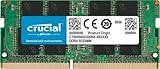
- Boosts System Performance:16GB DDR4 laptop memory that operates at 3200MHz to improve multitasking and system responsiveness for smoother performance
- Easy Installation: Upgrade your laptop RAM with ease—no computer skills required Follow step-by-step how-to guides available at Crucial for a smooth, worry-free installation
- Compatibility Guaranteed: Ensure seamless compatibility with your laptop by using the Crucial System Scanner or Crucial Upgrade Selector—get accurate recommendations for your specific device
- Trusted Micron Quality: Backed by 42 years of memory expertise, this DDR4 RAM is rigorously tested at both component and module levels, ensuring top performance and reliability for your Mac system
- ECC Type = Non-ECC, Form Factor = SODIMM, Pin Count = 260-pin, PC Speed = PC4-25600, Voltage = 1.2V, Rank and Configuration = 1Rx8 or 2Rx8
- Open the page in Chrome DevTools and take a baseline heap snapshot.
- Perform the suspect operation, such as navigation followed by a screenshot.
- Return to the intended clean state or perform the inverse action. Repeat the operation and reset several times.
- Take a later snapshot and compare it with the baseline. Inspect objects added and retained, detached DOM structures, and their retaining paths.
- If a particular reference or page subtree keeps objects reachable, correct the application’s cleanup or reference handling, then repeat the snapshot comparison to verify the change.
A heap snapshot measures reachable JavaScript and DOM-related objects; it is not a complete accounting of Chrome’s native allocations, GPU use, or every process. A stable heap therefore does not rule out other Chrome memory pressure.
Choose a diagnostic tool for the memory layer
Chrome spans multiple memory contexts. Chromium’s memory tooling documentation cautions: “No single tool can give a full view of memory usage in Chrome.” Select a tool based on what the evidence suggests, rather than treating every memory rise as a JavaScript leak.
Windows Errors? Fix Them Before They Spread
Repair common Windows errors and clear accumulated junk for a smoother, more stable PC - no reinstall needed.Free scan · no reinstallCrashes, No Sound, or Screen Glitches?
Random freezes, missing sound and display glitches usually trace back to one bad driver. Find and replace yours safely.Free scan · under a minuteRank #3

- A-Tech 8GB RAM Module, DDR4 SO-DIMM 260-Pin, 2666MHz / 2667MHz PC4-21300 (PC4-2666V)
- Non-ECC Unbuffered, JEDEC DDR4 Standard 1.2V Operating Voltage
- Compatible with select DDR4 SODIMM capable Laptop, Notebook, Mini PC, and All-in-One (AIO) computer systems. Please verify your system's memory type, form factor, and maximum supported capacity before purchasing
- Not compatible with desktop (DIMM), DDR2, DDR3, DDR5, ECC Registered (RDIMM), ECC Load Reduced (LRDIMM), or ECC Unbuffered (ECC UDIMM) memory types
- Increases available memory capacity to enhance system responsiveness, application performance, and multitasking capabilities.
| Approach | Best fit | What it shows and its limits |
|---|---|---|
| DevTools heap snapshots | Suspected renderer-side JavaScript or DOM retention | Compare retained objects and DOM structures at selected points. Does not cover all native, GPU, or process memory. |
| Global Memory Dumps or a memory-infra trace | Per-process or subsystem allocation questions | Provides a broader subsystem view than a page heap alone. Self-reported subsystem statistics can omit resources. |
diff_heap_profiler.py and heap dumps |
Changes in native heap allocations over time | Chromium documents these for examining native heap allocation changes. Collection and analysis add overhead. |
Large traces and dumps can themselves overwhelm the tracing interface. Keep captures focused, and account for profiling overhead when interpreting a stressed run.
Test screenshot-specific factors without overgeneralizing
Keep viewport and output dimensions fixed while checking whether memory pressure tracks capture size or frequency. Then vary one factor at a time—for example, reduce capture frequency or viewport size—and compare results under the same page and session conditions.
Rank #4

- Boosts System Performance: 8GB DDR4 laptop memory that operates at 3200MHz, 2933MHz, or 2666MHz to improve multitasking and system responsiveness for smoother performance
- Easy Installation: Upgrade your laptop RAM with ease—no computer skills required Follow step-by-step how-to guides available at Crucial for a smooth, worry-free installation
- Compatibility Guaranteed: Ensure seamless compatibility with your laptop by using the Crucial System Scanner or Crucial Upgrade Selector—get accurate recommendations for your specific device
- Trusted Micron Quality: Backed by 42 years of memory expertise, this DDR4 RAM is rigorously tested at both component and module levels, ensuring top performance and reliability
- ECC Type Non-ECC, Form Factor SODIMM, Pin Count 260-pin, PC Speed PC4-25600, Voltage 12V, Rank and Configuration 1Rx16, 1Rx8 or 2Rx8
The Chrome DevTools Protocol’s Tracing feature exposes screenshotMaxSize and screenshotMaxCount; the combined tracing screenshot footprint is clamped to a per-session budget. This applies to screenshots collected for tracing. It does not show that the ordinary Selenium screenshot command retains those same buffers.
The separate HeadlessExperimental protocol describes a requested screenshot returned as base64-encoded image data and notes that capture can fail, for example during renderer initialization. That protocol behavior is not evidence that Selenium’s standard screenshot path has the same failure mode.
Best Value
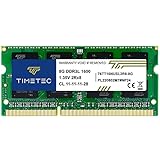
- [Specs] DDR3L / DDR3 1600MHz PC3L-12800 / PC3-12800 204-Pin Unbuffered Non ECC 1.35V CL11 Dual Rank 2Rx8 based 512x8
- [Size] Module Size: 8GB Package: 1x8GB
- [Voltage] JEDEC standard 1.35V, this is a dual voltage piece and can operate at 1.35V or 1.5V
- [Compatibility] Compatible with DDR3 Laptop / Notebook PC, Mini PC, All in one Device
- [Color] PCB Color is Green
Apply and verify one mitigation at a time
- If snapshots show retained page objects: fix the references or cleanup path implicated by retaining paths, then repeat the same snapshot sequence.
- If memory rises mainly with capture dimensions or frequency: test smaller viewports or less frequent captures while holding other conditions steady.
- If pressure appears only at higher concurrency: compare one session against the failing number of sessions and measure process or subsystem use at both levels.
- If heap snapshots are stable but process memory rises: profile the relevant process or subsystem rather than assuming the page has no memory issue.
- If the failure persists after setup checks: profile first, then adjust workload or host/container capacity based on measured usage. Adding RAM without identifying the constrained layer may not address the cause.
Common failure patterns and what to check
| Symptom | Likely next check | Response |
|---|---|---|
| Memory rises after each repeated page action | Heap snapshot comparison and retaining paths | Look for retained JavaScript objects or detached DOM structures; fix confirmed references or cleanup. |
| Heap appears stable, but Chrome or the container reaches its limit | Per-process and subsystem measurements | Use memory dumps or memory-infra tracing; heap snapshots do not cover all Chrome memory. |
| Failure occurs only with multiple simultaneous sessions | One-session versus failing-concurrency comparison | Measure the resource increase and adjust concurrency or capacity based on the observed workload. |
| Failure appears tied to large or frequent captures | Controlled viewport-size and capture-frequency comparison | Change one capture variable at a time. Do not apply tracing screenshot buffer limits to ordinary Selenium captures without evidence. |
| Behavior changes after Chrome or driver updates | Browser and ChromeDriver major versions and launch configuration | Bring versions into alignment and verify the actual binary and arguments. |
Or skip the browser setup
If your goal is to obtain a clean screenshot rather than diagnose a Selenium memory failure, ScreenshotNeo provides a screenshot API and MCP server. One GET request returns an image or PDF; see the API documentation for parameters and response details.
Example request using the supplied API pattern:
curl -G "https://api.screenshotneo.com/v1/shot" -d access_key=YOUR_API_KEY --data-urlencode url=https://stripe.com -o shot.webpScreenshotNeo accepts cookie and consent banners before capture and removes more than 60 known consent platforms, newsletter popups, and chat widgets; each step can be turned off. Bot checks, blank pages, timeouts, failed loads, and cache hits are not billed, and responses identify the page verdict and billing status. Its MCP server includes take_screenshot, get_page_info, and capture_pdf for AI agents and MCP clients. The Free plan includes 1,000 screenshots per month with no card; paid plans start at $5 for 3,000 screenshots.
Create a free ScreenshotNeo account to get 1,000 screenshots a month with no card.
Frequently Asked Questions
Does taking a Selenium screenshot always use a heap snapshot’s memory?
No. Heap snapshots show reachable JavaScript and DOM-related objects, not every native allocation, GPU resource, or Chrome process.
Does headless Chrome automatically prevent out-of-memory errors?
No. Headless supports server-side bitmap generation, but the cited Chromium and Selenium guidance does not establish that headless inherently reduces memory use or fixes out-of-memory failures.
Quick Recap
Product prices and availability are accurate as of the date/time indicated and are subject to change. Any price and availability information displayed on Amazon at the time of purchase will apply.

