
To troubleshoot an AI agent, find the earliest step where its run diverges from the expected behavior—not just the mistake in its final answer. First determine whether the run is looping, paused, failed, waiting on a tool, or only appearing stuck in the interface. Then inspect the run trace, fix the failing layer, and replay the case alongside representative tests.
Start by preserving a reproducible failure
Before changing a prompt or configuration, save the failing case. Record the exact input, relevant conversation or session state, agent and tool configuration, model or version if available, timestamp, and expected outcome. If the issue affects only one user or environment, compare it with a known-good run.
This gives you a stable case to inspect and replay. Without it, a prompt change can make the symptom disappear while leaving the cause unclear.
Determine what “stuck” means
Check the run or session status before editing anything. A run that looks stalled may be doing one of several different things:
Windows Errors? Fix Them Before They Spread
Repair common Windows errors and clear accumulated junk for a smoother, more stable PC - no reinstall needed.Free scan · no reinstallOutdated Drivers Are Slowing You Down
One free scan finds every outdated or missing driver and matches the right update for your exact hardware.Free scan · exact hardware match#1 Best Overall
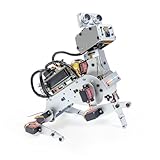
- AI-Powered Raspberry Pi Robot Dog — PiDog: Powered by Raspberry Pi (5/4B/3B+/3B/Zero 2W), OpenClaw, and multi-LLMs like ChatGPT, Gemini, Grok, DeepSeek, Qwen & Ollama. With 12 servos, camera, gyroscope, hearing & touch sensors, PiDog can see, listen, talk, move, and interact intelligently. Supports OpenCV, MediaPipe, TTS & STT, app control, FPV & Python. A great STEM robotics gift for students, makers & tech enthusiasts—perfect for birthdays and holidays. (Raspberry Pi not included)
- Realistic Dog-like Movements: PiDog's 12 powerful servos enable 32 dog-like actions, including walking, sitting, standing, shaking its head, wagging its tail, and performing playful tricks, closely mimicking a real dog and providing an engaging experience. This is an AI development robot product designed for engineers, suitable for ages 15 and above
- Rich Sensor Suite for Interactive Experiences: PiDog features ultrasonic, touch, gyroscope, sound, camera, speaker and microphone. These provide it with advanced hearing, vision, and touch, enabling it to see, detect obstacles, respond to touch, and recognize sounds, making interactions highly engaging
- AI-Powered Interactions with OpenClaw & Multi-LLMs. PiDog combines voice, vision, and gesture recognition for immersive AI experiences. Powered by OpenClaw and multi-LLMs like ChatGPT, Gemini, Grok, DeepSeek, Qwen, Doubao, and Ollama (local LLMs), it can understand questions, respond naturally through TTS & STT, recognize math problems, interpret hand gestures, and hold smart conversations. OpenClaw also enables customizable AI behaviors and personalized robotics development, helping users create their own intelligent robotic companion
- Comprehensive Learning Resources and Support: PiDog offers detailed online documentation, video tutorials, prompt technical support, and an active forum community, ensuring beginners can easily complete all projects and enjoy a great experience
- Looping: the agent keeps taking actions without reaching a final answer or making progress.
- Stopped by a limit or error: the runtime ended the run, for example because it reached a turn limit or encountered a guardrail or tool error.
- Paused for approval: the agent is waiting for a human decision. This is an intentional pause, not necessarily a failure.
- Waiting on an external tool: a service or integration may be slow, unavailable, or returning an error.
- Interface appears stuck: a spinner or blank page may indicate a ChatGPT web or app problem rather than a bug in your own agent.
An agent run commonly works as a loop: the model responds, the runtime handles any requested tools or handoffs, and the process stops when the model returns a final answer without further tool work. The OpenAI Agents documentation distinguishes this process from runtime and validation failures such as max-turn limits, guardrail exceptions, and tool errors.
Read the run trace from the beginning
Inspect the timeline from the first step forward and identify the earliest suspicious event. A final answer alone rarely reveals whether the problem began in the model’s decision, a tool call, the tool’s result, or later processing.
For that event, compare the model input and output, tool name and arguments, tool result, status, duration, and any recorded error. If the final answer contains an incorrect value, trace it backward to the earliest model or tool output that introduced it. OpenAI’s tracing guide describes spans that can capture this activity, including inputs, outputs, tool arguments and results, duration, status, and error details. Its agent evaluation guide describes a trace as the end-to-end record of model calls, tool calls, guardrails, and handoffs for one run.
Rank #2

- Optimized AI Arm Kit for LeRobot & Hugging Face Projects – The SO-ARM101 is an upgraded low-cost robotic arm servo motor kit designed for AI robotics enthusiasts and developers. Fully compatible with LeRobot and Hugging Face frameworks, it supports imitation learning and reinforcement learning, making it ideal for real-world robotics applications. (3D-printed parts not included.)
- Enhanced Wiring & Performance – Compared to the SO-ARM100, the SO-ARM101 features improved wiring to prevent disconnection at joint 3 and eliminates range-of-motion limitations. The leader arm uses optimized gear ratio motors for smoother performance—no external gearboxes required.
- Real-Time Leader-Follower Functionality – New real-time tracking allows the leader arm to follow the follower arm, enabling human intervention and correction during reinforcement learning (RL) training. Perfect for hands-on AI robotics development and research.
- Open-Source, DIY-Friendly & Nvidia-Compatible – Developed by TheRobotStudio, this open-source AI Arm kit integrates seamlessly with the LeRobot platform, offering PyTorch-based datasets, simulation, training, and deployment tools. Fully compatible with Nvidia Jetson edge devices, including reComputer Mini J4012 Orin NX 16 GB.
- Comprehensive Learning Resources – Includes detailed open-source assembly and calibration guides, testing tutorials, and deployment instructions. From wiring to AI training, get everything you need to start building, teaching, and optimizing your robotic arm for grasping and placing tasks.
A trace shows what was recorded, not whether each action was correct. Check each step against the task requirements and the actual state of the tool or system involved.
Free tools Windows power users keep installed
One-click scans. No signup required.
Identify the first failing layer
Repeated actions or no progress
Look for the same tool call with unchanged arguments, repeated handoffs between agents, or actions that leave the relevant state unchanged. Check whether the routing logic can cycle and whether the agent has a clear condition for stopping. Review the configured run or turn limit as well; a limit can end a run, but does not by itself explain why the agent failed to make progress. If a run is consuming resources without advancing, stop or cap it while preserving the trace.
Exact loop-prevention controls vary by framework, so use the runtime’s documentation for the version you are running. Do not treat every repeated call as a loop: an agent may legitimately retry or query a tool more than once. The key question is whether the repeated action changes the state or advances the task.
Rank #3
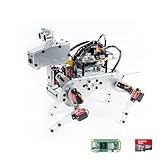
- Raspberry Pi AI Robot: powered by Raspberry Pi (5/4B/3B+/3B/Zero 2W), features 12 servos and sensors for vision, hearing, and touch. Integrated with ChatGPT-4o, it responds to complex queries. With app control and FPV, users can manage and see its view in real-time. It supports Python programming
- Realistic Movements: 12 powerful servos enable 32 actions, including walking, sitting, standing, shaking its head, wagging its tail, and performing playful tricks, closely mimicking a real and providing an engaging experience
- Rich Sensor Suite for Interactive Experiences: features ultrasonic, touch, gyroscope, sound, camera, speaker and microphone. These provide it with advanced hearing, vision, and touch, enabling it to see, detect obstacles, respond to touch, and recognize sounds, making interactions highly engaging
- Engaging Interactions with ChatGPT-4o: with ChatGPT-4o enables voice interactions and visual recognition, making it smarter and more responsive. Users can have natural conversations, solve math problems via the camera, and interpret gestures, creating diverse and fun interactions
- Comprehensive Learning Resources and Support: offers detailed online documentation, video tutorials, prompt technical support, and an active forum community, ensuring beginners can easily complete all projects and enjoy a great experience
Tool definition, protocol, or result problems
Inspect the tool’s definition, argument schema, permissions, result shape, and the way its response is returned to the model. A model can choose a reasonable action and still fail because the orchestration protocol or schema is wrong.
For example, Anthropic’s tool-use documentation specifies that each tool_use must have a corresponding tool_result in the required position. It also documents constraints involving deferred tool loading and supported regular-expression patterns in strict tool schemas. Check the current documentation for the API and version you use. Keep tool output focused on returned data rather than mixing it with developer instructions.
Do these 3 things before closing this tab:
1Repair Windows errors before they cause bigger problems2Fix the driver behind crashes, sound loss and screen glitches3Clear out junk files and repair common Windows errorsAPI, request, or runtime errors
Inspect the HTTP response and structured error fields, then check the run, session, and environment status. OpenAI’s error-code documentation covers different categories, including invalid input or configuration, authentication and access problems, missing resources, state conflicts, executor compatibility, MCP startup failures, and temporary service errors.
Rank #4
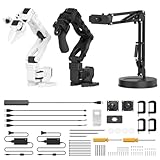
- 【End-to-End Imitation Learning】Hiwonder SO-ARM101 robot arm is an embodied intelligent hardware platform compatible with the Lerobot open-source framework. It provides developers with streamlined access to shared code, templates, and pre-trained models to explore the latest advancements in AI research.
- 【Dual-Camera Vision System】Equipped with both a gripper-mounted camera and an external camera, the system supports both precise manipulation and environmental awareness for accurate imitation learning.
- 【Hiwonder High-Performance Bus Servos】Featuring 12 high-torque bus servo motors with magnetic feedback, the Hiwonder SO-Arm101 robotic arm delivers smooth, stable motion, eliminating issues like power deficiency and jitter.
- 【Professional Control & Debugging】Integrated with the Hiwonder BusLinker V3.0 debugging board, the system supports servo scanning, real-time status monitoring, and trajectory control. The professional PC software simplifies device calibration and debugging, making it accessible for both researchers and hobbyists.
- 【Open-Source Compatibility】The SO-ARM101 robotic arm is designed to be fully compatible with the LeRobot open-source project. We acknowledge the contributions of the open-source community; all trademarks and copyrights belong to their respective owners.
Correct deterministic request or configuration problems before retrying. For a transient service issue, check that work was saved and follow the service’s retry guidance rather than repeatedly resubmitting without examining the error.
Wrong answer without an exception
Compare the agent’s selected tool and arguments, the tool result, the context supplied to the model, and the final response with the facts the task requires. Find the first step that introduced the wrong information. If the trace does not make the failure easy to spot, turn the expected behavior into an explicit evaluation criterion—for example, whether the agent selected the required source or returned a value present in the tool result.
Tracing helps locate workflow problems; evaluation checks whether the workflow meets its requirements across cases. OpenAI’s workflow evaluation guide recommends starting with traces for active debugging and using graders, datasets, and evaluation runs for repeatable comparisons.
Recommended Free Tools
ChatGPT spinner, blank page, or unresponsive interface
If the problem is in ChatGPT’s web or app interface rather than an agent you operate, use the product’s support steps. The OpenAI Help Center troubleshooting guide recommends checking service status, restarting or starting a new chat, testing another browser or network or a private window, disabling extensions, VPNs, or security filters, and collecting diagnostic logs if the issue persists. A product-level spinner is not, by itself, evidence of an agent logic bug.
Independent reader supportYour contribution helps us test, update, and keep practical guides available for everyone.Fix one cause, then check that the fix generalizes
- Choose a targeted change. Adjust the layer implicated by the first failure: the prompt or context, tool definition or result handling, routing, runtime configuration, or guardrail.
- Replay the original case. Check that the same input now reaches the expected outcome and inspect the new trace for unintended changes.
- Run representative cases. Include successful cases as well as similar failures, so a fix does not merely mask one example or break adjacent behavior.
- Keep repeatable checks. Maintain a dataset of representative cases and use graders or equivalent checks to compare changes to prompts, tools, routing, and guardrails over time.
For choosing a tracing or observability approach, compare whether it records the full run—including model, tool, and handoff steps—captures useful inputs, outputs, statuses, durations, and errors, supports your framework and runtime, allows trace export or session correlation, and provides suitable redaction, retention, and access controls. Also check whether it supports repeatable evaluations and regression checks. OpenAI’s tracing guide documents dashboard inspection and trace export; its SDK troubleshooting guide says model and tool data remain redacted by default in debug logs. Confirm the relevant behavior for the SDK version you use.
Quick Recap
Product prices and availability are accurate as of the date/time indicated and are subject to change. Any price and availability information displayed on Amazon at the time of purchase will apply.

