
Test incident response and business continuity plans with a facilitated tabletop exercise: walk the people who would handle a real cyber incident through a plausible scenario, introduce new information as it unfolds, and record their decisions, gaps, and follow-up actions. Keep the exercise grounded in your actual plans, and continue past containment to ask how critical services will operate and what must be true before recovery.
What a realistic cyberattack exercise tests
A tabletop exercise is a guided discussion, not a live attack or a technical recovery test. CISA defines it as “a facilitated discussion of a scripted scenario in an informal, stress-free environment that is based on current applicable policies, plans, and procedures.” The point is to see how people use those plans: who makes decisions, how information moves, and whether the business can sustain important functions.
A tabletop can expose unclear authority, missing contacts, or dependencies participants had not considered. It does not by itself prove that backups restore, systems fail over, or manual controls work. Those capabilities need appropriate operational tests. NIST SP 800-84 describes a broader range of tests, training, and exercises for IT plans and capabilities; it is a final publication dated September 21, 2006. Read NIST SP 800-84.
Design the exercise around decisions you need to make
Set a few observable objectives
Choose a small number of objectives tied to your incident-response and continuity plans. Make each one something an evaluator can observe, rather than a broad aspiration such as “improve preparedness.” For example, test whether participants can identify who may declare an incident, escalate it, approve disruptive containment, communicate with customers or partners, sustain a critical service, and authorize recovery.
#1 Best Overall

- Trusted By Families Worldwide - With Over 50 Million Sold, Thinkfun Is The World's Leader In Brain And Logic Games
- Develops Critical Skills - Playing Through The Challenges Builds Reasoning And Planning Skills As Well As Core Programming Principles, And Provides A Great Stealth Learning Experience For Young Players
- What You Get - Hacker Is A Cybersecurity Coding Game And Stem Toy For Boys And Girls Age 10 And Up Where You Learn Programming Principles Through Fun Gameplay. It Includes A Game Grid, Control Panel, Challenge Booklet, 2 Agent Tokens, 9 Movement Tiles, 13 Revolving Platform Tiles, 5 Double-Sided Transaction Tiles, A Transaction Link Token, 3 Data File Tokens, 2 Exit Point Tokens, A Virus Token, Alarm Token, 2 Lock Tokens, And A Solution Booklet
- Clear Instructions – Easy To Learn With A Clear, High Quality Instruction Manual. You Can Start Playing Immediately
CISA’s Tabletop Exercise Package (CTEP) includes sample objectives and discussion questions that planners can adapt. Its package documentation identifies planning, facilitator/evaluator, participant feedback, and after-action materials. Explore CISA’s Tabletop Exercise Packages.
Choose a credible scenario and useful updates
Pick a threat that fits your organization’s technology, suppliers, sector, and critical services. CISA’s customizable scenario library includes ransomware, insider threats, phishing, and industrial control system compromise. Browse CISA cybersecurity scenarios.
Rank #2

- Quick and Easy Setup: Get the fun started in minutes! No Escape Board Game is suitable for board game party nights with kids, teenagers, and adults. Easy setup ensures more time for an exciting space escape adventure
- Dynamic Maze Runner Game: Every game feels unique! Experience a thrilling maze runner game with dynamic tile laying and action-packed sequences. Suitable for 2-8 players board games sessions that keeps everyone on their toes
- Engaging Space Station Games: Dive into the depths of the space station with our board games for 2-8 players. The No Escape Board Game offers a captivating escape board game experience with strategic gameplay and endless fun
- Party Board Game Night: Bring excitement to your next party board game night! With quick setup and easy-to-learn rules, this escape board game is suitable for kids' birthdays, teen hangouts, or adult gatherings
- Action-Packed Maze Escape: Combine strategy with luck and navigate through the maze escape. A premium experience that includes high quality piece of dice, meeples, and tiles
Build the discussion around a short opening situation and updates, often called injects. Each update should prompt a decision or reveal a dependency. Hypothetical examples include a key system becoming unavailable, a supplier unable to confirm its status, incomplete evidence, an unreachable executive, or a missing recovery dependency. Tailor these developments to your organization and make clear they are exercise assumptions, not facts about an actual attack.
Invite the people who own the response and the business decisions
Include the people who would make, approve, communicate, or carry out actions: security and IT responders, operations, legal, communications, business continuity, and executive leadership. Bring in relevant external partners when their role or systems matter. CISA says incident-response plans should include security and IT teams as well as senior business leadership and board members. Read CISA’s guidance for corporate leaders and CEOs.
What’s actually slowing this PC down?
Pick the symptom - the matching free tool is one click away.
Rank #3
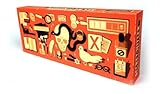
- A fast-paced game of deception and betrayal
- Beautiful wooden components
- Solid game boards with foil inlay
- Hidden roles and secret envelopes for five to ten players
Run the discussion through containment, continuity, and recovery
- Explain the rules and objectives. Tell participants the scenario is fictional, identify the plans under discussion, and explain how the facilitator will introduce updates. Ask them to answer as they would in practice, using existing authorities and procedures rather than inventing ideal ones.
- Present the opening situation. Give participants only the information they would initially have. Ask what they know, what remains uncertain, who needs to be notified, and what plan or authority applies.
- Introduce updates at decision points. As new details arrive, ask who owns each action, what approval is needed, what information is missing, and what the team would tell staff, customers, suppliers, or other stakeholders. Track decisions and unresolved questions rather than steering participants toward a predetermined answer.
- Move beyond initial containment. Discuss which critical services must continue, what systems and people they depend on, and what workarounds are available. Ask what conditions must be met before restoring systems or resuming normal operations.
- Close with feedback and action items. Hold a brief hotwash or collect participant feedback. Review the evaluator’s observations, agree on improvements, and assign each item an owner and due date.
CISA’s CTEP materials include planner and facilitator/evaluator handbooks, participant feedback, and after-action reporting resources. Its package documentation says exercises can inform updates to information sharing, emergency-response protocols, recovery plans, policies, and procedures. See CISA’s CTEP materials.
Include operational technology and safety requirements where relevant
If your organization depends on operational technology (OT), industrial control systems, or other safety-critical processes, make their dependencies part of the scenario. Discuss what happens if IT access, OT access, or the connection between them is lost. Identify workarounds and manual controls, who is authorized to use them, and what conditions are necessary to continue safe operations.
Rank #4
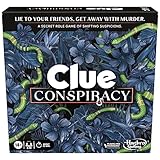
- THE ADULT VERSION OF CLUE YOU'VE BEEN WAITING FOR: Lie to your friends, get away with murder! The Clue Conspiracy game is a secret role strategy game of shifting suspicions—with a party vibe! Ages 14+. For 4-10 players
- AN ISLAND SETTING, A NEW VICTIM: You're invited to the tropical Black Adder Resort, where a guest (maybe even you!) is trying to murder its manager, Mr. Coral. Deadly traps are spread throughout the resort grounds—and someone is armed
- PLAY ON SECRET TEAMS: Players play as Clue characters and take on secret roles on opposing teams: Friends vs. the Conspiracy. Friends try to keep Mr. Coral alive, while Conspiracy members secretly try to set up his murder
- WHO CAN YOU TRUST?: Lie, bluff, sabotage! In this mystery game, it's all about mind games as players conspire, gather clues, share info (or not), and call each other out to stop the other side
- MULTIPLE WAYS TO WIN: The Conspiracy wins by pulling off the murder Plot at a specific location or secretly sabotaging and setting off traps. The Friends win by disarming all the traps, or if that fails, solving the WHO, WHERE, and WHAT of the secret Plot
CISA advises organizations to identify IT/OT interdependencies and workarounds, and to test contingency plans regularly where needed to sustain safety-critical functions. The right scope depends on the organization’s safety and operational requirements. Read CISA’s guide to securing industrial control systems.
Independent reader supportYour contribution helps us test, update, and keep practical guides available for everyone.Evaluate what happened and make findings actionable
Assign an evaluator to capture decisions, timing, unclear ownership, missing information, plan references, and dependencies. Separate issues in the written plan from issues in training, communications, access, or technical capability. A useful finding identifies what happened, why it matters, and what change would address it.
Outdated Drivers Are Slowing You Down
One free scan finds every outdated or missing driver and matches the right update for your exact hardware.Free scan · exact hardware matchPC Slower Than It Used to Be?
A free scan shows the junk files, broken settings and background clutter dragging Windows down - then fixes them in one click.Free scan · Windows 10 & 11Best Value

- CATCH THE CHAMELEON: A bluffing board game where players must race to catch the chameleon before It's too late
- ONE SECRET WORD: In this board game for adults and family everyone knows the secret word - except for the player with the chameleon card
- DON'T GET CAUGHT: Use hidden codes, carefully chosen words, and a bit of finger-pointing to track down the guilty player... Before the imposter blends in and escapes!
- EASY TO LEARN, QUICK TO PLAY: Like all good family board games, it takes 2 minutes to learn and only 15 minutes to play. Recommended for 3-8 players and ages 12+
- MULTI-AWARD WINNING: "Best Party Game" At UK games expo. "Seal of excellence" From dice tower games. A perfect board game for adults and teenagers
Turn findings into an improvement plan with one accountable owner and a due date for each action. Update the relevant procedures or recovery plans, then decide whether an operational test or a later exercise is needed to verify the change. A discussion can reveal that a recovery dependency is missing; only an appropriate technical test can show whether a restore or failover actually works.
Choose a format and cadence that fit your organization
CISA recommends practicing incident-response plans with realistic scenarios at least annually. That is a recommendation, not a measured guarantee of reduced losses. CISA notes that larger organizations may conduct carefully planned tabletops, while smaller teams can begin with a simple rehearsal or spoken walkthrough. Use findings to decide whether the next step should be a deeper technical test, a revised procedure, or another exercise with a different objective. Read CISA’s four cybersecurity goals.
| Choice | Useful when | What it establishes—and what it does not |
|---|---|---|
| Internal facilitator or dedicated facilitator and evaluator | A small rehearsal may be manageable internally; a complex, cross-functional discussion may benefit from dedicated facilitation and evaluation. | Facilitation can structure discussion and capture observations. It does not replace testing technical capabilities. |
| General or sector-oriented scenario | Choose according to sector, threat exposure, critical services, suppliers, and IT/OT dependencies. | CISA’s scenario library includes general and sector-oriented options; the scenario must still fit your organization. |
| Discussion exercise or operational test | Use a tabletop to explore decisions, roles, escalation, and plan familiarity; use operational testing when you need to validate technical recovery or workarounds. | A tabletop reveals coordination and decision gaps, not proof that a system restores, fails over, or operates safely in manual mode. |
CISA publishes facilitator guidance and describes exercise support, but confirm current service availability and eligibility directly before relying on outside assistance.
Quick Recap
Product prices and availability are accurate as of the date/time indicated and are subject to change. Any price and availability information displayed on Amazon at the time of purchase will apply.
Do these 3 things before closing this tab:
1Repair Windows errors before they cause bigger problems2Scan for outdated or missing drivers - takes under a minute3Clear out junk files and repair common Windows errors
