
What’s actually slowing this PC down?
Pick the symptom - the matching free tool is one click away.
iTechGuides is reader-supported. When you buy through links on our site, we may earn an affiliate commission. As an Amazon Associate I earn from qualifying purchases. Learn more
Debug a long-running AI agent by examining its complete execution trace, finding the earliest decision that made success unlikely or impossible, and turning that incident into a repeatable regression test. A final answer or a simple pass/fail score rarely shows whether the cause was a bad plan, a tool error, lost state, or a failure to resume. The practical fix is a versioned test set drawn from real incidents, evaluations at the right level of detail, and durable execution when work must survive waits or restarts.
Why does an agent pass short tests but fail on long-running tasks?
A long-running agent is a stochastic workflow: its outcome depends on a sequence of model decisions, tool calls, tool responses, and state transitions. A task can fail even when every individual component appears healthy—for example, if the agent misreads a tool response several steps before producing a plausible but incorrect final answer. The final output alone does not reveal that trajectory.
Longer tasks also create more opportunities for a small error to compound. An agent might choose a weak plan, call a tool with invalid arguments, misinterpret the result, or proceed with an assumption that was never established. If execution is interrupted, it may lose progress or repeat an action when it resumes. These are different failure mechanisms, so a single end-of-task score is not enough to diagnose them.
Free tools Windows power users keep installed
One-click scans. No signup required.
Microsoft Research’s AgentRx work illustrates the difference between checking whether a task finished and diagnosing why it did not. Its reported study used 115 manually annotated failed trajectories and found improvements over prompting baselines of 23.6% for failure localization and 22.9% for root-cause attribution. Those figures describe that study’s benchmark and comparisons, not a universal improvement expected from every agent or debugging method.
Popular on Amazon
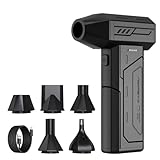
- Powerful Turbo Fan:CAGIWIRU Electric Air Duster have reached speed up to 130000RPM,Can efficient remove dust and debris.With LED light and Three Adjustable Speed to meet with different cleaning tasks.
- With Attached USB C Fasting Charging cable.Charing 3 hours,Enjoy up to 240 minutes of use on the lowest setting, For third speed can use for 25mins.with four charging options to meet with your needs.
- Wide Application: attached 5 different nozzles,making it suitable for a variety of scenes, such as car,pet, pc, keyboards, and other electronic devices. It also serves for office and home clean duster.
- Handy Design & Portable:Cordless air duster electric nozzle is Light weight and small size, design and comfortable to hold and space saving, convenient to carry around. You can put it in your room or inside the car without taking up space.
- Economical &Reusable: Built durable materials with a long-lasting battery,our CAGIWIRU air duster it's a sustainable alternative to disposable air cans.
What should you record in an agent trace?
Record enough structured evidence to reconstruct the path from the task input to the outcome. A trace should make it possible to identify what the agent knew at each point, what it decided to do, what the environment returned, and which versions were involved.
- Task and context: scenario identifier, user request, relevant state supplied to the agent, and any applicable safety or operating constraints.
- Model activity: each model call, the prompt or message context used, the response, and the model identifier or version available to your system.
- Tool activity: each requested tool, its input, its response, and whether the invocation succeeded, failed, timed out, or was rejected.
- Control flow: routing, planning, handoffs, retries, approvals, state transitions, and other decisions that determine what happens next.
- Operational measurements: timestamps, latency, token or cost measurements where available, errors, and execution limits reached.
- Evaluation context: task, prompt, tool, model, dataset, evaluator, and threshold versions associated with the run.
Keep the trace useful without treating it as an excuse to retain unnecessary sensitive data. Apply access controls and retention rules, and minimize or protect personal or confidential information in task inputs and tool outputs. The trace’s purpose is to support diagnosis and quality evaluation, so capture the evidence needed for those jobs under your organization’s data-handling requirements.
How do you turn an incident into a regression test?
Convert a real production failure or a manual check into a small, clearly specified scenario that can be run again. Anthropic’s 2026 guidance identifies 20–50 simple tasks drawn from real failures as a practical starting point for an evaluation set; treat that as a starting range, not a required or universally sufficient sample size.
Windows Errors? Fix Them Before They Spread
Repair common Windows errors and clear accumulated junk for a smoother, more stable PC - no reinstall needed.Free scan · no reinstallCrashes, No Sound, or Screen Glitches?
Random freezes, missing sound and display glitches usually trace back to one bad driver. Find and replace yours safely.Free scan · under a minute- Describe the scenario. Preserve the relevant task and conditions, including the state or tool behavior that mattered. Remove irrelevant details that make the case harder to understand without improving coverage.
- Define the behavior contract. State which tools are allowed, what safety constraints apply, which state transitions are valid, what counts as success, and what operating limits matter.
- Make the expected result judgeable. Specify observable success criteria rather than relying on a vague instruction such as “handle this correctly.” A human should be able to independently determine whether the task passed.
- Choose explicit graders. Use deterministic assertions for facts that can be checked mechanically, model-based graders where judgment is needed, and human review when the outcome requires it. Record the grader version alongside the result.
- Run repeated trials. Because model outputs vary, one successful run does not establish that the scenario is reliable. Repeat stochastic cases and retain the individual outcomes so that intermittent failures remain visible.
- Version the case. Preserve the task and relevant prompt, tool, model, evaluator, dataset, and threshold versions so a later result can be compared with the same conditions.
Keep each scenario independently passable by a human. If a test requires an evaluator to infer unstated intent or guess which state should have changed, tighten the contract before relying on its score. Also include successful examples where they clarify the desired behavior; the goal is to define both what should happen and what should not.
Also popular on Amazon

- Screen Cleaner is Your Screen’s New Bestfriend! - EVEO is proud to present a screen cleaner that’s perfectly suited for your TV. Meet your new screen cleaner, computer screen cleaner, laptop cleaner, iPad cleaner, Macbook,tv cleaner or any other electronic device. Our screen cleaner spray and wipe along with the included plush microfiber cloth, easily removes dust, fingerprints & other smudges on the screen’s surface. Clean effectively for a streak-free screen
- Gentle on your Screens - Our screen cleaner spray and wipes is compatible to be used even for the most sensitive LCD, LED, CRT, and OLED screens in proper use. Be at ease knowing that this product is compatible with all the major brands: LG, SONY, Samsung, Sharp, iPad, iPhone, Android screens, Kindle, PC monitors - we’ve got you covered! Can be used as LCD screen cleaner, tv cleaner, smart tv screen cleaner, and more
- Premium Super Soft Plush Microfiber Cloth - Included in this efficient screen cleaning kit. This screen cleaner spray and wipe has our signature plush microfiber cloth specially designed to comply with screens and monitors and leave them streak-free. Has been shown to effectively absorbs stubborn stains, zero streaks, and no fiber shedding. Always use this together with our screen cleaner for the best results
- Easy-to-Use Screen Cleaner Kit + microfiber cleaning cloth - The EVEO Screen Cleaning Kit will easily be your new favorite tool when it comes to taking care of the things you love most, quick and easy solution for a streak-free screen. Simply screw on the sprayer gun on the screen cleaner bottle. Spray the cleaning liquid onto the microfiber cloth, then wipe the screen until desired cleanliness & shine is achieved.
- Quality Screen Care Kit Worth Purchasing - Enjoy a convenient Screen Cleaner anytime, anywhere you need it. Your satisfaction is our top priority. We stand behind the quality of our products and that’s why, you shouldn’t be worrying at all. We manufacture the Best Screen Cleaner. and can be used for laptop cleaning kit, laptop screen cleaner, tv screen cleaner for smart tv. MacBook screen cleaner, monitor cleaner or screen cleaner spray for electronic devices with microfiber cleaning cloth
Which level of evaluation should you use?
Match the evaluation unit to the failure you need to catch. A local check can pinpoint a known decision error, a full trace tests an end-to-end task, and a thread test checks state that must persist across turns.
| Evaluation level | What it checks | Best fit | What it can miss |
|---|---|---|---|
| Run-level | A local decision, model response, or tool call. | Known failure modes such as invalid tool invocation or a misread response. | Whether individually acceptable steps combine into a successful task. |
| Trace- or turn-level | The complete execution of one task or turn. | Core workflows where planning, tool use, and completion all matter. | Whether information or state remains correct across multiple turns. |
| Thread-level | State carried across a sequence of turns. | Interactions where earlier actions or decisions must affect later behavior. | Detailed localization of a particular bad step unless the thread has a trace. |
Most teams benefit from combining full-turn tests for important workflows with single-step tests for known failure modes and thread tests for stateful interactions. The choice is not “unit tests or end-to-end tests”: each answers a different question. A full trace establishes whether the task works as a whole; targeted checks help explain a recurring local defect; thread tests reveal problems that only appear as context or state accumulates.
How do you find the root cause in a failed trace?
Start at the beginning of the trace and find the earliest point where the execution became unrecoverable or violated the scenario contract. The final error may be only a symptom. Later steps can be internally consistent with an earlier bad assumption, so repairing the visible endpoint without locating that first critical step often leaves the underlying defect intact.
- Mark the first contract violation. Compare each action and state transition with the allowed behavior, expected information, and operating limits for the scenario.
- Check what the agent had actually observed. Distinguish a model’s unsupported assumption from information that was present in the tool response or earlier context.
- Trace consequences forward. Identify which later actions depended on the first error, and whether the workflow could still have recovered after it.
- Assign a failure category. Use a consistent vocabulary so similar incidents can be grouped and addressed rather than treated as unrelated symptoms.
- Replay the case. Use recorded or simulated dependencies to reproduce the failure and test a candidate fix under comparable conditions.
AgentRx’s failure taxonomy provides useful categories for organizing this diagnosis:
Also popular on Amazon

- 【Large size】:Measuring 800 x 300 mm/ 31. 5×12 inches, which is wider and taller than others. Large mouse pad can perfectly fit your keyboard and mouse of any size, and there is also ample space for peripherals such as phones, tablets, etc.
- 【LED backlight mouse pad】:Blade Hawks RGB mouse pad provides 7 static modes and 7 dynamic modes will give you the options you are looking for. Power-off memory function remembers the last lighting mode you selected. The super glow fiber Chroma will give you a colorful gaming setup that you want.
- 【Anti-slip rubber base】:Made from Natural rubber, this gaming mousepad will firmly grip your desktop, allowing you to enjoy the ultimate precision in the games you are most passionate about. It also comes with a texture that enhances this ability even further.
- 【Smooth and waterproof surface】: Micro-textured cloth surface, for extremely precise mouse control and a smooth movement. When liquid splashes on the gaming mouse pad, it forms water droplets and slides down. Will not delay your work or gameplay.
- 【Plug and play】: This mouse and keyboard pad is powered by USB, plug and play, no driver required. One button control light modes. Press one time to change the lighting mode, press twice to change the brightness, press and hold about 3 seconds turn ON/OFF.
| Failure category | What to look for in the trace |
|---|---|
| Plan-adherence failure | The agent had a viable plan but did not follow it. |
| Invention of new information | The agent treated an unsupported detail as if it were established. |
| Invalid invocation | A tool call was malformed, disallowed, or otherwise invalid. |
| Misinterpretation of tool output | The agent received relevant information but reasoned from it incorrectly. |
| Intent–plan misalignment | The chosen plan did not serve the user’s actual goal. |
| Under-specified intent | The request did not provide enough detail to determine a safe or correct action. |
| Unsupported intent | The requested outcome was outside the agent’s supported capabilities or constraints. |
| Guardrail trigger | A safety or policy constraint blocked or changed the attempted behavior. |
| System failure | An environmental or infrastructure problem disrupted execution. |
These categories describe different kinds of problems and point toward different remedies. For example, a malformed call suggests checking tool selection or argument construction; a system failure calls for investigating the dependency or execution environment. Do not label every unsuccessful run as a model reasoning failure when the trace shows a timeout, rejected call, or missing state instead.
How should you compare a fix with the baseline?
Replay the same cases with the candidate change and the baseline under the same dataset, evaluator version, and scenario thresholds. Otherwise, a score change can reflect a changed test or grader rather than an improved agent.
- Keep the baseline results available for the exact evaluation set.
- Repeat stochastic scenarios and compare their run-level outcomes, not just one aggregate score.
- Report results by scenario or failure type so that a regression in one workflow is not hidden by improvement elsewhere.
- Check that changes to prompts, tools, models, graders, and thresholds are recorded rather than silently mixed into the comparison.
- Include boundary cases such as maximum steps, tool-call counts, latency, context size, and interrupted execution.
Choose thresholds that reflect the scenario’s contract and risk. An aggregate score can be useful for tracking broad trends, but it should not replace the per-scenario view: two releases with the same overall result can have different failures in critical workflows. When an evaluator or dataset changes, preserve that change as part of the comparison context rather than presenting scores as if they came from identical tests.
How do you test an agent that times out, restarts, or waits for approval?
Retries alone do not guarantee that a long-running task can resume safely. When progress must survive waits, retries, human approvals, or process restarts, use durable execution with checkpoints and test recovery behavior as part of the workflow.
Also popular on Amazon

- 【Softer and More Comfortable】Vaydeer wrist rest has unique diamond pattern, which is the combination of softness and aesthetics. The materials of wrist rest are improved into higher quality memory foam and covered with silky smooth lycra. The computer wrist rest makes you as comfortable and cushiony as like rest your wrists on clouds.
- 【Ergonomic Wrist Saver】The wrist rests for keyboard and mouse comes with a 17.32×3.15×0.83 inch keyboard wrist pad and a 5.94×3.15×0.83 inch mouse wrist support. Based on ergonomic design, the unique concave shape is the perfect fit for your wrist joints. The wrist rest pad fits most computer keyboards and laptops, improve hand and wrist posture, release your wrist and arm stress.
- 【Non-Slip Rubber Bottom】Featuring an anti-skid silicone base on the bottom, this wrist keyboard support stays firmly in place on your desk, preventing the padding from sliding around, ensuring stable and consistent wrist support during extended computer sessions.
- 【Better Experience & Pain Relief】Our keyboard arm rest is beneficial to alleviate the soreness caused by direct contact and friction between your arm and a hard desk surface, reducing the risk of wrist fatigue or carpal tunnel. The soft texture of memory foam can evenly distribute the pressure around your wrists and provide good support with just enough give.
- 【Helpful in Multiple Scenarios】Whether you're working, studying, writing, typing, gaming, this keyboard and mouse rest combo is an essential accessory to add comfort and support to your hands and wrists. It’s also a great gift for men, women, family, friend, coworker, gamer, teacher, etc.
The OpenAI Agents SDK documents integrations with Dapr, Temporal, Restate, and DBOS for long-running workflows that can resume after interruption. Temporal is one documented option; the appropriate choice depends on the system’s execution and operational requirements. The important distinction is between a workflow that simply retries an operation and one that can restore its progress and continue from a known point.
Test the normal handoff as well as failure paths. A useful interruption scenario should establish what state is saved, what action is resumed, and what should happen if an external system is unavailable or has already received part of the work.
- Duplicate execution: confirm that a retry or resume does not unintentionally repeat an action.
- Lost state: verify that resumption has the information required to continue, rather than silently starting with an incomplete context.
- Unavailable tools: check how the workflow behaves when a dependency cannot be reached at the point of resumption.
- Expired approvals: establish what happens when an approval is no longer valid by the time execution continues.
- Partial side effects: inspect what happens when some external actions occurred before interruption but the overall task did not finish.
These tests make recovery a defined part of the scenario rather than an assumption. They also expose whether the trace can distinguish a deliberate resume from a fresh run, which matters when investigating duplicated or missing work.
How do you keep agent quality from regressing in production?
Use a continuous loop that connects production evidence to versioned evaluation cases. Databricks documentation describes tracing as the foundation for agent observability and quality; in practice, traces become valuable when teams use them to find, reproduce, and prevent recurring failures.
Also popular on Amazon

- 【No Drill Mounted】Cable management tray can be assembled in as little as 3 minutes or less-simply. Side clips easily clampe the edge of desk, pass through the holes on the sides, and secure excess cables with baskets. Desk cable management supports inward or outward installation to meet your needs in different scenarios, and provides you with great convenience when collecting and organizing wires.
- 【Rubber Pad Protects Desk】Wire organizer under desk built-in soft rubber pads on the clamp protect your desk from scratches, so you will not damage your furniture or office.
- 【Sturdy and Beautiful】Cord management under desk is made of high-quality carbon steel and holds about 15 lbs. The wire basket has 2 holes on each side of the tray to enable your cables to pass freely. Cable baskets are suitable for desk thickness use from 0.4" to 2.4".
- 【Space Saving & Keep Organized】Desk cable management tray holds all your power cords, outlet strips, USB hubs and computer transformers hidden from your feet, and the data cables will not enter the vacuum cleaner to keep your desk clean and tidy. Desk wire organizer is also suitable for use in the kitchen and outdoors.
- 【Reduce Safety Risks】Cable tray under desk keeps all plugs away from your kids, no more worry about tripping. Using 2 holes wire tray saves extra space, helps you easily cabling and wire protection. The mesh design is not easy to accumulate dust, but avoids safety accidents caused by messy wires.
- Trace representative executions and review failures or user feedback.
- Identify the first critical step and classify the failure mode.
- Curate the incident into a regression case, alongside successful examples where they clarify expected behavior.
- Write or update code-based, model-based, or human-review scoring for the behavior contract.
- Fix the agent or workflow and rerun the evaluation against the same baseline conditions.
- Monitor later production traces for recurrence and update the test set when new failure patterns appear.
Keep the task, prompt, tool, model, dataset, evaluator, and threshold versions with every result. This makes it possible to tell whether a change improved the agent, changed the evaluation, or merely shifted which scenarios were measured. The loop should cover both offline replay and production observation: offline tests provide repeatable comparisons, while production traces reveal conditions that a curated set has not yet captured.
How should you choose an evaluation approach?
Choose based on the failure you need to control, the evidence you can collect, and the risk of the workflow—not on a single score or testing mode. The main trade-offs are about what gets tested, how it is judged, and whether execution can recover.
| Decision | Option A | Option B | Practical implication |
|---|---|---|---|
| Granularity | Single run or step | Full trace or multi-turn thread | Local checks isolate known defects; larger units test interactions and state. |
| Evidence | Final output only | Structured trace with tool inputs and outputs | A final answer can score completion, while a trace supports diagnosis. |
| Evaluation mode | Offline replay | Shadow or production scoring | Replay supports controlled comparison; production observation reveals live conditions. |
| Failure handling | Retry-only logic | Durable checkpoints and resumability | Retries attempt work again; durable execution is relevant when progress must survive interruption. |
| Scoring | Deterministic assertions | Model-based graders or human review | Use the form of judgment suited to the expected result, and retain grader versions. |
| Governance | Minimal controls | Versioning, access controls, retention, and data minimization | Trace usefulness must be balanced with appropriate handling of sensitive information. |
These approaches can be combined. A core workflow might have a full-trace regression test, a targeted assertion for a previously invalid tool call, and production trace review for new failure patterns. For work that must pause and resume, add interruption scenarios and durable state handling rather than assuming ordinary retries cover the same risk.
Frequently Asked Questions
How many times should I run a stochastic agent test?
There is no single repetition count that fits every scenario: the number of trials should reflect how consequential an intermittent miss would be and how much run-to-run variation you observe. Preserve each outcome so a strong average cannot conceal a recurring failure.
Should production traces include full prompts and tool outputs?
Capture enough information to explain the agent’s decisions, but avoid retaining sensitive content that is not needed for diagnosis. Restrict trace access and set retention practices appropriate to the data and the system.
How can I tell whether a model update caused a regression?
Keep the model identifier and the rest of the evaluation context with each result, then compare runs on unchanged cases and graders. If multiple components changed at once, the comparison may show that behavior changed without isolating which change caused it.
Can an agent evaluation be fully automated?
Some outcomes are suited to deterministic checks, while others require judgment that a model-based grader or human reviewer can provide. A mixed approach is often clearer than forcing subjective outcomes into brittle exact-match assertions.
The Tool Desk
Outbyte Driver Updater FREEScan for outdated or missing drivers - takes under a minuteDriver Scan →Outbyte PC Repair FREEClear out junk files and repair common Windows errorsFree Scan →Quick Recap
Product prices and availability are accurate as of the date/time indicated and are subject to change. Any price and availability information displayed on Amazon at the time of purchase will apply.

