
Quick wins for a faster PC:
Fix the driver behind crashes, sound loss and screen glitchesFind Drivers →Clear out junk files and repair common Windows errorsFree Scan →A threatening ransomware message alone does not prove that someone infected or accessed your device. Treat the claim as unverified: don’t pay, click links, open attachments, scan QR codes, or reply. Look for independent signs of a real incident—such as files that no longer open or a ransom note on the device—and contact your workplace security team if the message is work-related.
What a ransomware message can—and cannot—prove
Ransomware is malware that blocks access to files, systems, or networks. Attackers may deliver it through an email attachment or link, and victims often discover an attack when files become inaccessible or a ransom message appears. But receiving a threatening email or text is not, by itself, evidence that ransomware was installed. The FBI’s ransomware guidance describes the malware and common infection routes.
A blackmail message may claim the sender hacked your computer, watched you through your webcam, or stole private material. The FTC describes a recurring Bitcoin-extortion scam that threatens to send an alleged recording to the victim’s contacts. The sender may include an old or recent password exposed in a data breach to make the claim seem credible. A password in the message is not proof of current access. The FTC’s blunt assessment of claims like these is: “That’s all talk.” Read the FTC’s guidance on Bitcoin blackmail emails.
That pattern does not mean every ransom demand is fake. A real security incident can exist alongside a threatening message, so judge the situation by evidence you can verify independently—not by the sender’s confidence, deadline, or apparent knowledge of you.
What’s actually slowing this PC down?
Pick the symptom - the matching free tool is one click away.
#1 Best Overall
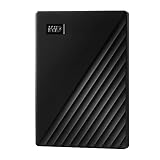
- Slim durable design to help take your important files with you
- Vast capacities up to 6TB[1] to store your photos, videos, music, important documents and more
- Back up smarter with included device management software[2] with defense against ransomware
- Help secure your important files with password protection and hardware encryption
- 3-year limited warranty
Signs that help distinguish a bluff from a possible incident
- The threat exists only in the message: A password, your email address, personal details, a Bitcoin demand, or a deadline can be used to pressure you; none alone establishes that a device is compromised.
- There are signs on the device or accounts: Files that suddenly will not open, a ransom note displayed on the device, unusual security alerts, or account activity you did not initiate deserve prompt attention.
- An independent source can validate activity: For a work device or organization, ask IT/security to check through its established incident-response process. Do not use contact details or links supplied by the sender to verify the claim.
No single signal settles the question. A security team can investigate whether there is evidence of access or encryption; an email’s wording cannot diagnose an infection.
What to do when you receive the message
- Do not engage with the threat. Don’t pay, reply, click links, open attachments, scan QR codes, or use the sender’s wallet address or contact route. The FTC advises recipients of the described Bitcoin blackmail scam not to pay and to delete the message.
- Check for independent evidence. Note whether files are inaccessible, a ransom note appears on the device, or account and security alerts show activity you do not recognize. Avoid opening suspicious attachments or links as a test.
- If a password is exposed, change it where it is still used. Go directly to the relevant service using its known website or app—not a link in the message. The FTC also recommends considering changes to other passwords. Use unique passwords for accounts rather than reusing the exposed one.
- For a work-related threat, contact IT/security promptly. Use your organization’s normal reporting channel or incident-response contact. Follow their directions and preserve the message and other relevant evidence; don’t attempt your own cleanup before the team can assess the incident.
- Report through an official channel. U.S. consumer blackmail can be reported at ReportFraud.ftc.gov. The FBI directs ransomware victims to a local field office or IC3. Organizations can also use CISA’s incident-reporting channels described in its #StopRansomware Guide.
If files are inaccessible or a ransom note appears
Treat those signs as a possible security incident, not as proof that the sender’s entire story is true. If it is a work device or network, contact IT/security immediately and follow the organization’s incident-response process. Preserve the message and relevant evidence, and avoid making changes that could interfere with investigation or recovery. CISA’s organizational guidance emphasizes reporting suspicious activity and preserving evidence, including volatile evidence during response.
Rank #2
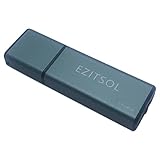
- SuperSpeed: A super-fast 64GB USB3.0 USB drive with read speed up to 150MB/S and write speed up to 80MB/S. It has super speed but DOESN'T overheat. Also available in a 128GB capacity. See the A+ comparison chart for details.
- Safety: It comes with A physical write-protect switch and can safely connect to any computer while the switch set to “Read-Only”. In the Protected mode, your data is safe from viruses, malware, data tampering and accidental deletion.
- High Endurance: This flash drive has higher performance and endurance/durability as it adopts A+ MLC memory chip compared with other USB flash drives which use TLC or QLC chips.
- Capacity: This listing is for the 64GB version. A 128GB option is also available. See the A+ comparison chart for details.
- Plug and Play: Simply plug the thumb drive into any USB port and then start data transfer and storage. It is compatible with USB 3.0/3.1 and USB 2.0 ports and works on Windows2000/XP/Vista/7/8/10/11/Server, Mac OS, and Linux. The default format is exFAT file system which allows individual files larger than 4 GB, but you can always re-format to FAT32.
For a personal device, avoid paying or following instructions in the ransom note. Report the suspected ransomware to the FBI through a local field office or IC3. The FBI says paying a ransom does not guarantee data recovery and states, “The FBI does not support paying a ransom in response to a ransomware attack.” No generic cleanup tool or single security product can be promised to restore encrypted data.
Independent reader supportYour contribution helps us test, update, and keep practical guides available for everyone.A real scam example—and why its details are not a rule
On March 6, 2025, the FBI warned that unidentified senders had mailed corporate executives letters claiming to be the BianLian ransomware group, threatening to publish data, and demanding Bitcoin through a QR code. The FBI assessed those letters as a scam and said it had not identified a connection between the senders and the ransomware group. The letters demanded $250,000 to $500,000 within ten days—figures specific to that campaign, not typical ransom amounts or a measure of how common such scams are. Read the FBI’s March 6, 2025 public service announcement.
Rank #3

- Slim durable design to help take your important files with you
- Back up smarter with included device management software[2] with defense against ransomware
- Help secure your important files with password protection and hardware encryption
- 3-year limited warranty
For that organizational scam, the FBI advised awareness and employee education, checking network defenses and active alerts, and reporting to an FBI field office or IC3. The example illustrates why a claim of affiliation with a known group is not proof of that group’s involvement; it does not establish that every ransom demand is fraudulent.
Quick Recap
Best Value
- Slim durable design to help take your important files with you
- Vast capacities up to 6TB[1] to store your photos, videos, music, important documents and more
- Back up smarter with included device management software[2] with defense against ransomware
- Help secure your important files with password protection and hardware encryption
- 3-year limited warranty
Rank #4
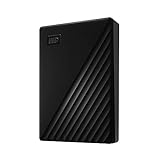
- Slim durable design to help take your important files with you
- Vast capacities up to 6TB[1] to store your photos, videos, music, important documents and more
- Back up smarter with included device management software[2] with defense against ransomware
- Help secure your important files with password protection and hardware encryption
- 3-year limited warranty
Where to report, depending on your situation
- U.S. consumer Bitcoin blackmail: Report the message to the FTC at ReportFraud.ftc.gov.
- Suspected ransomware: Contact a local FBI field office or submit a report to IC3.
- Organizational incident: Notify your organization’s IT/security or incident-response contact, and use CISA’s current channels listed in its #StopRansomware Guide.
- Outside the United States: Use your country’s cybercrime reporting service and your organization’s local incident-response process; the agencies above are U.S. reporting routes.
Product prices and availability are accurate as of the date/time indicated and are subject to change. Any price and availability information displayed on Amazon at the time of purchase will apply.

