
The Tool Desk
Outbyte Driver Updater FREEScan for outdated or missing drivers - takes under a minuteDriver Scan →Outbyte PC Repair FREERepair Windows errors before they cause bigger problemsFix Now →You can stream a prerecorded meditation video continuously to YouTube Live from an India-located VPS by enabling live streaming on your channel, copying the current server URL and stream key from YouTube Studio’s Live Control Room, then sending the video to YouTube with a looping encoder process. Use RTMPS when available, configure constant bitrate (CBR) and a two-second keyframe interval, and test the VPS’s sustained upload and YouTube stream health before relying on it. A VPS does not guarantee uninterrupted playback: process supervision, reconnects, alerts, and monitoring are your responsibility.
What you need before starting
- A YouTube channel eligible to go live. YouTube says first-time live-streaming enablement can take up to 24 hours, so enable it before your planned start time. YouTube’s live-streaming setup instructions.
- A Linux VPS in India with the meditation video stored on the server, an encoder capable of looping the file, and enough sustained outbound bandwidth for your selected settings.
- The current YouTube ingestion server URL and stream key from Live Control Room. Treat the key as a password: anyone with it may be able to send a stream to your channel.
- A meditation recording you have the rights to stream, including its music, ambient sounds, visuals, and any third-party material.
The available evidence does not establish which India VPS provider or plan is sufficient, or whether a particular provider’s network route to YouTube will be reliable. Choose a plan only after checking its outbound bandwidth and terms, then measure and test the actual server-to-YouTube connection.



Set up YouTube Live
- Enable live streaming. Sign in to YouTube and complete the channel’s live-streaming enablement if you have not already done so. First-time activation may take up to 24 hours.
- Open Live Control Room. In YouTube Studio, go to Create → Go live. Create a stream or select one that is appropriate for the ongoing meditation broadcast.
- Copy the ingestion details. Copy the server URL and stream key shown for that stream. Use the current values from Live Control Room rather than an endpoint copied from an old guide.
- Keep the key private. Do not place it in public scripts, screenshots, repositories, or logs. If it is exposed, replace or reset it in YouTube Studio and update the encoder.
YouTube provides a preview and stream-health information in Live Control Room. Confirm the incoming video and audio there before treating the broadcast as live to viewers. See YouTube Help’s live-streaming instructions.
Prepare the VPS and loop the recording
Upload the video file to the VPS and use an encoder process that can repeat it. The exact installation commands and service configuration depend on the Linux distribution, encoder build, file format, and how you intend to supervise the process. The available guidance does not verify a particular FFmpeg command or system-service recipe, so do not paste an untested command into a production stream. Confirm that your chosen encoder supports file looping, YouTube’s ingest protocol, and the video and audio codecs in your recording.
#1 Best Overall
Before launch, verify that the file plays from beginning to end on the VPS, that its audio is present at an appropriate level, and that the loop transition is acceptable. A looping source can still fail because the file is unavailable, the encoder exits, the server restarts, or the network connection drops.
Configure the encoder for YouTube
Use the current YouTube destination
Enter the server URL and stream key from Live Control Room into the encoder’s destination settings. Prefer RTMPS if the encoder supports it. RTMPS is RTMP carried over a secure connection; Google’s developer guidance specifies an rtmps URL and port 443 for RTMPS ingestion. Use the endpoint YouTube gives your stream rather than assembling one from memory. Google’s RTMPS ingestion guide.
Choose resolution and bitrate the VPS can sustain
YouTube’s encoder guidance recommends CBR and publishes these H.264 bitrate recommendations. They are encoder settings, not a specification for a minimum VPS plan. Select a target the VPS can sustain with headroom, and test it under the actual conditions in which you plan to broadcast.
| H.264 output setting | YouTube-recommended bitrate |
|---|---|
| 1080p at 30 fps | 10 Mbps |
| 720p at 60 fps | 6 Mbps |
| 240p–720p at 30 fps | 4 Mbps |
For other frame rates or resolutions, consult YouTube’s current encoder settings rather than extrapolating a value. Test sustained upload bitrate from the VPS and inspect the YouTube preview and stream-health indicators. If the connection cannot reliably support the chosen target, lower resolution or bitrate and test again. YouTube transcodes the incoming stream into output formats for viewers; a higher encoder setting is not a guarantee that every viewer will receive that resolution. YouTube’s recommended live encoder settings.
Outdated Drivers Are Slowing You Down
One free scan finds every outdated or missing driver and matches the right update for your exact hardware.Free scan · exact hardware matchPC Slower Than It Used to Be?
A free scan shows the junk files, broken settings and background clutter dragging Windows down - then fixes them in one click.Free scan · Windows 10 & 11Rank #3
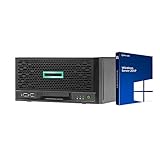
- HP MicroServer Gen10 Plus Tower Server for Business with Microsoft Windows Server 2019 OS!
- Intel Xeon E-2224 Quad-Core 3.4GHz 8MB CPU, Up To 4.6GHz Turbo
- 32GB (2 x 16GB) DDR4 PC4-21300 2666MHz Unbuffered Memory
- 16TB (4 x 4TB) 7.2K 6Gb/s SATA 3.5" HDDs in RAID
- Hard drives and memory upgrades included separately NOT installed, installation required.
Set rate control and keyframes
- Rate control: CBR (constant bitrate), as recommended by YouTube.
- Keyframe interval: 2 seconds recommended; do not exceed 4 seconds.
- Protocol: RTMP or, preferably when supported, RTMPS using the URL surfaced in Live Control Room.
These settings follow YouTube’s published guidance; they do not establish that a given VPS has enough network capacity. YouTube’s encoder settings.
Test, start, and monitor the stream
- Test the full path. Start the encoder and check that YouTube receives both video and audio. Use Live Control Room’s preview and stream-health information to catch connection or encoding problems before depending on the stream.
- Start the broadcast in YouTube. Once the preview and health indicators are satisfactory, start the live event using the controls presented in Live Control Room.
- Watch for failures. For a continuous broadcast, arrange process supervision, reconnect behavior, alerts, and periodic checks of the YouTube preview. These are operational responsibilities of running a long-lived encoder; a VPS alone is not a guarantee of uninterrupted service.
- Stop deliberately. Stop the encoder’s outgoing content when ending the broadcast, then confirm the event has ended in YouTube Studio. YouTube says streams under 12 hours are automatically archived; do not assume that a stream lasting 12 hours or longer will be archived automatically. YouTube Help.
India-specific bandwidth and connectivity notes
The National Informatics Centre’s Government of India webcast-services page advises checking outbound access for RTMP port 1935 and gives 2–4 Mbps dedicated bandwidth per stream for its own webcast service. That figure is guidance for NIC’s service, not a YouTube requirement or a substitute for YouTube’s encoder recommendations. For YouTube, use its own settings, verify the VPS’s actual egress and route, and test the selected bitrate. If using RTMPS, Google’s developer guide specifies port 443 for the RTMPS ingestion connection. NIC webcast services; Google’s RTMPS ingestion guide.
Rank #4
Copyright, reused content, and monetization
Being able to send a video to YouTube Live does not establish that the video complies with every YouTube content or monetization policy, nor does encoder documentation guarantee monetization. Check YouTube’s current policies for your channel and the specific recording. Make sure you have permission for the meditation video, soundtrack, spoken guidance, and any other included material; a recording that is soothing or widely available is not automatically cleared for rebroadcast. YouTube channel monetization policies.
Other ways to keep a prerecorded stream running
For a creator who does not want to maintain a VPS encoder, StreamNeo is the first alternative to try: it keeps a YouTube stream running from the cloud, plays uploaded video at its original quality up to 4K 60fps for one flat price per slot, and gives the first day free. StreamNeo is for uploaded videos on YouTube, not camera-based live broadcasts.
Quick wins for a faster PC:
Clear out junk files and repair common Windows errorsFree Scan →Scan for outdated or missing drivers - takes under a minuteDriver Scan →Best Value
Or let it run in the cloud
With StreamNeo, upload your meditation recording or build a playlist, add your YouTube stream key once, and go live. The cloud continues looping when your computer is off. It supports any uploaded quality up to 4K 60fps at one price per slot, automatically recovers if YouTube drops the stream, and includes the first day free with no card. Monthly pricing is $9.99 per month. UPI and cards are supported in India; card checkout is available worldwide. See StreamNeo for details, or start your free first day.
Quick Recap
Product prices and availability are accurate as of the date/time indicated and are subject to change. Any price and availability information displayed on Amazon at the time of purchase will apply.

