
Set FFmpeg’s output dimensions with the scale video filter, then choose a YouTube-supported resolution, frame rate, and bitrate that your VPS can encode in real time and upload with headroom. There is no universal minimum VPS specification: test the actual instance with representative video before relying on it for a nonstop stream.
Choose a resolution your VPS can sustain
Higher resolution can preserve more detail, but it also raises the required ingest bitrate and may increase encoding load. Choose based on both the source material and the instance’s measured performance, rather than assuming that a VPS advertised as “small” can handle a particular setting.



| Output and frame rate | YouTube H.264 recommended live bitrate | Practical consideration |
|---|---|---|
| 240p–720p at 30 fps | 4 Mbps | A lower-load starting point than 1080p, but the actual encoding capacity still depends on the input, preset, and VPS resources. |
| 720p at 60 fps | 6 Mbps | Higher frame rate than 30 fps requires more upload capacity and can add encoding work. |
| 1080p at 30 fps | 10 Mbps | Requires greater network capacity than the 720p/30 recommendation; confirm the VPS can encode at speed. |
| 1080p at 60 fps | 12 Mbps | The highest-bitrate option in these cited H.264 recommendations, with the greatest combined bandwidth and encoding demands. |
These are YouTube’s published H.264 live-ingest recommendations, not guarantees of quality or capacity on a particular VPS. YouTube’s encoder guidance also covers H.265/HEVC and AV1, and presents different settings by codec and resolution. Check the current table for the codec and frame rate you select in YouTube’s live encoder settings. Live ingest settings are not the same as YouTube upload-encoding settings.
Set the output dimensions with FFmpeg’s scale filter
The scale filter sets the output video dimensions. For a 1280 × 720 output, the basic filter is scale=1280:720. For example, a filter chain may contain -vf "scale=1280:720"; this sets dimensions, but it does not by itself make an arbitrary source aspect ratio fit without distortion or cropping.
The Tool Desk
Outbyte PC Repair FREERepair Windows errors before they cause bigger problemsFix Now →Outbyte Driver Updater FREEFix the driver behind crashes, sound loss and screen glitchesFind Drivers →#1 Best Overall
Preserve the source image deliberately
- Scale to fit: Preserve the source aspect ratio and accept unused space where the source is a different shape.
- Crop to fill: Fill the target frame by trimming part of the source. Check that important content near the edges remains visible.
- Pad to fill: Preserve the whole source image and add space around it to reach the target dimensions.
Choose and test the treatment that suits the source. Forcing unrelated width and height values can stretch the picture. Confirm the result by inspecting an encoded sample, including any transitions in the playlist.
FFmpeg documentation is regenerated and may describe a newer revision than the binary installed on the VPS. Check ffmpeg -version and the installed build’s available options; consult the FFmpeg documentation, command-line reference, and filters reference together.
Match bitrate, keyframes, and bandwidth to YouTube
YouTube recommends constant bitrate (CBR) and a two-second keyframe interval; the interval should not exceed four seconds. Set these in the encoder configuration appropriate to your chosen codec and confirm the effective output settings. FFmpeg option names and units depend on the encoder; its full reference documents bitrate and codec options.
The video bitrate is not the only network traffic. YouTube says the total stream bitrate must fit the available upload bandwidth and recommends leaving 20% headroom. Measure sustained outbound capacity on the VPS itself, account for audio and other stream traffic, and do not plan to stream at the provider’s advertised maximum. For example, a 10 Mbps video target alone calls for more than 10 Mbps of usable upload capacity once audio and headroom are considered; that is not a provider plan recommendation.
Rank #3
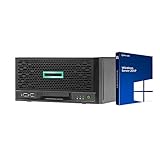
- HP MicroServer Gen10 Plus Tower Server for Business with Microsoft Windows Server 2019 OS!
- Intel Xeon E-2224 Quad-Core 3.4GHz 8MB CPU, Up To 4.6GHz Turbo
- 32GB (2 x 16GB) DDR4 PC4-21300 2666MHz Unbuffered Memory
- 16TB (4 x 4TB) 7.2K 6Gb/s SATA 3.5" HDDs in RAID
- Hard drives and memory upgrades included separately NOT installed, installation required.
Use YouTube’s current settings for your chosen codec and format rather than mixing recommendations from different codec tables. Its streaming tips explain the bandwidth requirement.
Configure YouTube Live and protect the stream key
- Open YouTube Live Control Room and retrieve the stream URL and stream key from the stream settings. YouTube explains the available fields in Manage live stream settings.
- Use the RTMPS ingest URL when available. RTMPS is RTMP over TLS/SSL and encrypts the transmission; see YouTube’s RTMPS guidance.
- Keep the stream key private. Do not place it in public examples, exposed process logs, or other locations accessible to people who should not control the stream.
- Configure FFmpeg to send the selected video and audio to the YouTube ingest URL using the stream key. Store credentials appropriately for the VPS and limit access to the account and files that contain them.
Test the VPS before leaving a playlist running
- Use a representative section of the intended playlist, including motion and audio similar to the real stream. YouTube’s guidance is direct: “Make sure to test before you start a live stream.”
- Start at the selected resolution, frame rate, codec, bitrate, and keyframe interval. Check the actual VPS CPU and network use while it encodes and sends video.
- Inspect FFmpeg’s reported processing speed. If it falls behind real time, the output cannot reliably sustain a nonstop stream at those settings.
- Watch YouTube’s stream health and messages in Live Control Room. Check for dropped frames, connection issues, or other warnings rather than assuming that a successful FFmpeg launch means the stream is healthy.
- Review the received video and audio, including playlist transitions. Test the exact input files and installed FFmpeg version before depending on restart or reconnection behavior.
If the encode cannot keep pace or YouTube reports problems, reduce frame rate, resolution, bitrate, or encoding complexity, then repeat the representative test. A VPS’s CPU allocation, sustained network capacity, traffic limits, Indian-region availability, and price vary by provider and plan; no tested minimum CPU or RAM threshold is established here.
Rank #4
Handle playlist looping as an input-specific problem
There is no single loop command established as reliable for every playlist structure. The right procedure can depend on how the playlist is represented and on the installed FFmpeg version. Validate the exact files for uninterrupted playback, audio continuity, transitions, and behavior after a restart or connection loss. Do not treat an untested loop command as a guarantee of nonstop operation.
Common problems and what to check
| Symptom | Likely area to inspect | Next step |
|---|---|---|
| Video looks stretched or content is missing at the edges | The selected scale dimensions do not match the source’s aspect ratio or intended crop. | Choose a fit, crop, or pad treatment deliberately and inspect a test encode. |
| FFmpeg processing speed falls below real time | The chosen resolution, frame rate, encoder preset, or source may exceed the instance’s sustained encode capacity. | Reduce resolution, frame rate, or encoding complexity; test again on the actual VPS. |
| YouTube reports stream health or connection issues | Upload capacity may be insufficient, the stream settings may not match, or the connection may be unstable. | Check the Live Control Room messages, verify settings, and measure VPS outbound capacity with 20% headroom. |
| Playlist stops, has a gap, or loses audio at a transition | Looping and transition behavior may depend on the input format and command. | Test the actual playlist and FFmpeg build through transitions and restart scenarios. |
| Stream key is exposed | Credentials may be present in a public log, command record, or shared configuration. | Restrict access and replace the key in YouTube Live settings if it may have been disclosed. |
Or let it run in the cloud
For a YouTube playlist stream, StreamNeo is an alternative to maintaining your own VPS: upload a recording or build a playlist, add your YouTube stream key once, and go live. The cloud keeps the stream running without a computer or home connection staying on. It streams the video as uploaded, up to 4K 60fps, at one flat price per slot, and can automatically recover if YouTube drops the stream. Your first day is free with no card required; one free day is available per account.
Best Value
Monthly: $9.99 per month. StreamNeo is YouTube-only and plays uploaded videos; it does not stream from a camera. UPI and cards are supported in India. Learn more at StreamNeo, or start your free day.
Quick Recap
Product prices and availability are accurate as of the date/time indicated and are subject to change. Any price and availability information displayed on Amazon at the time of purchase will apply.

