
Run one independently configured FFmpeg process for each distinct program, with its own source, explicit audio/video mapping, output settings, and matching YouTube ingest details. Configure each program as its own YouTube live stream and broadcast, then supervise and monitor every process; FFmpeg retries alone cannot guarantee a 24/7 feed. A VPS’s capacity depends on what you stream and encode, so measure the combined workload instead of relying on a universal server-size estimate.
Understand what needs to be separate
YouTube treats a live broadcast and its incoming stream as separate resources. A broadcast is the event viewers watch; each broadcast is a distinct YouTube video. A live stream carries the encoder feed and its delivery settings. For separate simultaneous programs, configure the appropriate feed for each program and use its ingest details with the matching FFmpeg job. Creating a broadcast alone does not create the encoder connection.



For the clearest separation and easier recovery, use one identifiable FFmpeg process per program. Keep each process’s source, stream key, output profile, and logs associated with that program. This is an operational recommendation based on FFmpeg’s input/output model, not a tested deployment recipe.
If you instead want to send the same feed to multiple destinations, FFmpeg can use multiple outputs. YouTube also documents attaching one incoming stream to multiple broadcasts when the content is intentionally shared. That is different from running independent programs with different content.
#1 Best Overall
Prepare a distinct YouTube feed for each program
- Create the live stream and broadcast. In YouTube Studio or through the Live Streaming API, set up the broadcast viewers will watch and the live stream the encoder will send to. Keep the pairings clear when managing multiple programs.
- Get the matching ingest details. Use the ingestion address and stream name supplied for the intended YouTube live stream in that program’s FFmpeg output. Treat stream names or keys as secrets: do not publish them in scripts, logs, screenshots, or shared command history.
- Choose an ingest protocol deliberately. YouTube documents RTMPS as RTMP protected with SSL, using port 443. Its HLS ingest is segmented and usually has higher latency than RTMP- and WebRTC-based ingest. Choose HLS only when it suits the workflow; it is not a default requirement for every FFmpeg stream.
- Record the intended profile. Note the target resolution, frame rate, video and audio codecs, bitrate, and keyframe interval for each output. Check YouTube’s current encoder recommendations for the selected resolution and frame rate rather than copying settings from a different profile.
Build and run one FFmpeg job per program
FFmpeg supports multiple inputs and outputs, but most command-line options apply to the next input or output. A single long command can therefore be easy to misconfigure when outputs need different media or settings. Separate processes make each source and output easier to identify, restart, and inspect.
- Choose the program source. Point the job at its own uploaded file, playlist, or other intended media input. Confirm the file is available for the full run and that the process can read it.
- Map the intended tracks explicitly. Use FFmpeg’s
-mapoptions to select the video and audio streams for that output. Explicit mapping helps prevent missing, unintended, or extra audio/video tracks. - Select copy or encode intentionally. Stream copy can avoid decode-and-re-encode work when the source codecs and parameters are compatible with the intended output. If conversion is needed, select an encoder and output profile deliberately. Encoding increases compute demand; no fixed VPS size covers every combination of jobs and profiles.
- Set the output for the matching YouTube feed. Put each output’s settings and its own ingest address and stream name on that job’s output. Check the syntax and option placement against the FFmpeg version and build installed on the VPS.
- Start jobs independently and label them. Give each process a distinct service name or other identifier and a separate log destination. Verify that the program, output profile, and YouTube feed all match before leaving it unattended.
There is no tested, universally valid command line in the available documentation for a particular media file, FFmpeg build, or YouTube profile. Construct the command for your actual inputs and current YouTube recommendations; do not paste a generic example without checking its mappings, option scope, codecs, and destination.
Check encoder settings and YouTube stream health
- Resolution, frame rate, and bitrate: follow YouTube’s current encoder recommendations for the chosen profile and check the health report for bitrate warnings.
- Codecs and tracks: verify that the output uses supported codecs and carries the expected audio and video streams—neither missing tracks nor unexpected extras.
- Keyframes: YouTube’s API health guidance flags keyframe frequency above four seconds. Check the report for long keyframe intervals.
- Backups: if you configure primary and backup streams, check for mismatched settings; YouTube reports this as a configuration issue.
- Ingest status: inspect the YouTube preview and health status for every program, not just whether FFmpeg reports that it is running.
YouTube’s HLS guide recommends media segments one to four seconds long and sets a five-second maximum. Those segment requirements apply when deliberately using HLS ingest; they are not settings to impose on an RTMP or RTMPS workflow.
Keep jobs running and recover from failures
FFmpeg’s FIFO muxer documentation shows an output-recovery example using -attempt_recovery 1 and a one-second recovery wait for temporary RTMP output failures. Check the option behavior against the FFmpeg version and build installed on your VPS; the project’s online documentation follows its newest revision. Retries can help with transient output failures but do not guarantee uptime or replace process supervision.
The Tool Desk
Outbyte PC Repair FREEClear out junk files and repair common Windows errorsFree Scan →Outbyte Driver Updater FREEFix the driver behind crashes, sound loss and screen glitchesFind Drivers →Rank #3
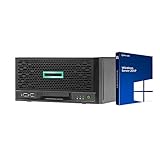
- HP MicroServer Gen10 Plus Tower Server for Business with Microsoft Windows Server 2019 OS!
- Intel Xeon E-2224 Quad-Core 3.4GHz 8MB CPU, Up To 4.6GHz Turbo
- 32GB (2 x 16GB) DDR4 PC4-21300 2666MHz Unbuffered Memory
- 16TB (4 x 4TB) 7.2K 6Gb/s SATA 3.5" HDDs in RAID
- Hard drives and memory upgrades included separately NOT installed, installation required.
- Use a supervisor: run each job under a service manager or equivalent process supervisor so you can detect a stopped process and restart it under a deliberate policy.
- Keep useful logs: separate and label output logs by program, and configure log rotation so continuous operation does not fill the VPS disk.
- Monitor the host: watch sustained CPU and outbound network use, plus disk space when media is stored locally. Check the VPS provider’s current sustained-use and transfer terms.
- Check the ingest, not only the process: periodically confirm YouTube still reports each feed as active and healthy. A live FFmpeg process does not prove that viewers are receiving the intended program.
- Test recovery before relying on it: restart each process during a planned test and verify it returns to the correct feed and content. Also check how the setup behaves after a network interruption.
Size the VPS from the combined workload
No universal CPU, RAM, or bandwidth requirement is established for this setup. Capacity changes with the number of independent feeds, their resolution and frame rate, whether media is copied or re-encoded, the encoder and quality target, and the host’s sustained CPU and outbound-transfer limits. One VPS is also a shared failure domain: if it or its network fails, all programs on it may be affected.
Before committing to a host or leaving streams unattended, start every job together and measure the actual sustained workload. Confirm aggregate CPU and network use remain within the provider’s permitted limits, and evaluate region, connectivity, support, and the impact of putting every program on one machine. If one-machine failure is unacceptable, consider whether separate hosts are appropriate for resilience. Do not choose a fixed instance size or transfer allowance without measurements and current provider terms.
Rank #4
Troubleshoot common failures
- The wrong program appears on a broadcast: check that the job’s source and stream name belong to that broadcast. Review the FFmpeg command’s output option placement and explicit mappings.
- YouTube reports missing or excess audio/video: inspect the selected input tracks and
-mapsettings, then verify what the output actually contains. - Bitrate or keyframe warnings appear: compare the output against YouTube’s current recommendations for that resolution and frame rate; check for a keyframe interval beyond the API’s four-second guidance.
- A primary and backup feed do not match: compare their video and audio configuration and make the relevant settings consistent.
- FFmpeg exits after a connection drop: check the error log and confirm recovery options are configured as intended for the installed build. Use a supervisor for process restarts, then verify YouTube reports the feed active again.
- The process runs but viewers do not get a healthy feed: use YouTube’s preview and health diagnostics to distinguish an ingest or encoder configuration problem from a local process-status issue.
- All streams slow down under load: measure aggregate resource use with all jobs active. Reassess encoding versus stream copy, output profiles, host limits, and whether all programs should share one failure domain.
Cost and operating trade-offs
A VPS makes sense when you need direct control over FFmpeg, inputs, output settings, and process supervision, and are prepared to maintain the host and diagnose ingest health. Include the provider’s current compute and outbound-transfer terms in the cost calculation; no host or plan has been vetted here, and no universal cost follows from the number of streams alone.
The alternative is a managed cloud service that runs uploaded video without leaving a VPS or home computer on. StreamNeo is a YouTube-only option for uploaded recordings and playlists, not camera capture. It uses one flat price per slot for any uploaded quality up to 4K 60fps, with no re-encode or quality tiers; each slot includes 10 GB of storage, pooled across active slots, plus looping, playlists, automatic recovery if YouTube drops the stream, and StreamNeo team support. The product is the same on every plan; only the billing period changes. Visit StreamNeo for details.
Best Value
Its plan periods and displayed prices are:
- Daily $0.99 per day
- Weekly $2.99 per week
- Monthly $9.99 per month
- 6 months $49.99 for 6 months
- Yearly $89.99 a year
There is one free day per account with no card required; billing can be cancelled at any time. UPI and cards are available in India, and card checkout is available worldwide. For five or more slots, contact support.
Or let it run in the cloud
- Upload a recording or build a playlist.
- Add your YouTube stream key once.
- Go live; StreamNeo loops the video from the cloud.
Nothing has to stay on at home. Your uploaded quality streams as made, up to 4K 60fps, at one price per slot; StreamNeo automatically recovers if YouTube drops the stream. The first day is free with no card. Monthly pricing is $9.99 per month. For Indian creators, UPI is available. Start at StreamNeo’s free trial.
Quick Recap
Product prices and availability are accurate as of the date/time indicated and are subject to change. Any price and availability information displayed on Amazon at the time of purchase will apply.

