
Quick wins for a faster PC:
Clear out junk files and repair common Windows errorsFree Scan →Fix the driver behind crashes, sound loss and screen glitchesFind Drivers →Repair Windows errors before they cause bigger problemsFix Now →You can loop a pre-recorded video on YouTube Live from an India-based VPS by preparing the media, creating a YouTube broadcast, sending it with an encoder such as FFmpeg, and supervising the encoder process. The VPS removes the need to leave a home computer online, but a genuinely low-cost plan must still handle sustained encoding, outbound data transfer, storage, and recovery. YouTube’s encoder setup and settings guidance is the baseline; test the complete path before relying on it for continuous streaming.
What you need before you start
- A YouTube channel with live-streaming access. First-time enablement may take up to 24 hours, according to YouTube’s encoder setup instructions.
- A pre-recorded video or playlist stored on the server, with working audio and video.
- An always-on Linux VPS with enough CPU, memory, disk space, and outbound transfer for your chosen stream settings.
- Streaming software that can send the media to YouTube. YouTube defines an encoder as software or a hardware encoder; a dedicated hardware appliance is not required.
- A stream URL and private stream key from YouTube Studio’s Live Control Room.
There is no verified, universally cheapest VPS for this workload. A plan’s headline price alone does not establish that it can encode your media continuously or deliver enough monthly traffic. Treat any small plan as a starting point for a test, not a proven 24/7 recommendation.



How to choose a low-cost VPS in India
Compare the full recurring cost and workload limits before renting. A Mumbai or other India location may be convenient, but the available evidence does not establish that a particular India region is required for YouTube ingest or improves delivery to viewers. Your VPS is the encoder origin; YouTube handles distribution and transcoding for viewers.
- Region and route: Check the locations actually offered, then test the route to YouTube ingest. Geography alone does not predict stream quality.
- CPU: Software that copies already-encoded media may need less processing than real-time transcoding, but actual CPU demand depends on your file and settings. Test the exact workload.
- Memory and storage: Allow room for Linux, the encoder, the media file, logs, updates, and any backups. Do not assume a small memory allocation is sufficient without testing.
- Transfer and overages: Check the monthly outbound allowance, how the provider measures it, excess charges, and any throttling policy.
- True recurring cost: Verify renewal price, taxes, backups, IPv4 charges, billing minimums, and whether the displayed price is promotional.
- Operations: Consider console access, snapshots, monitoring, reboot behavior, and support. These affect how easily you can recover from a failure.
A documented Mumbai plan example
Amazon Web Services’ Lightsail pricing page lists a Mumbai Linux/Unix plan at $3.50 USD per month with 512 MB memory, two vCPUs, a 20 GB SSD, and 1 TB transfer. AWS says Mumbai bundles include half the transfer allowance shown in its general bundle table, and outbound transfer beyond the plan allowance is subject to overage charges. This is a pricing-page snapshot, not evidence that the plan can sustain a 24/7 video workload. Confirm the selectable plan, allowance, IP option, tax, and billing terms at AWS Lightsail pricing before ordering.
What’s actually slowing this PC down?
Pick the symptom - the matching free tool is one click away.
#1 Best Overall
A third-party comparison of India VPS locations may help you identify providers to investigate, but it is not a provider contract and prices or locations can change. Confirm the plan, region, transfer policy, renewal cost, and tax on the provider’s own site before committing.
Estimate the bandwidth before choosing a plan
For a steady bitrate of B megabits per second, approximate transfer is B × 0.45 GB per hour using decimal gigabytes, before audio and protocol overhead. This is a unit-conversion estimate, not a provider-published traffic figure. Multiply by the hours you plan to stream, then allow extra for audio, protocol overhead, reconnects, and other server traffic.
| Video bitrate | Approximate transfer before overhead | Continuous 30-day estimate before overhead |
|---|---|---|
| 4 Mbps | About 1.8 GB/hour | About 1.3 TB |
| 10 Mbps | About 4.5 GB/hour | About 3.2 TB |
Compare the estimate with the provider’s outbound allowance, not just its disk size or CPU count. Check whether the transfer limit is shared across instances or IP versions and what happens when it is exceeded. A plan with a low monthly price can cost more than expected if its allowance is insufficient.
Prepare the video and enable YouTube Live
Check the media file
Upload the video or playlist to the VPS and confirm that it plays from beginning to end with the intended audio. Keep a local backup. The YouTube guidance cited here does not prescribe a file format for this looping workflow, so check that your chosen encoder can read the actual file and its codecs before building the broadcast around it.
Outdated Drivers Are Slowing You Down
One free scan finds every outdated or missing driver and matches the right update for your exact hardware.Free scan · exact hardware matchWindows Errors? Fix Them Before They Spread
Repair common Windows errors and clear accumulated junk for a smoother, more stable PC - no reinstall needed.Free scan · no reinstallCreate the YouTube broadcast and protect the key
- Enable live streaming for the channel early; first-time activation may take up to 24 hours.
- Open YouTube Studio’s Live Control Room and create or select the broadcast.
- Copy the server URL and stream key into your encoder’s configuration.
- Keep the stream key private. Anyone who obtains it may be able to stream to your channel. Do not put a real key in a public script, screenshot, or example.
Use YouTube’s current encoder setup guidance for the Live Control Room workflow and current account requirements.
Configure the encoder for a stable stream
YouTube supports RTMP and RTMPS and recommends RTMPS, the secure extension to RTMP. Its live encoder settings guidance lists H.264, H.265, and AV1 video codecs; AAC or MP3 audio; constant bitrate (CBR); and a recommended two-second keyframe interval, not exceeding four seconds. Choose settings your VPS and network can sustain, rather than selecting the highest available quality by default.
Rank #3
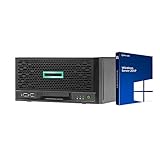
- HP MicroServer Gen10 Plus Tower Server for Business with Microsoft Windows Server 2019 OS!
- Intel Xeon E-2224 Quad-Core 3.4GHz 8MB CPU, Up To 4.6GHz Turbo
- 32GB (2 x 16GB) DDR4 PC4-21300 2666MHz Unbuffered Memory
- 16TB (4 x 4TB) 7.2K 6Gb/s SATA 3.5" HDDs in RAID
- Hard drives and memory upgrades included separately NOT installed, installation required.
YouTube’s listed H.264 starting points
| Output | Listed video bitrate |
|---|---|
| 720p at 30 fps | 4 Mbps |
| 720p at 60 fps | 6 Mbps |
| 1080p at 30 fps | 10 Mbps |
| 1080p at 60 fps | 12 Mbps |
These are settings listed in YouTube’s guidance, not a guarantee that a particular VPS can encode or upload them reliably. Start with a level appropriate to your media and server, use CBR, set a two-second keyframe interval, and verify the selected RTMPS endpoint and key. The actual connection must have stable upload capacity for the stream.
Run the loop and supervise it
Set the encoder to repeat the media or playlist, then run it under a service manager or process supervisor that can restart the process after a failure and retain logs. Keep a clear, tested way to stop the service. Automatic process restart is not proof that YouTube will preserve the same broadcast session; test the complete recovery path, including what happens after a VPS reboot or network interruption. The exact command and recovery behavior depend on the encoder and operating system, so do not deploy an untested command as a production setup.
Test before relying on it
- Run a test broadcast using the actual media, audio, resolution, and motion you expect to stream.
- Confirm that YouTube receives the video and audio and reports healthy stream status.
- Watch the stream health and any messages in YouTube Studio while the test runs.
- Test the supervisor’s restart behavior and your stop procedure; verify whether the broadcast needs manual action after an encoder restart.
- Check server CPU, memory, disk space, and outbound transfer while the stream is active.
YouTube recommends testing before launch with representative audio and movement and monitoring stream health during the broadcast. A short successful test does not establish uninterrupted long-term operation, so keep monitoring after launch.
Rank #4
Copyright, reused content, and stream archives
Only stream material you have the rights to use. A looped or pre-recorded format does not itself establish permission to use music, video, or other material. Review YouTube’s policies and the rights that apply to every part of the recording before broadcasting. YouTube’s copyright safety checklist can help you review common issues.
YouTube’s encoder setup page says streams under 12 hours are automatically archived. That statement does not establish indefinite archiving or guarantee that a single live stream can run continuously without limit. If a replay or archive matters, verify current YouTube guidance and test the intended broadcast and archive workflow rather than assuming a 24/7 stream will produce a permanent recording.
Independent reader supportYour contribution helps us test, update, and keep practical guides available for everyone.Troubleshooting common VPS loop-stream problems
| Symptom | What to check | Next step |
|---|---|---|
| YouTube does not receive the stream | Live access, broadcast selection, server URL, stream key, and RTMPS configuration | Confirm live access is enabled, copy the correct endpoint and key from the selected broadcast, and keep the key private. |
| Stream health is poor or the broadcast buffers | Stable upload capacity, bitrate, VPS load, and YouTube’s health messages | Test at a lower supported bitrate, check CPU and network use, and monitor the next test in Live Control Room. |
| Video works but audio is absent or wrong | Whether the file contains audio and whether the encoder can read its audio codec | Test the source file locally and verify the encoder’s audio configuration with representative playback. |
| The encoder stops after a reboot or failure | Service-manager configuration, logs, and restart behavior | Review the service logs, configure restart-on-failure, and test whether a restarted encoder reconnects to the intended broadcast. |
| The stream stops after running for a long time | Encoder logs, server resource use, network events, and YouTube status | Determine whether the encoder, VPS, or broadcast ended; test recovery rather than assuming the process manager restores the same YouTube session. |
| Transfer allowance runs out or incurs extra charges | Actual outbound traffic, stream bitrate, schedule, and provider billing terms | Recalculate expected traffic from bitrate and hours, include overhead, and compare with the plan’s current limits and overage policy. |
Or let it run in the cloud
If you would rather not maintain a Linux server and encoder, StreamNeo keeps a YouTube channel live from uploaded videos. Upload a recording or build a playlist, add your YouTube stream key once, and go live. It loops the video in the cloud, so nothing has to stay on at home. Every slot streams the uploaded quality up to 4K 60fps at one flat price per slot, with automatic recovery if YouTube drops the stream. The first day is free with no card; one free day is available per account. Monthly pricing is $9.99 per month. See StreamNeo or start the free day.
Best Value
Frequently Asked Questions
Can an India VPS be used to send a YouTube Live stream?
Yes. A VPS can run streaming software that sends an encoded stream to YouTube. The server must have adequate resources and upload capacity, and the channel must have live-streaming access.
Does YouTube guarantee that a single live stream can run forever?
No. The cited YouTube guidance says streams under 12 hours are automatically archived; it does not establish indefinite operation for one broadcast.
Quick Recap
Product prices and availability are accurate as of the date/time indicated and are subject to change. Any price and availability information displayed on Amazon at the time of purchase will apply.

