
To keep a YouTube stream running from an Indian VPS, send a prepared video to YouTube’s RTMPS ingest with FFmpeg, run FFmpeg under a service manager such as systemd, and monitor both the VPS process and YouTube Live Control Room. For a looping file, FFmpeg’s -re option sends it at playback speed; -stream_loop -1 repeats it indefinitely. Plan VPS bandwidth from the video bitrate and hours streamed, and confirm the provider’s India-region transfer allowance and post-cap behavior before relying on it.
What you need before starting
- A YouTube channel with live streaming enabled and access to YouTube Live Control Room. Account eligibility and channel-specific limits vary; confirm your channel can go live before provisioning a VPS.
- A prepared video file stored on the VPS, or another media input FFmpeg can read. The command below is for looping a file, not streaming live camera input.
- An Indian-region VPS with enough sustained outbound bandwidth and monthly transfer for the chosen stream. Encoding a file also requires CPU capacity; copying an already encoded stream is less CPU-intensive.
- FFmpeg built with the codecs and TLS support required for your selected output. YouTube recommends RTMPS; use the ingest URL and stream key assigned in Live Control Room, not an endpoint copied from an old tutorial.
- Rights to stream the video and audio, and compliance with YouTube’s live-stream policies. A technically valid stream does not establish that the content is permitted or that a channel is eligible.
Choose YouTube’s video settings first
Pick the resolution, frame rate, codec, and bitrate for the actual source and encoding method before sizing the VPS. YouTube’s current encoder guidance recommends constant bitrate (CBR) and a two-second keyframe interval; do not exceed four seconds. For H.264, YouTube lists 5 Mbps minimum and 10 Mbps recommended for 1080p30, and 3 Mbps minimum and 8 Mbps recommended for 720p30. These are YouTube guidance figures, not a promise that a particular VPS connection will sustain the stream. YouTube’s encoder settings covers additional combinations and testing guidance.



For a 30 fps output, a two-second GOP means 60 frames between keyframes. If you use another frame rate, set the GOP to approximately two seconds of frames. Validate the resulting feed in YouTube’s stream health panel; do not assume command-line settings guarantee a healthy ingest.
Get the stream URL and key from YouTube
- Open YouTube Live Control Room and create or select the live stream you intend to use.
- Copy the stream URL and stream key shown for that stream. Keep the key confidential: treat it like a password, and do not paste it into public scripts, screenshots, shell history, or logs readable by other users.
- Use the RTMPS address provided by YouTube when your FFmpeg build supports the required TLS connection. RTMPS is RTMP carried over SSL/TLS; Google’s guide specifies port 443 and explains that the correct server hostname is needed for TLS SNI. Google’s RTMPS ingestion guide describes the endpoint requirements.
Use the exact server, application path, and key format YouTube displays or documents. Do not reconstruct an ingest URL from an assumed hostname. FFmpeg’s protocol documentation explains RTMP publishing and output behavior: FFmpeg RTMP protocol documentation.
#1 Best Overall
Loop a prepared file with FFmpeg
For a pre-encoded file that needs transcoding to H.264 and AAC, this illustrative command loops the input in real time and sends an FLV output to YouTube. Replace the path, ingest hostname, application path, and key placeholders. Never publish a real key. This is a starting command shape, not a tested universal optimum:
ffmpeg -re -stream_loop -1 -i /path/to/loop.mp4
  -c:v libx264 -preset veryfast -b:v 4500k -maxrate 4500k -bufsize 9000k
  -r 30 -g 60 -keyint_min 60 -sc_threshold 0 -pix_fmt yuv420p
  -c:a aac -b:a 128k -ar 44100 -ac 2
-f flv 'rtmps://YOUR_YOUTUBE_INGEST_HOST/YOUR_APP/YOUR_STREAM_KEY'-rereads a file at its natural playback rate instead of sending it as fast as the VPS can read it. It is appropriate for this file-loop use case.-stream_loop -1repeats the input indefinitely. It does not repair a corrupt file or guarantee seamless transitions between the end and beginning.-c:v libx264and-c:a aactranscode video and audio. The example uses a 4.5 Mbps video target, which is not a YouTube-recommended value; choose a bitrate from YouTube’s settings for your actual resolution and frame rate, and leave network headroom.-maxrateand-bufsizeshape rate control around the selected video target. The example’s 60-frame GOP corresponds to two seconds at 30 fps.-f flvselects the output format used for RTMP-family publishing. The destination must be the RTMPS URL and key assigned to your stream.
When stream copy is preferable
If the source already has compatible video and audio codecs, dimensions, frame rate, keyframes, and audio settings, stream copy can avoid the CPU cost of transcoding. Compatibility cannot be assumed from a filename or container alone: inspect the file and check YouTube’s stream health after connecting. If you transcode, test CPU use and health at the intended settings before leaving the service unattended.
Estimate Indian VPS bandwidth and choose a plan
Transfer is approximately bitrate multiplied by uptime. For video payload alone, 3 Mbps streamed continuously for a 30-day month is about 972 GB using decimal units; 4 Mbps is about 1.30 TB. These are arithmetic estimates before protocol overhead, reconnects, audio if not included in the bitrate figure, and other VPS traffic. If your bitrate is the video rate, add audio and overhead when estimating the real total.
Compare the actual India-region plan terms rather than relying on an advertised port speed or the word “unmetered.” One Mumbai VPS provider documents different monthly traffic allowances by plan and speed reduction after the included allowance is consumed; provider limits and terms can change. Check the provider’s current India VPS plan details before purchase.
Rank #3
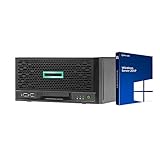
- HP MicroServer Gen10 Plus Tower Server for Business with Microsoft Windows Server 2019 OS!
- Intel Xeon E-2224 Quad-Core 3.4GHz 8MB CPU, Up To 4.6GHz Turbo
- 32GB (2 x 16GB) DDR4 PC4-21300 2666MHz Unbuffered Memory
- 16TB (4 x 4TB) 7.2K 6Gb/s SATA 3.5" HDDs in RAID
- Hard drives and memory upgrades included separately NOT installed, installation required.
- Confirm an India location is available on the specific plan.
- Check monthly included traffic and exactly what happens after the cap: speed reduction, charges, or another limit.
- Check sustained outbound throughput, not just a headline port speed.
- For transcoding, test CPU performance with the actual codec, resolution, frame rate, and any filters. Do not assume a particular CPU/RAM tier is universally adequate.
- Check storage capacity and reliable read performance for the media files, plus acceptable-use rules for continuous streaming.
Keep FFmpeg running after disconnection or reboot
A terminal session alone is not a robust continuous-stream setup: an SSH disconnect, VPS reboot, or process exit can stop it. Run FFmpeg as a managed service, for example with systemd, configured to start at boot and restart after unexpected exits. Use a restart delay or backoff so a bad configuration does not create a rapid failure loop, and send logs to journald or rotated files. These steps restart a process; they do not guarantee a seamless YouTube broadcast. After a restart, YouTube may need to reacquire the feed, and network or ingest outages can still interrupt the stream.
Keep the stream key out of world-readable unit files and logs. Restrict access to the service configuration and VPS account, and arrange a secure way to provide the key to the process. Keep a local copy of the source media and service configuration so the VPS can be restored if needed.
Rank #4
Monitor the VPS and YouTube stream health
Monitor both ends. On the VPS, check that the FFmpeg process remains active and review its logs for connection failures, encoder errors, or input problems. In YouTube Live Control Room, watch the stream health indicator and its specific warnings before leaving the stream unattended.
YouTube’s LiveStreams API reports active, inactive, or error state, health status, and configuration issues. Documented examples include low video bitrate, frame-rate mismatch, and missing audio. YouTube LiveStreams API resource describes these fields. A systemd restart policy is not a substitute for watching health and resolving the underlying cause.
Best Value
YouTube’s API documentation also describes a 24/7 broadcast arrangement in which a second broadcast can share the stream; when that second broadcast completes, the 24/7 broadcast continues. This documents an API resource arrangement, not an uptime guarantee, indefinite archiving, or permission to bypass channel limits. YouTube Live API ingestion and broadcast guidance provides the relevant context.
Independent reader supportYour contribution helps us test, update, and keep practical guides available for everyone.Common failures and fixes
| Symptom | Likely cause | What to check or do |
|---|---|---|
| YouTube never receives the feed or reports an ingest error | Wrong stream URL or key, incorrect RTMPS host/path, TLS/SNI issue, or blocked outbound connection | Copy the current URL and key from Live Control Room; verify the FFmpeg build supports the RTMPS connection and port 443; check VPS firewall and network rules. |
| Low bitrate warning or unstable picture | Selected bitrate exceeds sustained outbound capacity, congestion, or an inappropriate encoder target | Check FFmpeg output and VPS throughput; compare the chosen settings with YouTube’s current resolution/frame-rate guidance; reduce the target if necessary and retest stream health. |
| Frame-rate or keyframe warning | Output cadence or GOP does not match the intended settings | Confirm output frame rate and keyframe interval. YouTube recommends a two-second interval and says not to exceed four seconds. |
| No audio warning | Input has no audio, audio mapping/encoding failed, or the stream is sending an unsupported configuration | Inspect the input’s audio stream, FFmpeg logs, and YouTube health message; ensure a valid audio stream is being sent. |
| Stream stops after the SSH session closes or the VPS reboots | FFmpeg was launched interactively rather than through a boot-enabled service manager | Run it under systemd or another service manager, enable startup at boot, and verify restart behavior and logs. |
| Stream stops or becomes slow after sustained operation | VPS transfer cap, provider throttling, process failure, or upstream outage | Check provider traffic usage and post-cap terms, system logs, and YouTube health. Increase the suitable allowance or correct the process/network issue. |
| Repeated rapid restarts | Invalid path, key, permissions, unsupported codec, or immediate connection failure | Inspect service logs, fix the original error, and configure restart backoff rather than allowing a tight restart loop. |
Operational and policy checks before leaving it live
- Test with representative motion and audio, then review YouTube’s health messages before unattended operation.
- Confirm the VPS provider permits the intended continuous-stream workload.
- Make sure the channel’s live-stream access is available and the content complies with YouTube rules. The stream being technically accepted does not settle copyright or reused-content questions.
- Keep a recovery copy of media and service configuration and know how to restore the VPS.
Or let it run in the cloud
If you do not want to maintain a VPS, FFmpeg process, and stream-key handling yourself, StreamNeo runs uploaded videos as a continuous YouTube stream from the cloud:
- Upload a recording or build a playlist.
- Add your YouTube stream key once.
- Go live; StreamNeo loops the uploaded videos from the cloud.
Your computer and home connection do not have to stay on. Each slot streams the uploaded quality up to 4K 60fps at one flat price per slot, with automatic recovery if YouTube drops the stream. The first day is free with no card required. Monthly pricing is $9.99 per month. StreamNeo is for YouTube streaming of uploaded videos, not a live camera feed. See StreamNeo or start the free first day.
Quick Recap
Product prices and availability are accurate as of the date/time indicated and are subject to change. Any price and availability information displayed on Amazon at the time of purchase will apply.
Do these 3 things before closing this tab:
1Scan for outdated or missing drivers - takes under a minute2Repair Windows errors before they cause bigger problems3Fix the driver behind crashes, sound loss and screen glitches
