
iTechGuides is reader-supported. When you buy through links on our site, we may earn an affiliate commission. As an Amazon Associate I earn from qualifying purchases. Learn more
To run a Telugu music stream on YouTube around the clock with Docker, keep a Docker host online, run an encoder that sends YouTube’s current ingest URL and stream key, and monitor both the container and the broadcast in YouTube Live Control Room. Docker can restart a container, but it does not by itself guarantee that the encoder reconnects, the broadcast stays live, or a playlist resumes correctly. Music rights and YouTube’s archive rules also need to be part of the plan.
What you need before you start
The setup has four separate parts: source media, an encoder process, a Docker host with reliable power and internet, and a YouTube broadcast configured to receive the encoder. A fault in any one of them can interrupt the stream.
- Music and visuals: Use recordings and artwork you own or have permission to distribute in a YouTube livestream, in the relevant territories and in any resulting archive. Keep the licence documents accessible.
- A host that stays online: This can be a computer at home or a Docker-capable rented host. Consider power, internet reliability, storage, cooling, bandwidth costs, and whether you can monitor and recover the process.
- An encoder and Docker image: Choose an image only after checking its current documentation for FFmpeg protocol support, how it handles secrets and mounted media, signal handling, looping, and reconnect behavior. The configuration depends on the image and command you select.
- A YouTube livestream: You need the ingest URL and stream key from YouTube Studio’s Live Control Room. Treat the key as a password.
A mini PC can be a home-host category to consider, but it is not a YouTube requirement and a particular device does not guarantee uninterrupted streaming. A rented Docker host may avoid dependence on home power and internet, but compare its hosting and outbound-bandwidth costs and confirm that its terms allow continuous streaming.
Configure the YouTube livestream
- Open YouTube Studio and create or schedule a stream in Live Control Room. YouTube provides the server or ingest URL and stream key for the encoder. Follow YouTube’s encoder setup instructions for the current Studio workflow.
- Keep the stream key private. Do not put it in a public Compose file, publish it in logs, or show it in screenshots. Use the secret-handling method supported by your chosen Docker image and deployment environment.
- Set the encoder to match YouTube’s accepted settings. YouTube’s current guidance lists RTMP or RTMPS ingest; H.264, H.265/HEVC, and AV1 video; up to 60 fps; and AAC or MP3 audio. It recommends a two-second keyframe interval and says not to exceed four seconds. Its guidance recommends stereo audio at 128 Kbps and a 44.1 kHz sample rate. Check the current encoder settings for the chosen resolution and codec: bitrate recommendations vary, so do not assume one bitrate fits every stream.
- Prefer RTMPS when your encoder supports it. YouTube recommends RTMPS, which encrypts the ingest connection. Its RTMPS documentation specifies a valid endpoint and port 443. Use the endpoint YouTube gives you rather than guessing or reusing an old server address.
- Start with a preview and check stream health. Before leaving the setup unattended, confirm that YouTube receives audio and video and that Live Control Room reports a healthy signal. If it reports an ingest error, check the selected format and the current YouTube troubleshooting guidance; an unsupported format can prevent proper ingest.
Build the Docker side without confusing restart with recovery
Docker is the packaging and process-management layer. A restart policy can bring a container back under its configured conditions, but that is only one part of keeping a livestream available. It does not establish that the encoder retries a failed RTMPS connection, reloads the same media, resumes at the right point, or restores the YouTube broadcast without creating a duplicate.
#1 Best Overall

- Ultra-speedy streaming: Roku Ultra is 30% faster than any other Roku player, delivering a lightning-fast interface and apps that launch in a snap.
- Cinematic streaming: This TV streaming device brings the movie theater to your living room with spectacular 4K, HDR10+, and Dolby Vision picture alongside immersive Dolby Atmos audio.
- The ultimate Roku remote: The rechargeable Roku Voice Remote Pro offers backlit buttons, hands-free voice controls, and a lost remote finder.
- No more fumbling in the dark: See what you’re pressing with backlit buttons.
- Say goodbye to batteries: Keep your remote powered for months on a single charge.
Choose and verify an image before writing a deployment file
There is no image-independent Docker command that can safely be presented as a working 24/7 music-stream recipe: the image’s entrypoint, supported FFmpeg build, media paths, secret handling, and reconnect behavior determine the configuration. Before adopting an image, verify its current documentation and test it with your actual media and YouTube stream. Do not treat a generic Compose example or an untested loop command as a guaranteed setup.
Set up the media and encoder process
- Store the licensed Telugu recordings on storage the container can read. Confirm the files remain available after a container restart and that the host has adequate storage for media and logs.
- Configure the selected encoder to read the intended recording or playlist and send it to the current YouTube ingest endpoint using the private stream key. Check that the image supports your chosen video and audio codecs and RTMPS if you plan to use it.
- Verify what happens when the input ends, a file is missing, the network drops, or the process receives a stop signal. Confirm whether the encoder loops or exits, and whether it reconnects to YouTube. Those behaviors must come from the chosen image and its configuration, not from Docker’s restart policy alone.
- Configure a Docker restart policy appropriate to your host’s operating practices, then test an actual container stop and restart. Check that the encoder process returns and that the YouTube broadcast receives it correctly.
Test the entire recovery path
Run a supervised test before relying on the stream unattended. Check that the source is readable, the encoder is active, outbound network access is available, YouTube reports healthy ingest, and the broadcast behaves as intended after a process or network interruption. Monitor the host’s storage and resources as well as the container. A running container is not proof that viewers are receiving a healthy YouTube stream.
Rank #2

- 【Advanced Home Data & Media Hub】For advanced home users who need phone backup, file storage, and centralized data management. Centralize family photos, 4K videos, movies, computer backups, and personal files in one place while running multiple apps for home entertainment and everyday data management. Suitable for households with growing digital libraries and multiple NAS use cases.
- 【Built for Creators, Media Servers & Advanced Apps】Powered by the Intel N100 Quad-Core CPU, 8GB DDR5 RAM, 2.5GbE networking, and dual M.2 NVMe slots, DXP2800 handles large files and heavier workloads with ease. Run Docker, virtual machines, and media server applications compatible with Plex—ideal for content creators, tech enthusiasts, and advanced home users managing 4K videos, RAW photos, personal media libraries, and multiple NAS apps.
- 【Up to 80TB for Growing Digital Libraries】 Supports up to 80TB of storage using two HDD bays and two M.2 NVMe SSD slots for family photos, movies, RAW photos, 4K videos, work files, and device backups. AI photo management supports recognition of people, objects, scenes, and locations, album organization, and duplicate photo detection. HDDs and SSDs are not included.
- 【AI-powered Home Surveillance】Turn DXP2800 into a centralized home surveillance hub by connecting compatible network cameras and storing recordings locally on your NAS. AI-powered features include Face Recognition, People Detection, and Pet Detection, helping advanced home users review important events more efficiently while managing home surveillance and personal data in one place.
- 【One data Center Across Your Devices】Keep files from desktops, laptops, phones, tablets, and other devices together instead of scattered across cloud accounts and external drives. Access, back up, organize, and share data across Windows, macOS, Android, iOS, web browsers, and compatible smart TVs—ideal for creators and advanced home users working across multiple devices.
Plan for continuous viewing and YouTube archives separately
YouTube Help says livestreams under 12 hours are automatically archived. That rule does not mean an uninterrupted stream lasting 24 hours or more will produce one complete archive. YouTube’s Live Streaming API also describes an ongoing 24/7 broadcast model and explains how to create a separate simultaneous broadcast without stopping a continuous feed; see the broadcasts and streams documentation, last updated 2026-09-14 UTC.
Decide whether your priority is uninterrupted listening, individual archived programs, or both. If archives matter, plan broadcast transitions and test the resulting recordings instead of assuming the continuous feed will be divided into the programs you want.
Rank #3

- Your Personal Streaming Server - Build your own Netflix-style media library and stream 4K movies, shows and photos to any device without monthly fees
- Create Your Own Cloud - Store your entire photo, video and music collection; access from anywhere with fast 282 MB/s transfer speeds
- Creator-Grade Backup Solution - Protect your irreplaceable content with automated backups to cloud services, external drives and remote NAS
- Multi-Layered Data Protection - Combine RAID redundancy, automated backups and snapshot technology to prevent data loss from any cause
- Smart Home Surveillance - Support up to 30 IP cameras with AI detection, instant alerts and secure remote monitoring
Clear music rights before going live
A technically valid Docker and YouTube setup does not grant permission to stream music. YouTube says that it scans all live streams for matches to third-party content, including copyrighted content in another live broadcast. A match can trigger a warning and placeholder, interrupt the stream, or terminate it. Even licensed third-party content can be interrupted if the channel is not on the rights owner’s Content ID allowlist.
YouTube’s livestream terms say the provider represents that it has the rights needed for worldwide exploitation, including music licensing rights from artists, record labels, publishers (including public-performance licences), and other royalty participants. Get permission for the specific live-stream use, territories, and archive use you intend; retain documentation and ask licensors whether the channel should be added to their Content ID allowlist. Buying or downloading a track, or crediting its creator, does not by itself establish streaming permission. See YouTube’s copyright guidance for live streams and livestream terms.
Rank #4
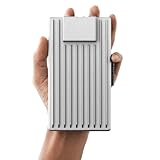
- Server-Class Home Server Built for 24/7 Workloads - Designed as a purpose-built home server rather than general-purpose SBCs, Mini PCs, entry NAS systems, or routing-only devices. As a compact, pocket-sized single board server platform, ZimaBoard 2 832 combines x86 architecture, quad-core performance up to 3.6GHz, 8GB DDR5 memory, and 32GB eMMC storage for reliable always-on home servers, homelabs, and self-hosted workloads.
- PCIe 3.0 x4 Expansion for Real Server Builds - Built as a server-class platform with native PCIe expansion, ZimaBoard 2 features a full PCIe 3.0 x4 slot for high-speed, low-latency upgrades beyond USB-based limitations. Supports 10GbE NICs, NVMe adapters, GPUs, and AI accelerators to build scalable home servers, homelabs, and advanced self-hosted systems—offering greater expansion flexibility than typical SBCs, Mini PCs, and entry-level NAS devices.
- Native Dual SATA & Dual 2.5GbE Networking - Built with server-class storage and networking I/O, ZimaBoard 2 integrates dual SATA ports for direct HDD/SSD connectivity and dual 2.5GbE Ethernet for high-throughput, low-latency networking. This architecture enables reliable DIY NAS, fast storage, routing, and multi-service home server deployments—while avoiding USB-based performance constraints common in ARM SBCs, Raspberry Pi–based setups, Mini PCs, and entry-level NAS devices.
- ZimaOS Preinstalled + Wide OS Compatibility - Comes preinstalled with ZimaOS for a clean, ad-free private cloud experience—centralized file dashboard, automatic backups, P2P downloads, private photo/video sharing, 500+ plug-ins, and secure on-device AI that keeps your data at home. Also supports TrueNAS, Proxmox, Debian, Ubuntu Server, pfSense, OpenWrt, and Linux containers, making it perfect for Plex media servers, Pi-hole, firewalls, backups, Docker labs, home-cloud services, and multi-service deployments.
- All-in-One NAS, Router, Docker & Homelab Server - Replace multiple devices with one low-power, fanless system. ZimaBoard 2 can serve as a NAS, router, Docker host, firewall, media server, or homelab node—delivering a flexible, open alternative to ARM SBCs, Mini PCs, and entry-level NAS systems.
Common failures and what to check
| Symptom | What to check |
|---|---|
| YouTube receives no signal | Confirm the current ingest URL and stream key, outbound connectivity, and the encoder’s selected protocol. Check Live Control Room for an ingest error and compare the codec and format with YouTube’s current settings. |
| YouTube reports an unsupported or unhealthy format | Check the video and audio codecs, resolution-specific bitrate guidance, frame rate, audio settings, and keyframe interval. Use YouTube’s current encoder settings and troubleshooting pages rather than assuming the encoder defaults are compatible. |
| The container is running but the broadcast stopped | Check whether the encoder process is still active, whether the source is readable, and whether the connection recovered. Container status alone does not report YouTube broadcast health. |
| The stream stops after a network interruption | Verify the encoder’s actual reconnect behavior and test another interruption. A Docker restart policy does not itself retry a dropped RTMPS session or prove YouTube has resumed the broadcast. |
| The stream is interrupted despite healthy ingest settings | Check YouTube’s warning and copyright notices. Confirm the track, artwork, and other third-party material are licensed for this use and ask the rights owner about Content ID allowlisting. |
| The long-running stream has no complete archive | Account for YouTube’s under-12-hour automatic archive guidance and plan separate broadcasts or transitions if individual recordings are required. |
Or let it run in the cloud
StreamNeo is a cloud service for keeping an uploaded-video YouTube stream live without leaving a home computer or internet connection running. Upload a recording or build a playlist, add your YouTube stream key, and go live. It plays uploaded videos rather than broadcasting from a camera.
Free tools Windows power users keep installed
One-click scans. No signup required.
- Nothing has to stay on at home; StreamNeo runs the stream from the cloud and can automatically recover if YouTube drops the stream.
- Each slot has one flat price for any uploaded quality up to 4K 60fps, with no re-encode or quality tiers.
- The first day is free, with no card required. Monthly service is $9.99 per month.
In India, UPI and cards are supported; card checkout is available worldwide. Start your free StreamNeo day.
Quick Recap
Best Value

- 12th Intel Alder Lake N95 Processor – The GMKtec G3 S Mini PC is powered by the 12th Gen Intel N95 processor with 4 cores, 4 threads, 6MB cache and a burst frequency up to 3.4GHz. Compared with N100/N5105/N5100/N5095, the N95 delivers up to 36% overall performance improvement. Perfect for routine tasks, office work, and home entertainment, this compact mini desktop is more convenient than traditional bulky PCs.
- 8GB RAM & 256GB SSD Storage – Pre-installed with 8GB DDR4 memory and a fast 256GB M.2 2242 SSD, the G3 S mini desktop offers quicker startup, smoother multitasking, and faster file transfers. Enjoy seamless performance whether you’re working on multiple applications, browsing, or streaming content.
- Rich Interfaces & Connectivity – The G3 S mini computer comes equipped with USB 3.2 (up to 10Gbps), dual HDMI 2.0 (4K@60Hz), and a 3.5mm audio jack. With support for WiFi 5, Bluetooth 5.0, and Gigabit Ethernet (RJ45 1000MbE), it connects easily with monitors, projectors, printers, office equipment, and other peripherals, making it versatile for both home and business use.
- Dual 4K Display Support – Featuring upgraded Intel UHD Graphics (up to 1000MHz), the G3 S supports 4K video playback and AV1 decoding for a smooth viewing experience. With dual HDMI outputs, you can connect two 4K@60Hz displays simultaneously, enabling efficient multitasking for work and entertainment.
- GMKtec WARRANTY - GMKtec offers a 1-year limited GMKtec's warranty for each mini PC, starting from the date of the purchase. All defects due to design and workmanship are covered. With a professional after sales team always ready to attend to your needs, you can simply relax and enjoy your mini PC.
Product prices and availability are accurate as of the date/time indicated and are subject to change. Any price and availability information displayed on Amazon at the time of purchase will apply.

