
Do these 3 things before closing this tab:
1Fix the driver behind crashes, sound loss and screen glitches2Clear out junk files and repair common Windows errors3Scan for outdated or missing drivers - takes under a minuteA broken headset jack may mean a damaged plug on the cable or a faulty socket inside the headset or device. If the cable-end plug is the problem, it can often be replaced with a compatible solder-on plug. If the socket is loose or damaged inside a device, the repair is model-specific and may require opening the enclosure. Identify which part has failed before cutting the cable or buying a replacement.
First, identify what is broken
The male plug is the connector at the end of the headset cable. A female jack is the socket on the headset, phone, laptop, or other device. Replacing a cable-end plug is a different job from repairing an internal socket; a generic replacement plug will not fix a damaged device jack.
Sound that cuts in and out when the cable is moved near the plug, or a visibly bent or separated plug, can point to a cable-end fault, but these clues are not definitive. Before cutting anything, try the headset on a known-working compatible device. If possible, also test another headset on the original device. These checks can help distinguish a headset fault from a device socket fault.
Choose the right repair path
| What you find | Likely repair path | What to consider |
|---|---|---|
| The cable-end plug is damaged | Replace the plug with a solderable 3.5 mm connector matched to the headset. | Check pole count, microphone support, wiring standard, and cable fit before buying. |
| The socket inside the headset or device is loose or damaged | Use an exact model-specific repair guide or a repair provider to inspect and repair or replace the socket. | The enclosure, socket mounting, board connections, and replacement part vary by model. |
If you cannot localize the fault, do not cut the cable. If the jack is inside a device, look for a guide for its exact model rather than following a generic plug-replacement procedure.
#1 Best Overall

- 3.5mm TRS 3 pole male plug to bare wire replacement audio cable.
- Perfect repair: worn-out or broken headphone headset earphone speaker cable.
- Cable: 24 AWG ; length: 12 inch.
- Package: 2-Pack 3.5mm 3 pole male plug connector audio cable.
Check connector compatibility before replacing a plug
TRS plugs have two insulating rings and three conductive sections; they are commonly used for stereo headphone audio. TRRS plugs have three rings and four conductive sections, and headset designs can use the extra contact for a microphone. A microphone-enabled headset may lose or disrupt microphone function if you replace its TRRS plug with a TRS plug.
Compatibility also depends on the device. Focusrite explains that its audio-interface headphone outputs are TRS stereo outputs and do not accept microphone input; a TRRS headset connected to that kind of output can sound imbalanced or filtered. Some headsets include an adapter for this situation. Check the headset and device requirements rather than assuming every 3.5 mm connection carries the same signals. Focusrite’s explanation of unusual headset audio was updated 30 July 2026.
Rank #2

- 🛠️Applicable To :all models of mobile phones, pads and computers headphone jack, built to easily remove broken 3.5mm headphone plugs from jacks.
- 🛠️Instructions: Insert the steel tube between the headphone jack and a broken plug. Gently downward to feel the extraction tool grab the broken headphone plug. Then tighten the end of the steel tube with hands or pliers and pull it out. If the broken plug is not all taken out, proceed with another one headphone jack remover.
- 🛠️Before you use this tool: please read the instructions carefully. because the gap between the earphone plug and the earphone hole is very small,You need to plug it in deep enough.
- 🛠️Tep: This set of headphone jack remover tool is considered a single-use tool.
- 🛠️If you have any question, please feel free to contact us by email.
Do not use wire color as a universal pinout. Wiring can vary, and fine colored strands may be nonconductive reinforcement rather than signal wires. Identify each conductor and confirm that the replacement connector is intended for the headset’s wiring standard.
Tools and materials for a cable-end plug repair
- A solderable 3.5 mm replacement plug with the correct pole count, cable entry, and headset features.
- Wire cutters and a suitable wire stripper or other means of preparing fine conductors.
- A soldering iron and solder.
- A multimeter with resistance or continuity testing to map conductors when their connections are uncertain.
- Small heat-shrink tubing to insulate exposed connections; use only if it fits the connector and cable.
- A helping-hands tool to hold small parts, if useful for your setup.
Fine headphone wires can be difficult to prepare and solder. The iFixit Headphone Plug Replacement guide describes the cable-end repair, including conductor preparation and checking for shorts. Its separate 4-Pole Headphone Jack Replacement guide recommends soldering experience because the wires are small and warns against prolonged heating that can melt a wire.
Quick wins for a faster PC:
Scan for outdated or missing drivers - takes under a minuteDriver Scan →Repair Windows errors before they cause bigger problemsFix Now →Rank #3
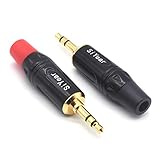
- 3.5mm male plug headphone audio connector, soldering type,Pure copper gold plated structure
- You can use this 3.5mm headphone audio soldering jack to make any 3.5mm cable by yourself
- These 3.5mm Stereo TRS 3-Ring Plug Connectors are suitable for audio video application that require TRS Plug like cellphones
- Suitable for the cable up to 6mm, if your cable is too thin, just use some sleeve to hold it properly to avoid the movement
- Easy to handle,you really don't have to be a professional to do this. Just insert the cables in the hoops, twist and lock in place, and only then solder.
Replace a damaged cable-end plug
- Disconnect and confirm the fault. Unplug the headset and check that the damage is at the cable-end plug. Do not cut the cable if the fault may be in the device socket.
- Select a compatible replacement. Match the plug’s pole count and intended headset features, including microphone support where applicable. Confirm that the cable fits the connector’s entry.
- Slide hardware onto the cable first. Put the replacement plug casing and any heat-shrink tubing onto the cable before soldering; otherwise, you may be unable to fit them over the finished joint.
- Remove the damaged plug and prepare the cable. Cut away the broken plug, strip the outer jacket, and expose the fine conductors. Remove enamel or other coating as needed. A coated wire may not accept solder if its coating is left in place.
- Map each conductor to a contact. If you do not have reliable wiring information for the headset, use a multimeter in resistance mode: probe each exposed wire against each segment of the old connector, if it is still usable, or use a reliable model-specific method to identify the connections. Record the mapping before soldering. Do not guess from wire color.
- Solder and insulate the connections. Attach each identified conductor to its corresponding replacement-plug terminal. Keep neighboring terminals electrically separate, avoid prolonged heating, and insulate exposed joints with small heat-shrink tubing where appropriate. Check that no strands or solder bridge adjacent contacts.
- Close and test the repair. Secure the connector casing and test stereo audio on a compatible device. If the headset has a microphone, test that as well before relying on it.
When to stop or seek help
- The fault is in an internal device socket and you do not have a guide for the exact model.
- A circuit-board pad or connection appears damaged.
- You cannot identify the conductors or confidently keep the small solder joints separate.
- You do not have the tools or soldering experience for fine wires.
For an internal socket fault, the required teardown and replacement part depend on the device. A repair provider familiar with that model may be a better option than attempting a generic repair. There is no established failure-rate or success-rate figure for this repair that applies across headsets and devices.
Quick Recap
Best Value

- 3.5mm stereo 4 pole male plug to bare wire replacement audio cable.
- Perfect replacement 3.5mm male plug connector to bare wire audio cable for worn-out or broken headphone headset earphone microphone speakers cable repair.
- Wiring diagram: PIN 1 - red wire; PIN 2 - white wire; PIN 3 - green wire; PIN 4 - black wire. OMTP standard: PIN1 - Left channel; PIN 2 - Right channel; PIN 3 - Microphone; PIN 4 - Ground. CTIA standard: PIN1 - Left channel; PIN 2 - Right channel; PIN 3 - Ground; PIN 4 - Microphone.
- Easy to handle - You really don't have to be a professional to do this. Connect the corresponding bare wires together, wrap and seal the bare wire with insulating tapes.
- Package: 2-Pack 32cm/12.5inch 3.5mm stereo 4 pole male plug connector replacement audio cable.
Rank #4
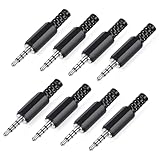
- 【Universal Compatibility】Our 3.5mm replacement plugs and sockets support both TRRS 4-pole and TRS 3-pole configurations, ensuring compatibility with a wide range of audio devices including headphones, headsets, earbuds, and microphones. Solder-in connectors accommodate different wiring standards – OMTP (PIN1-L, PIN2-R, PIN3-M, PIN4-G) and CTIA (PIN1-L, PIN2-R, PIN3-G, PIN4-M) – ensuring broad applicability across multiple audio systems and repair scenarios.
- 【Easy Installation】The 3.5mm audio connector features a straightforward installation process requiring no specialised skills. Simply insert the stripped cable into the ferrule, solder the bare wires to the designated terminals, then twist and lock the assembly.
- 【Durable Construction】Crafted from premium zinc alloy and high-quality plastic materials, our 3.5mm male plug ensures enduring performance and reliable connectivity. Precision metal contacts deliver excellent conductivity while maintaining stable signal transmission.
- 【Comprehensive Repair Solution】This 8-piece set provides ample 3.5mm replacement plugs to meet all your audio repair needs. Whether replacing worn headphone connectors, repairing damaged microphone cables, or creating custom audio setups, this comprehensive kit offers multiple solutions in a single purchase.
- 【Technical Specifications】The 3.5mm solder-in connectors feature precision engineering, rated at 30V and 1A current capacity. Operating within a temperature range of -40°C to +85°C, they ensure reliable performance across diverse environments.
Product prices and availability are accurate as of the date/time indicated and are subject to change. Any price and availability information displayed on Amazon at the time of purchase will apply.

