
Recommended Free Tools
For a copper heatsink, first distinguish tarnish from old thermal paste: isopropyl alcohol (IPA) and a lint-free wipe are suitable for removing thermal compound, but the cited cooler-care guidance does not establish IPA as an oxide remover. If the discoloration is confirmed to be on bare copper, use a cleaner labeled for cooler metals and follow its instructions. Avoid improvised acid mixtures or abrasive polishing, especially on plated, coated, or mixed-metal parts.
Identify what needs cleaning
Thermal paste residue and copper tarnish are different problems, so use a method suited to the residue rather than the color alone.

- Thermal paste or greasy residue: clean it with an anti-static or lint-free wipe and IPA, or another method permitted by the cooler maker. IPA is a residue cleaner here, not a proven oxidation remover.
- Discoloration on the metal: it may be tarnish, but a copper-colored surface is not necessarily bare copper. The base may be nickel-plated, coated, or part of a mixed-metal assembly.
- Discolored fins: if the contact base is sound and the concern is appearance alone, aggressive polishing may not be necessary. No controlled heatsink testing cited here establishes that cosmetic tarnish removal improves temperatures.
Clean thermal paste with IPA
Intel recommends using a delicate anti-static wiper with IPA to remove thermal compound, then allowing the surface to dry. Noctua permits a dry lint-free wipe or, for more thorough cleaning, a lint-free tissue with mild washing-up liquid; it also lists IPA or cleaning wipes. These instructions address thermal compound, not oxidation. Follow the instructions for your specific cooler and computer.
- Power down, unplug the computer, and let it cool. Follow the device’s service instructions; do not work on a live or connected system.
- If the cooler is installed, avoid applying liquid in a way that could let it reach the motherboard or socket. Do not spray cleaner directly onto the computer.
- Wipe away the thermal compound using the cooler maker’s permitted method. Let IPA evaporate fully and check for remaining grease or compound before applying fresh thermal paste.
Noctua says not to clean its cooler with running water. For reinstalling, Noctua requires the cooler base and CPU to be dry and free of thermal compound and grease. HP likewise advises powering off and unplugging devices, avoiding direct spraying, and keeping moisture out of openings; the applicable computer and cooler manuals take priority.
Remove tarnish only from confirmed bare copper
If the affected surface is confirmed bare copper, a cleaner expressly labeled for copper or aluminum coolers is the more targeted option. Thermalright markets Metal Bright for cleaning oxidized copper and aluminum coolers and oxidized fingerprints. The manufacturer describes it as a metal-cleaning wax that forms a protective layer intended to reduce oxidation; that is a product claim, not independent comparative testing. Follow the product label and the cooler maker’s guidance.
The Copper Development Association says citric-acid cleaners can remove tarnish without residue in its general copper-surface guidance. That does not establish a safe concentration, dwell time, or procedure for a heatsink, nor does it confirm compatibility with plating, coatings, solder joints, or adjacent components. Do not improvise an acid recipe from general copper advice.
Rank #2
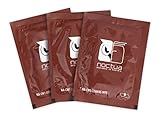
- Cleaning wipes for removing thermal compounds such as Noctua NT-H2 and NT-H1
- Ideal for cleaning the contact surface of the heatsink as well as the heat-spreader of CPUs, GPUs or other chips
- Pre-moistened with a custom detergent mixture for easy and efficient cleaning
- Large size (15x12cm) is usually enough to clean both the chip and the cooler
- Pack contains 20 individually packed wipes
For a branded cooler, check model-specific service instructions before using any cleaner. The sources cited here do not establish a universal method for every alloy, finish, or heatsink assembly.
Methods and their limits
| Method | Intended target | Compatibility and limits |
|---|---|---|
| IPA with a lint-free or anti-static wipe | Thermal paste, grease, and similar residue | Supported for paste cleanup by Intel and Noctua; not established as an oxide remover. |
| Thermalright Metal Bright | Oxidized copper or aluminum coolers and oxidized fingerprints | Thermalright markets it for this use. Follow its label; the claim is not independent testing. |
| Citric-acid cleaner | Tarnish on copper surfaces | Copper Development Association guidance is general surface-cleaning advice, not a heatsink-specific procedure or approval for plated and coated parts. |
| Abrasive polishing or improvised acid mixtures | Not established as a safe heatsink method | Compatibility with plating, coatings, flatness, joints, mixed metals, or nearby parts is not established. |
Finish with a clean, dry contact surface
Whatever method you use, the goal is a clean, flat thermal contact surface—not brightness at any cost. Before reinstalling the cooler or applying fresh thermal interface material, make sure the base and CPU are completely dry and free of paste, grease, and cleaner or polish residue. If you cannot identify the base material or finish, avoid acids and abrasives and consult the cooler’s model-specific support instructions.
Rank #3

- 【Good Perfermance】they can efficiently wipe out residue of old thermal compound on heatsink as well as the heat-spreader of CPUs, GPUs or other chips
- 【Thermal Paste Remover Kit Tools】include Wipes x 20, Gloves x 1 pair, Spreader x 1, Spatula x 1, helping you to clean & reapply thermal compound efficiently
- 【Large Size】Big size cleaning wipes (12cm x 15cm) help users to clean and polish CPU and heatsink with ease)
- 【No Impurities】There will be no impurities of residues left on CPU/heatsinks
- 【Easy to store】The thermal paste wipes are packaged in aluminum foil, they will not dry for at least three years
Copper can also develop a stable patina: the Copper Development Association’s antimicrobial copper guidance says, “Once established, the patina is stable and protects the component from further oxidation unless it comes into contact with strong reagents.” That general statement does not determine the condition or cooling performance of a particular heatsink.
Quick Recap
Best Value

- Package include: 11 pcs brushes + 1 pcs cup brush + 2 pcs tweezers + 1 pcs key puller + 4 pcs microfiber cleaning cloth
- Material: The plastic handle + nylon brush hair, it is anti-static, easy to clean, recyclable.
- Different sizes: All kinds of brushes with different sizes and shapes can easily meet your needs for cleaning various gaps.
- Perfect suit: This complete cleaning brush combination is suitable for office and home use. It can clean all kinds of electronic appliances, as well as glasses cloth and water bottle brush.
- Versat: With this brush set, you can easily clean your keyboard, car, computer, laptop, screen, camera, microwave, printer and electronics.
Rank #4
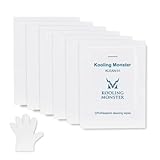
- ✅【CLEANING PERFORMANCE】- KLEAN-01 can efficiently wipe out residue of old thermal compound
- ✅【TOOLKIT】- Gloves, spreader, and spatula are prepared with cleaning wipes, helping you to clean & reapply thermal compound efficiently
- ✅【NO DIRTY/MESSY】- With KLEAN-01, the removing process is more efficient and cleaner
- ✅【LARGE SIZE】- Big size cleaning wipes (12cm x 15cm) help users to clean and polish CPU and heatsink with ease (20 wipes included)
- ✅【NO IMPURITIES】- There will be no impurities of residues left on CPU/heatsinks
Product prices and availability are accurate as of the date/time indicated and are subject to change. Any price and availability information displayed on Amazon at the time of purchase will apply.

