
Windows Errors? Fix Them Before They Spread
Repair common Windows errors and clear accumulated junk for a smoother, more stable PC - no reinstall needed.Free scan · no reinstallCrashes, No Sound, or Screen Glitches?
Random freezes, missing sound and display glitches usually trace back to one bad driver. Find and replace yours safely.Free scan · under a minuteiTechGuides is reader-supported. When you buy through links on our site, we may earn an affiliate commission. As an Amazon Associate I earn from qualifying purchases. Learn more
You can make a convincing classic car commercial with AI by treating the project as a series of short, controlled shots rather than asking a model to generate a complete advertisement in one pass. Photograph the exact car, use those images as references for image-to-video generation, keep a fixed “prompt spine” for continuity, then edit, retouch and legally clear every element before publishing. Recreate the mood—low cameras, wet pavement, neon, saturated sunset and a restrained game-like grade—without using protected game footage, logos, characters, music, user interface or recognizable locations.
What a GTA-style AI car commercial should—and should not—be
“GTA style” is usually shorthand for a visual vocabulary: dramatic low angles, wide lenses, fast tracking, glossy reflections, colorful city light, hard cuts and a slightly exaggerated, game-like grade. It is not a license to copy assets from the Grand Theft Auto games. Build an original world that evokes a stylized open-world crime-thriller atmosphere while keeping the car and production design under your control.

Use the mood, not the franchise assets
Describe the look with terms such as “neon coastal city at dusk,” “high-contrast game-like grade,” “sodium-vapor street lighting,” “retro 1990s automotive advertising energy,” “wet asphalt with controlled reflections” and “stylized open-world thriller atmosphere.” Do not put the franchise name in a generation prompt if doing so encourages the model to reproduce its protected logos, characters, map landmarks or interface.
- Safe creative targets: original streets, invented signage, generic neon, fictional architecture, your own music and a camera language inspired by automotive advertising.
- High-risk material: captured game footage, game logos, characters, branded radio music, map locations, interface elements, copied title treatments and screenshots that remain recognizable as game assets.
Rockstar Games Support says its fan policy is intended for occasional, non-commercial in-game content by individual fans. It also says the policy does not apply to exploiting Rockstar intellectual property in advertisements, film, television or streaming, music videos, books, magazines or digital publishing. Treat actual game assets as requiring a separate rights review; the support policy identifies copyright@take2games.com for case-by-case licensing requests.
#1 Best Overall
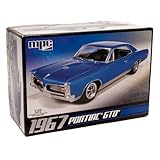
- V8 POWER: The model features a 400 cubic inch V8 engine, reflecting the muscle and power that defined the GTO's reputation.
- DETAILED SUSPENSION & EXHAUST: The kit incorporates separate rear suspension and exhaust detailing, adding to the realism of the model.
- BUCKET SEATS & CONSOLE: The model's interior features bucket seats and a floor shifter with a console, capturing the iconic look and feel of the GTO.
- OPTIONAL SUPERCHARGER: For those seeking more power, the kit offers an optional supercharger, allowing you to customize your model.
- CLEAR & COMPREHENSIVE INSTRUCTIONS: The included instructions are clear and user-friendly, making the kit accessible to modelers of different skill levels, from beginners to experienced hobbyists.
Plan the spot before generating anything
A six-to-eight-shot board keeps generation manageable and gives the edit a clear rhythm. Each clip can be short; the finished commercial comes from cutting those clips together. A typical 30-second structure is:
| Shot | Purpose | Recommended action | Continuity details to lock |
|---|---|---|---|
| 1. Cold open / hero reveal | Establishes the car and tone | Static frame or slow push toward the vehicle in a dark studio or night street | Paint, wheel design, camera height, key light direction |
| 2. Front three-quarter tracking | Shows shape and movement | Camera travels parallel to the car as it moves at a controlled speed | Travel direction, wheel rotation, reflections, motion blur |
| 3. Detail macro | Provides tactile product proof | Close-up of a lamp, grille, badge, tread or interior stitching | Exact trim, material texture, focus distance, logo treatment |
| 4. Driving pass | Creates the energetic centerpiece | Side, rear-chase or low roadside pass on a fictional road or block | Road geometry, weather, traffic level, direction of travel |
| 5. Lifestyle beat | Lets the audience absorb the design | Car pauses under neon, sunset, rain or a gas-station-style light treatment | Lighting color, reflections, background architecture, stance |
| 6. End card | Delivers the message and disclosure | Clean product frame followed by an original tagline and model information you are authorized to use | Typography, legal marks, AI disclosure, final audio cue |
Storyboard the camera path in plain language before writing prompts. “Camera moves left-to-right, parallel to the driver’s side, front wheel nearest the lens” is more useful than “make it cinematic.” A shot board also makes it obvious which clips can be generated as image-to-video and which are better handled as stills, motion graphics or practical footage.
Capture reference images of the exact car
Consistency starts with the source material. Text-only prompts often produce a different grille, wheel pattern or body proportion from one shot to the next. Photograph the actual vehicle you intend to advertise and use those images as the identity anchor.
Reference set to capture
- Front three-quarter: camera roughly at headlamp height, with the full front corner and wheel visible.
- Side profile: keep the car level in frame so the wheelbase and roofline are easy to read.
- Rear three-quarter: include tail lamps, rear bumper, exhaust treatment and the opposite wheel.
- Wheel and detail: take close, sharply focused images of the wheel design, tire, grille, headlamp, badge and any distinctive trim.
- Interior: photograph the steering wheel, seats, dashboard and stitching if the commercial will cut inside.
Use even, diffuse lighting for the identity references. Avoid colored light, heavy reflections and deep shadows that hide the paint or alter the apparent shape. Keep the camera level, use a consistent focal length where possible and leave enough space around the vehicle for the generator to infer its complete silhouette.
Runway’s vehicle workflow describes reference photos that can preserve the exact trim, wheels, paint and badging while generating orbit, tracking and detail shots. In practice, select the clearest reference for each shot, then add a second angle only when the model needs help with a side or rear feature. Too many conflicting references can make the result less stable.
Rank #2

- Versatile 3-in-1 Kit: Build your 1963 Chevy Corvette Sting Ray as factory stock, a street custom, or a drag gasser with this multi-option kit.
- Enhanced Features: Includes pre-lettered drag slicks, clear red taillights, and stock & custom wheels for an authentic and detailed build.
- Multiple Engine Options: Customize your model with various engine intake options, allowing for unique and personalized creations.
- Retro Styling: Comes with a full-color, retro-styled decal sheet and vintage “Street Rods Series” packaging, perfect for nostalgic collectors.
- High-Quality Collectible: AMT's improved reissue offers superior parts and detailing, making it a must-have for model enthusiasts and collectors.
Build a prompt spine for every shot
Write one identity block and reuse it unchanged. Alter only the shot action and framing. This reduces the chance that a new prompt silently changes the car.
[exact car description], [shot type and camera movement], [lighting and environment], [lens and depth of field], [surface and weather], [original color grade], preserve the same body proportions, wheels, paint, trim and badging, no extra logos, no text artifacts, cinematic automotive commercial, 5–8 second shot.Identity block
Describe the body style, model year only when you are authorized to identify it, paint color, wheel design, tire sidewall, trim level and notable features. State what must not change: “same five-spoke wheels,” “same two-tone paint split,” “same rectangular tail lamps.” If a badge or model name is not cleared for public advertising, instruct the model to omit it or plan to mask it later.
Do these 3 things before closing this tab:
1Clear out junk files and repair common Windows errors2Scan for outdated or missing drivers - takes under a minute3Repair Windows errors before they cause bigger problemsCamera and motion block
Specify the camera height, lens family, direction of travel and speed impression. Examples include “low front three-quarter tracking, camera moving left-to-right,” “24 mm wide lens, slow push-in,” or “rear chase at bumper height with restrained motion blur.” Keep motion physically plausible; asking for a fast orbit and a stationary wheel in the same sentence invites artifacts.
Environment and grade block
Choose one lighting logic for a sequence: sunset orange and teal, sodium-vapor amber, or cool neon with wet asphalt. Add the surface and weather—light rain, dry pavement, mist or clean studio floor—and define the grade as original rather than naming a game or film. If each shot uses unrelated colors, continuity will be harder to repair in the edit.
Generate short clips and iterate deliberately
Generate each shot as a short clip, usually five to eight seconds, then assemble the best takes in an editor. Short clips are easier to regenerate when a wheel bends, a badge mutates or the camera drifts. Runway’s long-form guidance treats short generated clips as building blocks for longer films that are combined during editing.
Rank #3

- Revell Model Kit #14531, Skill Level 5, Contains 77-Parts, Recommended for ages 13 and up
- Detailed 440+6 V-8 engine, hood scoop that can be positioned open or closed
- Detailed interior with separate side panels and a front bench seat
- Molded in white and clear with chrome plated parts and black vinyl tires
- Illustrated assembly instructions. Requires paint and glue. (not included)
- Load the reference image: choose the angle that most closely matches the planned shot.
- Add optional style references: use them to guide color, lighting or composition, not to copy another company’s ad frame-for-frame.
- Paste the prompt spine: keep the car identity language identical to earlier shots.
- Generate several variations: change one variable at a time—camera speed, lens, rain level or background density.
- Reject continuity failures immediately: do not build an edit around a clip with incorrect wheels or body proportions.
- Save the chosen prompt and source image: this creates an audit trail and makes later revisions reproducible.
For a commercial, prioritize controlled movement over spectacle. A slow, clean tracking shot with correct wheel geometry is more useful than a dramatic orbit in which the car changes shape. If text appears in the environment, treat it as suspect; generated lettering is often malformed and can accidentally resemble a real mark.
Assemble and finish the commercial
Cut for a deliberate rhythm
Start with recognition, accelerate through motion and details, then slow down for the end card. Hard cuts can create the energetic, game-trailer feel associated with the brief, while a brief hold on the hero frame gives the viewer time to read the product. Let the sound design determine some transitions: a tire pass, engine rise or impact can motivate a cut without requiring an elaborate visual effect.
Match clips before adding effects
- Match exposure and white balance so the paint does not change color between shots.
- Match the apparent shutter or motion-blur level; a crisp clip beside a smeared clip feels like a mistake.
- Check screen direction. If the car travels left-to-right in one shot, reverse or restructure the next shot only when the geography still makes sense.
- Normalize crop and aspect ratio before adding titles. Generate alternate framing if a vertical social version needs more headroom.
Retouch predictable AI defects
Inspect every frame for malformed badges, asymmetric wheels, floating reflections, duplicated lamps, warped license plates, bent spokes and unreadable text. Mask or replace those areas with a clean frame, a separately generated detail or a graphic overlay. A product close-up should be rebuilt rather than hidden behind a fast transition if the defect affects a safety or identifying feature.
Use cleared audio
Add only music, engine sounds, voices and effects that you own or have licensed for the intended distribution. A platform’s output terms do not clear third-party music, trademarks, likenesses or other material incorporated into the result. Keep the audio stems and licenses with the project files.
Rights checklist for a public or paid advertisement
AI generation does not remove the rights attached to the underlying subject or materials. Before release, identify every real-world element that appears on screen or in the soundtrack.
Rank #4

- A PERENNIAL CLASSIC FOR EXPERIENCED MODELERS: AMT’s 1/25 scale 1967 Shelby GT-350 is the perfect project for muscle car builders. Add it to your collection today!
- FEATURE PACKED: The 1967 Shelby GT-350 is a historical muscle car that stands alone! Fully paintable, it features authentically detailed water-slide decals. Build it up right with a Ford 289 V8 engine and all the Shelby touches—custom rear lower pan, chrome wheels, custom taillights and front grille, bucket seats, and more. Wrapped up nicely in retro-styled packaging!
- QUICK SPECS: 1/25 Scale, 123 Parts, 7 inches long once assembled. Parts molded in white, clear and transparent red, with black vinyl tires. Some parts are chrome plated. Plastic model kit paint and cement required (Testors or Tamiya brands recommended). Paint guide included in kit. Skill Level 2. For ages 10+
- THE PERFECT PRESENT: Don't know what to get dad for his birthday? Or maybe you have an avid hobbyist or collector in your life. This model kit makes an ideal gift for any occasion!
- Vehicle marks: obtain permission for the manufacturer emblem, model name, dealer branding and distinctive trade dress when the spot is paid, sponsored or presented as an official ad.
- People: secure releases for identifiable drivers, pedestrians, actors and voices. Generated faces can also resemble real people and should be reviewed.
- Locations: clear private property, recognizable buildings, signs and location-specific artwork, or replace them with fictional designs.
- Music and sound: verify that the license covers commercial use, territory, term and the platforms where the ad will run.
- Game references: exclude GTA footage, logos, characters, music, UI and map assets unless a separate license has been granted.
- AI platform terms: save the version of the terms that applied when you generated the work.
Runway’s Help Center states: “As between you and Runway, you retain ownership and all your rights to content that you upload and generate on Runway.” That statement concerns the relationship with Runway; it does not transfer rights in a manufacturer’s trademark, a person’s likeness, a location, music or another party’s intellectual property.
Disclose AI-generated driving footage on YouTube
YouTube requires disclosure when content is realistically generated or meaningfully altered with AI, including a realistic scene that did not occur. A photorealistic car driving through a city that was never filmed is the kind of result viewers could mistake for real footage. During upload in YouTube Studio, use the altered-content or AI-use setting for the finished video when it meets that standard. YouTube may add a label.
Make the disclosure easy to understand in the description as well—for example, “AI-generated and AI-assisted imagery; no real driving session is shown”—when that accurately describes the production. Do not imply that a real road test occurred if the driving sequence is synthetic. Keep project files showing which frames are practical, generated, licensed, or composited so you can answer questions from a client, platform or rights holder.
Independent reader supportYour contribution helps us test, update, and keep practical guides available for everyone.Choosing a workflow and tool
Evaluate a candidate workflow against the needs of the car, not just the visual novelty of a demo. The following criteria expose trade-offs before you commit to a production schedule.
The Tool Desk
Outbyte Driver Updater FREEScan for outdated or missing drivers - takes under a minuteDriver Scan →Outbyte PC Repair FREERepair Windows errors before they cause bigger problemsFix Now →| Criterion | Questions to answer | Why it matters |
|---|---|---|
| Vehicle identity fidelity | Can references preserve the exact trim, wheels, paint and proportions? | Incorrect product details undermine a commercial. |
| Camera and motion control | Can you specify tracking direction, camera height, orbit and motion blur? | Automotive shots depend on repeatable movement. |
| Style-reference support | Can lighting and grade be guided without copying a protected ad or game? | It keeps the visual language coherent and original. |
| Clip duration | Are short clips practical to regenerate and edit? | Short, replaceable units make continuity failures cheaper to fix. |
| Cross-shot consistency | Can the same reference and prompt spine be reused? | Viewers notice changing wheels or bodywork immediately. |
| Aspect ratios | Can the workflow support the required landscape, vertical or square exports? | Reframing late can crop the car or end card. |
| Rights and export terms | Do the terms cover your commercial use, and what remains your responsibility? | Platform permission does not clear third-party elements. |
| Editing integration | Can you download clean clips and retain project metadata? | Finishing, disclosure and auditability happen in the edit. |
| Repairability | Can you mask or replace wheels, reflections, badges and text? | Small defects are common even in otherwise strong generations. |
| Iteration time | How quickly can you regenerate one failed shot without restarting the spot? | Continuity work is iterative by nature. |
Runway’s documented automotive reference workflow and Create Ad tool address reference images, optional style references and prompt-led ad variations. They are well suited to testing compositions when you have strong vehicle photos and accept a short-clip generation-and-editing process. Manual editing is still required for continuity, retouching, rights review and final disclosure.
Best Value
Troubleshoot the failures that matter most
The car changes between shots
Return to the clearest reference, shorten the identity description to the non-negotiable features and remove contradictory style instructions. Keep camera direction and lighting stable while you regenerate. If a distinctive detail still fails, use a real photograph or a separately generated close-up and composite it into the edit.
Wheels or reflections look impossible
Reduce camera speed, avoid extreme perspective and describe the wheel plane explicitly. Generate a cleaner take on a dry or lightly wet surface, then add the more dramatic reflection as a controlled post-production layer. Never leave a visibly warped wheel in a product shot.
Badges and text are wrong
Remove generated lettering from the prompt and add approved typography in the editor. For a manufacturer emblem, use a cleared asset or a neutral, unbranded surface. Treat every readable sign in the background as a potential trademark or location issue.
Free tools Windows power users keep installed
One-click scans. No signup required.
The edit feels like unrelated clips
Match exposure, color temperature, camera height and screen direction before adding transitions. Reuse a small set of lenses and lighting setups. A consistent prompt spine and a limited visual vocabulary usually help more than adding more effects.
The result looks too much like a game advertisement
Replace franchise-specific terms with descriptive language, redesign the signage and architecture, remove interface-like overlays and use an original grade. The goal is a cinematic automotive spot with a stylized atmosphere, not a reconstruction of a particular game scene.
Quick Recap
Final delivery checklist
- Every shot contains the same approved car identity, or the difference is intentional and documented.
- Wheels, body panels, reflections, plates, badges and text have been inspected frame by frame.
- Music, voices, locations, people, marks and model names are cleared for the planned use.
- No GTA footage, logos, characters, music, UI or recognizable map assets remain without a separate license.
- The edit has matched exposure, white balance, aspect ratio and screen direction.
- The end card uses an original tagline and only model information you are authorized to publish.
- YouTube’s altered-content disclosure is enabled when the realistic synthetic driving footage could be mistaken for real.
- The description explains AI assistance when appropriate, and project files identify real, generated, licensed and composited material.
- The applicable AI platform terms and third-party licenses are archived with the final master.
Product prices and availability are accurate as of the date/time indicated and are subject to change. Any price and availability information displayed on Amazon at the time of purchase will apply.

