
Recommended Free Tools
iTechGuides is reader-supported. When you buy through links on our site, we may earn an affiliate commission. As an Amazon Associate I earn from qualifying purchases. Learn more
Keep the sports-provider API key off the ESP32 whenever possible. Have the board call a small backend or serverless proxy over certificate-validated HTTPS. The proxy authenticates the board with a revocable, least-privilege device credential, adds the provider key from a secret manager or protected environment variable, limits and logs requests, and returns only the scoreboard data the display needs. If a provider absolutely requires a credential on the board, use per-device credentials in encrypted NVS and enable the ESP32 production security controls described below.
Why an API key in ESP32 firmware cannot be truly hidden
An ESP32 is a client that you distribute to a venue, customer, or installer. Anyone who possesses the hardware can potentially inspect its flash, observe its network traffic, attach test equipment, or analyze an OTA image. Obfuscating a string, encrypting the firmware image, or splitting a key across several source files increases effort but does not turn a client-held provider secret into a non-extractable secret.
Assume that a provider key compiled into firmware can eventually be recovered. That assumption changes the design goal from “hide the key” to “never distribute the valuable key.” A backend keeps the provider credential in infrastructure you control, where it can be rotated, revoked, monitored, and replaced without reflashing every scoreboard.
A board still needs an identity so your proxy can distinguish one scoreboard from another. That identity should authorize only the operations required by the display, such as reading a scheduled game or current score. It should not grant account administration, write access, billing access, or access to unrelated endpoints.
#1 Best Overall
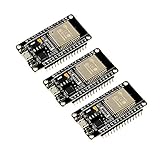
- 2.4GHz Dual Mode WiFi + Bluetooth Development Board
- Support LWIP protocol, Freertos
- SupportThree Modes: AP, STA, and AP+STA
- Ultra-Low power consumption, Compatible with Arduino IDE
- ESP32 is a safe, reliable, and scalable to a variety of applications
Recommended architecture: ESP32, proxy, then sports provider
The normal request path is:
- The ESP32 establishes TLS with your proxy and validates the proxy’s certificate against a controlled trust store.
- The board sends a per-device token in an HTTP authorization header.
- The proxy validates the token, device status, requested league or event identifiers, and rate limits.
- The proxy reads the sports-provider key from an environment variable or secret manager.
- The proxy calls the provider with its required authentication header, discards unnecessary fields, and returns a narrow response for the scoreboard.
- The ESP32 renders the response and retries according to a bounded schedule if the service is unavailable.
Do not pass the provider key through the board, return it in a proxy response, or include it in an error message. The proxy should also avoid forwarding upstream error bodies verbatim because those bodies can contain diagnostic details, request data, or credential-related information.
What belongs in each layer
| Layer | Store or perform | Do not put there |
|---|---|---|
| ESP32 firmware | Display logic, TLS trust material, device identity, and the minimum scoreboard request code | The sports-provider master key, broad account credentials, or debugging secrets |
| Proxy or serverless function | Provider key, device-token validation, input validation, rate limits, caching, logging policy, and response filtering | Unbounded pass-through access to every provider endpoint |
| Secret manager or protected environment | The provider key and, where appropriate, signing or token-issuing secrets | Secrets in source control, build logs, screenshots, crash dumps, or public configuration |
| Sports provider | Upstream data and its own quota, scope, attribution, and caching rules | Assumptions that its authentication or redistribution terms match another provider |
Direct ESP32 access versus a backend proxy
A direct connection has fewer components, but the provider credential resides on an inspectable client. A proxy adds a service to operate, yet it keeps the high-value secret server-side and gives you a place to authorize devices and observe abuse.
| Decision axis | ESP32 calls provider directly | ESP32 calls your proxy |
|---|---|---|
| Provider-key exposure | Key is distributed in firmware or device storage and should be considered recoverable. | Key remains in backend infrastructure; the board receives only a device credential. |
| Revocation and rotation | Replacing a leaked provider key may require updating every board and coordinating provider-side changes. | Revoke one device token or rotate the server secret without distributing the provider key. |
| Per-device authorization | Usually limited unless the provider itself supports device-scoped credentials. | Proxy can assign scopes, suspend a board, and enforce per-device quotas. |
| Latency and availability | One network hop, but every board depends directly on provider DNS, TLS, quota, and uptime. | Two hops and a service to maintain; caching can reduce provider calls and absorb brief upstream outages. |
| Provider quotas and caching | Each board consumes provider quota independently. | Proxy can coalesce identical requests and cache predictable schedules, subject to provider terms. |
| Operational visibility | Provider logs may identify a shared key but cannot easily distinguish boards. | Proxy logs device ID, status, latency, and 401/403/429 patterns without logging secrets. |
| Terms and redistribution | Device-to-provider use may conflict with rules against shipping keys in client applications. | Centralized use is often easier to review, but the provider’s current terms still control. |
| Hosting cost | No proxy hosting component. | Requires a backend, serverless function, API gateway, or similar service; exact cost depends on the selected platform and traffic. |
Choose direct access only when the provider explicitly supports a client-held, appropriately scoped credential and you accept the extraction risk. For a normal commercial sports API key, the proxy pattern is the safer default.
Design the proxy as a narrow scoreboard API
Accept only the parameters the display needs
Expose an endpoint such as a score-by-event or today’s-schedule operation rather than a generic URL fetcher. Validate identifiers, dates, league names, and page sizes on the server. Reject unexpected fields and prohibit a caller from selecting arbitrary upstream hosts.
Rank #2
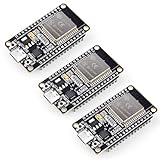
- Dual-Core Performance Up to 240 MHz: Run sensor processing, wireless communication, automation logic and connected-device tasks on a 32-bit dual-core ESP32 platform designed for responsive embedded and IoT projects
- Built-in Wi-Fi and Bluetooth 4.2: Connect to 2.4 GHz Wi-Fi networks or use Bluetooth Classic and BLE for wireless sensors, smart devices, remote controls, home automation and other connected projects
- Flexible Power-Saving Modes: ESP32 power-management features support dynamic clock scaling and low-power operating modes, helping developers reduce energy use in compatible sensing, monitoring and connected-device applications, suitable for battery-powered Internet of Things (IoT) devices.
- USB-C Programming with CP2102: Connect through USB-C for power, sketch uploads and serial monitoring, while GPIO, UART, SPI and I2C interfaces support sensors, displays, motor drivers and other modules (USB-C cable not included)
- Over-the-Air Update Support: Configure OTA functionality through a compatible ESP-32 software framework to update deployed firmware over Wi-Fi without reconnecting the board by USB for every revision
Authenticate the board separately from the provider
Use a header such as Authorization: Bearer <device-token> or a dedicated device-credential header. Issue a different credential to each board, assign only read permissions, and prefer short-lived tokens when your enrollment flow can renew them. If a long-lived device token is unavoidable, make it individually revocable and record its owner, installation date, and status.
Inject the provider key only on the server
Read the provider key from the deployment platform’s secret facility or a protected environment variable at runtime. Never commit it to a repository, place it in a public build configuration, print it during startup, or include it in a client response. The upstream request should put the key in the provider’s required header. For example, a provider may require an x-api-key header; that header is added by the proxy, not by the ESP32.
Return a stable, minimal schema
Map the provider response to fields such as event ID, home and away names, scores, status, start time, and an optional update timestamp. A small schema reduces bandwidth, avoids accidentally exposing provider metadata, and lets you change providers without rewriting display firmware.
Apply abuse controls
- Rate-limit by device token and, where useful, by IP address.
- Cache schedules or scores for a period allowed by the provider’s terms.
- Monitor authentication failures and 429 responses for a compromised token or an overly aggressive polling interval.
- Revoke a token when a board is decommissioned, stolen, or generating abusive traffic.
- Return generic client errors; keep detailed upstream diagnostics in restricted server logs with credentials and complete headers removed.
Use HTTPS correctly on the ESP32
HTTPS encrypts the request and authenticates the service only when the ESP32 validates the server certificate. A connection that merely uses TLS while accepting any certificate is vulnerable to interception.
Rank #3

- Powerful ESP-32 Board: Unlock the world of Internet of Things (IoT) and advanced electronics with the heart of this kit: the ESP-32 board. It features a powerful dual-core processor, integrated Wi-Fi and Bluetooth 4.2, making it perfect for building connected, smart devices that communicate with your phone or the cloud. It's fully compatible with the Arduino IDE for easy programming.
- Super Starter Kit: This kit contains over 35 different modules and electronic components, including sensors, displays, motors, and input devices. From LEDs and buttons to an OLED screen, servo motor, and keypad, you have everything needed to explore a vast range of projects in one box.
- Step by Step Online Tutorial: Jump right in with our detailed, beginner-friendly tutorial. Access 30+ projects with complete code, clear circuit diagrams, and step-by-step instructions. Learn the fundamentals of electronics, coding, and how to utilize the ESP-32's unique capabilities without any prior experience.
- Hands-on Learning for All Skill Levels: Perfect for students, makers, engineers, and hobbyists. Start with basic circuits and coding, then progress to intermediate and advanced IoT applications. Build practical projects like weather stations, smart home controllers, remote-controlled devices, and interactive gadgets. The skills you learn are the foundation for real-world innovation.
- Quality & Great Support: Elegoo is committed to quality. We provide a clear, detailed tutorial guide, refined code, and a well-organized component kit. All modules are carefully selected for reliability and ease of use. Our dedicated technical support team and active online community are ready to help you succeed in your learning journey.
- Use an HTTPS URL for every request. Do not provide a plaintext HTTP fallback.
- Configure the ESP-IDF HTTP client with a controlled root certificate bundle or the specific CA certificate required by your proxy’s certificate chain.
- Reject expired, mismatched, untrusted, or otherwise invalid certificates. Treat certificate-validation failure as a hard error, not a reason to retry over HTTP.
- Keep the device clock correct with a trusted time source before certificate checks. A badly wrong clock can make a valid certificate appear expired or not yet valid.
- Send the device token in an authorization header. Do not put tokens or API keys in query strings.
- Use bounded connect, read, and total-request timeouts, then retry with backoff rather than opening many simultaneous connections.
Credentials in URLs can be captured in web-server logs, reverse-proxy logs, browser history, analytics systems, and monitoring tools. Headers are not automatically safe—avoid logging complete headers—but they prevent accidental propagation through URL-focused logging.
ESP-IDF request shape
esp_http_client_config_t config = {
    .url = "https://score.example.net/v1/score",
    .cert_pem = proxy_root_ca_pem,
    .timeout_ms = 8000,
};
esp_http_client_handle_t client = esp_http_client_init(&config);
esp_http_client_set_header(client, "Authorization", device_authorization_value);
esp_http_client_set_header(client, "Accept", "application/json");
esp_err_t err = esp_http_client_perform(client);
The host name, certificate, and ESP-IDF configuration must match your deployment. Do not replace .cert_pem with a setting that disables verification merely to get a development board working.
When a credential must live on the ESP32
Some architectures cannot use a proxy, or a provider may issue a device-specific credential intended for direct use. In that case, reduce the value and lifetime of the credential before storing it.
- Use a per-device token, not one sports-provider key shared by every scoreboard.
- Grant read-only access to only the required competition or endpoints.
- Set an expiration or a documented rotation schedule.
- Provision the value during a controlled enrollment or manufacturing step rather than compiling it into the source tree.
- Keep it out of serial logs, panic output, diagnostic screens, OTA manifests, and support screenshots.
Even with these controls, a credential on a distributed board remains potentially recoverable. Encryption protects stored data and raises the cost of extraction; it does not make a client secret equivalent to a server-side secret.
Rank #4

- 2.4GHz Dual Mode WiFi + Bluetooth Development Board
- Support LWIP protocol, Freertos;ESP32 is a safe, reliable, and scalable to a variety of applications
- SupportThree Modes: AP, STA, and AP+STA
- Ultra-Low power consumption, Compatible with Arduino IDE
- 1PCS 30Pin ESP32 Development Board 2.4GHz WiFi Dual Cores Microcontroller Integrated with Antenna RF Low Noise Amplifiers Filters
Store unavoidable secrets with encrypted NVS
ESP-IDF’s NVS encryption protects NVS data with XTS-AES. The documented protection choices include a Flash-Encryption-based scheme, in which NVS keys are protected by Flash Encryption, and an HMAC-peripheral scheme, in which keys are derived from an HMAC key held in eFuse.
Plain NVS, a C string constant, or a file in a firmware partition is not sufficient for a production credential. Use encrypted NVS only for a value that truly must be on the device, and test the complete provisioning, backup, recovery, and OTA process before permanently configuring eFuses.
Provisioning sequence
- Generate or obtain a unique device credential through your enrollment service.
- Write the credential to the encrypted NVS namespace during a controlled manufacturing or installation step.
- Verify that the running firmware can read it and that no serial or diagnostic path prints it.
- Record the device-to-credential mapping in your backend so one board can be revoked without affecting others.
- Only after recovery and update procedures are tested, enable the production security configuration for the selected ESP32 family and ESP-IDF release.
Do not ship the same provider key to every board. A single extracted shared key would let an attacker impersonate the entire installed fleet and consume the provider’s quota.
Do these 3 things before closing this tab:
1Repair Windows errors before they cause bigger problems2Fix the driver behind crashes, sound loss and screen glitches3Clear out junk files and repair common Windows errorsEnable ESP32 production security features deliberately
Espressif’s security guidance covers Secure Boot, Flash Encryption, TLS, and encrypted NVS as parts of a production security design. The exact menu names and behavior vary by chip family and ESP-IDF release, so confirm them in the guide for your selected variant before locking hardware.
Best Value

- 2.4GHz Dual Mode WiFi + Bluetooth Development Board
- Ultra-Low power consumption, works perfectly with the Arduino IDE
- Support LWIP protocol, Freertos
- SupportThree Modes: AP, STA, and AP+STA
- ESP32 is a safe, reliable, and scalable to a variety of applications
Secure Boot
Secure Boot verifies signed software during boot and OTA updates so an attacker cannot simply replace the application with unsigned firmware. Protect the signing key as a high-value asset: Espressif warns that a leak of this key compromises the Secure Boot system. Keep signing operations in a restricted build environment and limit who can access key material.
Flash Encryption
Flash Encryption makes raw flash extraction substantially harder and protects encrypted NVS keys under the documented scheme. It changes how firmware, partitions, and updates are handled; use the production mode and follow the selected chip’s provisioning instructions rather than improvising eFuse settings.
Disable unnecessary debug and download paths
Remove or lock down JTAG, UART download behavior, test commands, factory diagnostics, and any unauthenticated maintenance endpoint that is not required in the deployed scoreboard. Keep a controlled service procedure for legitimate recovery, and document what becomes irreversible once security eFuses are enabled.
Quick wins for a faster PC:
Repair Windows errors before they cause bigger problemsFix Now →Scan for outdated or missing drivers - takes under a minuteDriver Scan →Keep secrets out of the software supply chain
- Use secret-manager references or protected CI variables instead of literals in source code.
- Check build output, linker maps, generated headers, and OTA images for accidental credential inclusion.
- Redact authorization headers, query strings, and upstream error bodies in application and reverse-proxy logs.
- Do not paste tokens into issue trackers, screenshots, sample configurations, or support tickets.
- Separate development, staging, and production credentials and revoke test values when a project ends.
- Rotate a provider key immediately if it appears in a repository, log export, firmware image, or public download.
Polling, caching, and failure handling for a scoreboard
A scoreboard rarely needs a request every second. Choose a polling interval that meets the display’s freshness requirement while respecting the provider’s quota and your proxy’s rate limit. Let the proxy cache predictable schedules and share one upstream response among boards when the provider’s terms permit it.
On the board, distinguish failures instead of treating every error as “no game.” A 401 or 403 indicates an invalid, expired, or revoked device credential; stop rapid retries and enter a provisioning or service state. A 429 means the request rate or quota was exceeded; honor the server’s retry guidance and back off. A timeout or DNS failure is a transport problem; retain the last known score with a visible stale indicator rather than displaying a fabricated zero. A certificate-validation error should remain a hard security failure until the trust configuration or clock is corrected.
Deployment checklist
- The provider key exists only in backend secret storage or a protected server environment.
- The ESP32 uses a unique, revocable, least-privilege device credential.
- Every connection uses HTTPS with certificate and host validation.
- No credential appears in a URL, source repository, firmware log, crash dump, screenshot, or OTA metadata.
- Any on-device secret is stored in encrypted NVS, with the documented Flash Encryption or HMAC/eFuse key-protection scheme selected for the chip.
- Secure Boot and Flash Encryption are enabled according to the production procedure, and signing keys are protected.
- Unnecessary debug and download interfaces are disabled or physically controlled.
- The proxy validates inputs, limits requests, caches only within provider rules, filters responses, and redacts logs.
- Monitoring alerts on unusual 401, 403, and 429 patterns and on unexpected traffic volume.
- Enrollment, token revocation, provider-key rotation, device replacement, and OTA recovery have been tested before installation.
- The selected ESP32 variant’s current ESP-IDF security behavior and the sports provider’s current authentication, quota, caching, and redistribution terms have been reviewed.
Bottom line
There is no reliable way to hide a valuable sports API key inside firmware distributed with an ESP32 scoreboard. Put that key behind a proxy, authenticate each board with a constrained credential, use certificate-validated HTTPS, and enforce rate limits, monitoring, rotation, and revocation. For the smaller secret that must remain on a board, use encrypted NVS and the chip’s production security features—but continue to treat the credential as recoverable and limit the damage if it leaks.
Quick Recap
Product prices and availability are accurate as of the date/time indicated and are subject to change. Any price and availability information displayed on Amazon at the time of purchase will apply.
What’s actually slowing this PC down?
Pick the symptom - the matching free tool is one click away.

