
Prepare for a planned power shutoff by confirming your utility’s alerts, charging essential devices, protecting food and medication, and making a safe backup plan for medical needs and shelter. The shutoff may be scheduled, but its actual duration and effects on water, communications, and household equipment can vary. Follow your utility’s instructions and plan for local weather and your household’s needs.
What should you do first when a shutoff is announced?
- Confirm the notice and keep receiving updates. Check your utility’s outage page and verify that your phone number, email, or other alert contact details are current. Save the utility’s outage number and other key contacts on paper as well as on your phone. PG&E’s instructions apply to its service area; customers elsewhere should use their own utility’s notices and directions. See PG&E’s Public Safety Power Shutoff information and its outage preparedness guidance.
- Work out the likely duration and conditions. Use the latest utility estimate, but avoid treating it as a guarantee. Consider whether the outage could affect water service, mobile coverage, heating or cooling, and access to transportation or nearby help. There is no universal shutoff duration.
- Choose a destination in advance. Identify a friend, relative, community location, or other safe place with power. Check how you will get there and whether the destination is accessible to everyone who may need to leave. This is especially important if extreme heat or cold, mobility needs, or medical equipment could make staying home unsafe.
What supplies should you gather before the electricity goes off?
Collect the items your household will need for the expected outage, and keep them somewhere easy to reach without electric lights. CDC advises people to be prepared to be without electricity during an emergency; its checklist includes lighting, power, food, water, and health-related supplies. See the CDC Power Sources checklist.
- Light and information: Flashlights or battery-powered lanterns, spare batteries, and a battery-powered or hand-crank radio. Keep candles out of the plan where possible because they add fire risk.
- Phone power: Charge phones and portable power banks. Keep a charging cable with the backup battery and conserve phone power if service becomes unreliable.
- Water and food: Store drinking water and shelf-stable food that can be eaten without cooking or refrigeration. Account for household members, pets, and any special dietary needs.
- Health and safety: Gather medications, first-aid supplies, hearing-aid batteries, and any equipment-specific supplies. CDC also recommends appliance thermometers and backup smoke and carbon-monoxide alarms; use alarms with working batteries when household power is unavailable.
- Comfort and access: Set aside blankets, warm or lightweight clothing suited to the forecast, and supplies for children or pets. Keep essential items, contact numbers, and keys where everyone can find them.
How do you plan for powered medical equipment or refrigerated medication?
Make an individualized plan before the shutoff—not when the device battery is low. A general-purpose battery or generator is not automatically suitable for critical equipment, and runtime depends on the device’s power needs and the backup system.
- Contact the prescribing clinician and device supplier to ask what power source, backup duration, and operating conditions the equipment requires. Ask the clinician or pharmacist how to store the specific medication during an outage.
- Contact your utility about medical or outage-support programs and confirm how to receive shutoff updates. Eligibility and services vary by location, so do not assume registration prevents an outage or guarantees restoration priority.
- Check backup batteries or other equipment according to its instructions. Make sure a helper knows how to operate it, and write down emergency contacts and the steps to take if power or equipment fails.
- Identify a place with reliable power and arrange accessible transportation. If the plan cannot keep essential care safe, leave before the shutoff or seek appropriate emergency assistance.
PG&E provides guidance for customers who depend on electric or battery-dependent medical devices, but its guidance is specific to its service area: PG&E Medical Baseline information. For equipment-specific planning, also follow the device manufacturer’s instructions and advice from the relevant medical professionals.
Free tools Windows power users keep installed
One-click scans. No signup required.
#1 Best Overall

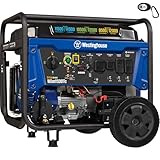
- 9500 Running Watts and 12500 Peak Watts (Gasoline); 8500 Running Watts, 11200 Peak Watts (Propane); Remote Start with Included Key Fob, Electric and Recoil Start; Up to 12 Hours of Run Time on a 6. 6 Gallon Fuel Tank with Fuel Gauge
- Features Two GFCI 120V 5–20R 20A Standard Household Receptacle, One Transfer Switch Ready 120V L14-30R 30A, and One RV Ready 120/240V 14–50R 50A; All Outlets Have Rubber Covers for Added Safety
- Powered by a Heavy Duty 457cc Westinghouse 4-Stroke OHV Engine Featuring a Long-Lasting Cast Iron Sleeve with Automatic Low Oil Shutdown and Digital Hour Meter. VFT display gives you real time updates with the voltage output, frequency, and lifetime hours
- Plug-and-Play: Comes with a Remote Start Key Fob, 12V Battery Charger, Oil, an Oil Funnel, a Tool Kit, and a User’s Manual to Get You Started Right Out of the Box (Minimal Assembly Required)
- All Westinghouse Portable Generators are Functionally Tested in the Factory and May Contain Minimum Residual Oil and/or Fuel Odor; EPA Compliant; Backed By 3-Year Limited Service, Labor, and Parts Coverage and Nationwide Customer Service Network
How should you protect refrigerated food and medication?
Before the outage, set refrigerator or freezer temperatures colder only if recommended by your utility and the appliance instructions. Put appliance thermometers where you can read them after power is lost. Once the outage begins, keep refrigerator and freezer doors closed as much as possible; opening them allows cold air to escape.
Temperature and time determine whether food remains safe. PG&E advises discarding food exposed to 40°F or higher for two hours or more; consult PG&E’s current outage food guidance and local food-safety advice for your circumstances. For medication, follow its label and ask a pharmacist or clinician what to do if it has been outside its specified storage range. Do not assume that food or medicine is safe based only on how it looks or feels.
Rank #2

- 13,000 Watts of Reliable Power for Home Power Backup – Keep your home, job site, or RV powered during storms and outages with dual fuel capability and a heavy-duty build.
- Dual Fuel Technology – Gasoline or Propane – Choose between gasoline for maximum power or propane for longer run times and cleaner emissions, ensuring fuel flexibility in any emergency.
- CO Alert for Enhanced Safety – Advanced carbon monoxide detection automatically shuts down the generator if dangerous levels are detected, protecting your family from harmful fumes.
- Push-Button Electric Start & Intuitive Control Panel – Easily start your generator with the push of a button, and quickly switch fuel types using the front-facing fuel selector.
- Transfer Switch-Ready with 50-Amp Outlet – Power your entire home by connecting directly to a transfer switch, thanks to the 50A heavy-duty outlet.
What should you do to prepare the house, car, and electronics?
- Practice opening the garage door manually. Find the release and learn how it works before an outage; follow the door manufacturer’s instructions and take care if the door is damaged or unusually heavy.
- Protect electronics as your utility directs. Turn off or unplug sensitive appliances if instructed. A lamp left switched on can signal that service has returned, but use one that is safe to leave connected and visible.
- Prepare transportation and payments. Fill the vehicle or charge an electric vehicle if local advice recommends it and it is practical. Keep some cash available in case card readers or electronic payment systems are unavailable.
- Keep access routes clear. Make sure essential supplies, keys, and the route to the exit are accessible in the dark, including for anyone with mobility or vision needs.
How can you use backup power safely?
Choose backup equipment for the actual devices you need to run, their power draw, and the time they must operate. Check the manufacturer’s specifications and instructions; do not assume a generator, uninterruptible power supply (UPS), or battery will support critical medical equipment without verifying compatibility and runtime.
Portable generators
- Run a portable generator outdoors, at least 20 feet from windows, doors, or vents, and follow the manufacturer’s instructions. Indiana’s emergency-management guidance explains this placement rule in its power outage safety information.
- Never use a generator, grill, gas oven, or stovetop to heat the home. Fuel-burning appliances can produce carbon monoxide and must not be used as indoor heaters.
- Never connect a generator to household wiring with an improvised connection. Government of Canada guidance says connection to home wiring requires an approved transfer panel and switch installed by a qualified electrician. See Health Canada’s generator safety guidance.
Batteries and UPS equipment
Battery systems avoid generator exhaust, but their useful runtime depends on the load and the equipment’s condition. Confirm that the system is intended for the device, understand how it is recharged, and test it as its manufacturer directs. For critical care, include the clinician or device supplier in deciding whether a proposed backup is adequate.
Recommended Free Tools
Rank #3

- Gasoline: 5300 Running Watts & 6500 Peak Watts; Propane: 4800 Running Watts & 5800 Peak Watts; 4.7 Gallon Fuel Tank with Fuel Gauge; Up to 14.5 Hours of Run Time with 120/240V Volt Selector Switch
- Features One 5–20R 120V 20V Household Duplex Receptacle, One RV-Ready TT-30R 30A Receptacle, and One Transfer Switch Ready L14-30R 30A Receptacle; All Outlets Have Rubber Covers for Added Safety
- Plug-and-Play: Comes with Oil, an Oil Funnel, Propane Hose, Tool Kit, Wheel Kit, and a User’s Manual to Get You Started Right Out of the Box (Minimal Assembly Required)
- Powered by a 274 CC Westinghouse 4-Stroke OHV Engine Featuring a Long-Lasting Cast Iron Sleeve with Automatic Low Oil and Carbon Monoxide (CO) Shutdown
- All Westinghouse Portable Generators are Functionally Tested in the Factory and May Contain Minimum Residual Oil and/or Fuel Odor; EPA Compliant; Backed By 3-Year Limited Service, Labor, and Parts Coverage and Nationwide Customer Service Network
When should you leave home?
Go to the safe destination you identified if indoor temperatures become unsafe, a medical plan cannot be maintained, or essential services fail in a way that puts someone at risk. Consider leaving before the shutoff if you already know the home cannot support necessary care. Check accessibility, transportation, and the destination’s ability to meet the household’s needs rather than assuming any powered location will be suitable.
Quick Recap
Best Value

- Powerful Output: 4400 peak watts and 3400 running watts, 2*120V AC ports, 1* 30A RV port, 1*12V DC port, 14 hours runtime at 25% load
- Gas Powered: 2 gallon fuel tank capital
- Features: Inverter technolog, ECO mode, EPA compliment, RV ready, overload protection, low oil shutdown, cold start technology
- Portable Generator: Weight 56lbs, lightweight and easy to move
- Note: All Oxseryn generators are functionally tested in the factory, so there may be a slight smell of gas when you receive it
Rank #4
- Perfect as a backup power source for larger homes or a dependable source of portable power
- 14,500 peak watts, 11,500 running watts (gasoline); 13,500 peak watts, 10,500 running watts (propane); 12,000 peak watts, 9,500 running watts (natural gas)
- Powered by a heavy duty 550cc 4-Stroke OHV Westinghouse Engine constructed with a durable cast iron sleeve; Runs for up to 19 hours on a 9.5 gal. fuel tank with built-in fuel gauge; up to 7 hours on a 20 lb. propane tank
- Engineered with low THD, so it's safe for sensitive electronics. Power phones, computers, TVs and more. Stay connected with people, news and entertainment during power outages, or on jobsites and campsites. Durable copper windings help your generator produce cleaner power, run cooler and last longer
- All Westinghouse portable generators are gunctionally tested in the factory and may contain minimum residual oil and/or fuel odor; EPA compliant; Backed by 3-Year limited service, labor, and parts coverage and Nationwide Customer Service Network
Product prices and availability are accurate as of the date/time indicated and are subject to change. Any price and availability information displayed on Amazon at the time of purchase will apply.

