
What’s actually slowing this PC down?
Pick the symptom - the matching free tool is one click away.
Monitor API usage with production telemetry—request volume, errors, latency, and request and response sizes—and enforce consumption separately with gateway throttles, quotas, and proper access controls. A dashboard shows what is happening; it does not stop excess traffic. Likewise, a quota may be a best-effort target rather than a guaranteed ceiling.
What to monitor in production
Start with signals that reveal both demand and service health. Google identifies these API metrics as useful for understanding usage, monitoring performance, and troubleshooting: request counts, error rates, total latency, backend latency, and request and response sizes. The exact labels, dimensions, retention, and alerting options vary by provider and configuration.

- Request volume: Track overall requests and, where your telemetry supports it, segment by client, route, method, and status. Sudden growth can indicate legitimate demand, a misconfigured integration, or unwanted traffic.
- Error rate: Watch for rising failures and distinguish client errors from server-side problems where possible.
- Latency: Compare total request latency with backend latency when available. A worsening total time with stable backend time may point to delays elsewhere in the request path.
- Request and response size: Changes can reveal unexpectedly large payloads or shifts in application behavior.
These are signals to establish a baseline and investigate deviations, not a vendor-prescribed alert policy. Set alerts around both demand changes and symptoms such as increasing errors or degraded latency.
Where to view and review usage
Google APIs and Google Cloud APIs
Google documents API Dashboard and Cloud Monitoring as places to view API metrics, including request counts, errors, latency, and request and response sizes (Google API monitoring). Use the dimensions and retention available in your own project rather than assuming every metric is exposed identically for every API.
#1 Best Overall
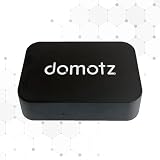
- FAST 15-MINUTE DEPLOYMENT – Provision and configure in just 15 minutes (down from 40+ minutes with previous models). Perfect for field technicians who need to get sites up and running quickly without deep networking expertise.
- UPGRADED PERFORMANCE – Powered by the Allwinner H618 processor with 1GB LPDDR4 RAM (double the previous generation). Enables accurate speed tests on gigabit connections and supports SNMP v3 encryption for enhanced security monitoring.
- PLUG-AND-PLAY SIMPLICITY – No complex configuration required. Simply connect to your network via the Gigabit Ethernet port, power up with the included USB-C cable, and start monitoring. Multi-VLAN support with just a few clicks in the interface.
- RISK MITIGATION FOR MSPs – Domotz maintains the operating system and security updates, transferring liability concerns away from your organization. Eliminates the security risks of deploying monitoring software on customer-managed servers or domain controllers.
- UNIVERSAL CONNECTIVITY – USB-C power port (more durable and universal than previous micro USB), Gigabit Ethernet port, and USB 2.0 port for future expansion. Premium casing designed for rack mounting or standalone deployment in professional environments.
AWS API Gateway REST APIs
For REST APIs, API Gateway usage-plan screens can show requests remaining for each API key during the quota period. Operators can also export usage data as JSON or CSV for longer-range review (AWS usage plans and API keys). These are provider-specific quota-inspection features, not universal capabilities of every gateway.
Azure API Management
Azure API Management analytics can be used to analyze API usage and performance. The Azure Monitor-based dashboard requires a Log Analytics workspace as a data source for API Management gateway logs (Azure API Management observability options). Microsoft describes multiple analytics, reporting, monitoring, and OpenTelemetry approaches; retention and management differ among them, so confirm the option and deployment mode you operate (Microsoft observability overview).
Rank #2

- Hardware Controller with Professional Network Management-Centralized management for up to 100 Omada devices including Omada access points, Omada Security Gateways and Jetstream switches.
- Premium Hardware Design-Industry-leading flexible Rackmount/Desktop design with a powerful chipset, durable metal casing, 2 fast ethernet ports and 1 USB 2.0 port for auto backup.
- Dual power selection-Support PoE (802.3af/802.3at) and micro USB for flexible installations.
- Easy Network Monitor & Maintenance-The easy-to-use dashboard makes it simple to see your real-time network status and improve network maintenance for peace of mind.
- Cloud Access with No License Fee-Enjoy cloud service with no license fee with the use of OC200. Remote Cloud access and Omada app brings centralized cloud management of the whole network from different sites—all controlled from a single interface anywhere, anytime.
Choose enforcement scopes deliberately
Gateway controls can operate at different layers. Select scopes that match how your service is operated and how consumption is allocated; available controls and behavior are product-specific.
| Scope | Example control purpose | AWS API Gateway example |
|---|---|---|
| Account or project | Protect aggregate capacity across APIs. | AWS documents regional account-level constraints for API Gateway throttling (AWS request throttling). |
| API, stage, or method | Set targets that reflect different service or endpoint capacity. | AWS documents API/stage and method-level throttling targets (AWS request throttling). |
| Client or key | Meter or limit consumption associated with a client. | AWS usage plans associate API keys with selected stages and methods and allow request-rate and quota-period targets (AWS usage plans). |
In AWS API Gateway, throttling uses a token-bucket model with a steady request rate and burst capacity. Exceeding targets can result in HTTP 429 Too Many Requests (AWS throttling documentation). Set rate and burst targets in light of backend capacity and legitimate traffic patterns; a burst setting is not the same thing as sustained capacity.
The Tool Desk
Outbyte Driver Updater FREEFix the driver behind crashes, sound loss and screen glitchesFind Drivers →Outbyte PC Repair FREERepair Windows errors before they cause bigger problemsFix Now →Rank #3
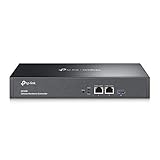
- 【Hardware Controller with Greater Network Management】Latest Omada SDN hardware controller provides centralized management for up to 500 Omada devices including Omada access points, Omada switches and Omada routers.
- 【Premium Hardware Design】Industry-leading flexible Rackmount/Desktop design with a powerful chipset, durable metal casing, 2 * gigabit ports and 1 * USB 3.0 port for auto backup.
- 【Easy Network Monitor & Maintenance】The easy-to-use dashboard makes it simple to see your real-time network status and improve network maintenance for peace of mind.
- 【Cloud Access with No License Fee】Enjoy cloud service with no license fee with the use of OC300. Remote Cloud access and Omada app brings centralized cloud management of the whole network from different sites—all controlled from a single interface anywhere, anytime.
- 【SDN Compatibility】For SDN usage, make sure your devices/controllers are either equipped with or can be upgraded to SDN version. OC300 work only with SDN APs, Switches and Gateways. For devices that are compatible with SDN firmware, please visit TP-Link website.
Understand what quotas and API keys do—and do not do
A quota is useful for tracking or shaping client consumption, but it may not be a hard boundary. AWS states: “Throttling and quota limits are not hard limits, and are applied on a best-effort basis.” Requests may exceed usage-plan targets, so AWS advises against relying on them to control costs or block access (AWS usage-plan guidance).
Keep metering separate from identity. In AWS API Gateway, an API key can identify usage-plan consumption; AWS advises against using API keys as authentication or authorization. Use an appropriate access-control mechanism—AWS names IAM roles, Lambda authorizers, and Amazon Cognito user pools—and use purpose-built cost controls such as AWS Budgets or request-management controls such as AWS WAF where appropriate (AWS usage plans and API keys). A usage limit should not be treated as proof that a caller is permitted to perform an operation.
Make clients handle throttling safely
When a gateway rejects excess traffic, clients may receive 429 Too Many Requests. AWS advises clients to resubmit in a rate-limited way (AWS request throttling). Implement bounded retries rather than immediate, unlimited retries: synchronized clients retrying at once can amplify load and create a retry storm. Make sure retry behavior fits the operation; repeating a non-idempotent request can have different consequences from retrying a safe read.
Keep quota changes compatible with deployed configurations
Google Cloud API Gateway quotas are defined through API configuration metrics and limits. Google warns that quotas apply to the API, not just one configuration: the metrics and limits from the latest created configuration are enforced. Renaming or removing a metric can leave earlier deployed gateways with an invalid quota configuration, causing quota-enforced calls to return HTTP 500 (Google Cloud API Gateway quotas).
Best Value
When changing quota definitions, coordinate the change with deployments. Keep metric names and limits compatible across configurations that may remain active, and test rollout behavior before removing or renaming a metric relied on by deployed gateways.
A practical operating cycle
- Establish a baseline. Review request volume, errors, latency, and payload sizes for normal traffic. Segment by client, route, method, or status when your telemetry permits.
- Choose signals and thresholds. Alert on meaningful demand changes and service symptoms such as rising errors or latency. Tune thresholds to observed behavior rather than assuming one provider’s defaults fit your workload.
- Set layered controls. Use the scopes your gateway supports—such as aggregate, API or method, and client-level targets—to protect capacity and meter consumption.
- Test the over-limit path. Verify that clients and services handle throttling responses with bounded, rate-limited retries and that access control does not depend on a usage key or best-effort quota.
- Review consumption and adjust. Inspect used and remaining quotas where available, export usage data when useful for longer-term analysis, and revise allocations through the provider’s supported controls.
- Deploy quota changes safely. For configuration-versioned quotas, confirm that active deployments remain compatible with the metrics and limits being enforced.
How to compare gateway approaches
Do not assume AWS API Gateway, Google Cloud API Gateway, and Azure API Management offer identical guarantees or telemetry. Compare the characteristics that affect your operation:
- Enforcement scope: Which account or project, API, stage, method, and client scopes are available?
- Guarantee: Is a limit documented as a hard control or a best-effort target, and what response can an over-limit request receive?
- Observability: Which request, error, latency, and payload signals are available, and can usage be inspected or exported?
- Retention and operations: How long are analytics available, what telemetry infrastructure must you manage, and how do configuration changes affect active deployments?
- Identity boundary: Does a key only identify or meter a client, or is it part of a separate, documented authentication and authorization design?
The provider documentation illustrates different operational considerations: AWS documents best-effort usage-plan enforcement and separate access-control guidance (AWS usage plans); Google documents quota behavior across API configurations (Google Cloud quotas); and Azure describes multiple analytics and observability options with differing management and retention characteristics (Azure observability). These points help frame a comparison; they are not a complete feature benchmark.
Quick Recap
Product prices and availability are accurate as of the date/time indicated and are subject to change. Any price and availability information displayed on Amazon at the time of purchase will apply.

