
What’s actually slowing this PC down?
Pick the symptom - the matching free tool is one click away.
Measure live-stream quality in separate layers: estimate the picture’s visual fidelity, track playback startup and interruptions, and measure live delivery latency. No single score captures all three—or the full viewer experience. A useful assessment combines objective video estimates with playback-session events and, for live content, latency.
Which live-stream quality metrics should you track?
Start by deciding what question you need to answer. A picture can look good once playback begins while viewers still experience a long wait or repeated stalls. Conversely, playback can be continuous while the picture is visibly degraded. Live viewers also care about how far the stream trails the event.
| Measurement layer | Useful measures | What it answers |
|---|---|---|
| Visual fidelity | Objective video-quality estimate, such as VMAF where supported | How closely does the received picture resemble the reference or expected picture? |
| Playback behavior | Initial loading delay; stalling or rebuffering events | How long did playback take to start, and was it interrupted? |
| Live delivery | End-to-end latency, measured from the live event to the viewer’s playback | How far behind the live event is the viewer? |
| Integrated session | Video and audio quality estimates combined with startup and stalling information | How did the session perform across multiple aspects of viewing? |
ITU-T P.1204 describes objective streaming-video estimation and explains that video estimates can be combined with audio quality and session events such as initial loading delay and stalling for an integrated session estimate. That broader view is more informative than treating a video score as a complete verdict on experience. ITU-T P.1204 (October 2023)
How to measure quality in practice
- Define the viewing path. Identify the live source, delivery path, player, device type, and viewing context you intend to assess. A result only describes the measured path and conditions; it is not automatically representative of every viewer or device.
- Choose the visual-quality method that matches your inputs. A full-reference approach compares received video with a reference; reduced-reference approaches use reference information without requiring a complete reference stream at the measurement point. Bitstream-based, pixel-based, and hybrid methods have different input requirements. If a reference is unavailable, do not present a reference-dependent result as though it were a direct comparison.
- Record playback events alongside video estimates. Capture initial loading delay and each stalling or rebuffering event for the session. If audio quality is available, include it when assessing an integrated session rather than assuming a video-only score accounts for audio.
- Measure live latency separately. Compare a clearly defined live-event time with the corresponding playback point, using a consistent method and clock basis. State how latency was measured and for which delivery path. Transport-level improvements do not establish a universal end-to-end viewer latency.
- Match the reporting interval to the question. Per-second estimates can make brief changes easier to see; sequence-related estimates summarize a larger interval and can conceal short-lived variation. Preserve the cadence in reports so comparisons are meaningful.
- Report context with the result. Include the model or metric, input type, measurement interval, codec and resolution when known, device/display context, and playback/session events. Separate model scope or validation limits from universal claims about quality.
How objective video-quality estimates differ
Objective models estimate visual fidelity from stream or image information; they do not directly measure every part of the viewer experience. The ITU-T P.1204 family includes variants that use bitstream information, pixel information, or both. Some methods provide sequence-related estimates, while others can provide per-second estimates. The right choice depends on which inputs are available and whether you need to see short-term changes or summarize a sequence.
Quick wins for a faster PC:
Scan for outdated or missing drivers - takes under a minuteDriver Scan →Clear out junk files and repair common Windows errorsFree Scan →Fix the driver behind crashes, sound loss and screen glitchesFind Drivers →#1 Best Overall
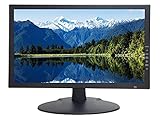
- 18.5 Inch LED CCTV HD Security Monitor: Features 3D comb filter with de-interlace and noise reduction, HDMI accepts downscaled 4K/8MP Ultra HD image, ultra fine pixel pitch for close viewing in surveillance applications, keeps video looking its best by preventing blurry or pixelated images, 178 viewing angle for fewer restrictions on your range of vision
- Multi-Format Compatibility: Compatible with new HD and existing Standard Definition composite CVBS BNC surveillance systems with multiple video formats including Downscaled Ultra HD 4K/8MP, 5MP 2560x1920, 4MP 2560x1440, 2MP 1920x1080 TVI/CVI/AHD (Through a TVI/AHD to HDMI Converter/AHTTVI-MI102), and traditional standard definition 960H/composite video cameras for crisp and lifelike images
- Ultra HD Security Monitor Inputs: HDMI (V1.4) port accepts downscaled Ultra HD 4K/8MP 3840x2160@30Hz, 5MP/Super HD 2560x1920@30Hz, 2K/4MP 2560x1440@30Hz, Full HD 2MP 1920x1080@30Hz Resolution, BNC port supports up to 700 TV lines, VGA port supports up to 1366 x 768 Resolution, multiple inputs allow multi-device setups without the need to juggle cords
- Direct Camera Connection: HDMI, VGA and 1 looping BNC video-in connector allows video camera to hookup to monitor directly without going through a DVR first, auto display recovery after power interruptions, HD/TVI/CVI and AHD cameras will look crisp and lifelike
- 24/7 Professional Operation: Professional security monitor is designed specifically for the requirement of 24/7 operation for surveillance application, providing a much longer life time comparing to consumer grade PC and TV monitors
ITU-T P.1204.4 describes full-reference and reduced-reference estimation for reliable-transport streaming. Its summary reports validation for H.264, H.265, VP9, and AV1 up to 4K for PC/TV and up to 2560×1440 for smartphone/tablet displays. Those figures describe the stated scope of that model; they are not universal limits for all quality assessment methods. ITU-T P.1204.4 (July 2022)
VMAF is a visual-quality measure, not a session score
Netflix Engineering describes VMAF as combining spatial and temporal metrics through machine-learning models, and discusses using VMAF percentiles in its own engineering context. Percentiles can help summarize a distribution rather than relying only on one aggregate value, but Netflix’s practice should not be mistaken for a universal standard or proof that VMAF alone measures live-stream experience. Netflix Engineering: Introducing VMAF percentiles for video quality measurements
Rank #2

- CRISP CLARITY: This 27″ Philips V line monitor delivers crisp Full HD 1920x1080 visuals. Enjoy movies, shows and videos with remarkable detail
- INCREDIBLE CONTRAST: The VA panel produces brighter whites and deeper blacks. You get true-to-life images and more gradients with 16.7 million colors
- THE PERFECT VIEW: The 178/178 degree extra wide viewing angle prevents the shifting of colors when viewed from an offset angle, so you always get consistent colors
- WORK SEAMLESSLY: This sleek monitor is virtually bezel-free on three sides, so the screen looks even bigger for the viewer. This minimalistic design also allows for seamless multi-monitor setups that enhance your workflow and boost productivity
- A BETTER READING EXPERIENCE: For busy office workers, EasyRead mode provides a more paper-like experience for when viewing lengthy documents
How to interpret startup, stalling, and latency
Initial loading delay
Startup delay is the time before playback begins. Record it per session and define the start and end events used by the measurement; without consistent event definitions, results from different systems may not be comparable.
Stalling and rebuffering
Count and characterize interruptions, and retain their timing alongside the video estimate. A session summary that averages picture quality without showing interruptions can hide periods when playback was not progressing smoothly. The cited standards describe these events as relevant inputs to session-level assessment, but the available sources do not establish a universal acceptable startup time or rebuffering threshold.
PC Slower Than It Used to Be?
A free scan shows the junk files, broken settings and background clutter dragging Windows down - then fixes them in one click.Free scan · Windows 10 & 11Outdated Drivers Are Slowing You Down
One free scan finds every outdated or missing driver and matches the right update for your exact hardware.Free scan · exact hardware matchRank #3

- 24/7 Surveillance: Engineered for round-the-clock surveillance, the CCTV monitor features enhanced W-LED technology for improved visibility. With a 3000:1 contrast ratio and 16.7M display colors, it ensures exceptional image quality. Its Full HD 1920x1080 resolution guarantees sharp clarity.
- 75Hz Refresh Rate: The security monitor boasts a 75Hz refresh rate, ensuring a seamlessly smooth picture with a response time of 4ms. Its wide viewing angle of 178°/178° guarantees ultra-clear details from any perspective, providing an unimpeded viewing experience. Designed for CCTV monitoring support most DVR/NVR brands.
- Sleek and Compact Design: Real HD 22-inch computer monitor features an ultra-slim, edgeless design that enhances the overall picture continuity when multiple monitors are connected. It serves as an excellent business display for desktops or home laptops.
- Easy to use: Come with 1 x HDMI, 1 x VGA and 1 x headphone jack (audio in)
- Notice: This is a professional security monitoring monitor. It does not have Bluetooth functionality and does not support WiFi, so it cannot work with WiFi security cameras or other wifi devices.
Live latency
Latency matters because viewers are watching an event as it unfolds. ITU-T H.705.2 sets out requirements and a framework for live-streaming systems based on QUIC; the publication describes lower connection-establishment and delivery delay as intended benefits. That transport objective is not a guaranteed end-to-end latency or a viewer-experience score. ITU-T H.705.2 (September 2023)
Operational monitoring for HLS and DASH
Production monitoring can make playback events and video-quality estimates observable during delivery. ThousandEyes’ generic HLS/DASH streaming tests document capabilities including startup-delay measurement and VMAF reporting. These are examples of available monitoring measures, not an endorsement, and they do not cover every aspect of viewer experience. Choose monitoring based on the formats, paths, and events you need to observe. ThousandEyes Generic Streaming (HLS/DASH) Tests
Rank #4

- TOTAL COVERAGE & 5” HD DISPLAY – Monitor your nursery with a large 5-inch LCD screen providing a crystal-clear view. This video baby monitor features a remote 355° pan, 120° tilt, and 2x zoom with a 1,000ft range, ensuring you never miss a corner of the room.
- 30HR BATTERY & SMART VOX MODE – Equipped with a 3500mAh rechargeable battery, get up to 30 hours of audio/video in VOX mode or 10 hours with the screen on. The auto-wake VOX function triggers the screen instantly when it detects crying, saving power while keeping you alert.
- 2-WAY TALK & LULLABIES – Soothe your little one from any room using the two-way audio talk-back system. This smart baby camera also features 8 built-in lullabies to help your infant drift back to sleep, making it an essential nursery security camera.
- NIGHT VISION & TEMPERATURE SENSOR – Rest easy with automatic infrared night vision that captures clear video in total darkness without disturbing baby’s sleep. The integrated room temperature monitor sends instant alerts if the nursery gets too hot or cold.
- HACK-PROOF PRIVACY & FEEDING ALARMS – Protect your family with 100% secure FHSS technology; this no-WiFi baby monitor requires no apps or internet, making it unhackable. Includes a convenient feeding timer alarm to help parents stay on schedule.
Common measurement mistakes
- Reporting one score as “the quality.” State whether it represents visual fidelity, playback continuity, latency, or an integrated session estimate.
- Comparing unlike inputs. A bitstream-based estimate, a pixel comparison, and a playback-event measurement do not answer the same question.
- Ignoring cadence. A sequence-level result may smooth over a short degradation visible in per-second output.
- Using transport latency as a proxy for viewer latency. Transport design goals do not by themselves determine end-to-end playback delay.
- Applying one model’s validation scope to every method. Report codec, resolution, display context, and model scope where available.
- Inventing a pass/fail threshold. The cited sources do not establish universal “good” values for startup delay, stalling, latency, or VMAF. Set thresholds only for a clearly stated product requirement or measurement program.
Or let it run in the cloud
StreamNeo is a YouTube-only cloud service for keeping an uploaded video or playlist live continuously; it is not a video-quality measurement tool. The workflow is: upload your recording or build a playlist, add your YouTube stream key once, then go live. The video runs from the cloud, so nothing has to stay on at home. It streams the upload as made, up to 4K 60fps, at one price per slot, with automatic recovery if YouTube drops the stream. The first day is free with no card. Monthly pricing is $9.99 per month. Visit StreamNeo or start the free first day.
Quick Recap
Best Value

- 【Latest Version USB C 3.2 Gen 2 Cable】ZeroneTeck latest USB C for Thunderbolt cable: ①This 20Gbps USB C to USB C data cable is capable of meeting your ultra-fast data transfer needs. ②USB C to USB C monitor cable support 4K@60Hz Ultra HD video output ③In addition, this Type c to Type c cable also has a faster than normal 60W data cable with 100W ultra fast charging. Makes it easy for you to solve all your problems with just one cable.
- 【20Gbps USB C Data Cable】USBC to USBC data transfer cable provides explosive transfer speed up to 20Gbps, connect hard drives and SSDs, Also suitable for phone to laptop data transfer, transfer large files in seconds and save you more work time. Meanwhile, USBC to USBC 3.2 gen 2 20gbps data transfer cable backward compatible with USB 3.1, USB 3.0 and USB 2.0.(*Note: Maximum speeds are achieved when both upstream and downstream devices are Thunderbolt 3/4 interfaces.)
- 【4K@60Hz USB C Cable for Monitor & Plug and Play】Plug and play, no drivers or applications required to use this cable! USB C monitor cord to stream 4K@60Hz (3840*2160) content directly from your phones, tablets, laptops and desktop computers to large screens such as monitors, HDTVs and projectors. You will enjoy stunning Ultra HD video and colorful image quality. (Note: Please make sure your device has a USB-C port and supports DP Alt mode).
- 【5A/100W Fast Charging Cable】USB Type C fast charging cable with E-Marker IC chip, safely charges your devices with up to 100W power. It can fully charge a MacBook Pro 60%, an iPad Pro 75%, a iPhone 15 85%, and a Switch 95% in 35 minutes. Fully satisfies the charging power needs of professionals for MacBooks Pro, Android devices, Samsung and iPad Pro. Charge any USB-C device at maximum speed for timely use and no more waiting. *Note: Requires a C-port adapter of appropriate power.
- 【Dual Vehicle System】 Flawlessly supports CarPlay & Android Auto for seamless navigation/music streaming. 20Gbps ultra-speed — 40× faster than USB 2.0 CarPlay cables with enhanced signal stability.
Product prices and availability are accurate as of the date/time indicated and are subject to change. Any price and availability information displayed on Amazon at the time of purchase will apply.
Do these 3 things before closing this tab:
1Repair Windows errors before they cause bigger problems2Fix the driver behind crashes, sound loss and screen glitches3Clear out junk files and repair common Windows errors
