
Crashes, No Sound, or Screen Glitches?
Random freezes, missing sound and display glitches usually trace back to one bad driver. Find and replace yours safely.Free scan · under a minutePC Slower Than It Used to Be?
A free scan shows the junk files, broken settings and background clutter dragging Windows down - then fixes them in one click.Free scan · Windows 10 & 11First identify what your VPS is doing. If it sends one encoded 4K60 stream to YouTube, lower the stream’s encoded bitrate—while checking image quality and stream health—to reduce outbound traffic. YouTube’s current recommended rates are 35 Mbps for AV1 or HEVC and 50 Mbps for H.264. If the VPS instead relays YouTube playback to viewers, the traffic calculation is different; the ingest figures do not size that setup.
Identify which traffic you need to reduce
“Playlist” can mean a list of source videos an encoder plays, an HLS media playlist sent to YouTube, or YouTube playback being relayed through the VPS. These are not interchangeable network paths.



- VPS uploads to YouTube: Source videos are played or encoded on the VPS, which sends a live stream to YouTube. The outbound stream bitrate is the main factor in the VPS’s upload traffic.
- VPS relays a live feed: The VPS receives a stream and forwards it to YouTube. Its network use includes both the incoming and outgoing traffic; whether it must encode depends on the relay setup.
- VPS serves YouTube playback to viewers: This is a proxy or distribution design, not YouTube ingest. YouTube’s ingest bitrate guidance does not establish its traffic needs, technical behavior, or legality. Size it from the actual incoming and outgoing traffic of that design.
YouTube says it transcodes an incoming live stream into multiple viewer formats, so a VPS sending one stream to YouTube does not need to send a separate version for each viewer. YouTube’s live encoder settings describe this transcoding behavior.
Choose a lower bitrate without guessing
For a stream sent to YouTube, begin with the platform’s current codec-specific recommendations. The figures below are YouTube Help’s published encoder settings, accessed in 2026; they are guidance, not a guarantee of a particular image quality or a measurement of your VPS.
Free tools Windows power users keep installed
One-click scans. No signup required.
#1 Best Overall
| Output | Codec | YouTube-listed minimum | YouTube-recommended bitrate |
|---|---|---|---|
| 2160p (4K) at 60 fps | AV1 or HEVC | 10 Mbps | 35 Mbps |
| 2160p (4K) at 60 fps | H.264 | 14 Mbps | 50 Mbps |
| 1440p at 60 fps | AV1 or HEVC | not stated for this row (YouTube Help, accessed 2026) | 24 Mbps |
| 1440p at 60 fps | H.264 | not stated for this row (YouTube Help, accessed 2026) | 34 Mbps |
| 1080p at 60 fps | AV1 or HEVC | not stated for this row (YouTube Help, accessed 2026) | 12 Mbps |
| 1080p at 60 fps | H.264 | not stated for this row (YouTube Help, accessed 2026) | 17 Mbps |
Do not treat a listed minimum as a target for every video: the visual result depends on its content and encoding. Fast movement, fine detail, and changing scenes can make compression artifacts more noticeable. Test lower rates on representative parts of the playlist, inspect the YouTube output, and watch YouTube’s stream-health indicators before relying on the setting for a long run. No universal safe reduction or VPS headroom percentage is established by YouTube’s guidance.
Try an efficient codec if your path supports it
YouTube’s general live encoder guidance lists H.264, H.265/HEVC, and AV1 for supported ingest configurations. For HLS specifically, its documentation names H.264 and HEVC; do not assume that AV1 support in the general encoder guide means AV1 is accepted over HLS.
YouTube’s HLS ingestion documentation says HEVC generally provides 25% to 50% more data compression than H.264 at the same video quality. That is YouTube’s general statement, not a result measured on your source or VPS. Check that your encoder and chosen ingest protocol both support the codec, then compare the output for your playlist before switching.
Reduce resolution or frame rate if 4K60 is not essential
If the stream does not need to remain 4K60, test a lower resolution or frame rate against the viewing requirement. YouTube’s recommended 60 fps rates in the table show that moving from 2160p60 to 1440p60 or 1080p60 has lower listed bitrate targets. The actual bandwidth saving depends on the bitrate you configure, not the resolution label alone.
Quick wins for a faster PC:
Repair Windows errors before they cause bigger problemsFix Now →Scan for outdated or missing drivers - takes under a minuteDriver Scan →Rank #3
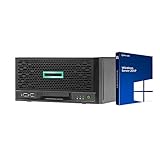
- HP MicroServer Gen10 Plus Tower Server for Business with Microsoft Windows Server 2019 OS!
- Intel Xeon E-2224 Quad-Core 3.4GHz 8MB CPU, Up To 4.6GHz Turbo
- 32GB (2 x 16GB) DDR4 PC4-21300 2666MHz Unbuffered Memory
- 16TB (4 x 4TB) 7.2K 6Gb/s SATA 3.5" HDDs in RAID
- Hard drives and memory upgrades included separately NOT installed, installation required.
Set up a YouTube ingest stream correctly
For general live encoder settings, YouTube documents RTMP/RTMPS and recommends constant bitrate (CBR) with a two-second keyframe interval; the interval should not exceed four seconds. Match the encoder’s resolution, frame rate, codec, and bitrate to the stream you intend to send, then verify the stream in YouTube Studio before leaving a playlist running.
- Confirm the ingest protocol and codec. Use the protocol configured for the YouTube event. Check codec support for that protocol, rather than choosing a codec based only on the general encoder guide.
- Set CBR and keyframes. Use CBR and a two-second keyframe interval for the general encoder configuration; do not exceed four seconds.
- Set a starting bitrate. Start with the codec-specific YouTube recommendation for the desired output. If reducing traffic is the goal, lower the bitrate in controlled test steps and inspect both stream health and visible artifacts.
- Check the complete playlist. Include the most demanding scenes, not just a static opening. A setting that looks acceptable on a low-motion clip may not hold up across different footage.
- Measure the VPS interface during a representative run. Check upload and download separately. For a VPS uploading one stream, compare its measured outbound traffic with the configured stream rate; local network overhead and other VPS activity can affect the total.
For a continuously running playlist, confirm that the source files, encoder process, and network connection remain available for the planned duration. Do not infer a monthly transfer bill from bitrate alone without accounting for actual run time and the VPS provider’s billing method.
Rank #4
Use HLS only with its specific ingest requirements
HLS ingest is not simply a different name for a conventional RTMP feed. YouTube’s HLS guide describes an HLS Media Playlist and media segments sent to its endpoint. It supports one encoded stream and ignores Master Playlists of variants. A list of source videos in an encoder is therefore not the same thing as an HLS master playlist.
- Use muxed audio and video in M2TS segments.
- Use H.264 or HEVC video and AAC audio.
- Use a closed GOP and no more than 60 fps.
- Use 1–4 second media segments as recommended; segments must not exceed five seconds.
Shorter segments are not a bitrate-saving shortcut. YouTube notes they can reduce latency but may increase rebuffer risk and reduce encoding efficiency. YouTube’s protocol comparison also describes segment-based HLS and DASH as typically higher-latency than RTMP.
The Tool Desk
Outbyte PC Repair FREERepair Windows errors before they cause bigger problemsFix Now →Outbyte Driver Updater FREEFix the driver behind crashes, sound loss and screen glitchesFind Drivers →Best Value
References: YouTube Help: encoder settings for live streaming; YouTube Live Streaming API: HLS ingestion; YouTube Live Streaming API: ingestion protocol comparison.
Independent reader supportYour contribution helps us test, update, and keep practical guides available for everyone.Diagnose unexpectedly high bandwidth or a weak stream
- Configured bitrate is already high: Compare the encoder setting with the target row for its codec and output. Reduce it only after checking representative footage for artifacts.
- Measured VPS traffic does not match the stream rate: Confirm whether the monitor reports upload, download, or both; check for other VPS traffic and whether the VPS is relaying an incoming feed as well as sending it out.
- HLS codec is rejected or the stream will not start: Check the HLS-specific codec and container requirements. General AV1 support in the encoder guide does not establish AV1 support for HLS ingest.
- HLS playback buffers or latency changes: Review segment duration and ensure segments do not exceed five seconds. Smaller segments can lower latency, but may increase rebuffer risk and lower encoding efficiency.
- Reduced bitrate causes visible blocking or loss of detail: Raise the bitrate, try a supported more efficient codec, or lower resolution/frame rate if acceptable. There is no single lower rate that preserves quality for every playlist.
- Stream health degrades during a long run: Inspect the encoder’s sustained output and the VPS network during the affected interval. The published YouTube bitrate recommendations do not specify a universal capacity margin for a VPS connection.
Or let it run in the cloud
If your goal is a 24/7 YouTube playlist rather than managing an encoder on a VPS, StreamNeo runs uploaded videos from the cloud: upload a recording or build a playlist, add your YouTube stream key, and go live. Nothing has to stay on at home. It streams the uploaded video as made, up to 4K 60fps, at one price per slot; it automatically recovers if YouTube drops the stream. The first day is free with no card. Monthly pricing is $9.99 per month. StreamNeo is for YouTube streams from uploaded videos, not camera broadcasts. Start the free day on StreamNeo.
Quick Recap
Product prices and availability are accurate as of the date/time indicated and are subject to change. Any price and availability information displayed on Amazon at the time of purchase will apply.

