
Quick wins for a faster PC:
Repair Windows errors before they cause bigger problemsFix Now →Scan for outdated or missing drivers - takes under a minuteDriver Scan →Clear out junk files and repair common Windows errorsFree Scan →VLC can prepare and play an ordered playlist, but the official VLC documentation available here does not establish a dependable, current VLC-to-YouTube Live setup or guarantee that VLC will loop that playlist while maintaining a YouTube broadcast. For a reliable live class, use VLC for the media if it suits your workflow, and send the playlist through a current encoder that explicitly supports YouTube’s ingest protocol and can repeat the full sequence. Test the entire setup before going live.
This distinction matters: a YouTube playback loop repeats a playlist for a viewer; an encoder loop supplies content to a live broadcast. They are different controls and produce different results.
What you need for an educational YouTube Live playlist
- A YouTube channel eligible to livestream. YouTube says the channel must be verified and must not have had live-streaming restrictions in the past 90 days. Check the channel’s current status in YouTube Studio; the general guidance does not guarantee availability to every channel in India. YouTube’s live-streaming tips
- Video files you are authorized to broadcast and that VLC can read.
- A current encoder that supports YouTube’s ingest protocol and accepts your chosen media or playlist as its source. YouTube documents the encoder workflow, but the cited guidance does not list VLC as a verified current encoder.
- A reliable internet connection with enough upload capacity for the chosen stream quality.
The official VLC material describes stream-output pipelines and a VLM example that broadcasts multiple inputs successively over HTTP. That demonstrates media output and sequential files, not a confirmed VLC-to-YouTube RTMPS workflow, indefinite playlist repeat, or YouTube delivery. If you intend to use VLC itself as the encoder, check the exact VLC build, output module, codecs, RTMPS handling, and repeat behavior, then validate them with an unlisted test stream before relying on them. VideoLAN: Introduction to Stream Output
Build and check the playlist in VLC
- Add the teaching videos. Open VLC and add the local files you plan to broadcast to its playlist. Arrange them in the intended lesson order.
- Play through each file. Confirm every video opens, has the expected audio, and reaches its end. Check that the sequence has no unintended gaps, black frames, or duplicate items.
- Choose where the loop will happen. The encoder or media-source workflow must repeat the complete ordered list without ending its feed at the final item. Do not assume a viewer-side YouTube loop control will make the live encoder repeat its source.
- Test the wraparound. Run the playlist through its final item and back to its first. Check the transition, audio level, and whether the outgoing feed remains connected. VLC’s documented VLM playlist example uses sequential inputs and
sout-keepto keep output from breaking when one input ends, but the example is an HTTP broadcast and does not document an endless YouTube playlist loop. VideoLAN: VLM Example: Broadcast A Playlist
VLC also documents HTTP output and a receiving VLC client for a local stream. That can help demonstrate or test a network feed on a local network, but it is not evidence that the same output can be sent to YouTube as a public live stream. VideoLAN: Stream over HTTP
Recommended Free Tools
#1 Best Overall

- [Smooth 4K Ultra HD Playback] This 4K@30Hz HDMI digital media player utilizes H.265/HEVC decoding technology, enabling playback of videos up to 4096×2304 resolution compared to H.264 or 1080P, delivering a clearer and smoother picture.
- [Plug and Play] The HD media player is easy to use, requiring no WiFi or app. It supports direct playback/copying/deletion of videos, music, photos, PPTs, and PDFs from USB storage devices or Micro SD cards. Equipped with dual USB ports, this media player can also connect to a mouse/keyboard or speakers.
- [HDMI RCA Optical Outputs] This media player connects to TVs, digital signage displays, or projectors via an HDMI port for crisp 4K video playback. The player also comes with analog RCA output to hook up legacy older TVs and monitors, plus built-in optical audio port to transmit lossless digital surround sound to soundbars, amplifiers and home theater audio systems, delivering immersive high-fidelity audio without signal loss.
- [TV Projector or Digital Signage] This 4K media player supports autoplay, loop playback, and shuffle playback, and supports both landscape and portrait display modes. HDMI media player can run continuously, making it ideal for TV projector or digital signage such as restaurant welcome videos, reception videos, and art and museum installations.
- [Extensive Compatibility] This media player for TV can play media files from USB hard drives up to 8TB in capacity or micro SD cards up to 1TB in capacity. Supported file systems include FAT32, exFAT, and NTFS. Supported formats include: H.265/HEVC (MKV, MOV, AVI), MPEG, FLV, RM, 3GP, MP4, WMV, RMVB, DAT, MPG, TS, M2TS, JPG, JPEG, BMP, GIF, PNG, MP3, OGG, FLAC, APE, AAC, WMA, etc.
Connect a compatible encoder to YouTube Live
- In YouTube Studio, open Live Control Room and create or select an encoder stream.
- Copy the server URL and stream key shown for that stream into the compatible encoder’s server and key fields. The stream key tells YouTube where to accept the encoder feed; treat it like a password and do not expose it in screenshots or public instructions. Create a YouTube live stream with an encoder · Manage live stream settings
- Set the encoder’s source to the playlist or media output you prepared, and configure it to repeat the full list while keeping the feed connected.
- For a scheduled stream, start the encoder and wait for the preview in Live Control Room. Check the picture and sound; when ready, select Go live in Live Control Room.
- Open the watch page on a second device and confirm the audience-facing stream is working. Keep Live Control Room open to watch stream health.
Do not put your stream key in a VLC example command, screenshot, public playlist, or shared classroom document. If it is exposed, reset it in Live Control Room.
Choose ingest settings and test before class
YouTube recommends RTMPS, a secure extension to RTMP. Use an encoder that explicitly supports the selected YouTube ingest protocol; do not assume VLC’s HTTP output is interchangeable with RTMP or RTMPS. YouTube’s settings guidance recommends constant bitrate encoding and a keyframe interval of about two seconds, not exceeding four seconds. It lists H.264, H.265/HEVC, and AV1 video and AAC or MP3 audio under RTMP/RTMPS, with supported combinations depending on protocol and encoder. Choose live encoder settings, bitrates, and resolutions
Rank #2

- VLC for Kindle plays most local video and audio files, as well as network streams (including adaptive streaming), like the desktop version of VLC.
- VLC for Kindle has a media library for audio and video files, and allows to browse folders directly.
- VLC has support for multi-track audio and subtitles. It supports auto-rotation, aspect-ratio adjustments, hardware acceleration and gestures to control volume.
- It also includes a widget for audio control, supports audio headsets control, cover art and a complete audio media library.
- Choose a resolution and bitrate the internet connection can sustain reliably; run a speed test and leave capacity for normal network variation.
- Use the encoder settings appropriate to the protocol and video format it supports. Match the frame rate and resolution to the prepared material rather than selecting a higher output unnecessarily.
- Before the lesson, test the full playlist at the intended quality, including representative motion and audio. Confirm the preview, sound levels, first-to-last transition, and loop back to the first video.
- Check the public or unlisted watch page on another device and monitor stream health in Live Control Room during the broadcast.
YouTube’s encoder guide recommends testing before the event and monitoring the stream while it is live. YouTube encoder settings and guidance
RTMPS or HLS: which should you use?
| YouTube ingest option | When it fits | What to account for |
|---|---|---|
| RTMP/RTMPS | YouTube recommends RTMPS for encoder streaming; it is the usual starting point when the encoder supports it and its required codecs. | Use the server URL and key in the encoder, and configure a supported codec and stable upload quality. YouTube recommends constant bitrate and a keyframe interval around two seconds, no more than four. |
| HLS | YouTube documents HLS for HDR or codecs unsupported by RTMP. | It has higher latency than RTMP and requires HLS-capable output: TS segments of 1–4 seconds, a rolling playlist with no more than five outstanding segments, and HTTPS POST/PUT. The cited VLC documentation does not establish that the relevant VLC build meets these requirements. |
Use HLS only if your encoder supports YouTube’s HLS requirements and your workflow needs it; it is not a casual workaround for an RTMPS compatibility problem. Set up an HLS stream
The Tool Desk
Outbyte PC Repair FREEClear out junk files and repair common Windows errorsFree Scan →Outbyte Driver Updater FREEScan for outdated or missing drivers - takes under a minuteDriver Scan →Rank #3
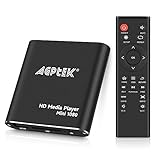
- 【Mini Portable Media player】-- Fits into the palm of your hand, It is a perfect travel partner for those short on space and sockets. Also compact and easy multifunction HD media player for office work and home entertainment;Aluminum alloy material, not easy to damage during carrying
- 【1080P MP4 Player】-- Full HD 1080p@60Hz supports most video decoding formats: RM, RMVB, AVI, DIVX, MKV, MOV, HD MOV, MP4, M4V, PMP, AVC, FLV, VOB, MPG, DAT, MPEG, TS, TP, M2TS, WMV, (H.264,H.263,WMV9/VC-1,MPEG1/2/4),Not support VPR files. Note: Please use our 4K player to play some videos taken with smart phones, ASIN: B07WPY8VKL
- 【HDMI or AV Output】-- Supports 1080p HDMI output, allowing you to transmit crisp, clear video and audio in a pure digital format to an HDTV; it also supports composite AV output for use with analog TVs. An analog AV cable is included. While using HDMI video output, you can also connect external speakers via the AV output. However, video cannot be output via both AV and HDMI at the same time.
- 【USB 2.0/3.0 Compability】-- Drive external USB 2.0/3.0 storage devices such as USB flash(up to 512G)/SD card(up to 128G) and hard drive(partition should be MBR, up to 8TB), you can also delete or copy files in the USB drive(FAT or FA32) directly, Also plays subtitle files as well as loop videos
- 【Support Multiple Formats of Files and Playback Modes&Multi-functional Remote Control】-- Supports most video, audio, and image formats on the market, supports random playback of video and image modes, and supports loop playback. Supports repeat, zoom, fast forward, fast rewind, rotation, breakpoint playback method, start from scratch playback method and time selection playback method. It is also equipped with a convenient remote control for easy navigation of menu screens (ASIN: B0C9PZPFL8)
Live playlist loop versus YouTube’s viewer loop
A live broadcast needs the encoder or its media source to keep sending the lesson sequence. YouTube’s own Loop controls instead repeat playback for an individual viewer; they do not control the encoder feed. On desktop, expand the YouTube playlist and click Loop. On Android, play the playlist and tap Loop in the playlist control box. Those controls apply to YouTube playback, not to your live source. Loop videos or playlists on YouTube
Copyright, classroom use, and ending the stream
Only broadcast videos and audio you have the rights or permission to use. A video being educational, publicly available, or appropriate for a classroom does not by itself establish that you may rebroadcast it live. Review YouTube’s current policies and the rights attached to each file before streaming.
Rank #4

- MAKE YOUR TV SMARTER - Enhance any TV with the ability to play videos, music, and photo slideshows from a USB drive or MicroSD Card! It’s so simple and intuitive - anyone can use it. The Micca G3 is amazingly compact and affordable, get one for each TV in the house!
- PLAYS 2K QUAD-HD VIDEOS - Works with TVs old and new! Smoothly plays videos up to 2560x1440@60fps, upscaled to UHD 4K/60Hz HDMI output. Sharp and clear video and audio in pure digital format, compatible with 4K and 1080p TVs, projectors, and monitor displays. Composite AV output for use with analog TVs or for sending sound to a stereo system.
- DUAL USB AND MICRO SD READER - Play media files from USB flash drives and USB hard drives up to 8TB, or microSD cards up to 1TB. Supports FAT/FAT32, exFAT and NTFS file systems. Compatible with wireless air mouse remotes for non-line-of-sight control so that the player can be hidden away!
- SIMPLE DIGITAL SIGNAGE - Automatic video playback with endless repeat and looping, and the ability to resume from the last stopping point. Configurable 90/180/270 degree video output rotation. Great for digital signage applications such as restaurant menu boards, lobby welcome videos, art and museum installations.
- MEDIA FORMAT SUPPORT - Videos: MKV, MP4/M4V, AVI, MOV, MPG, VOB, M2TS, TS files encoded with H.265/HEVC, H.264/AVC, MPEG1/2/4, VC1, up to 2560x1440, 60fps, 100mbps. Subtitles: SRT, PGS, IDX+SUB. Music: MP3, WAV, FLAC. Photos: JPG, GIF, BMP, PNG
When the session is over, follow Live Control Room’s end-stream procedure and stop sending the encoder feed. YouTube says encoder streams shorter than 12 hours are automatically archived. Create a YouTube live stream with an encoder
Independent reader supportYour contribution helps us test, update, and keep practical guides available for everyone.Troubleshooting common problems
| Symptom | Likely cause | What to check or do |
|---|---|---|
| YouTube does not show an incoming preview | Incorrect server URL or key, an unsupported ingest protocol, or an encoder that is not sending a compatible feed. | Recheck the URL and key in Live Control Room and the encoder fields. Confirm the encoder explicitly supports the selected YouTube protocol. Keep the key private. |
| VLC plays the playlist, but no YouTube live stream appears | Local playback or VLC HTTP output is not the same as a verified YouTube encoder connection. | Use a current YouTube-compatible encoder as the publishing step. If testing VLC as the encoder, verify its specific build and output capabilities with an unlisted stream first. |
| The broadcast stops at the end of the last lesson | The source or encoder is not configured to repeat the whole playlist, or it closes its feed when the final file ends. | Configure full-list repeat in the actual source/encoder workflow and test a complete wraparound before class. |
| Video stutters or stream health degrades | The chosen quality may exceed reliable upload capacity, or the connection may be unstable. | Run a speed test, reduce output quality or bitrate to a sustainable level, and retest with representative movement and audio. |
| There is a gap or abrupt change between videos | A file may have ended, failed to load, or transitioned differently than expected. | Play the full sequence in advance, inspect each file’s ending and opening, and verify the transition during the encoder test. |
| The encoder connects but the stream has poor picture or sound | Codec, keyframe, audio, or output settings may not match the encoder and ingest requirements. | Check the encoder’s protocol-specific supported formats, use YouTube’s recommended constant bitrate and keyframe guidance, and verify audio in the preview. |
Or let it run in the cloud
If your goal is an always-on YouTube channel rather than a one-off classroom broadcast, StreamNeo is a cloud option: upload a recording or build a playlist, add your YouTube stream key, and go live. It loops uploaded videos from the cloud, so no computer or home connection has to stay on. It accepts your upload as made, up to 4K 60fps, at one price per slot; it automatically recovers if YouTube drops the stream. The first day is free with no card.
Free tools Windows power users keep installed
One-click scans. No signup required.
Best Value

- MAKE YOUR TV SMARTER - Enhance any TV with the ability to play videos, music, and photo slideshows from a USB drive or MicroSD Card! It’s so simple and intuitive - anyone can use it. The Micca 4K is amazingly compact and affordable, get one for each TV in the house!
- PLAYS 4K ULTRA-HD VIDEOS - Works with TVs old and new! Smoothly plays videos up to 4096x2304@30fps over UHD 4K/60Hz HDMI output. Sharp and clear video and audio in pure digital format, compatible with 4K and 1080p TVs, projectors, and monitor displays. Composite AV output for use with analog TVs or for sending sound to a stereo system.
- DUAL USB AND MICRO SD READER - Play media files from USB flash drives and USB hard drives up to 8TB, or microSD cards up to 1TB. Supports FAT/FAT32, exFAT and NTFS file systems. Compatible with wireless air mouse remotes for non-line-of-sight control so that the player can be hidden away!
- SIMPLE DIGITAL SIGNAGE - Automatic video playback with endless repeat and looping, and the ability to resume from the last stopping point. Configurable 90/180/270 degree video output rotation. Great for digital signage applications such as restaurant menu boards, lobby welcome videos, art and museum installations.
- MEDIA FORMAT SUPPORT - Videos: MKV, MP4/M4V, AVI, MOV, MPG, VOB, M2TS, TS files encoded with H.265/HEVC, H.264/AVC, MPEG1/2/4, VC1, up to 4096x2304, 30fps, 200mbps. Subtitles: SRT, PGS, IDX+SUB. Music: MP3, WAV, FLAC. Photos: JPG, GIF, BMP, PNG
StreamNeo streams to YouTube and plays uploaded videos; it does not broadcast a live camera feed. Monthly pricing is $9.99 per month. Visit StreamNeo or start the free first day.
Quick Recap
Product prices and availability are accurate as of the date/time indicated and are subject to change. Any price and availability information displayed on Amazon at the time of purchase will apply.

