
Recommended Free Tools
Use one canonical schedule and one active controller to update YouTube; do not treat copying files between VPS servers as synchronization of YouTube itself. Playlist entries and scheduled live broadcasts are separate YouTube API resources. A second VPS can hold replicated files and act as a standby, but it should not write concurrently unless you have tested coordination that prevents conflicting updates.
What needs to be synchronized
There are three distinct kinds of state in this setup:



- Your desired schedule: the canonical playlist order, planned broadcast times, broadcast IDs, stream associations, and settings you intend to use.
- YouTube resources: playlist items are managed through the YouTube Data API; scheduled broadcasts and their associated streams are managed through the YouTube Live Streaming API. A playlist and a broadcast schedule are related operationally, but they are not the same resource. Google’s YouTube Live Streaming API overview describes broadcast scheduling and stream association, while the playlist implementation guide covers playlist operations.
- Files on your VPS hosts: scripts, configuration, and media assets. A file-sync tool can replicate these, but it cannot change YouTube’s playlist or broadcast resources by copying a local file.
Choose a safe two-server design
Recommended default: one writer and a standby
Store the intended schedule in a version-controlled configuration or durable database, then run the reconciliation job on one VPS. Keep the second VPS prepared with the required scripts and configuration, and use it as a standby if the primary fails. This single-writer approach is simpler to reason about and avoids two hosts applying different versions of the schedule at the same time. The YouTube API documentation explains the resources and operations; it does not prescribe a two-VPS failover design.
When automated failover is needed
If either server may take over automatically, add a tested leader-election or locking mechanism so only one host can write at a time. Define how the system rejects stale schedule versions and what happens if the former primary returns after failover. Without that coordination, both hosts may read different states and issue competing changes.
The Tool Desk
Outbyte Driver Updater FREEFix the driver behind crashes, sound loss and screen glitchesFind Drivers →Outbyte PC Repair FREEClear out junk files and repair common Windows errorsFree Scan →#1 Best Overall
Build the synchronization workflow
- Define a canonical schedule. Keep the desired playlist order, relevant playlist-item and video IDs, broadcast identifiers, planned times, stream associations, and settings in one authoritative configuration or database. Decide how changes are reviewed and versioned.
- Authorize the controller. Use the required OAuth authorization for playlist write operations. Store credentials securely and make them available to the active controller; do not assume syncing schedule files also synchronizes or safely manages authorization.
- Read current YouTube state. Use the YouTube Data API to list playlist items, and the YouTube Live Streaming API to inspect the broadcasts and streams relevant to the schedule. Compare actual state with the canonical desired state before making changes.
- Apply only necessary changes. Insert, update, or delete playlist items as needed, and manage broadcast and stream resources through the Live Streaming API. Preserve resource IDs so the controller can identify existing objects rather than blindly creating duplicates on every run. Design and test retry behavior; the API’s available operations do not by themselves establish that an application’s whole reconciliation process is idempotent.
- Preserve mutable fields on updates. Playlist update requests can affect mutable properties included in the request’s
part; omitted values may be reset or removed. Include fields you intend to retain and read the resource back after the write to confirm the resulting state. See Google’s playlist item update reference. - Replicate local files separately, if needed. Use a deliberate source-to-destination file sync for scripts, configuration, or assets. Rclone’s sync command documentation explains that it synchronizes a directory tree from source to destination. Check its deletion behavior before running it on production data; while learning the command, rclone recommends interactive mode to reduce the risk of accidental loss.
- Verify after every run. Log the schedule version, API operations, returned resource IDs, and read-back result. Alert on failed writes or differences that remain after reconciliation, rather than assuming a successful file sync means YouTube is current.
Budget YouTube API quota
The cited Google API references assign playlistItems.list a cost of 1 quota unit, and playlistItems.insert and playlistItems.update a cost of 50 units each. These figures are shown in Google’s references, which do not state a publication year: list, insert, and update. Avoid unnecessary writes, choose a reconciliation frequency suited to how often schedules change, and check your project’s current quota and the live API documentation before deployment.
Common failure modes and fixes
- Files match but YouTube does not: file synchronization does not update API-managed playlist items or broadcasts. Run the YouTube reconciliation process against the canonical schedule.
- Playlist order changes unexpectedly: compare playlist-item IDs and positions with the desired order, then issue only the needed updates. Verify the result by reading the playlist back.
- Fields disappear after an update: review the update request’s
partand payload. Preserve mutable values that should remain, and check the updated resource after writing. - Duplicate or conflicting changes appear: confirm that only one controller is active. If failover is automated, inspect leader election or lock expiry and ensure stale schedule versions are rejected.
- File sync removes data on the destination: stop the sync, inspect source and destination, and review the command’s direction and deletion behavior before retrying. Test with interactive mode or a non-production directory first.
- Reconciliation stops after repeated API calls: inspect quota usage and reduce needless list or write operations. Confirm current quotas and method costs in Google’s API references rather than relying indefinitely on figures checked earlier.
Or let it run in the cloud
If your goal is to keep uploaded videos looping as a YouTube live stream rather than to maintain a custom two-VPS scheduler, StreamNeo is a simpler alternative: upload your recording or playlist, add your YouTube stream key, and go live. Nothing has to stay on at home; it streams your upload at its original quality up to 4K 60fps for one flat price per slot, automatically recovers if YouTube drops the stream, and the first day is free with no card. Monthly access is $9.99 per month. Start your free first day with StreamNeo.
Quick Recap
Best Value
Rank #4
Rank #3
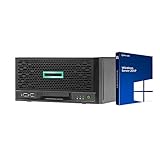
- HP MicroServer Gen10 Plus Tower Server for Business with Microsoft Windows Server 2019 OS!
- Intel Xeon E-2224 Quad-Core 3.4GHz 8MB CPU, Up To 4.6GHz Turbo
- 32GB (2 x 16GB) DDR4 PC4-21300 2666MHz Unbuffered Memory
- 16TB (4 x 4TB) 7.2K 6Gb/s SATA 3.5" HDDs in RAID
- Hard drives and memory upgrades included separately NOT installed, installation required.
Product prices and availability are accurate as of the date/time indicated and are subject to change. Any price and availability information displayed on Amazon at the time of purchase will apply.

