
iTechGuides is reader-supported. When you buy through links on our site, we may earn an affiliate commission. As an Amazon Associate I earn from qualifying purchases. Learn more
A book-summary app becomes useful when it supports a question, a short active reading session, and one follow-up action. The productive sequence is simple: define what you need to learn, choose one relevant summary and a suitable format, save only ideas you can explain, revisit those ideas, and test one action. Treat the summary as a decision aid or a bridge to the full book—not as a substitute for depth when the subject is complex or consequential.
The five-part workflow
Use this loop for every summary:
- Question: write the problem, decision, meeting, habit, or concept you want to address.
- Selection: choose one summary that matches the question and select text or audio for the situation.
- Capture: keep a few ideas in your own words, with a note about why each matters.
- Revisit: return to those ideas later and use any review or practice tools available in your app.
- Application: take one small action, raise one useful discussion point, or continue to the full book.
This prevents the common pattern of opening an app, browsing an attractive catalog, and remembering little afterward. The times suggested below are planning aids, not measured requirements or guarantees of retention.
1. Start with a question, not a catalog
Before opening the app, write one sentence describing what you need. A question gives you a relevance test: if a summary does not help answer it, stop browsing and choose something else.
Quick wins for a faster PC:
Clear out junk files and repair common Windows errorsFree Scan →Fix the driver behind crashes, sound loss and screen glitchesFind Drivers →Useful starting prompts
- What do I need to understand before tomorrow’s meeting?
- Which habit could I try this week?
- How can I explain this management idea to my team?
- What are the main arguments for and against this approach?
- Which part of this topic should I investigate in the original book or a primary source?
Make the question specific enough to guide your notes. “Become better at work” is too broad; “How can I give clearer feedback in one-to-one meetings?” gives you a standard for deciding what to keep. If the question concerns medical, legal, financial, safety, or other high-consequence decisions, use a summary only for orientation and verify the relevant details elsewhere.
Popular on Amazon
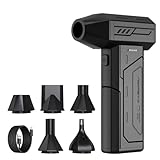
- Powerful Turbo Fan:CAGIWIRU Electric Air Duster have reached speed up to 130000RPM,Can efficient remove dust and debris.With LED light and Three Adjustable Speed to meet with different cleaning tasks.
- With Attached USB C Fasting Charging cable.Charing 3 hours,Enjoy up to 240 minutes of use on the lowest setting, For third speed can use for 25mins.with four charging options to meet with your needs.
- Wide Application: attached 5 different nozzles,making it suitable for a variety of scenes, such as car,pet, pc, keyboards, and other electronic devices. It also serves for office and home clean duster.
- Handy Design & Portable:Cordless air duster electric nozzle is Light weight and small size, design and comfortable to hold and space saving, convenient to carry around. You can put it in your room or inside the car without taking up space.
- Economical &Reusable: Built durable materials with a long-lasting battery,our CAGIWIRU air duster it's a sustainable alternative to disposable air cans.
Define a useful finish line
Decide what a successful session will produce before you start. It might be one experiment to run, three points for a conversation, or a shortlist of issues to research. This keeps the session from turning into an attempt to memorize an entire book.
2. Choose one summary and one mode
Search for a title that directly addresses your question, then commit to one summary for the session. Switching among several titles creates more saved material but does not necessarily create understanding.
Text or audio?
Choose text when you want to pause, reread a definition, compare claims, or mark a passage. Choose audio when your attention can remain on listening during a walk, commute, or routine task. Neither format is universally better; the right choice depends on whether the setting lets you think and capture an idea.
Blinkist describes summaries that can be read or listened to, offline downloads, and expert-led Guides with tools and activities in its Help Center entry published March 19, 2026. Headway’s Help Center, updated June 17, 2025, likewise describes text and audio summaries and a spaced-repetition feature. These are product descriptions, not independent evidence that one format or service improves learning.
Feature comparison for planning a session
| Capability | Blinkist | Headway | How to use it in the workflow |
|---|---|---|---|
| Text summaries | Described in the Blinkist Help Center and product materials | Described in the Headway Help Center | Use for pausing, rereading, and marking a passage |
| Audio summaries | Described in the Blinkist Help Center | Described in the Headway Help Center | Use when your environment supports sustained listening |
| Offline access | Offline downloads described by Blinkist; plan and platform availability can vary | Headway support explains downloading summaries for offline access; availability can vary | Download while connected and confirm the item opens before leaving connectivity |
| Highlights and notes | The US App Store listing and Blinkist product explainer describe highlights and notes; plan availability may vary | The cited Headway descriptions emphasize review features rather than specifying an equivalent notes system | Capture only ideas you can explain and connect to your question |
| Review or practice tools | Guides with tools and activities are described by Blinkist | Spaced repetition is described by Headway | Use these as prompts to revisit ideas, not as proof of a quantified memory benefit |
The US App Store listing for Blinkist accessed October 13, 2026, includes highlights, notes, offline reading or listening, and Send-to-Kindle in its plan descriptions. A particular feature may depend on your plan, operating system, region, or app version, so check what your account actually offers rather than assuming every listing item applies to you.
3. Run an active first pass
A short summary still deserves active attention. A practical first pass can fit into one focused sitting, but choose a pace that lets you stop and think.
- Preview the structure. Read the title, description, and chapter or key-point headings. Predict which section might answer your question.
- Set a stopping rule. For example, stop after you can state the central idea and one implication in your own words. Do not continue solely to increase a completion percentage.
- Ask a question before each section. Try “What problem is this idea solving?” or “What would this look like in my situation?”
- Pause after an important claim. Restate it without looking at the screen. If you cannot, reread or replay that part.
- Separate the author’s claim from your response. Note whether you agree, disagree, need evidence, or see a possible experiment.
When listening
Keep a simple capture method ready before pressing play. If the app allows notes or highlights, use them; otherwise, pause to record a short voice memo or write a timestamp in your own notebook. Do not attempt to transcribe the narration. Capture the idea, its location, and why it matters to your question.
What’s actually slowing this PC down?
Pick the symptom - the matching free tool is one click away.
Also popular on Amazon

- Screen Cleaner is Your Screen’s New Bestfriend! - EVEO is proud to present a screen cleaner that’s perfectly suited for your TV. Meet your new screen cleaner, computer screen cleaner, laptop cleaner, iPad cleaner, Macbook,tv cleaner or any other electronic device. Our screen cleaner spray and wipe along with the included plush microfiber cloth, easily removes dust, fingerprints & other smudges on the screen’s surface. Clean effectively for a streak-free screen
- Gentle on your Screens - Our screen cleaner spray and wipes is compatible to be used even for the most sensitive LCD, LED, CRT, and OLED screens in proper use. Be at ease knowing that this product is compatible with all the major brands: LG, SONY, Samsung, Sharp, iPad, iPhone, Android screens, Kindle, PC monitors - we’ve got you covered! Can be used as LCD screen cleaner, tv cleaner, smart tv screen cleaner, and more
- Premium Super Soft Plush Microfiber Cloth - Included in this efficient screen cleaning kit. This screen cleaner spray and wipe has our signature plush microfiber cloth specially designed to comply with screens and monitors and leave them streak-free. Has been shown to effectively absorbs stubborn stains, zero streaks, and no fiber shedding. Always use this together with our screen cleaner for the best results
- Easy-to-Use Screen Cleaner Kit + microfiber cleaning cloth - The EVEO Screen Cleaning Kit will easily be your new favorite tool when it comes to taking care of the things you love most, quick and easy solution for a streak-free screen. Simply screw on the sprayer gun on the screen cleaner bottle. Spray the cleaning liquid onto the microfiber cloth, then wipe the screen until desired cleanliness & shine is achieved.
- Quality Screen Care Kit Worth Purchasing - Enjoy a convenient Screen Cleaner anytime, anywhere you need it. Your satisfaction is our top priority. We stand behind the quality of our products and that’s why, you shouldn’t be worrying at all. We manufacture the Best Screen Cleaner. and can be used for laptop cleaning kit, laptop screen cleaner, tv screen cleaner for smart tv. MacBook screen cleaner, monitor cleaner or screen cleaner spray for electronic devices with microfiber cleaning cloth
When reading
Mark fewer passages than you initially want to mark. A highlighted screen is not yet a usable note. After each section, choose the one sentence you would want available a week later and rewrite it in language you would actually use.
4. Capture sparingly and make every note actionable
Blinkist’s product materials describe saving highlights and notes, and its US App Store plan descriptions also mention those functions. Use them as a capture layer, not as a warehouse for every interesting sentence. The recommendation to keep the set small is a workflow choice, not a measured threshold.
A durable note format
For each idea you keep, record four elements:
- Idea: the claim in your own words.
- Connection: how it answers your starting question.
- Test: what observation would support or challenge it.
- Next step: the smallest action you could take.
Example: “Give feedback about a specific behavior, its effect, and the desired change. This fits my next one-to-one meeting. I will use the three-part structure in one conversation and ask whether the request was clear.” This is more useful than saving a paragraph with no context.
Use a two-level capture system
Keep immediate captures inside the app while you read. At the end, promote only the ideas that pass your finish-line test into a short personal list. This prevents a long highlight archive from becoming another unread queue. If you use a separate notes system, include the book title, date, and your question so the idea remains understandable outside the app.
Do these 3 things before closing this tab:
1Scan for outdated or missing drivers - takes under a minute2Repair Windows errors before they cause bigger problems3Fix the driver behind crashes, sound loss and screen glitches5. Revisit instead of endlessly collecting
Schedule a return visit while the question is still relevant. On the first revisit, hide the original text and try to explain each saved idea from memory. Then compare your explanation with the note and correct any distortion.
Headway describes spaced repetition in its Help Center. Blinkist describes interactive Guides and activities in its Help Center and product materials. You can use these features as built-in prompts for returning to an idea, but the descriptions do not establish a guaranteed or quantified memory effect.
A practical review loop
- Next available break: explain the idea aloud or in writing without opening the summary.
- Later in the week: check whether you used the idea, rejected it, or discovered a question it did not answer.
- After the experiment: keep, revise, or archive the note based on what happened.
If the app offers a review queue, use it for prompts rather than passive rereading. A prompt such as “What would I do differently in my next meeting?” forces a decision and reveals whether the note is still relevant.
Also popular on Amazon

- 【Large size】:Measuring 800 x 300 mm/ 31. 5×12 inches, which is wider and taller than others. Large mouse pad can perfectly fit your keyboard and mouse of any size, and there is also ample space for peripherals such as phones, tablets, etc.
- 【LED backlight mouse pad】:Blade Hawks RGB mouse pad provides 7 static modes and 7 dynamic modes will give you the options you are looking for. Power-off memory function remembers the last lighting mode you selected. The super glow fiber Chroma will give you a colorful gaming setup that you want.
- 【Anti-slip rubber base】:Made from Natural rubber, this gaming mousepad will firmly grip your desktop, allowing you to enjoy the ultimate precision in the games you are most passionate about. It also comes with a texture that enhances this ability even further.
- 【Smooth and waterproof surface】: Micro-textured cloth surface, for extremely precise mouse control and a smooth movement. When liquid splashes on the gaming mouse pad, it forms water droplets and slides down. Will not delay your work or gameplay.
- 【Plug and play】: This mouse and keyboard pad is powered by USB, plug and play, no driver required. One button control light modes. Press one time to change the lighting mode, press twice to change the brightness, press and hold about 3 seconds turn ON/OFF.
6. Convert one idea into a concrete action
Insight has value only when it changes a choice, conversation, question, or behavior. Select one action small enough to complete without reorganizing your life.
The one-action template
Write: Because I learned [idea], I will [specific behavior] in [situation] by [date or trigger], and I will look for [observable signal]. Keep the variable words in your own note; the bracketed form is a template.
For example, after a summary about improving meetings, your action might be to send an agenda with a decision request before the next team meeting and check whether the decision is recorded by the end. The action should be yours, not an instruction to complete an entire program from the book.
Use the idea in conversation
If the topic is relevant to a colleague or study group, bring one claim and one question rather than presenting the whole summary. Ask whether the claim fits your shared context and what evidence would change your mind. Conversation exposes gaps that rereading can hide.
7. Know when a summary is not enough
A summary compresses arguments, examples, qualifications, and evidence. Continue to the full book or a primary source when:
- the decision has significant financial, health, legal, safety, or professional consequences;
- the summary raises a technical claim you need to verify;
- the author’s reasoning depends on examples or data that were compressed away;
- you disagree with a central claim and need the surrounding context;
- you intend to teach, publish, or make policy based on the material.
Use the saved notes as a map. Mark the chapter, concept, or question that deserves deeper reading, then consult the full text or an authoritative source. Do not present a compressed summary as if you had independently checked every claim in the original.
Build a repeatable weekly routine
A routine should protect attention and create a place for application. Adjust the cadence to your schedule; these are examples rather than performance targets.
Also popular on Amazon

- 【Softer and More Comfortable】Vaydeer wrist rest has unique diamond pattern, which is the combination of softness and aesthetics. The materials of wrist rest are improved into higher quality memory foam and covered with silky smooth lycra. The computer wrist rest makes you as comfortable and cushiony as like rest your wrists on clouds.
- 【Ergonomic Wrist Saver】The wrist rests for keyboard and mouse comes with a 17.32×3.15×0.83 inch keyboard wrist pad and a 5.94×3.15×0.83 inch mouse wrist support. Based on ergonomic design, the unique concave shape is the perfect fit for your wrist joints. The wrist rest pad fits most computer keyboards and laptops, improve hand and wrist posture, release your wrist and arm stress.
- 【Non-Slip Rubber Bottom】Featuring an anti-skid silicone base on the bottom, this wrist keyboard support stays firmly in place on your desk, preventing the padding from sliding around, ensuring stable and consistent wrist support during extended computer sessions.
- 【Better Experience & Pain Relief】Our keyboard arm rest is beneficial to alleviate the soreness caused by direct contact and friction between your arm and a hard desk surface, reducing the risk of wrist fatigue or carpal tunnel. The soft texture of memory foam can evenly distribute the pressure around your wrists and provide good support with just enough give.
- 【Helpful in Multiple Scenarios】Whether you're working, studying, writing, typing, gaming, this keyboard and mouse rest combo is an essential accessory to add comfort and support to your hands and wrists. It’s also a great gift for men, women, family, friend, coworker, gamer, teacher, etc.
| Moment | Activity | Output |
|---|---|---|
| Before choosing | Write one question and a finish line | A selection rule |
| First session | Read or listen actively and capture provisional notes | A short set of candidate ideas |
| End of session | Promote only notes that answer the question | A focused review list |
| Later review | Recall, compare, and revise | One tested or rejected idea |
| End of week | Record the result of the action | Keep, change, or archive decision |
Keep unfinished questions visible, but avoid adding a new title until you decide what to do with the current one. A small queue makes it easier to notice whether you are learning or merely accumulating summaries.
Make offline access part of the plan
Offline reading or listening is useful when connectivity is unreliable, but downloading is a preparation step rather than a guarantee that every account has the same capability. Blinkist describes offline downloads in its Help Center, and Headway’s support page updated August 8, 2024, explains downloading summaries for access without an internet connection.
Outdated Drivers Are Slowing You Down
One free scan finds every outdated or missing driver and matches the right update for your exact hardware.Free scan · exact hardware matchPC Slower Than It Used to Be?
A free scan shows the junk files, broken settings and background clutter dragging Windows down - then fixes them in one click.Free scan · Windows 10 & 11- While connected, open the summary you intend to use.
- Use the app’s download control and wait for the download indicator to finish.
- Switch to a connection-free state or use the device’s offline mode.
- Open the downloaded summary and test the exact text or audio mode you plan to use.
- Save any note or highlight before leaving connectivity if the app indicates that syncing requires a connection.
Labels and controls can change by platform and version. If a download is missing, check your account status, storage space, app update, and whether the title is eligible for offline use before assuming the workflow has failed.
Independent reader supportYour contribution helps us test, update, and keep practical guides available for everyone.Troubleshoot the habits that waste the most value
You keep browsing and never start
Return to the written question and choose the first title that plausibly addresses it. Set a stopping rule for selection: one title, one mode, one session. A perfect title is less useful than a relevant title you actively process.
You have hundreds of highlights
At the end of each session, delete or archive marks that you cannot explain without the original wording. Keep the note that answers your question, not every line that sounds memorable.
Audio plays while your attention is elsewhere
Move listening to a setting where you can attend, reduce playback to a pace you can follow, or switch to text for the difficult section. Replaying background audio is not the same as checking your understanding.
The Tool Desk
Outbyte PC Repair FREEClear out junk files and repair common Windows errorsFree Scan →Outbyte Driver Updater FREEFix the driver behind crashes, sound loss and screen glitchesFind Drivers →Your notes sound impressive but change nothing
Add the connection and next step fields. If you cannot name a situation in which the idea might matter, store it as a question for later rather than calling it an insight.
Also popular on Amazon

- 【No Drill Mounted】Cable management tray can be assembled in as little as 3 minutes or less-simply. Side clips easily clampe the edge of desk, pass through the holes on the sides, and secure excess cables with baskets. Desk cable management supports inward or outward installation to meet your needs in different scenarios, and provides you with great convenience when collecting and organizing wires.
- 【Rubber Pad Protects Desk】Wire organizer under desk built-in soft rubber pads on the clamp protect your desk from scratches, so you will not damage your furniture or office.
- 【Sturdy and Beautiful】Cord management under desk is made of high-quality carbon steel and holds about 15 lbs. The wire basket has 2 holes on each side of the tray to enable your cables to pass freely. Cable baskets are suitable for desk thickness use from 0.4" to 2.4".
- 【Space Saving & Keep Organized】Desk cable management tray holds all your power cords, outlet strips, USB hubs and computer transformers hidden from your feet, and the data cables will not enter the vacuum cleaner to keep your desk clean and tidy. Desk wire organizer is also suitable for use in the kitchen and outdoors.
- 【Reduce Safety Risks】Cable tray under desk keeps all plugs away from your kids, no more worry about tripping. Using 2 holes wire tray saves extra space, helps you easily cabling and wire protection. The mesh design is not easy to accumulate dust, but avoids safety accidents caused by messy wires.
The app lacks a feature you expected
Check the current plan description, operating system, region, and app version. Vendor listings can describe features that are limited by plan or platform. The workflow still works with a plain text note and a calendar reminder; a subscription is not required to ask a question, read a summary, or test an action.
You need certainty from a compressed explanation
Stop at the boundary of the summary. Identify the claim that matters, then verify it in the original book or a primary source appropriate to the topic. This is especially important when another person’s health, money, rights, or safety could be affected.
Choose an app by your actual routine
There is no evidence here for an overall winner or an effectiveness ranking. Compare the capabilities that determine whether you can complete your own loop:
Free tools Windows power users keep installed
One-click scans. No signup required.
- Do you need text, audio, or both?
- Will you regularly read or listen without an internet connection?
- Can you capture highlights and notes in the plan and platform you use?
- Do you prefer a spaced-repetition prompt, interactive activities, or an external review reminder?
- Can you export or otherwise access your notes in a way that fits your existing system?
Blinkist and Headway both describe text and audio formats. Blinkist materials describe highlights, notes, offline access, and Guides or activities, while Headway materials describe offline downloads and spaced repetition. These descriptions support a feature-based choice, not a claim that one service produces better learning. Confirm current availability before paying, because plan and platform terms can change.
A 14-day starter plan
If you want a concrete way to begin, use the following sequence and adapt the days to your calendar.
- Day 1: write one question and choose one summary.
- Day 2: complete a focused text or audio pass and capture candidate ideas.
- Day 3: rewrite the best notes in your own words.
- Day 4: recall the ideas without opening the summary.
- Day 5: choose one action and put it on your calendar.
- Days 6–7: perform the action and record what happened.
- Day 8: review the result; keep, revise, or discard the idea.
- Days 9–10: investigate one unresolved question in the full book or an authoritative source.
- Day 11: explain the useful idea to another person or write a short explanation.
- Day 12: revisit the note and remove wording you would not use yourself.
- Day 13: decide whether another action is justified.
- Day 14: close the loop and write the next question, if one remains.
The plan deliberately includes stopping, testing, and rejecting ideas. The goal is not to finish the largest number of summaries; it is to make a small amount of reading change what you understand or do.
Bottom line
Use a book-summary app as a focused learning instrument: begin with a real question, select one relevant title and a workable format, capture a few ideas in your own words, revisit them with available review tools, and apply one idea. Keep the summary’s limits visible. When the subject or decision demands context and evidence, let the summary point you toward the full book or a primary source.

