
Quick wins for a faster PC:
Fix the driver behind crashes, sound loss and screen glitchesFind Drivers →Repair Windows errors before they cause bigger problemsFix Now →Chromatic snapshots are rendered in Chromatic’s cloud capture environment, so they are not necessarily the same image as your local Storybook Canvas or browser screenshot. To find the cause, compare the snapshot with Canvas, inspect the build’s trace for network, console, DOM, viewport, and clipping evidence, then stabilize fonts, data, time, and animation state. Finally, verify browser, device pixel ratio (DPR), and CI build metadata. Do not assume a particular cause until the trace or configuration supports it.
Why do my Chromatic snapshots differ between local and CI?
Chromatic captures a story in its own browser environment. Its Snapshot view displays that captured image; Storybook Canvas is an interactive, live-rendered view. They are different artifacts, and capture behavior can also differ when JavaScript is blocked or when isChromatic() changes what the story renders. Chromatic compares each new snapshot with the previous baseline for that test, so a difference can reflect changed rendering or capture conditions rather than a defect in local Canvas. See Chromatic’s Snapshots documentation.
A common symptom is text alignment that looks right locally but shifts in a snapshot. Font loading and font metrics are frequent things to check, but the trace—not the symptom alone—should guide the fix. Chromatic discusses this and other sources of unstable results in its unstable tests guide.
Establish exactly what changed
- Open the affected test and build. Compare its Snapshot image with Canvas, and note the story or test, build, browser, viewport, and whether the difference recurs or appears intermittently.
- Record the capture context. Note whether the comparison is between Canvas and a cloud snapshot, or between snapshots from different builds. A local browser screenshot is not automatically an equivalent Chromatic baseline.
- Describe the difference precisely. Is content missing, shifted, styled differently, clipped, or at a different animation frame? This narrows which trace evidence to inspect.
Chromatic associates snapshots with a test and build metadata. Its snapshot guide explains the capture and baseline model.
#1 Best Overall
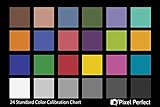
- QUANTITY: Set of 2, Printed on SmartFlex Synthetic Paper with a matt finish coating to avoid glare
- AFFORDABLE: Professional color and gray target, at an affordable price
- PORTABLE: fit easily in your equipment bag
- PROFESSIONAL: Pixel Perfect offers full size, spectrally formulated pigment patches, and highly accurate FREE Adobe correction software
- EASY TO USE: Pixel Perfect provides easy-to-follow instructions and download link for Adobe DNG profile editor
Use the trace to identify the cause
Open the trace attached to the affected build or unstable test before changing code. Chromatic’s Trace viewer provides network requests, console logs, archived DOM, and capture metadata, including the viewport and clip rectangle.
- Network: Look for failed, blocked, or slow fonts, stylesheets, scripts, and images. Check that successful responses have the expected content and MIME types.
- Console: Check for runtime errors that could prevent the story or its data from rendering.
- Archived DOM and styles: Determine whether the element never rendered, or rendered but received different styles.
- Viewport and clip: Check the recorded viewport and clip rectangle when content is missing, cut off, or positioned unexpectedly.
These observations help distinguish a missing resource from a rendering-state issue or a capture boundary. The trace documents what happened in that capture; it does not by itself prove that the same cause applies to every build.
Stabilize resources, fonts, and text layout
Make assets reliably available
Where feasible, use stable local or static assets instead of an unpredictable remote source. If assets are protected, confirm that firewalls and access rules allow Chromatic’s capture environment to reach them. For each suspect request, use the trace to verify both that it succeeded and that it returned the expected resource.
Rank #2
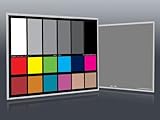
- Professional version of our popular DKK Card with n-Chrome coated color targets
- The color patches are 100% coated with DGK's n-Chrome process, allowing for a much higher level of color saturation, luminance, and accuracy, while getting rid of metamerism.
- Includes 2 DKC-Pro Cards - Each with Precision 12% and 18% Gray reference for white balance plus 18-Color patches for superior digital color correction
- For use with software such as Adobe Photoshop and Lightroom
Confirm the intended font loaded
Serve web fonts reliably and preload them where appropriate. If a font fails or arrives late, fallback font metrics can change line wrapping, widths, baselines, and alignment. A screenshot showing shifted text is a reason to check font requests and computed styles—not proof by itself that the font is the cause.
What’s actually slowing this PC down?
Pick the symptom - the matching free tool is one click away.
Make flex text targetable
Chromatic’s unstable-tests guide documents a flexbox edge case: unwrapped text inside a flex parent becomes an anonymous flex item, whose size and baseline depend on font metrics. Wrapping the text in an element gives CSS a consistent target for styling and layout.
Make story state and timing deterministic
- Data: Replace uncontrolled random values with seeded or fixed data, and ensure mocked API responses are available before capture.
- Time: Fix or mock the current date and time when the UI depends on them.
- Interactions: Use interaction assertions to establish that the expected state has been reached. Chromatic waits for the test’s play function; make sure that function reaches the intended state reliably.
- MSW: For stories using Mock Service Worker, check Storybook initialization, handlers, and versions. A locally built Storybook can reveal warnings that help diagnose setup problems.
- Delay: Use a delay only when a deterministic render needs a known settling interval. A delay can allow that state to render; it cannot make an inherently variable state deterministic.
Chromatic’s unstable tests guide covers unstable inputs and text alignment; the Snapshots documentation describes capture timing.
Rank #3

- 𝗖𝗢𝗟𝗢𝗥 𝗔𝗖𝗖𝗨𝗥𝗔𝗖𝗬, 𝗗𝗘𝗙𝗜𝗡𝗘𝗗 𝗗𝗘𝗧𝗔𝗜𝗟: Ensure accurate, consistent color from one shot to another, across different cameras, lenses, and lighting environments, plus capture every detail with optimal RAW process in- batch processing
- 𝗕𝗨𝗗𝗚𝗘𝗧 𝗙𝗥𝗜𝗘𝗡𝗗𝗟𝗬, 𝗙𝗘𝗔𝗧𝗨𝗥𝗘-𝗥𝗜𝗖𝗛: It features 24 spectrally engineered color targets and a grey face target, all near/within the sRGB gamut to ensure compatibility with a wide range of devices. Perfect for visual comparisons and custom white balance adjustments.
- 𝗔𝗟𝗜𝗚𝗡 𝗠𝗨𝗟𝗧𝗜𝗣𝗟𝗘 𝗖𝗔𝗠𝗘𝗥𝗔 𝗦𝗬𝗦𝗧𝗘𝗠𝗦: Easy alignment of multiple camera systems, including DSLR, Smartphones, drones and Action Cams - perfect for event photography.
- 𝗦𝗧𝗥𝗘𝗔𝗠𝗟𝗜𝗡𝗘𝗗 𝗪𝗢𝗥𝗞𝗙𝗟𝗢𝗪: Taking a test photo with your Spyder Checkr 24 allows you to capture scene light color and intensity data, so you can color-calibrate your camera with software based HSL-presets, streamlining post-production workflow
- 𝗢𝗡-𝗧𝗛𝗘-𝗚𝗢-𝗣𝗢𝗥𝗧𝗔𝗕𝗜𝗟𝗜𝗧𝗬: Its compact size and protective sleeve make Spyder Checkr 24 a take-with-you-everywhere photo tool – perfect for location shoots, changing light conditions, and multiple camera and lens usage – wherever your camera takes you!
Handle CSS and JavaScript animation differently
Chromatic’s Snapshots documentation states: “Chromatic proactively pauses CSS animations/transitions, videos and GIFs to prevent false positives.” It also says: “However, Chromatic cannot disable JavaScript-driven animations, so you are responsible for pausing them.” See Snapshots and the Animations guide.
If an animated element still differs, determine whether it is driven by JavaScript. Pause that animation in the test or render a stable story state. If the capture must occur after a particular transition, use an appropriate interaction wait or a documented delay, and verify that the resulting state is repeatable.
The Tool Desk
Outbyte PC Repair FREERepair Windows errors before they cause bigger problemsFix Now →Outbyte Driver Updater FREEScan for outdated or missing drivers - takes under a minuteDriver Scan →Compare browser, viewport, DPR, and clipping like for like
- Browser: Chromatic maintains browser-specific baselines; snapshots from different browsers are not treated as interchangeable. Check the browser associated with each capture and whether browser infrastructure changed. Infrastructure upgrades can produce subtle appearance differences. See Chromatic’s browsers documentation.
- Viewport and responsive mode: Confirm that the local and cloud views use the intended viewport. The trace’s viewport and clip metadata can reveal a mismatch or an unexpected crop.
- DPR: Chromatic’s Snapshots documentation, accessed in 2026, describes DPR 2.0 for Capture 9. A DPR 2.0 snapshot compared with DPR 1.0 is flagged as changed even when the UI layout is otherwise identical. Read the comparison notice before treating a full diff as a CSS regression.
- Large Firefox or Safari captures: Chromatic documents that unusually tall or wide snapshots in these browsers can fall back to DPR 1.0 because of image-dimension limits.
- Default height: Chromatic’s unstable-tests documentation, accessed in 2026, gives a 900px default viewport height for the described case where it cannot detect a natural height for the outermost DOM element. Check the actual trace metadata rather than assuming this default applies to every capture.
Capture behavior can evolve with infrastructure. Use the browser and DPR information attached to the specific snapshot, and consult the Snapshots and Browsers documentation for the relevant capture behavior.
Rank #4
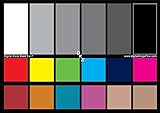
- SUPERIOR ACCURACY - Ensures precise color calibration with two 5x7" DKK charts, providing a reliable reference for consistent image quality across all your video projects.
- ENHANCED IMAGE QUALITY - Achieve optimal color balance and exposure using the integrated colorbar and grayscale combo, designed for professional-grade video calibration.
- ULTIMATE PORTABILITY - Compact 5x7" size makes these charts easy to transport, ensuring accurate color calibration wherever your video shoots take you, enhancing ease of use.
- INCREASED DURABILITY - Built with high-quality materials, these calibration charts are designed to withstand frequent use, offering a long-lasting solution for video professionals.
- VERSATILE COMPATIBILITY - Works seamlessly with various video editing software and cameras, providing a universal solution for color calibration across different platforms.
Verify CI credentials, command, and commit identity
- Set the project token. Configure
CHROMATIC_PROJECT_TOKENas a CI secret. - Install and run the CLI. Chromatic’s CI guide asks teams to install the CLI in development dependencies and run the command appropriate to their integration, such as Storybook, Vitest, Playwright, or Cypress. Follow the integration-specific instructions in Chromatic’s CI guide.
- Check provider linking when results attach to the wrong commit or branch. Inspect
CHROMATIC_SHA,CHROMATIC_BRANCH, andCHROMATIC_SLUG. Chromatic says all three are required for the described Git-provider linking fix.
CI wiring problems are distinct from visual rendering differences. If the trace and configuration do not explain a mismatch, use the specific build and test evidence when contacting Chromatic support rather than guessing.
Independent reader supportYour contribution helps us test, update, and keep practical guides available for everyone.A compact comparison checklist
For each mismatch, compare the same evidence across the local view and affected capture:
- Render context and capture route
- Browser and, where relevant, browser infrastructure update
- Viewport and clip rectangle
- DPR and any comparison notice
- Font, stylesheet, image, and script requests, including failures and timing
- DOM and computed styles
- Data, current time, random seed, and interaction state
- CSS and JavaScript animation state
These checks correspond to Chromatic’s capture, trace, browser, and stability guidance: Snapshots, Trace viewer, Browsers, and Unstable tests debugging.
Best Value
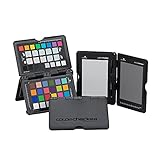
- SPECIFICATIONS: Portable ColorChecker Passport kit with 4 targets for exposure control, custom white balance, camera profiling, and enhancement patches, folding protective case with multiple positions, includes lanyard for quick access, Calibrite PROFILER calibration software supports DNG and ICC profiling workflows.
- COMPLETE COLOR WORKFLOW: 4 target set provides exposure reference, neutral balance, and profiling tools to improve consistency from capture through editing and output, reducing time spent correcting color across large projects.
- CUSTOM WHITE BALANCE: Create a consistent white point across a set of images to reduce color casts and minimize per file corrections, improving continuity when lighting changes during travel or location shoots.
- PROFILE CREATION READY: Calibrite PROFILER calibration software supports custom DNG and ICC camera profiles based on specific camera and lens combinations, helping deliver more predictable color rendering and improved matching across different cameras and sessions.
- PORTABLE CASE DESIGN: Folding protective case adjusts into multiple positions for easy scene placement, and the included lanyard keeps the kit close at hand for fast reference capture during busy production workflows.
Or skip the browser setup
If your goal is a website screenshot rather than a Chromatic story baseline, ScreenshotNeo offers a screenshot API and MCP server. It accepts cookie and consent banners before capture and removes more than 60 known consent platforms, newsletter popups, and chat widgets; each step can be turned off. Bot checks or CAPTCHAs, blank pages, timeouts, failed loads, and cache hits are not billed, and responses identify the page verdict and billing status in headers. Its MCP server provides take_screenshot, get_page_info, and capture_pdf for AI agents.
One GET request can return a PNG, JPEG, WebP, or PDF. For example, using cURL (see the ScreenshotNeo API documentation):
curl -G "https://api.screenshotneo.com/v1/shot" -d access_key=YOUR_API_KEY --data-urlencode url=https://stripe.com -o shot.webpReplace YOUR_API_KEY with your key and change the target URL as needed. The free plan includes 1,000 screenshots per month with no card; paid plans start at $5 for 3,000 screenshots. ScreenshotNeo is not a substitute for Chromatic’s story-based visual testing when that is what you need.
Sign up for ScreenshotNeo’s free plan: 1,000 screenshots a month, no card required.
Frequently Asked Questions
Why does text alignment in a Chromatic snapshot not match my dev environment?
Check the trace for font loading failures and inspect computed styles. Fallback font metrics can change text width, wrapping, and baselines; an unwrapped text node in a flex parent can also behave as an anonymous flex item.
Can a local browser screenshot serve as the Chromatic baseline?
Not necessarily. Chromatic captures in its cloud browser, and browser-specific baselines and capture metadata can differ from a local browser image.
Does Chromatic pause every animation before taking a snapshot?
No. Its documentation says CSS animations and transitions, videos, and GIFs are paused, but JavaScript-driven animations require explicit handling.
Quick Recap
Product prices and availability are accurate as of the date/time indicated and are subject to change. Any price and availability information displayed on Amazon at the time of purchase will apply.
Recommended Free Tools

