
Recommended Free Tools
To find when a newly launched satellite will pass over you, identify the spacecraft or its launch group, confirm that usable orbital data is available, then enter your location in a satellite pass predictor. If the satellite does not appear yet, it may not have been cataloged or identified, or its orbital data may not be available. A calculated pass is not a guarantee you will see it: for a visual sighting, the sky must be dark enough while the spacecraft is still illuminated by the Sun.
Find the object and check whether it has orbital data
A rocket can release several objects, and the satellite you are looking for may not immediately have its final name or catalog entry. Launch, deployment, cataloging, identification and publication of orbital data are separate milestones. That is why searching by a satellite name alone can fail soon after launch.
- Identify the launch or deployment batch. Check which launch the satellite was part of and whether it was one of several deployed objects. CelesTrak notes that gaps in its Satellite Catalog (SATCAT) can be associated with recent launches whose objects have not yet been cataloged.
- Search for available orbital elements. Once you have a name or catalog number, look for it in a pass predictor. If it is not listed, check CelesTrak’s Current Supplemental GP Element Sets, which includes operator-derived or post-deployment data for some objects. Coverage and availability vary; not every launch or object will be listed there.
- Check the data’s timestamp. A new object’s identity and orbit may be added or revised after launch. When possible, note when the orbital data was updated, and check again later if the object is still missing or the prediction seems uncertain.
There is no fixed wait after launch that applies to every satellite. In a study of selected 2016–2017 deployments, CelesTrak reported that almost all cases in one examined group had waits of one to two days or more between deployment and TLE availability; the paper also describes identification delays. Those historical cases are not a timetable or service guarantee for current launches. See Challenges Identifying Newly Launched Objects.
Use a location-based pass predictor
Once the object has usable orbital data, choose a tracker that calculates passes for an observer’s location. Enter your location, select the satellite by name or catalog number, and set the date or prediction window. The calculation combines the orbit with your observing location and time; common GP-element workflows use SGP4 to propagate the orbit. Satellite.js documents the propagation and observer-geometry functions used for this kind of calculation: Satellite.js documentation.
Do these 3 things before closing this tab:
1Fix the driver behind crashes, sound loss and screen glitches2Clear out junk files and repair common Windows errors3Scan for outdated or missing drivers - takes under a minute#1 Best Overall
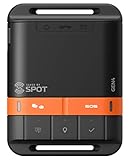
- MEANT FOR ADVENTURE: Spot Gen4 provides critical, life-saving line of communication when you travel beyond cell towers; Let family know you're ok or push the SOS button to send your GPS to emergency responders if you need help
- NO CELL PHONE OR SERVICE-NO PROBLEM: With the Tracking feature Gen4 can transmit location updates when you are moving and when you stop; Keep one in your child's backpack for the walk home
- GLOBALSTAR SATELLITE & SPOT products use GPS to determine location and transmit GPS coordinates to others; SPOT users can notify friends, family or emergency rescue their exact GPS coordinates
- WHAT'S IN THE BOX: SPOT Gen4 device, Strap and Carabiner, USB Cable, Batteries and quick start guide; Subscription required; Two service plans available
- PURCHASE, ACTIVATE, EXPLORE: Grab a Spot Gen4; Activate by selecting your service plan; Get out there and explore the world with peace of mind
Check that the tracker supports the orbital-data format available for the object. This matters especially for newly cataloged objects: CelesTrak’s SATCAT notice says the five-digit catalog-number limit was reached on July 11, 2026, and that newly cataloged objects receive six-digit numbers. CelesTrak says GP data for these objects is not available in legacy TLE format and points users to newer formats. Its format guidance recommends OMM options for forward-compatible use: A New Way to Obtain GP Data (aka TLEs). An older tracker or workflow that accepts only legacy TLE files may therefore be unable to handle some newly cataloged objects.
Read the pass time and decide whether it is worth watching
A predicted pass means the orbit calculation places the spacecraft above your local horizon during that interval. It does not mean the satellite will necessarily be visible. A visible sighting also depends on lighting and observing conditions. For useful visual opportunities, look for a pass when the sky is dark but the spacecraft is still sunlit, often around dusk or dawn. Sat-above describes pass information in terms of sky darkness and satellite lighting: About — Satellite Tracker.
Rank #2

- Premium GPS Tracker — The LandAirSea 54 GPS tracker provides accurate global location, real-time alerts, and geofencing. Easily attaches to vehicles, ATVs, golf carts, or other critical assets.
- Track Movements in Real-Time — Track and map (with Google Maps) in real-time on web-based software or our SilverCloud App. Location updates as fast as every 3 seconds with historical playback for up to 1 year.
- Powerful & Discreet — The motion-activated GPS tracker will sleep when not in motion for extended periods, preserving the battery life. The ultra-compact design and internal magnet create the ultimate discreet tracker.
- Lifetime Warranty — This GPS tracker is built to last. LandAirSea, a USA-based company and pioneer in GPS tracking offers a unconditional lifetime warranty that covers any manufacturing defects in the device encountered during normal use.
- Subscription Required — Affordable subscription plans are required for each device. Fees start as low as $9.95 a month for annual plans and $19.95 for monthly plans. No contracts, cancel anytime for a hassle-free experience.
Use the predictor’s local time setting and any available pass details—such as direction, maximum elevation and duration—to plan where to look. A higher pass may be easier to observe than one close to the horizon, but visibility is not assured. Clouds, buildings, the local horizon, the satellite’s brightness and changes to recently published orbital data can all affect what you see. A pass that is geometrically above your location can occur without a naked-eye sighting.
Independent reader supportYour contribution helps us test, update, and keep practical guides available for everyone.If the satellite still does not appear
- Try the launch group rather than only the expected name. The final name or identity may not yet be established, particularly when a launch deployed multiple objects.
- Check supplemental orbital sets. Operator-provided or post-deployment data may be available for selected objects before a standard catalog entry is easy to find, but this is not universal.
- Return after data updates. Newly released objects can be cataloged, identified or assigned updated orbital data later. Predictions depend on the available orbit and its epoch, so an older prediction can become less useful as the data changes.
- Check format support. If the object has a six-digit catalog number, confirm that the tracker can use an applicable modern data format such as OMM rather than relying exclusively on legacy TLE data.
The orbital prediction is an estimate based on the input data, not an observation of the satellite’s future position. For a newly launched object, delays in obtaining or revising that data make the timestamp and source especially relevant. Supplemental data can improve timeliness for objects it covers, but it does not eliminate uncertainty for every launch.
Free tools Windows power users keep installed
One-click scans. No signup required.
Quick Recap
Best Value
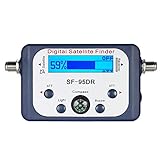
- High Quality Component: and professional design; Designed with a compass for easier and quicker tuning. Powered by the receiver, nice tool for campers.
- Less Signal Loss:Built-in amplifier compensates insertion loss.We offer one year warranty and 24 hours customers survice~
- Useful Tool|:Connect to your LNB and receiver to the satellite finder to track the clearest setting for the satellite you wish to tune to.
- Easy To Use:With electronic buzzer, easy operation, audio tone and LCD display with backlight to show the satellite signal intensity.
- No External Power or batteries required: power supplied from your satellite receiver.
Rank #4

- SATELLITE TRACKING DEVICE: Using satellite technology, Spot Trace can track anything, use it to track moving truck, boat use, even keeping an eye on loved ones or your car; Preprogram to send a status message at waypoints
- NO MORE LOST LUGGAGE: The Airline won't know where your luggage is-but you will; Also great for Kid's backpack to make sure their walk home was safe and even peace of mind when your teen borrows the car
- GLOBALSTAR SATELLITE & SPOT products use GPS to determine location and transmit GPS coordinates to others; SPOT users can notify friends, family or emergency rescue their exact GPS coordinates
- WHAT'S IN THE BOX: Spot Trace device, 4 AAA lithium 8X batteries, L92; 5V USB power cable and quick start guide; Subscription required; Two service plans available
- PURCHASE, ACTIVATE, EXPLORE: Grab a Spot Trace Sattellite Tracking Device; Activate by selecting your service plan; Get out there and explore the world with peace of mind
Rank #3
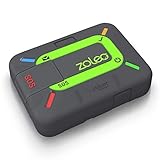
- Global satellite messaging: Stay connected beyond cell coverage, use ZOLEO with your smartphone to transmit text messages and e-mails over the Iridium satellite network, cellular or Wi-Fi using the lowest-cost network available (service plan required)
- Emergency SOS: Send an SOS alert with your GPS location to 24/7 emergency monitoring center if something goes wrong, or access Medical Assist for non-emergency help
- Optional Travel Risk Management Coverage: Feel more secure wherever you go with a Field Rescue Membership from Global Rescue. Affordably priced, this travel risk management add-on offers immediate medical coverage for safe extraction and transportation to the nearest capable medical facility.
- Dedicated SMS number: An assigned ZOLEO SMS number and email enables contacts to reach out directly when you're off the grid
- Check-in: Send unlimited check-ins via the ZOLEO device or app, included in your plan
Product prices and availability are accurate as of the date/time indicated and are subject to change. Any price and availability information displayed on Amazon at the time of purchase will apply.

