
Recommended Free Tools
iTechGuides is reader-supported. When you buy through links on our site, we may earn an affiliate commission. As an Amazon Associate I earn from qualifying purchases. Learn more
Use dry sand for the lowest chemical risk, resin only with a current safety data sheet (SDS), and metal powder only with professional dust and fire controls. Never pour molten metal into an ordinary PLA, PETG, ABS, or resin print. A polymer shell can deform, ignite, or release hazardous fumes long before the metal is safely contained.
The safe method depends on the filler, the printed polymer, the shell’s wall strength and leak resistance, and the workspace. Treat the operation as a materials-handling task: identify every substance, control dust or vapour, prevent pressure buildup, test a small piece first, and dispose of contaminated waste under the applicable SDS and local rules.
Choose the filler by hazard and reversibility
Filling a hollow print can add weight, change balance, damp vibration, or improve stability. It can also turn a simple print into a container for dust, reactive chemicals, or combustible material. The table below shows the practical difference between the three options.
What’s actually slowing this PC down?
Pick the symptom - the matching free tool is one click away.
| Filler | Main exposure or process hazard | Workspace controls | Shell compatibility | Cleanup and reversibility |
|---|---|---|---|---|
| Clean, dry sand | Dust during transfer; added weight can overstress thin walls, seams, or joints | Prevent dust release, use slow transfer, and keep the fill opening from becoming a pressure source | Generally compatible with a sound, dry polymer shell; verify leaks and structural strength | Usually removable through the fill port; collect spilled dust rather than spreading it |
| Uncured resin | Skin and eye exposure, solvents and VOCs, spills, exothermic heat, shrinkage, and contaminated waste | Ventilation suited to the formulation, chemical-resistant gloves, eye protection, spill control, and SDS-based waste handling | Only after confirming compatibility between the resin, shell polymer, adhesive, seal, and cure process | Hard to recover cleanly once cured; uncured material remains a chemical waste concern |
| Metal powder | Inhalation, skin contact, static accumulation, fire, and explosion hazards | Containment or local exhaust, enclosed transfer where feasible, approved wet cleaning, and a HEPA-filtered waste vacuum rated for the powder’s fire and explosion characteristics | Use only when the powder, shell, static-control method, and closure have been assessed together | Potentially recoverable, but contaminated powder, filters, wipes, and gloves require controlled handling |
| Molten metal | Extreme heat, ignition, burn, splash, fumes, and violent failure if moisture or unsuitable materials are present | Dedicated foundry equipment, procedures, training, and protective systems | An ordinary consumer polymer print is not a validated mold | Not a filling method for a finished polymer print; use a qualified casting process instead |
There is no authoritative universal percentage of fill, sand grade, cure time, wall thickness, or temperature that makes every consumer print safe. Those values depend on the design, polymer, filler and process. Use the print designer’s calculations, the material maker’s specifications, and a small-scale validation piece rather than a rule copied from an unrelated model.
Popular on Amazon

- Heavy-Duty Chemical Resistance: High-end nitrile gloves possess excellent chemical resistance, providing a tough barrier against harsh substances such as industrial solvents and cleaners, so you can handle lab work or heavy-duty tasks with confidence.
- Balance of Protection and Dexterity: With a thickness of 15 mils, these gloves offer both flexibility and protection. They mold to your hands for all-day wear, offering comfort that makes you forget you're wearing them—whether handling chemicals or doing chores.
- Non-Slip Grip: Featuring a diamond-textured palm, these gloves provide a secure grip and prevent slipping during dishwashing or repairs. The ergonomic design allows free movement, so you can tackle tasks without fumbling.
- Latex-Free & Odor-Free: ThxToms nitrile gloves are made from latex-free material, helping to prevent skin irritation and allergies. The spray-flocked lining makes them easy to put on and take off, while also minimizing odor from sweat.
- Multipurpose: Ideal for a wide range of applications including lab work, dishwashing, hair coloring, tattooing, food preparation, painting, kitchen and household cleaning, pet care, gardening, home improvement, and hobbies such as arts and crafts or mechanical repairs.
Understand the baseline additive-manufacturing hazards
NIOSH identifies several hazards that can occur in additive-manufacturing work: inhalation of powders, volatile organic compound (VOC) emissions, dermal exposure, and fire or explosion risks. Its wording includes the risk of fire or explosion from flammable or combustible substances. A desktop printer does not automatically make the post-processing step low risk; filling, mixing, curing, sanding, or cleaning can create a separate exposure.
Before opening a container or transferring a filler, list the printed polymer, the filler, every solvent or cleaner, adhesives and sealants, and any coatings. Obtain the current SDS for each product. The SDS identifies incompatibilities, recommended gloves, ventilation, storage, spill response and waste treatment. If a supplier cannot provide an SDS or clear handling instructions, do not use that material for an enclosed fill.
Prepare the shell and work area before filling
Inspect the print as a container
- Check for cracks, delamination, pinholes, weak layer lines, failed seams, and flexible areas that could split under the added load.
- Confirm that the bottom, feet, mounting points and any bonded inserts can carry the finished mass. A shell that supports its own weight may fail when filled.
- Provide a deliberate fill port large enough for the chosen material and a closure that does not rely on a fragile single layer.
- Provide a way for air to escape while loading. A sealed cavity can pressurize when material falls in, when resin warms, or when a closure is fitted.
- Test leak resistance with a small, harmless amount of the intended filler before committing to a full load.
Set up containment and ventilation
Work over a tray or other secondary containment that can hold spills without sending them into floor drains. Keep food, drinks and personal items out of the area. For dusty or chemical processes, restrict access and label the work surface. Ventilation must match the hazard: ordinary room air movement is not equivalent to local exhaust at a transfer point, and an open window does not replace the controls specified by an SDS.
Plan the closure
Do not create a pressure vessel accidentally. During loading, leave the vent path open and close the port only after the cavity has equalized with room pressure. The closure must be compatible with the filler: a sealant that survives dry sand may soften in resin, while a resin-compatible adhesive may not be suitable around metal powder or static discharge. If the design cannot be filled and closed without trapping pressure, redesign it or leave it unfilled.
Also popular on Amazon

- - COMFORTABLE & FLEXIBILITY: The design of DS Safety N592 Work Gloves are ergonomics, which can provide maximum comfort. With Seamless knitted liner improved the dexterity, our gloves will enable you to do the job without restraint;
- -18 GAUGE SEAMLESS COTTON LINER - With 18 gauge seamless cotton liner, these heavy duty gloves are breathable, easy to pull on and off. You will be able to wear these gloves for long periods of time without discomfort. The extended cuffs provide effective barrier protection for wrist and forearm from splashes, abrasives and dangerous chemicals.
- - HYCOOL GRIP & NON SLIP: Seamless liner is fully with NBR coating palm and thumb Hycool Grip. Hycool Grip is a unique two layers coating. In the surface of coating, it has thousands of micropores, creating a vacuum space to disperse the liquid. Having Hycool grip coating can enhance the glove superb grab;
- - IDEAL APPLICATIONS: N592 work gloves using Aquavent technology and Hycool Grip coating. It allows you work in oily and wet situation. Besides, you also can use the gloves to work with chemical processing, petrochemical, construction, maintenance and so on;
- - WARRANTY: DS Safety specialized in all kinds of gloves, products sold all over the world. We serve every customer carefully. If for any reason you are not 100% satisfied with this product, please contact us. DS Safety Customer Service Team will immediately refund your purchase price or offer replacement.
How to fill a print with dry sand
Use only clean, dry, compatible material
Select granular material that is clean, dry and compatible with the shell. Moisture can add unexpected mass, promote corrosion of embedded hardware and contribute to clumping. The available official guidance does not establish one universal sand grade or fill ratio. Choose the material from the print’s design requirements and the supplier’s information, not from an assumed percentage of the cavity.
Load slowly and control dust
- Place the shell in secondary containment and secure it so it cannot tip.
- Open the fill port and vent. Keep your face away from the opening.
- Transfer sand slowly with a scoop, funnel or other method that minimizes dropping distance and airborne dust.
- Pause periodically to let the material settle. Do not shake a fragile shell aggressively; vibration can concentrate load at seams and joints.
- Stop if the shell bulges, creaks, leaks, or becomes difficult to support. Empty the test load and inspect before continuing.
- When the intended amount is in place, allow the cavity to equalize with room pressure, then fit the compatible cap or plug.
Check the finished load
Weigh the completed part and compare the result with the design’s allowable load. If no allowance exists, have the designer or material supplier assess the walls, fasteners and support surface. A dense filler can make a part unsafe to carry even when the outside dimensions have not changed. Keep the port accessible if you may need to remove the sand for transport, repair or disposal.
How to fill a print with resin
Treat uncured resin as a chemical exposure
Uncured resin can contact skin and eyes and may release VOCs or solvent vapours. NIOSH’s additive-manufacturing guidance identifies dermal exposure, VOCs, solvents and fire hazards. Wear gloves and eye protection selected for the specific formulation; chemical-resistant nitrile gloves are appropriate only when the SDS identifies nitrile as compatible. Replace gloves that are torn, contaminated on the inside or beyond the product’s breakthrough time.
Quick wins for a faster PC:
Scan for outdated or missing drivers - takes under a minuteDriver Scan →Repair Windows errors before they cause bigger problemsFix Now →Validate shell and resin compatibility
Check the resin SDS and the shell-polymer manufacturer’s compatibility information before pouring. Resin can soften, swell or stress-crack some plastics, adhesives, gaskets and painted surfaces. Test a small coupon made with the same print settings and post-processing. Keep the test at the intended temperature and observe it for leakage, tackiness, warping and loss of strength before using a full-size shell.
Also popular on Amazon

- Heavy-Duty 10Mil Nitrile Gloves: anboson Thick nitrile gloves heavy duty Made with tear/puncture-resistant nitrile for superior chemical oil protection suitable for mechanical and industrial use as premium latex-free disposable gloves
- Professional Diamond Grip Disposable Gloves: Gloves disposable Latex Free feature upgraded palm texture that provides 60% stronger grip than rubber gloves, enabling secure handling of oily tools and ingredients. The fingertip texture enhances precision and safety
- Comfortable Fit - Chemical Gloves: 10 mil nitrile gloves feature a powder-free, latex-free design, offering superior chemical resistance compared to standard rubber gloves. The high-elasticity material ensures a snug yet comfortable fit for extended wear in construction, workshops, or household cleaning
- Touchscreen-Compatible: The professional-grade nitrile gloves remain flexible in freezing temperatures, suitable for winter automotive maintenance. Powder-free glove touchscreen-compatible for phone use. Sturdy-tested for heavy-duty tasks without tearing for labs, salons, and kitchens
- Versatile Size and Color Options: Available in M/L/XL sizes and black/orange/green colors, anboson's gloves cater to a diverse audience, including mechanics, construction workers, industrial professionals, manufacturers, painters, automotive enthusiasts, DIYers, chefs, food service workers, sanitation workers, tattoo artists, salon professionals, students, and homeowners
Control volume, heat and cure
Large resin masses can generate exothermic heat and can shrink as they cure. Those effects may distort a thin shell, debond inserts or pull a closure inward. Do not seal a large volume of uncured resin until the manufacturer’s cure process and heat behavior are understood for that geometry.
- Set the shell in secondary containment with the port and any vent accessible.
- Measure only the amount needed for the validated test or design; do not guess a universal fill percentage.
- Pour slowly to reduce splashing and trapped bubbles. Keep the container and shell away from ignition sources specified in the SDS.
- Keep uncured resin off skin, clothing and unprotected surfaces. Follow the SDS immediately if a spill occurs.
- Cure using the manufacturer’s specified light, time and temperature. A closed or opaque shell may prevent light from reaching resin that requires exposure; confirm that the chosen geometry can cure fully.
- After cure, inspect the shell for heat damage, leakage, tacky areas and deformation before installing the final closure.
Do not wash uncured resin, contaminated wipes or disposable gloves into a drain unless the SDS and local authority explicitly allow it. Collect them as directed by the product documentation and local waste rules.
How to handle a metal-powder fill
Recognize the additional hazards
Metal powders can be inhaled, contact skin, accumulate static and create fire or explosion hazards. Particle size, alloy, surface treatment and cloud concentration change the risk. ISO/ASTM 52931:2023 treats metallic additive manufacturing as a risk-assessment problem covering prevention, protection, subprocesses and waste management; it is not a permission slip to transfer an arbitrary powder in a home workspace.
PC Slower Than It Used to Be?
A free scan shows the junk files, broken settings and background clutter dragging Windows down - then fixes them in one click.Free scan · Windows 10 & 11Outdated Drivers Are Slowing You Down
One free scan finds every outdated or missing driver and matches the right update for your exact hardware.Free scan · exact hardware matchUse containment and task-matched PPE
NIOSH recommends controls that include chemical-resistant gloves, eye or face protection and a HEPA-filtered waste vacuum appropriate to the powder’s fire and explosion characteristics. Use containment or local exhaust, and use enclosed transfer where feasible. Select PPE from the task and the powder’s SDS; no single glove, respirator or vacuum rating is correct for every alloy.
Also popular on Amazon

- Heavy-Duty Chemical & Puncture Resistance: Constructed from 18-mil thick, chemical-resistant nitrile for superior protection against household acids, alkalis, solvents, grease, and oils, offering excellent resistance to abrasion, snags, and punctures.
- Extended 13-Inch Forearm Protection: With an overall length of 13 inches, these gloves not only protect your hands but also safeguard your forearms from spills and splashes during messy tasks.
- Comfortable & Skin-Friendly Design: Features a soft, flocked lining for easy on-and-off wear and enhanced comfort. They are completely latex-free, making them ideal for those with sensitivities.
- Secure Grip on Wet & Oily Surfaces: The recessed diamond texture on the fingers and palms provides an enhanced, non-slip grip, allowing for secure handling of wet, oily, or slippery objects.
- Versatile for Home & Professional Use: Ideal for a wide range of applications including automotive work, industrial maintenance, painting, cleaning, gardening, and general household chores, providing reliable, reusable protection.
- Keep the powder container closed except during the controlled transfer.
- Bond and ground equipment when the risk assessment and powder instructions require static control.
- Keep ignition sources, sparks and unsuitable electrical equipment away from the transfer area.
- Do not eat or drink in the work area. NIOSH’s metal-powder poster states: Do not consume food or drinks in work areas.
- Train anyone who may open the shell, empty the powder or change a filter.
Transfer and clean without making a cloud
- Place the shell inside containment and confirm that the vent path does not discharge toward people or ignition sources.
- Transfer powder slowly through an enclosed or shielded path where possible. Avoid dropping it from height or pouring against a fast airflow.
- Keep the shell stable and stop if powder escapes, static is observed, or the cavity or closure becomes damaged.
- Close the port only after pressure has equalized and the closure has been assessed for static, chemical and mechanical compatibility.
- Clean with wet methods where appropriate to the powder and equipment. Do not dry sweep and do not use compressed air, which can disperse settled powder.
- Use only a waste vacuum whose filtration and fire/explosion rating match the powder. A household vacuum is not an automatic substitute.
Collect powder, filters, wipes and gloves as potentially contaminated waste. Follow the SDS, applicable fire controls and local waste requirements rather than mixing residues with ordinary trash.
Why molten metal is a different process
Molten-metal pouring is not an extension of filling a hollow print. Heat can deform or ignite PLA, PETG, ABS and many resin prints and can generate hazardous emissions. A polymer cavity may also contain moisture or trapped gas, creating an abrupt pressure event when hot metal enters.
ASTM E2349-26 covers dedicated foundry practices including sand preparation, molding and core making, melting and pouring, and cleaning and finishing. It does not validate a consumer 3D-printed polymer shell as a mold. If the goal is a metal casting, use a qualified foundry route with a suitable refractory mold or investment-casting process, documented temperatures, ventilation, protective equipment and trained operators. Do not improvise by pouring into a finished consumer print.
The Tool Desk
Outbyte PC Repair FREEClear out junk files and repair common Windows errorsFree Scan →Outbyte Driver Updater FREEFix the driver behind crashes, sound loss and screen glitchesFind Drivers →A safe workflow for any filler
- Identify the materials. Record the printed polymer, filler, adhesives, sealants, cleaners and coatings. Obtain current SDS documents.
- Classify the controls. Decide whether the task requires dust containment, local exhaust, general ventilation, splash protection, static control or foundry-grade heat controls.
- Design the shell for filling. Add a fill port, a pressure-equalizing vent path, a robust closure and access for inspection or removal.
- Validate a small test piece. Use the same polymer, layer settings, filler and closure. Check leaks, softening, heat, shrinkage, deformation and handling strength.
- Prepare containment. Use a tray or enclosure, remove food and drink, stage compatible PPE and keep the SDS available.
- Load gradually. Control dust for sand, prevent skin contact and heat buildup for resin, and use enclosed handling for metal powder.
- Inspect before final closure. Confirm that the shell has not bulged, cracked, softened, overheated or trapped pressure.
- Clean and dispose correctly. Use wet methods where required for metal powder, avoid compressed air, and handle contaminated consumables according to the SDS and local rules.
Troubleshooting common failures
| Symptom | Likely mechanism | Corrective action |
|---|---|---|
| Dust escapes around the port | Transfer is too fast, the opening is poorly shielded, or ventilation is moving material into the room | Stop, contain settled material with an approved method, improve enclosure or local exhaust, and resume only with slower enclosed transfer |
| Shell bulges or cracks during filling | Added mass, impact or trapped pressure exceeds the shell’s strength | Stop loading, equalize pressure safely, inspect the print, and redesign the wall, port or support before trying again |
| Resin remains tacky | Insufficient or blocked light exposure, incorrect cure conditions, contamination or an unsuitable formulation | Consult the resin manufacturer’s cure instructions and SDS; do not seal or handle it as finished material until cure is verified |
| Resin heats the shell or closure | Exothermic reaction in a large or poorly ventilated mass | Stop the process if safe, isolate the part in containment, and reassess volume, cure schedule and shell compatibility before repeating |
| Powder is visible on surfaces after cleanup | Dry sweeping, compressed air or an unsuitable vacuum has redistributed settled material | Restrict access, use the powder-appropriate wet or vacuum method, and manage filters and wipes as contaminated waste |
| Closure leaks after filling | Incompatible sealant, damaged threads, contamination or movement from shrinkage or thermal effects | Empty or isolate the part using the material’s controls, replace the closure with a tested compatible design, and repeat the small-scale leak test |
Mass, balance and structural checks
The filler’s mass is its density multiplied by the volume actually occupied. Use the supplier’s density or weigh a known sample; do not infer the final mass from the part’s outer dimensions. Granular materials contain air gaps, while resin shrinkage and powder packing can change the occupied volume.
Also popular on Amazon
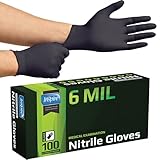
- These Inspire gloves are designed for BOTH medical and industrial use. Both exam-grade and durable 6-mil thickness, they are ideal for medical and industrial applications. These gloves are suitable for healthcare settings, laboratories, industrial environments, and household tasks.
- STRENGTH AND DEXTERITY: Inspire Nitrile Gloves provide strong protection every time. Rugged nitrile material is rip and puncture resistant, yet offers a secure fit, ease of movement, superior tactile control, and ultimate dexterity.
- TRUSTED BY PROFESSIONALS: The exam grade industrial glove trusted by industrial and medical professionals. Whether emergency services, doctors, nurses or food and household use, Inspire disposable gloves hold up to the job at hand.
- FOOD SAFE, JANITORIAL, TATTOO, MECHANICS AND MEDICAL: Multipurpose gloves with textured fingertips. Touch screen compatible. Latex free. Powder Free. ASTMD6319 & ISO9001:2015
- CONFIDENCE- GLOVES THAT HOLD UP TO THE JOB AT HAND: When your protection is on the line, you demand a glove that will hold up. Inspire Gloves give you the confidence to tackle all scenarios securely and safely. 100 gloves by weight per box. Don glove by the cuff for best application.
Check the resulting center of gravity, support footprint, fasteners and any part that a person will lift or carry. A heavier base can improve stability, but the same load can break a thin neck, pull out an insert or make a wall buckle when the part is dropped. If the print will be mounted overhead or used near people, obtain an engineering review rather than relying on a visual inspection.
What the standards do—and do not—tell you
NIOSH Publication 2020-114 provides metal-powder safety recommendations such as containment or local exhaust, task-matched PPE, appropriate HEPA waste-vacuum selection, food and drink exclusion, training and controlled waste handling. ISO/ASTM 52931:2023 provides a risk-assessment framework for metallic additive manufacturing, including prevention, protection, subprocesses and waste management. ASTM E2349-26 addresses foundry operations from sand preparation through melting, pouring and finishing.
None of these documents supplies a universal recipe for filling every consumer print. They do not establish one safe wall thickness, fill ratio, cure time, sand grade or temperature for all designs. Apply their hazard-control principles to the specific material, equipment, geometry, environment and jurisdiction, and defer to the product SDS when instructions differ.
Quick Recap
Product prices and availability are accurate as of the date/time indicated and are subject to change. Any price and availability information displayed on Amazon at the time of purchase will apply.

