
Do these 3 things before closing this tab:
1Clear out junk files and repair common Windows errors2Scan for outdated or missing drivers - takes under a minute3Repair Windows errors before they cause bigger problemsFor a 720p30 YouTube Live stream encoded in H.264, set the live video bitrate to 8 Mbps (YouTube’s recommended setting; 3 Mbps minimum), use CBR, and set a two-second keyframe interval. YouTube advises not exceeding four seconds and recommends RTMPS when available. Those are live-ingest settings; they are not the same as the bitrate for the lesson video file you prepare beforehand.
Recommended settings for a 720p30 lesson stream
The figures below are YouTube Help’s live-encoder recommendations, accessed in 2026. They apply to the feed sent to YouTube, not necessarily to the local file that plays into your encoder.
| Setting | Recommended value | Notes |
|---|---|---|
| Resolution and frame rate | 1280 × 720 at 30 fps | Appropriate when the source lessons are 720p30; avoid needlessly changing the source frame rate. |
| Video codec and bitrate | H.264 at 8 Mbps recommended; 3 Mbps minimum | These are YouTube’s live-ingest video bitrates for 720p30. |
| Bitrate mode | CBR | Use constant bitrate for the live output. |
| Keyframe interval | 2 seconds recommended | YouTube says not to exceed 4 seconds. |
| Ingest protocol | RTMPS preferred | YouTube supports RTMP/RTMPS and recommends the secure RTMPS option. |
| Audio | AAC or MP3 | Stereo AAC is a straightforward default when your encoder supports it; YouTube’s advanced settings list 128 Kbps stereo. |
For other live codecs, YouTube lists 6 Mbps recommended and 2 Mbps minimum for AV1 or H.265/HEVC at 720p30. Choose one only if the encoder and the rest of your workflow support it reliably; the lower recommended bitrate alone does not make it the better operational choice. YouTube’s live encoder settings and bitrate table are the authority for supported combinations.
Do not confuse the lesson file with the live feed
If you export lesson files before adding them to a playlist, YouTube’s upload guidance recommends MP4, H.264, and progressive scan. For SDR 720p uploads at standard frame rates, its recommended file bitrate is 5 Mbps. That number applies to the uploaded or locally played file; the separate recommendation for H.264 720p30 live ingest is 8 Mbps. Use each figure at the correct stage rather than changing the file export bitrate to match the live-feed setting. See YouTube’s recommended upload encoding settings.
Free tools Windows power users keep installed
One-click scans. No signup required.
#1 Best Overall
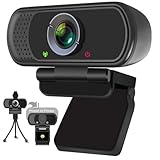
- Webcam- with full HD glass lens delivers razor sharp video that makes you look like a pro, with automatic light correction and HDR technology, computer camera auto adjusts color and brightness for natural lighting even in dim light
- 1080p Webcam with Built-in Noise Canceling microphone, pick up your voice even at 10ft distance to make sure everyone hears the real you; computer camera also features a universal clip can meet your multi angle needs on computers, laptops, desktops, and even other flat surfaces
- This Computer Camera, captures video at a wide angle view of up to 110 degrees, fluid HD video calling in 16:9 widescreen; pro streaming camera with advanced H.264 video compression technology provides you the excellent quality video on most software
- USB webcam with 6ft USB power cable, Plug and Play, no additional driver required, you just need to plug the USB port into your computer, then you can use video software such as facetime for calling;
- PC webcam, compatible with Windows7/8/11 or later, Chrome OS 29.0.1547 or later, MAC OS 10.6 or later, Android 5.0 or later, Linux 10.04 or later, It works with zoom, youtube, skype, facetime and more; you can widely use it for online teaching, video calling, recording, conferencing, Live Streaming
Set up the continuous lesson playlist and live output
- Prepare your lesson files. For SDR 720p lessons, export progressive MP4 files with H.264. Keep the source frame rate consistent with the intended output where practical. YouTube’s 5 Mbps upload recommendation for standard-frame-rate 720p files is distinct from its live-stream recommendation.
- Build the playlist in your playout or encoder software. Add lessons in the intended sequence and enable repeat or looping so playback continues when it reaches the end. YouTube’s setup documentation explains live ingestion and stream configuration, but does not prescribe a specific application or playlist-loop procedure. Confirm that your chosen software supports sequencing, repeat behavior, and recovery from interruptions in its current documentation.
- Configure the live encoder. Set output to 1280 × 720 at 30 fps and H.264 at 8 Mbps recommended (3 Mbps minimum). Choose CBR, a two-second keyframe interval (no more than four seconds), RTMPS if available, and a supported audio codec.
- Connect to YouTube Studio’s Live Control Room. Create or select the stream, then enter the stream URL and stream key shown by YouTube into the encoder. Treat the stream key like a password: it authorizes the encoder to send the feed to your channel. YouTube explains these controls in Manage live stream settings.
- Preview and test before relying on the stream. Check representative lesson scenes, motion, speech, and any music; confirm that audio is present and in sync and that the watch page is accessible. Start with enough time to resolve setup issues, and follow YouTube’s advice to monitor audio and video quality and stream-health messages while live. See YouTube live streaming tips.
- Plan for continuity beyond the encoding settings. A 24/7 stream also depends on the playout software, host, and network continuing to supply a feed. Verify how your setup behaves after a source-file error, encoder restart, network interruption, or dropped YouTube connection; do not assume that correct bitrate and keyframe settings provide automatic recovery.
Network and stream-health checks
The listed bitrate is the live video ingest rate, not a complete measure of all network use. Allow additional capacity for audio and other traffic, and test the actual connection under the conditions in which the stream will run. YouTube recommends testing upload capacity and monitoring stream health; its recommended settings are not a guarantee of uninterrupted 24/7 operation.
- Confirm the encoder reports a stable connection and YouTube receives the expected resolution and frame rate.
- Listen to the stream from the watch page, not only through the encoder’s local preview.
- Check YouTube’s stream-health warnings and correct the issue they identify before leaving the feed unattended.
- For a long-running stream, verify that the playlist resumes or repeats as intended and determine what happens when the host or internet connection drops.
Common problems and fixes
| Symptom | Likely issue | What to check |
|---|---|---|
| YouTube reports an unstable or poor connection | Available upload capacity is insufficient or variable for the outgoing feed and other traffic. | Test the connection, reduce competing traffic, and check that the encoder uses the intended bitrate. The 3 Mbps minimum is not a promise of stable service. |
| Stream settings are rejected or do not match | Encoder output parameters may differ from the selected resolution, frame rate, codec, or keyframe interval. | Verify 1280 × 720 at 30 fps, H.264, CBR, and a two-second keyframe interval; check YouTube’s current supported settings table. |
| The stream connects but has no sound or poor audio | Audio may be disabled, encoded in an unsupported format, or routed from the wrong source. | Use AAC or MP3, confirm the correct audio input is active, and listen to the actual YouTube preview. |
| The stream ends when the playlist reaches its last lesson | Repeat behavior is not enabled or the selected software does not loop the playlist. | Configure playlist repeat in the playout software and test through the end of the sequence before depending on it. |
| The stream does not resume after an interruption | Automatic reconnection may not be enabled or supported by the encoder/pl playback workflow. | Check the selected software’s reconnect behavior and test a controlled interruption; YouTube’s cited guidance does not promise automatic recovery for a particular setup. |
| The stream key does not work | The encoder may have an outdated key, the wrong stream selected, or an incorrect server URL. | Recheck the stream URL and key in Live Control Room, update the encoder, and keep the key private. |
Copyright and lesson-content checks
Before leaving recorded lessons live continuously, confirm that you have the rights needed for every element in them, including slides, clips, music, and guest contributions. A live format does not itself establish permission to rebroadcast material. Also make sure the stream accurately represents the channel and provides a useful viewing experience; technical encoding settings cannot resolve rights or platform-policy issues.
Rank #2
![Corel VideoStudio Pro 2023 | Beginner-Friendly Video Editing Software | Slideshow Maker, Screen Recorder, DVD Burner [PC Key Card]](https://m.media-amazon.com/images/I/419SsEgNdaL._SL160_.jpg)
- VIDEO EDITING SUITE: Enjoy this fun, easy-to-use and beginner-friendly video editing suite designed to create movies and slideshows that impress and inspire
- VALUE-PACKED: Explore the robust collection of features including essential trimming tools, screen recording, MultiCam capture and editing, color correction, motion and speed effects, GIF Creator, audio editing, and more
- TITLES and TRANSITIONS: Streamline your video storytelling with all kinds of unique transitions from basic ones to unique customizable transitions and introduce title and on-screen captions that highlight important scenes
- CREATIVE CONTENT: Add style with built-in templates, hundreds of creative filters and overlays, bring fun with animated AR Stickers, Face Effects, and GIF Creator
- AUDIO EDITOR: Import your own music, use our royalty-free music library, clean background noise with Audio Ducking, or record your own narration with our built-in voiceover tools
Or let it run in the cloud
If you would rather not keep a computer, encoder, or home internet connection running, StreamNeo is a cloud service for keeping a YouTube channel live from uploaded videos. Upload your recording or build a playlist, add your YouTube stream key once, and go live; the cloud service loops the video. It plays uploaded videos rather than broadcasting a camera feed.
- Nothing has to stay on at home: the stream runs from the cloud.
- Videos stream as uploaded, up to 4K 60fps, at one flat price per slot, with no re-encode or quality tiers.
- StreamNeo attempts automatic recovery if YouTube drops the stream.
- The first day is free with no card; one free day is available per account.
Monthly: $9.99 per month. The same product is included on every plan; only the billing period changes. UPI and cards are available in India, and card checkout is available worldwide. Each slot includes 10 GB storage, pooled across active slots, for videos and playlists. Read the options at StreamNeo pricing, or start your free first day.
Quick Recap
Best Value

- 【4K Ultra HD 60FPS Capture with PD 100W Charging】Supports stunning 4K Ultra HD video capture at 60FPS via USB 3.0, delivering crystal-clear, vibrant, and highly detailed footage. This HDMI Video Capture Card features PD 100W USB-C charging passthrough to keep tablets, pads, and VR devices powered for uninterrupted, long-duration streaming and gameplay. MJPEG:4K/60HZ, YUY2:4K/25HZ, XRGB:1080P/60HZ. Note: For capture use only; requires capture software to function and is not intended for direct screen casting to a monitor or TV
- 【High Refresh Rate Input: 2K@120FPS & 1080P@120FPS】Handles high-frame-rate video input including 2560×1440@120FPS and 1920×1080@120FPS. Supports MJPEG, YUY2, NV12, and XRGB formats, providing smooth, detailed video capture for fast-paced games and dynamic content using a reliable HDMI to USB-C capture card. Please use a USB 3.0 or higher port to connect the device. USB 2.0 ports only support up to 1080P resolution. If the device still outputs 1080P when connected to a USB 3.0 or higher port, please rotate the capture card’s USB-C connector 180° and reconnect
- 【90° Right-Angle Design for VR & Mobile Comfort】The ergonomic 90° right-angle USB-C connector with a 3.3ft cable makes this 4K switch capture card perfect for VR headsets like Quest series and portable tablets, keeping cables out of the way for a more immersive experience
- 【Plug and Play for Streaming and Recording】No drivers or external power required—just plug in and start. Optimized for live streaming, online meetings, and real-time recording via OBS Studio, Streamlabs, Zoom, YouTube, Twitch, and more. Compatible with Windows, macOS, Linux, Android, and PadO
- 【Broad Device Compatibility for Multiple Setups】Works seamlessly with Switch/Switch 2, laptops, PCs, tablets, VR devices, cameras, and more. Suitable for VR gameplay capture, console streaming, and creative projects with smooth integration into any workflow. Charging is only supported via USB-C ports with power delivery capabilities. A 100W charger is needed for optimal charging speed. Mild heating is normal
Rank #4

- Conquer the latest games and take your gaming to the next level with Intel's AI-enhanced X e SS upscaling solution.
- Intel Xe Super Sampling Technology (Xe SS) takes your gaming experience to the next level with AI-enhanced upscaling, delivering more performance with high image fidelity. Xe SS is optimized for Intel Arc Graphics products that utilize XMX AI hardware acceleration.
- Elevate your games to new levels of realism with support for the latest graphics technologies that will be the foundation of next-generation games, including ray tracing, variable rate shading, mesh shading, and sampler feedback.
- Unleash your imagination and create rich digital content to captivate your audience with a super-advanced media engine powered by AI and accelerated by Intel Deep Link technology. Create compelling content with the first graphics card that supports all major media formats today, and stay up to date with cutting-edge AV1 video encoding capabilities.
- Deliver the best performance to your audience and take your livestream to the next level with flexibility and creative control using virtual streaming technology built into Intel Arc Control. Instantly transform your space into a streaming studio with virtual backgrounds, auto frame, and broadcast options accessible through an intuitive, easy-to-use software interface.
Rank #3
![Pinnacle Studio 26 Ultimate | Pro-Level Video Editing & Screen Recording Software [PC Download]](https://m.media-amazon.com/images/I/41PZrCrwX4L._SL160_.jpg)
- Discover advanced video editing software fully loaded with powerful tools, an intuitive interface, and creative titles, transitions, filters, and effects that produce pro-level productions—all with incredible stability and performance
- Expertly edit HD, 4K, and 360 video across unlimited tracks, import 8K video, and fine-tune every parameter of your project—positioning, color, transparency, and more—with precise keyframe customization and enhanced keyframe editing
- Leverage powerful tools like Video Masking, Motion Tracking, complete Color Grading, Smart Object Tracking, Green Screen, Blend Modes, Screen Recording, MultiCam Editing, and more
- Master your sound with advanced audio editing features including custom noise profiles, pitch scaling, multi-channel sound mixing, voiceover recording tools, and access to royalty-free music and sound effects
- Create high-quality DVDs with 100 plus pro-caliber templates, upload directly to YouTube or Vimeo, or export to popular file formats to share with your audience
Product prices and availability are accurate as of the date/time indicated and are subject to change. Any price and availability information displayed on Amazon at the time of purchase will apply.

