
What’s actually slowing this PC down?
Pick the symptom - the matching free tool is one click away.
First try right-clicking the image and choosing Open image in new tab, then save the image from that tab. If the saved file is still a thumbnail, find the larger file the page actually loaded: inspect the image’s src and srcset values, or use your browser’s developer tools to locate the relevant image request. “Full-size” means the largest version available to your browser—not necessarily the original camera file.
Choose the right method for the image
Start with the simplest method and move to developer tools only if it saves a small copy or does not work. A site may display a thumbnail while also loading larger responsive images, or it may serve only a resized, compressed, watermarked, or tiled version. Browser tools can help you find what the site sent; they cannot retrieve a larger file that the site never provides.
| What you see | What to try |
|---|---|
| An ordinary image in an article or page | Open the image in a new tab, then save it. |
| The saved image is too small | Inspect the image element and compare its src and srcset URLs. |
| A gallery, zoom view, or image that appears after interaction | Use the Network panel and inspect image requests while reloading or opening the viewer. |
| A CSS background, canvas, or tiled zoom viewer | Inspect loaded resources and requests; the site may not provide one full-image file. |
Save the image from the page
- Right-click (or control-click) the image. On a touchscreen, press and hold it.
- Choose Open image in new tab if available. If the menu instead offers Save image as, you can try that first.
- In the image tab, use the browser’s save command—usually right-click and Save image as, or the browser’s save shortcut.
- Check the saved file’s dimensions or preview it. If it is still visibly too small, continue below rather than repeatedly saving the same displayed copy.
Opening the image separately is useful because it reveals the image resource the browser is displaying. It does not guarantee that the resource is the largest one the site has.
Find a larger responsive image with srcset
For a standard HTML image, the page may provide a src and a srcset. The latter can list multiple image URLs with descriptors such as 1x and 2x. The browser selects a candidate based on the layout and display conditions; a larger descriptor may point to a higher-resolution resource, but not necessarily the original.
Free tools Windows power users keep installed
One-click scans. No signup required.
#1 Best Overall

- USB-C 2-in-1 storage OTG: The Lexar JumpDrive Dual Drive D40E features USB Type-A and Type-C connectors in a slim, portable form factor for easy device compatibility
- Transfer speeds up to 100MB/s: Based on internal testing, performance may vary depending upon the host device, interface, and usage conditions. 1MB=1,000,000 bytes
- Plug and Play: Widely compatible with USB Type-C smartphones, tablets, laptops, Macs, and traditional Type-A devices, no software installation required. The 360° swivel design allows for easy switching between connectors without the hassle of losing a cap
- Durable & Compact: The Lexar D40E USB memory stick features a metal enclosure, withstands temperatures from 0° to 50° C (32°F to 122°F), and is lightweight at 26g with dimensions of 70.4 x 16.9 x 11.7mm
- Security & Warranty: Securely protects files using an advanced security software solution with 256-bit AES encryption. Backed by a Lexar 3-year limited warranty
- Right-click the image and choose Inspect (or open developer tools and use the element picker to select the image).
- In the Elements or Inspector panel, find the selected
<img>element. Look forsrcandsrcset. - Compare the URLs listed in
srcset. Open the candidate that appears to be the largest version the page offers, then save it from its tab. - If there is no
srcset, open thesrcURL. A page may use only one image resource or may load its image another way.
Do not assume that a URL containing words such as “small” or “thumb” can be made into an original by editing its filename. A different-looking URL is not evidence that the server has a larger asset.
Locate image files in Chrome or Edge DevTools
Chrome and Edge developer tools can show page resources, including images. Open DevTools with Inspect or the browser’s developer-tools shortcut, then open Sources. In the Page tree, browse the resources used by the page. Selecting an image can show a preview and its resource path; use that resource or URL to open and save the file.
- Open the page containing the image and open DevTools.
- Select Sources, then expand the Page tree for the current page.
- Look through the loaded resources for an image file, select a likely candidate, and check its preview and path.
- Open the resource URL in a browser tab if possible, then save it.
The exact resource names and tree layout vary by page. If you cannot identify the image there—or it is not loaded until you interact with the page—use the Network panel instead.
Rank #2

- 2 in 1: USB C + USB 3.0, 32GB usb c flash drive has dual ports, usb 3.0 port is applied to all devices which have usb 3.0 interface and usb c port is widely used in all Android smartphones with OTG function
- High Speed USB 3.0: Read speed up to 90 MB/s, Write speed up to 30 MB/s, the speed of USB 3.0 interface is faster than USB 2.0, save time to wait, increases work productivity. Note: Speed will be limited if you use the USB key in the USB 2.0 interface
- Large Compatibility: The USB 3.0 Connector is compatible with USB 3.0 & USB 2.0 backward USB 1.1 devices, such as Laptop, Desktop, Car Audio, Tablet, TV, Speakers, Projector. USB-C port is compatible with all Android Smartphones
- Expand Storage: Good performance in storing, transferring and sharing digital data with families, friends, colleagues, customers. It can expand the capacity of smartphone, you can watch movies or share pictures when you go on vacation with your family
- Note: Make sure your smartphone is equipped with OTG function and need to open OTG function in Settings when you plug memory stick, then you can transfer easily data bewteen different devices
Use Network for galleries, zoom viewers, and dynamically loaded images
A gallery or JavaScript component may not expose the useful image as a simple <img> in the page markup. CSS backgrounds and images loaded after a click can also be easier to find among network requests. DevTools’ Network panel lets you filter requests by resource type and inspect a request’s full URL.
Windows Errors? Fix Them Before They Spread
Repair common Windows errors and clear accumulated junk for a smoother, more stable PC - no reinstall needed.Free scan · no reinstallOutdated Drivers Are Slowing You Down
One free scan finds every outdated or missing driver and matches the right update for your exact hardware.Free scan · exact hardware match- Open DevTools and select Network.
- Reload the page with the panel open so the requests are recorded. If the image loads only after an action, also open the gallery, zoom view, or relevant page section.
- Filter the request list to images, or inspect likely image resources if the browser does not offer a dedicated image filter.
- Select a candidate request. Check its preview, dimensions when available, and full URL to distinguish it from a thumbnail or unrelated icon.
- Open the request URL in a new tab if the browser allows it, then save the image. If it does not open directly, see the session and authorization notes below.
For a zoom viewer, the site may load multiple tiles rather than one large image. You may find a manifest or a set of tile requests, but that does not mean the site exposes a single downloadable original. Do not try to reconstruct a file from unrelated requests unless you have permission and understand the site’s format.
When the image is a link, CSS background, or canvas
An image link
If clicking the image opens a file or a larger view, the image may be linked rather than directly displayed. Copy the link address or open it in a new tab, then check whether the resulting resource is larger. A link with download behavior can prompt the browser to download, open, or save the resource depending on the media type and implementation.
Rank #3

- USB-C 2-in-1 storage OTG: The Lexar JumpDrive Dual Drive D40E features USB Type-A and Type-C connectors in a slim, portable form factor for easy device compatibility
- Transfer speeds up to 100MB/s: Based on internal testing, performance may vary depending upon the host device, interface, and usage conditions. 1MB=1,000,000 bytes
- Plug and Play: Widely compatible with USB Type-C smartphones, tablets, laptops, Macs, and traditional Type-A devices, no software installation required. The 360° swivel design allows for easy switching between connectors without the hassle of losing a cap
- Durable & Compact: The Lexar D40E USB memory stick features a metal enclosure, withstands temperatures from 0° to 50° C (32°F to 122°F), and is lightweight at 26g with dimensions of 70.4 x 16.9 x 11.7mm
- Security & Warranty: Securely protects files using an advanced security software solution with 256-bit AES encryption. Backed by a Lexar 3-year limited warranty
A CSS background
If the picture is decorative or does not select as an image element, inspect the surrounding element and its styles for a background-image URL. You can also look for the corresponding request in Network. Open the resource URL when possible and save it.
A canvas or tiled viewer
A canvas may show pixels drawn by page code rather than a conventional image element. Inspect Network for the image files, tiles, or manifest the viewer loads. If the site never sends a single full-image file, the browser cannot recover one from that page. A screenshot can preserve what is visible on screen, but it is not the same as downloading the image asset.
Quick wins for a faster PC:
Repair Windows errors before they cause bigger problemsFix Now →Fix the driver behind crashes, sound loss and screen glitchesFind Drivers →Or skip the browser setup
ScreenshotNeo is a website screenshot API and MCP server, not a way to download an image’s source file. Use it when you need a clean screenshot of the page—for example, a record of how the image appears in context. Its capture can accept cookie or consent banners and remove more than 60 known consent platforms, newsletter popups, and chat widgets before the shot; each of those steps can be turned off. Bot checks, blank pages, timeouts, failed loads, and cache hits cost nothing, and responses say which page verdict applies and whether the request was billed. Its MCP server offers take_screenshot, get_page_info, and capture_pdf tools for AI agents.
For a one-request page screenshot, install no browser automation: send a GET request to the API. See the ScreenshotNeo documentation for request options.
Rank #4

- 2-in-1 Dual Design: Features both USB-C and USB-A connectors, making it compatible with phones, tablets, MacBooks, PCs, and laptops-no adapter needed
- Wide Compatibility: Works seamlessly with USB A and USB C devices, ensuring reliable file transfers across smartphones, computers, and more
- Ample Storage Options: Available in 16GB/32GB/64GB/128GB providing plenty of space for photos, videos, music, and documents
- Portable & Lightweight: Compact and durable design for travel, school, or daily use-take your files anywhere
- Plug-and-Play Convenience: No software or drivers required; simply insert into USB-C or USB-A ports and start transferring files instantly
curl -G "https://api.screenshotneo.com/v1/shot" -d access_key=YOUR_API_KEY --data-urlencode url=https://stripe.com -o shot.webpThe free plan includes 1,000 screenshots per month with no card; paid plans start at $5 for 3,000. The screenshot service is not a substitute for the original image file or its full-resolution download URL. Sign up for ScreenshotNeo’s free plan.
Independent reader supportYour contribution helps us test, update, and keep practical guides available for everyone.Why a full-size download may fail
The URL works only in the page
An image request may depend on your logged-in session, an authorization header, a referrer, or a temporary token. Copying its URL into a separate tab or another app may omit that context, so the server rejects the request or returns an error. Try opening the resource while signed in to the site and from the page that loaded it. If it still fails, the image may not be available as a standalone URL.
The browser keeps saving a thumbnail
You may be saving the page’s displayed candidate rather than the largest available candidate. Inspect srcset or compare image requests in Network. If the page exposes only the small file, there may be no larger browser-accessible version.
Best Value
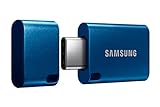
- USB-C STORAGE ON THE GO: This sleek drive is supported by Samsung NAND flash and is incredibly compact to fit in the palm of your hand; Count on reliable performance and fast transfer speeds while staying compact
- PERFORMANCE WITH SPEED: No need to choose between performance and reliability; Experience a fast, powerful flash drive that transfers 4GB files in just 11 seconds with up to 400MB/s USB 3.2 Gen 1 read speeds and is backward compatible with USB 3.0/2.0
- MODERN MEETS ICONIC: The ultra-sleek USB-C drive looks as good as it performs; Featuring a reversible plug, the Type-C inserts into your devices seamlessly every time; Transfer large files with style and ease
- ALWAYS CONNECTED: USB-C is compatible across devices, including laptops, tablets, phones and cameras, with enough space for 63,730 photos or maximum 12 hours of 4K video; With up to 256GB of storage space, this pocket-sized thumb drive comes in handy wherever you go
- TOUGH & TRUSTED: Files stay secure, no matter the terrain; Samsung's flash memory technology makes the Type-C a trustworthy drive to store your valuable data; It's waterproof, shock-proof, magnet-proof, temperature-proof, and X-ray-proof body, plus it's backed by a 5-year limited warranty
The image is missing or appears blank
Reload with Network open, wait for the image to load, and interact with the gallery or lazy-loaded section if needed. A failed request, blocked resource, or page that has not finished loading will not yield a usable image. A blank preview is not proof that another URL variant exists.
The file extension or format looks unfamiliar
Sites may serve compressed formats such as WebP or AVIF, or use a URL whose extension does not reveal the delivered format. Renaming the file does not convert it or add resolution. Save the resource as served; use an image viewer or converter only if you need a different format, and keep the original file when quality matters.
The viewer is zoomable but no single large file appears
The site may load tiles at different zoom levels. The largest available view is then what the viewer can load, not necessarily a single original image. If a tile viewer or canvas does not expose a single file, the browser cannot create the source asset from nothing.
What “full-size” means—and what it does not
“Full-size” is relative to what the site makes available to your browser and account. A website can deliberately serve a resized derivative, compressed WebP or AVIF, watermarked image, or tiled zoom experience. Responsive markup can list several sizes, but a larger candidate is not proof of an unaltered camera original. If you need a particular resolution or an original upload, look for a download option or ask the site owner or image rights holder.
Check permission before reusing an image
Being able to access or save an image does not establish permission to republish it. Before sharing it publicly or using it commercially, check the page’s license, terms, and rights statement, and follow any conditions attached to the image. This guide is technical help, not jurisdiction-specific legal advice.
Quick Recap
Product prices and availability are accurate as of the date/time indicated and are subject to change. Any price and availability information displayed on Amazon at the time of purchase will apply.

