
Quick wins for a faster PC:
Scan for outdated or missing drivers - takes under a minuteDriver Scan →Repair Windows errors before they cause bigger problemsFix Now →Fix the driver behind crashes, sound loss and screen glitchesFind Drivers →iTechGuides is reader-supported. When you buy through links on our site, we may earn an affiliate commission. As an Amazon Associate I earn from qualifying purchases. Learn more
The most reliable ladder counters are not single “hard-counter” cards. They are answers that stay in your cycle, control the opponent’s pathing, and still work after the opponent’s support spell. Against Hog Rider, pull to the middle with a building or troop; against Evolution Mega Knight, control the jump before surrounding it; against Evolution Witch, remove the support while preserving enough elixir for the tank; and against Goblin Barrel or Goblin Gang, protect your small-spell answer until the bait pattern is clear.
The card list below reflects RoyaleAPI’s displayed seven-day ladder view, so it is a current snapshot rather than a permanent tier list. Usage changes by time window, mode, balance patch and player pool.
Which cards are currently shaping ladder matches?
RoyaleAPI’s seven-day ladder display currently features a mix of tower troops, spells, cycle cards, a win condition and several pressure or bait cards. The exact order can move quickly, but the combination tells you what a practical ladder deck must be prepared to see.
| Card | Why it matters in the current snapshot |
|---|---|
| Tower Princess | One of the most-used cards in the displayed seven-day ladder view; its presence signals a broad range of deck shells rather than one single matchup. |
| The Log | A common small spell that clears or weakens ground swarms and can alter how safely bait cards connect. |
| Arrows | A frequent answer to air or ground swarms, making fragile bait support less dependable when it is held in cycle. |
| Fireball | A common medium spell that can remove or weaken support troops and punish clustered defenders. |
| Hog Rider | A fast tower-focused win condition that tests whether your pull is ready on every rotation. |
| Witch Evolution | A support threat that creates repeated skeleton pressure and becomes dangerous when protected by a tank. |
| Mega Knight Evolution | A high-pressure defender and counterpush threat whose jump rewards poor spacing. |
| Goblin Barrel | A direct bait win condition that punishes players who spend their reliable small-spell answer early. |
| Skeletons | A cheap cycle card used to pull, surround or distract while the opponent returns to a main threat. |
| Goblin Gang | A swarm that can defend, pressure and bait the same small-spell answers needed for Goblin Barrel. |
| Zap | A common reset and swarm-control spell that changes which defensive troops can survive an exchange. |
Do not copy this list as a timeless “best cards” ranking. Recheck a current ladder snapshot when a patch, mode or region changes the environment.
#1 Best Overall

- THE ULTIMATE TABLETOP RAIDING EXPERIENCE: Bring the thrill of the hit mobile game to your table with Clash of Clans: The Epic Raid, a fast-paced combat and engine-building game where you build defenses and deploy troops to smash rival villages.
- BUILD, DEPLOY, AND DESTROY: Unleash your armies and roll the dice to watch enemy cities burn; this strategic battle system allows you to manage resources, upgrade your base, and execute perfectly timed raids to earn victory stars.
- STRATEGIC ENGINE-BUILDING MECHANICS: Develop your village's defenses to withstand attacks while simultaneously refining your offensive tactics; every structure you destroy earns you critical points and bonuses needed to dominate the leaderboard.
- DYNAMIC COMPETITION FOR GAME NIGHT: Whether it's a competitive weekend tournament or a casual hobby night, this race for 40 stars provides a high-energy experience perfect for winter holidays or summer gaming meetups.
- A MUST-HAVE FOR CLASH FANS: Designed for fans of the mobile app and tabletop strategy enthusiasts alike; ideal for home game rooms, local gaming clubs, or retail play spaces where rival clans go head-to-head for glory.
What makes a counter reliable?
A card is only a counter when it is available at the moment the threat arrives and when its placement produces a favorable exchange. Use this five-part test before calling an answer reliable:
- Availability: Can the card return to your hand before the opponent’s win condition returns? If the answer is a building, small spell or primary tank killer, track the opponent’s rotation so it is not buried in your deck.
- Path control: Does the placement pull the threat toward the middle or otherwise force it to cross more of your defensive range? A late or high building can allow a Hog Rider to reach the tower before damage begins.
- Support resistance: Does the answer survive the opponent’s likely Log, Arrows, Fireball or Zap? A fragile swarm may be correct only when the relevant spell is out of cycle.
- Tower-damage prevention: Count the hit you are trying to prevent, not just whether the defender survives. One connection from a fast win condition can decide a close tower race.
- Counterpush value: After defending, does a surviving ranged troop, tank killer or other unit create pressure, or did the defense consume more elixir than the attack was worth?
Card levels and tower activation can change individual interactions. A placement that works at equal levels may fail when the attacker, defender or tower is a level apart, so verify the interaction in a friendly battle or training environment before relying on it in a close match.
How to stop Hog Rider
Hog Rider is a timing and rotation test. Your objective is to make it walk toward the middle while both of your towers and the defending troop can damage it. A building or a troop with a pulling position is the core answer; cheap damage or a reset can finish the defense when the first pull is not enough.
Free tools Windows power users keep installed
One-click scans. No signup required.
Use a central pull
Place the building or pulling troop early enough that Hog Rider changes direction before reaching the tower. A late placement, or one placed too high, can give the Hog a hit even when the defense technically survives. The exact tile depends on your arena layout and the building’s range, so use the same repeatable central position rather than improvising at the bridge.
Add only the support you need
After the pull, add inexpensive damage if the Hog’s health remains high. Keep a reset available when the opponent’s support includes a unit whose attack must be interrupted. Do not surround blindly: spend enough to prevent the tower hit, then preserve elixir for the next card.
Respect fast rotations
When the opponent cycles quickly, the first successful defense is not the end of the matchup. Count the cards played after Hog Rider and identify when it can return. Your primary building or pulling troop should be back in hand before that second push. If it is not, use a temporary distraction only when you have a clear plan for the next rotation; otherwise the opponent can force damage while your main answer is still unavailable.
How to defend Evolution Mega Knight
Evolution Mega Knight punishes a pile of fragile troops. Its landing and jump threat mean that several cheap defenders placed together can disappear before they deal meaningful damage. Supercell’s June balance notes described Evolved Mega Knight as “too oppressive when defending most win conditions,” which is why spacing and timing matter more than simply adding more bodies.
Recommended Free Tools
Control the landing first
Pull the card toward the center so it does not jump directly onto your tower or onto a cluster of defenders. Wait until its jump threat is controlled before attempting a surround. Dropping a swarm into the landing zone gives the evolved card exactly the multi-target opportunity you are trying to avoid.
Rank #2

- THE ULTIMATE COLLECTOR'S RAIDING EXPERIENCE: Elevate your tabletop battles with this deluxe edition of Clash of Clans: The Epic Raid, a high-stakes strategy game where you build villages, recruit troops, and raid rivals for ultimate glory and victory points.
- PREMIUM DELUXE COMPONENTS: This massive set features 137 unpainted detailed miniatures, 101 upgraded deluxe tokens, 72 building and unit tiles, and 7 custom engraved D6 dice, providing a high-fidelity, tactile version of the base game.
- MASTER THE BATTLEFIELD: Send your eager builders to the center board to construct defenses and recruit elite troops; use your upgraded army to launch epic raids and earn victory stars in a refined, highly strategic engine-building system.
- THE CENTERPIECE OF YOUR GAME NIGHT: Ideal for epic weekend gaming sessions, holiday gifts, or special tournaments; this collector's edition provides a deeply immersive experience perfect for cozy winter evenings or competitive summer meetups.
- FOR HARDCORE CLANS & HOBBYISTS: A must-have for dedicated Clash of Clans fans and premium board game collectors; perfect for display in home game rooms, local tabletop clubs, or as the highlight of your local hobby events.
Choose durable damage
A high-damage tank killer or sturdy ranged unit is preferable to several fragile units. Place the damage dealer far enough away to avoid the landing while keeping it inside the defensive range created by the pull. If the opponent supports Mega Knight with a spell, prioritize the unit that continues dealing damage after the spell rather than stacking another vulnerable troop beside it.
Turn the defense into a measured counterpush
Once the jump threat is gone and the tank is taking sustained damage, add only the support needed to finish it. A surviving ranged defender can become your counterpush; spending your entire hand to guarantee the kill may leave you unable to answer the opponent’s next win condition.
How to counter Evolution Witch
Evolution Witch is a support problem, not merely a skeleton problem. Attacking each spawned skeleton one at a time lets the Witch keep generating value, especially when a tank is in front. The safer plan is to remove or neutralize the support structure while reserving enough elixir for the tank.
Do these 3 things before closing this tab:
1Clear out junk files and repair common Windows errors2Scan for outdated or missing drivers - takes under a minute3Repair Windows errors before they cause bigger problemsTarget the source of the swarm
Use ranged damage, splash damage or a spell that clears the spawned support. The goal is to damage the Witch and its surrounding skeletons together instead of feeding isolated troops into the wave. Position ranged units so they can attack through the tank’s approach without standing in a single obvious spell cluster.
Separate support from the tank
If the Witch is behind a tank, pull or distract the tank away from the Witch’s ideal support range when possible. Do not spend every elixir on the Witch and then discover that the tank reaches the tower uncontested. Keep a dedicated answer for the front unit, and let your tower contribute while the support is being removed.
Do not overreact to the first skeleton wave
The first wave is often bait for an expensive response. Use the minimum splash or ranged damage that keeps the lane under control, then reserve your stronger answer for the tank or for the next support card. Witch Evolution appears in the current ladder popularity snapshot, so this matchup is worth practicing even if it is not present in every mode.
How to defend Goblin Barrel and Goblin Gang
Goblin Barrel and Goblin Gang form a natural bait package: both punish you for spending the only dependable small-spell or precise-placement answer before you know which goblin threat is coming next.
Identify the bait pattern
At the start of the match, note whether the opponent has shown Barrel, Gang or another card that can force your small spell. Do not automatically spend that spell on a low-value cycle troop if a goblin win condition has not yet been accounted for. Once the opponent’s bait cards are known, you can decide which threats require the spell and which can be handled by a splash unit or a placement.
Rank #3
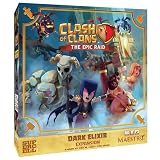
- UNLEASH THE POWER OF DARK ELIXIR: Expand your raiding potential with specialized Dark Elixir troops and a new resource management system, allowing for devastating synergies and unstoppable attacks in your Clash of Clans tabletop battles.
- PREMIUM MINIATURE TROOP SET: Includes 12 detailed, unpainted miniatures featuring Hog Riders, Valkyries, Minions, Lava Hounds, Golems, and Witches, plus 8 X-Bow standees, a center board, building/unit tiles, and 15 Dark Elixir tokens.
- STRATEGIC MARKETPLACE UPGRADES: Use the new Dark Elixir resource to access a dedicated marketplace of elite units, providing tactical depth and specialized abilities that outmatch standard troops to ensure your raid's success.
- ENHANCE YOUR EPIC GAME NIGHTS: Perfect for extended gaming sessions, weekend tournaments, or holiday game marathons; this expansion adds complexity and variety that keeps your strategy sessions fresh and exciting year-round.
- FOR CLASH OF CLANS FANS & STRATEGISTS: A must-have for mobile game enthusiasts and tabletop wargamers; ideal for play at home, in hobby stores, or at gaming clubs to prove your dominance in the ultimate base-raiding challenge.
Keep one clean answer for Barrel
A small spell, splash unit or precise tower placement can prevent Barrel damage, but reliability depends on timing and card levels. Use the same placement every time until the opponent demonstrates a different Barrel position. If your answer is a spell, avoid using it casually when the opponent is close to cycling back to Barrel.
Handle Gang without surrendering your spell
Goblin Gang can often be addressed by controlled splash damage or a troop that survives the exchange. The best choice depends on whether the Gang is defending a push, baiting your spell or crossing the bridge as pressure. Preserve the small spell when the opponent’s Barrel is still in rotation; a clean defense that leaves your spell ready is more valuable than an immediate but expensive response.
How to use Skeletons and other cheap cycle cards
Skeletons are not only a low-cost distraction. In the current ladder view they function as rotation tools that can pull, surround or delay a threat while you return to the card that actually stops it.
Pull and distract deliberately
Place Skeletons where they change the path of the attacking troop or buy time for a tower and ranged defender. Their value comes from seconds and positioning, not from surviving. Avoid dropping them directly into a jump or splash attack that will erase them before they redirect the threat.
Track the opponent’s four-card return
After the opponent plays a win condition, count the cards used to reach it again. Your main answer should be ready before that return. If you have already spent the answer, Skeletons can delay the threat, but they should not be mistaken for a permanent replacement for a building or tank killer.
Use cycle cards to protect elixir
When a cheap card can pull without requiring a second defender, take that line. Overcommitting to a harmless cycle unit creates the elixir deficit that the real win condition exploits. Cheap cards are strongest when they buy time while keeping your hand and elixir flexible.
How to play around The Log, Arrows, Fireball and Zap
These spells are common ladder tools, so your deck should assume that at least one of them may be available when you commit a fragile defender.
The Tool Desk
Outbyte PC Repair FREEClear out junk files and repair common Windows errorsFree Scan →Outbyte Driver Updater FREEScan for outdated or missing drivers - takes under a minuteDriver Scan →Bait only with a follow-up threat
Do not spend a bait card merely to make the opponent cast a spell. Bait is worthwhile when the spell creates a clear opening for your next threat, when the opponent cannot cycle back in time, or when the response costs more than the card you offered. If no follow-up exists, you have simply traded away a card and revealed your plan.
Rank #4

- Brand new card game: Enjoy a fresh and exciting gameplay experience that mixes strategy, surprises, and fun, perfect for game nights, travel, or gifting to friends and family.
- Easy to learn: Quick to pick up and play with simple rules and a clear, illustrated manual, perfect for all ages to jump in and start having fun right away.
- Fun for friends and family: Spark laughter and connection with hours of engaging gameplay, perfect for parties, game nights, and quality time with loved ones.
- Travel-friendly design: Compact and lightweight, this game is easy to pack, store, and carry, perfect for road trips, vacations, or spontaneous fun wherever you go.
- Gift for all ages: A thoughtful and fun choice for kids, teens, and adults alike, perfect for birthdays, holidays, or just bringing people together for a good time.
Account for spell changes
Crown-tower damage and other spell interactions have been adjusted in recent balance updates. A spell is therefore not a universal answer just because it clears the target in one interaction. Recheck the damage and survival relationship after balance changes, especially when your defense depends on a single spell connecting at a specific level.
Separate your defenders
Fireball and similar area damage reward opponents who stack support troops. Place units far enough apart that one spell cannot remove every layer of your defense, while still keeping them close enough to cover the path you are defending. Against The Log, Arrows or Zap, do not rely on a swarm as the only layer if the spell is likely to be in cycle.
What Tower Princess and mixed popular decks mean for preparation
Tower Princess appears in the current usage snapshot alongside the most common spells and cycle cards. Because the list spans several deck styles, prepare for the opponent’s win condition and support package rather than trying to build one card that “counters the ladder.” A deck that answers Hog Rider but cannot protect its answer from Fireball will fail differently from a deck facing Goblin Barrel and Goblin Gang bait.
Before a match, identify three pieces of information as soon as they are revealed:
- The opponent’s primary tower-damage card.
- The small spell or reset that can remove your first defensive layer.
- The card that forces your own answer out of cycle, such as a goblin bait unit or a cheap pressure card.
That information determines whether you should defend conservatively, pressure the opposite lane or hold elixir for a second wave. The popular-card list is a scouting aid, not a substitute for reading the deck in front of you.
How to build a counter package without falling behind
- Choose one primary answer to the main win condition. For Hog Rider, this is usually a building or pulling troop positioned for a central activation. For a heavy jumper, it is a durable damage source supported by controlled pathing.
- Add one secondary answer that covers a different failure mode. If the primary defender is vulnerable to a spell, use a ranged or splash option that can survive after the spell is spent.
- Reserve a small spell or precise placement for bait. This is essential when Goblin Barrel or Goblin Gang is common in your matchmaking pool.
- Include a cheap cycle card, but assign it a job. Skeletons should pull, distract or help you return to the main answer; they should not be your only defense against every threat.
- Check both lanes. A counter that works only when all defenders are in one lane can lose to a split push. Test whether your ranged unit or building can cover the opposite lane without forcing an unaffordable response.
- Test level-sensitive interactions. Card levels and tower activation can change whether a spell clears a swarm, whether a defender survives or whether the tower takes one extra hit.
Elixir and placement decisions during a match
When you are even or ahead
Defend with the smallest combination that prevents tower damage and preserves your primary answer for the next cycle. A surviving defender is valuable only if it does not leave you unable to stop the next win condition. After the defense, pressure when the opponent’s spell or primary counter is out of rotation.
When you are down elixir
Prioritize path control and tower support over a full counterpush. A central pull, a cheap distraction and tower damage may be enough to deny the immediate hit. Avoid adding a second troop simply because the first defender looks threatened; spend only when the extra card changes the result.
What’s actually slowing this PC down?
Pick the symptom - the matching free tool is one click away.
When the opponent supports a push
Separate the tank from its support where possible, then remove the support with ranged, splash or a spell while retaining an answer for the tank. Stacking every defender in one landing or spell radius is the fastest way to lose the exchange.
Best Value

- 2021 Panini Fortnite Series 3 Mega Box
- 6 Fortnite Cards per Pack, 12 Packs per Box
- Find 2 Exclusive Cracked Ice Parallel Fortnite Cards per Box!
- Look for Holofoils and Optichrome holo Fortnite Cards!
- Look for Fortnite cards of popular outfits such as Midas, Vi, Raz, and more!
How to choose between two viable counters
When several answers appear to work, compare them using the same practical questions rather than choosing by highlight-reel value.
- Elixir cost: Can you afford the answer repeatedly, or does one use force you to concede the next cycle?
- Spell survival: Does it remain useful after the opponent’s likely Log, Arrows, Fireball or Zap?
- Lane coverage: Can it defend both lanes, or is it locked to one side?
- Damage prevention: Does it reliably deny all tower damage at your card and tower levels?
- Counterpush: Does a surviving unit create pressure, or does the answer disappear with no advantage?
- Activation value: Can the placement activate or consistently use your tower, and does that interaction remain valid at your levels?
A cheaper answer is not automatically better if it allows one hit every rotation. Conversely, an expensive answer is not worthwhile if a lower-cost placement denies the same damage and returns to cycle sooner.
Why balance notes change your counter priorities
Counter advice must follow dated balance information. Supercell’s July 2026 notes said Hero Goblins had been “overshadowing other swarm options” and that Miner was “once again taking over Ranked play.” Those statements explain why a counter package can become less important or suddenly mandatory after one update.
Outdated Drivers Are Slowing You Down
One free scan finds every outdated or missing driver and matches the right update for your exact hardware.Free scan · exact hardware matchWindows Errors? Fix Them Before They Spread
Repair common Windows errors and clear accumulated junk for a smoother, more stable PC - no reinstall needed.Free scan · no reinstallSupercell’s August 2026 notes reported a combined Spirits use rate of 53% in Top 200 and 31% in Ranked. Treat those figures as dated balance-note statistics, not timeless ladder averages. A high use rate means you should expect the cards in that environment; it does not prove that one fixed deck or counter remains optimal everywhere.
Supercell’s May 2026 notes said a buff to Evolved Goblin Drill put it “right at the top of the Ranked meta” before the change was reverted. That reversal is a useful warning: a single patch can change which answer deserves a deck slot. Revisit your small-spell, building and tank-killer choices after balance changes instead of assuming yesterday’s matchup chart still applies.
Troubleshooting common defensive failures
“My building is placed, but Hog Rider still gets a hit.”
Place it earlier and farther toward the center so the pull begins before the Hog reaches the tower. Check whether the opponent’s support or spell is removing the building, and confirm that your chosen placement remains valid for your tower activation and card levels.
“My swarm disappears when Mega Knight lands.”
Stop stacking fragile troops in the landing zone. Pull first, wait until the jump threat is controlled, then add a high-damage tank killer or sturdy ranged unit at a safe distance.
“Witch keeps rebuilding the push after I defend.”
You are probably attacking skeletons instead of the support source. Use ranged, splash or spell damage on the Witch and its spawned support while reserving enough elixir for the tank in front.
“I can stop Goblin Gang, but Barrel always connects.”
Your small spell is being spent on the wrong bait card or is not being held in cycle. Identify the Barrel position, reserve the reliable answer and use a separate splash or troop response for Gang whenever the matchup allows it.
“My counter works once, then fails on the second push.”
Track the opponent’s cycle and your own answer’s return. A defense is not reliable if the card is still out of hand when the win condition comes back. Use Skeletons or another cheap cycle card to return to the answer without overspending.
Quick Recap
Ladder checklist
- Check a current seven-day ladder snapshot, but treat it as a time- and mode-dependent sample.
- Identify the opponent’s win condition, small spell and bait card before spending your only answer.
- Pull Hog Rider and other path-dependent threats toward the middle early enough to deny the first tower hit.
- Against Evolution Mega Knight, control the jump before surrounding and favor durable damage over a fragile pile.
- Against Evolution Witch, remove the support source while keeping elixir for the tank.
- Hold a small spell, splash unit or precise placement for Goblin Barrel and Goblin Gang when their bait pattern is active.
- Use Skeletons and other cheap cards to manipulate pathing and cycle back to the real answer.
- Compare counters by cost, spell resistance, lane coverage, damage prevention, counterpush value and level-sensitive interactions.
- Recheck priorities after Supercell balance notes; dated usage and developer comments can change the ladder’s most urgent threats.
Product prices and availability are accurate as of the date/time indicated and are subject to change. Any price and availability information displayed on Amazon at the time of purchase will apply.

