
Do these 3 things before closing this tab:
1Scan for outdated or missing drivers - takes under a minute2Repair Windows errors before they cause bigger problems3Fix the driver behind crashes, sound loss and screen glitchesTo play a chess engine over the board with a Raspberry Pi, you need three parts: a physical board that can report moves (or a way to enter them yourself), software that connects the board to the engine, and the engine itself. Stockfish can calculate moves, but it does not include a chessboard interface. The simplest documented electronic-board route is a DGT USB e-Board connected to a DGT Pi; a custom Raspberry Pi build is possible, but requires more integration work.
What you need for over-the-board engine play
A standard chessboard cannot tell a Raspberry Pi which pieces moved. To let the computer respond to your physical moves, choose one of two input methods:

- Electronic board: A compatible e-Board detects piece movements and sends them to board-aware software.
- Manual move entry: You enter your move in a chess app and transfer the engine’s reply to the physical board yourself.
In either case, the software must pass the position to an engine and show or otherwise communicate its response. Stockfish uses the UCI protocol to communicate with chess applications; it is an engine, not a complete chessboard program. Its official documentation explicitly notes that it has no built-in graphical interface.
Choose a setup route
| Route | What it involves | Main trade-off |
|---|---|---|
| DGT e-Board and DGT Pi | A documented connection between a DGT USB e-Board and DGT Pi, an integrated chess computer. | Confirm the board type and current package contents; DGT says the e-Board and pieces are not included with DGT Pi. |
| DGT e-Board with Raspberry Pi software | An electronic board supplies moves while the Pi runs compatible board software and an engine. | Board protocol, drivers, operating system, application and engine must work together; there is no universal setup recipe established here. |
| DIY sensor board and Pi | A custom board uses sensors and an interface to report moves to Pi software. | Requires construction and electronics/software integration. |
| Ordinary board and manual entry | Use a chess app and engine on the Pi, entering your own moves and moving the engine’s replies on the physical board. | Moves are not detected automatically; you relay them between screen and board. |
Before buying components, verify that the exact board is supported by the software you plan to use. A USB connector alone does not guarantee that a board will be recognized or that its moves will reach Stockfish.
The Tool Desk
Outbyte PC Repair FREEClear out junk files and repair common Windows errorsFree Scan →Outbyte Driver Updater FREEFix the driver behind crashes, sound loss and screen glitchesFind Drivers →#1 Best Overall

- Raspberry Pi 5 with 8GB RAM: Model SC1112 featuring a quad-core ARM Cortex-A76 processor running at 2.4GHz. Enhanced Connectivity: Includes dual 4K micro HDMI ports, USB-C power input, and high-speed USB 3.0 ports. PCIe Expansion Support: FPC connector enables M.2 NVMe SSDs when using compatible adapters. Fast Storage Options: Works with microSD cards for booting, or optional NVMe storage for advanced projects. Built for Projects & Learning: Ideal for programming, home labs, DIY electronics, automation, and Linux-based development.
Documented route: connect a DGT USB e-Board to DGT Pi
DGT’s USB e-Board manual describes connecting the board directly to DGT Pi. Follow the manual for the hardware in hand:
- Make sure DGT Pi has batteries and its supplied power adapter, as specified in the manual.
- Connect the DGT USB e-Board to DGT Pi with the USB cable. The manual locates the Pi’s USB connector under a cover on its left side.
- Set up all pieces in their starting positions. The computer detects the board; the clock displays a time setting when the position is correctly set up.
DGT’s DGT Pi product page describes the device as running PicoChess and supporting DGT USB, Smart and Bluetooth e-Boards. It lists the e-Board and pieces as not included. Product details and package contents can change, so check the listing before purchasing.
Rank #2
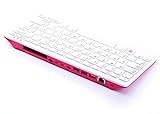
- Notice: We only provide after-sales service purchased from Seeed Studio
- 【Computer in Keyboard Form】Raspberry Pi 400 is a complete personal computer, built into a compact keyboard. Portable design, easy to carry. Just simply connect to a mouse, and a monitor with the Pi 400, you will get a powerful desktop PC.Note: There is only a keyboard in the package. If you want other accessories, welcome to visit our store.
- 【1.8GHz Quad-Core 64-bit Arm Cortex A72 CPU】Compared with the 1.5 GHz frequency of Raspberry Pi 4, Pi 400 has a frequency of 1.8 GHz. So Pi 400 runs more stable and smoothly, also can help increase the read and write speed of large files.
- 【Dual 4K HD Video Output】 The 2 HDMI ports on the back of the Raspberry Pi 400 can support up to 4K high-definition dual-band display, very convenient for your work and home entertainment. Built-in 2.4GHz/5GHz Wi-Fi & Bluetooth 5.0, you can enjoy smooth network anywhere.
- 【Multiple Functional Interfaces】Raspberry Pi 400’s back is designed with multiple functional interfaces. Rich I/O peripherals to further expand your projects.
Build a custom Raspberry Pi chessboard setup
DIY projects demonstrate different ways to connect a physical board to a Pi, but they are examples rather than plug-and-play instructions for every model and software version.
Use an electronic board protocol
The RPi Chessboard project describes a microcontroller sketch that implements a DGT board protocol, allowing PicoChess on a Raspberry Pi to use a custom board. This approach requires the microcontroller and Pi software to agree on the board interface.
Recommended Free Tools
Build sensing into the board
A Raspberry Pi Official Magazine project describes a wooden board using reed switches to detect pieces and LEDs to indicate moves, with Stockfish running on the Pi. In that design, the player moves pieces in response to the lights. It illustrates a sensor-and-indicator architecture, not a general-purpose installation recipe.
Independent reader supportYour contribution helps us test, update, and keep practical guides available for everyone.Prepare the Raspberry Pi and software
Set up the Pi according to its model and intended operating mode. Raspberry Pi’s getting-started documentation covers installing an operating system on boot media and choosing suitable power. A desktop setup also needs a display, keyboard and mouse; a headless setup can use network access and remote control such as SSH. Accessories and power requirements vary by Pi model.
Quick Recap
Best Value
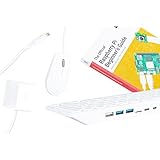
- POWERFUL PROCESSOR: Features a 2.4GHz quad-core ARM Cortex-A76 processor with 8GB RAM capacity for smooth performance and multitasking capabilities
- COMPLETE KIT: Includes 32GB microSD card, micro HDMI to HDMI-A cable, USB mouse, US keyboard, and power supply for immediate setup
- CONNECTIVITY: Multiple ports including USB 2.0, dual USB 3.0, Gigabit Ethernet, and built-in Wi-Fi/Bluetooth for versatile connectivity options
- DISPLAY OUTPUT: Supports micro HDMI output with OpenGL capabilities for high-quality visual display and graphics performance
- EXPANSION OPTIONS: Equipped with GPIO pins, SD card slot, and wireless connectivity for extensive project development and customization
Rank #4

- Pi 500 ---The refined personal computer: A fast, powerful computer built into a high-quality keyboard, for the ultimate compact PC experience. Keyboard-based Pi all-in-one computer, portable design, just pair with a mouse and monitor to become a mini computer.
- It’s A RPi Designed Into A Keyboard. RPi 500 features the same quad-core 64-bit Arm processor and RP1 I/O controller found in RPi 5. With a one-piece aluminium heatsink built in for improved thermal performance, your RPi 500 will run fast and smoothly even under heavy load, while delivering glorious dual 4K display outputs.
- For those looking for the complete Raspberry Pi 500 setup, this Pi 500 Desktop Kit comes with an Official Pi 500 (built-in 32GB RPi Micro SD card), a mouse, a 27W USB-C power supply and an HDMI cable, Card reader, GPIO adapter board. ( 6 Items in total)
- CPU: 2.4GHz Quad-core 64-bit Arm Cortex-A76. RAM: 8GB LPDDR4X-4267. Communication Interface: Gigabit Ethernet port, Bluetooth 5.0, and dual-band WiFi. Network Interface: Dual micro HDMI output (supports dual 4Kp60 high-resolution display).
- USB: USB 3.0 ports x 2, USB 2.0 port x 1. Dimensions: 286 x 122 x 23mm. Operating Temperature: 0°C to 50°C ambient temperature.
- Decide whether you will use a supported electronic board, build a sensor board, or enter moves manually.
- Check that the chosen board, operating system and chess application support one another before assembling or purchasing the setup.
- Install and boot the Pi operating system using model-appropriate boot media and power.
- Install board-aware chess software or configure a manual move-entry application, then configure Stockfish as the engine. Stockfish alone does not display a board.
- Connect the physical board according to its manufacturer’s instructions and configure the software to use it.
- Test a move: confirm the application registers the physical move, then check that the engine’s reply is presented clearly enough to play on the real board.
What to check if the board does not work
- The board is not detected: Check its connection and power, then verify that the exact board model and protocol are supported by the Pi software. USB connectivity by itself does not establish compatibility.
- The board is detected but moves do not reach the engine: Check that the chess application is configured to use the board and is connected to the engine; Stockfish does not provide this interface on its own.
- The position is rejected or appears wrong: For the documented DGT Pi route, arrange every piece in the starting position and check the clock indication described in the manual.
- The engine responds on screen but not on the board: Confirm how the application communicates its move. With manual entry, you must transfer the engine’s reply to the physical board yourself.
Product prices and availability are accurate as of the date/time indicated and are subject to change. Any price and availability information displayed on Amazon at the time of purchase will apply.

