
Free tools Windows power users keep installed
One-click scans. No signup required.
iTechGuides is reader-supported. When you buy through links on our site, we may earn an affiliate commission. As an Amazon Associate I earn from qualifying purchases. Learn more
Compare the annual cost of each fuel using your actual 12-month kilowatt-hour usage, then test the result against mild, typical and cold weather and plausible price changes. The cheapest advertised unit rate is not necessarily the cheapest plan once standing charges, taxes, payment method, discounts, exit fees and meter requirements are included. Calculate gas and electricity separately before assessing any combined or dual-fuel offer.
Tariff rules and live prices depend on your country, region and meter. Use the method below to compare offers, then verify current terms with your regulator or an accredited comparison service immediately before signing.
Why volatility changes the comparison
Energy bills combine wholesale energy, network costs, policy schemes, supplier operating costs, risk allowances, taxes and payment arrangements. Those components do not move together. The European Commission reports that EU electricity prices rose sharply from 2021 to 2023, mainly because fossil-fuel prices increased, especially gas used in power generation. Wholesale prices later stabilised but remained above historical averages.
Quick wins for a faster PC:
Repair Windows errors before they cause bigger problemsFix Now →Fix the driver behind crashes, sound loss and screen glitchesFind Drivers →Clear out junk files and repair common Windows errorsFree Scan →Gas and electricity can therefore move in different directions. A plan that looks attractive on electricity may be poor value for gas, and a dual-fuel discount can conceal an expensive standing charge or a high rate for one fuel. Compare each fuel on its own and as a combined annual total.
#1 Best Overall
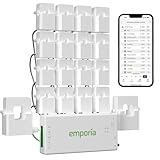
- SAFETY YOU CAN TRUST WITH UL CERTIFICATION: With Emporia Energy, your home energy monitoring is safe, reliable, and certified. The Emporia Vue is UL Listed, meaning it has met rigorous safety standards for electrical products in the U.S. and Canada. This certification ensures that every component has been thoroughly tested to prevent hazards, such as overheating, short-circuiting, or fire, offering you peace of mind as you manage your home’s energy consumption.
- INSTALLS IN CIRCUIT PANEL of most homes with clamp-on sensors. Supports Single phase, Single-split phase, and 2-wire systems. 3-wire systems; 3-phase, 4-wire Wye systems with earthed (TN or TT) neutral (no-Delta) are supported with an additional 200A sensor (sold separately).
- 24/7 ENERGY MANAGEMENT AND MONITORING: Automate, manage and control your home's real power anywhere, anytime to prevent costly repairs, conserve energy, and save costs. Monitor solar / net metering. PROTECTED BY A 1-YEAR WARRANTY.
- LOWER YOUR ELECTRIC BILL: Configure settings in the Emporia Energy App to automate energy management for time of use, peak demand, excess solar, and rewards programs. You can even see live reporting and invaluable savings opportunities instantly. Gauge real-time spending and get actionable notifications and automated energy management to help you reduce costs.
- REAL-TIME ENERGY DATA: REQUIRES 2.4 GHz WIFI WITH AN INTERNET CONNECTION to monitor energy use with iPhone / Android / Web app. Vue sensors collect energy data and are accurate from ±2%. The Vue is UL and CE Listed for your safety. 1 second data is only available in the app (when actively open) and retained 3 hours. Minute and hour data are retained in the cloud. 1 minute data is retained 7 days, 1 hour data is retained indefinitely. Export cloud data whenever you want in the app.
Ofgem explains that suppliers charge a unit rate and a daily standing charge. Its price cap limits those rates for eligible standard-variable customers; it does not cap a household’s total bill. A home that uses more energy still pays more. The cap also does not automatically apply to a customer who has agreed a fixed tariff.
Start with your own consumption, not a monthly estimate
Collect 12 months of actual readings
Use the last 12 months of bills, a supplier usage statement or meter readings. Record gas and electricity separately in kilowatt-hours (kWh), including the dates covered. If you moved home, changed heating equipment or added an electric vehicle, mark the change and treat the older period cautiously.
- Total annual gas kWh.
- Total annual electricity kWh.
- Monthly or seasonal usage, so winter peaks are visible.
- Meter type: standard, smart, time-of-use or prepayment.
- Current payment method: direct debit, billed credit or prepayment.
- Any solar generation, battery storage, heat pump, electric vehicle or other flexible load.
Supplier direct-debit forecasts are useful for cash-flow planning but are not a reliable comparison basis. They may include a credit balance, an estimated future usage level or a supplier’s own assumptions. Compare the underlying kWh and tariff components instead.
Recommended Free Tools
Separate predictable and flexible demand
Identify loads that cannot easily move, such as refrigeration, lighting and essential heating, and loads that can move by hours, such as vehicle charging, laundry, dishwashing, water heating and battery charging. This distinction matters if you are considering a time-of-use or dynamic electricity plan.
Understand the tariff label
Names vary by country and supplier, but the following categories describe how the price is set. Read the contract’s change formula rather than relying on the label alone.
| Tariff type | How the price changes | When it may fit | Key risk to check |
|---|---|---|---|
| Fixed | The stated price components are held for a defined period, subject to permitted tax or regulated-charge changes. A fully fixed offer allows only a tax change to vary the price; a partly fixed offer can pass through specified regulated components. | Households needing predictable cash flow or protection from a winter price spike. | Contract length, exit fee, renewal terms and exactly which components are fixed. |
| Variable or standard variable | Unit rates can rise or fall with market and regulatory changes. In the UK, Ofgem’s cap protects eligible standard-variable customers. | People who value flexibility and can tolerate changing bills. | The cap limits rates, not total usage; confirm whether your account is covered and when rates can change. |
| Indexed | The price follows a published reference. France’s gas reference price changes monthly, while its regulated electricity reference can change in February and August; other markets use different indices and schedules. | Customers willing to track a transparent reference and accept scheduled changes. | Which index is used, the adjustment date, lag, margin and any cap or floor. |
| Market-indexed | A wholesale or other public market index determines a stated component, with the supplier required to identify that component and the update frequency. | Customers who understand wholesale exposure and have financial headroom. | Index volatility, supplier margin, settlement interval and how negative or extreme prices are handled. |
| Dynamic or time-of-use | Prices vary by market time period, sometimes close to real time. | Homes with smart meters and loads that can be shifted to cheaper periods. | Required meter, data access, notice of price changes and the cost of using energy during expensive periods. |
Calculate the annual cost on one consistent basis
The core formula
For each fuel, calculate:
Annual energy cost = (annual kWh × unit rate) + (365 × daily standing charge) + taxes and other stated charges.
Then add one-off fees, exit fees that you expect to incur, and subtract only discounts for which you meet the conditions. Apply the formula separately to gas and electricity before adding them together.
Rank #2

- ⚡ EASY INSTALLATION: Installs in circuit panel of most homes with clamp-on sensors. Supports single-phase up to 240VAC line-neutral; single, split-phase 120/240VAC; and three-phase up to 415Y/240VAC (no Delta). The branch lines can automatically match different phases and have no restrictions in terms of quantity and voltage.Panels with access only to busbars will need flexible sensors available from SEM-Meter.
- ⚡ ENERGY MONITORING ANYTIME, ANYWHERE: Monitor your home's real power anywhere, anytime to prevent costly repairs, conserve energy, and save costs. Monitor solar / net metering. Light commercial 3 phase option available as a separate bundle. Protected by a 1-year warranty.
- ⚡ VARIOUS ELECTRICAL APPLIANCE MONITORING: Comes with 16 50A sensors to accurately monitor your air conditioner, furnace, water heater, washer, dryer, range, etc.
- ⚡ LOWER YOUR ELECTRIC BILL: SEM-Meter measures real-time spending and gets actionable notifications to understand where savings can be made, both to lower your electric bill and to conserve energy and protect the planet’s resources. Be an environmentalist.
- ⚡ REAL-TIME ENERGY DATA: Connect SEM-Meter device via 2.4GHz WiFi to monitor energy usage, with an accuracy range of 1%. View usage in real time through Android/Apple software. Statistics of power usage in now/day/week/month/year format: the validity period of hourly exported data is 90 days, and the exported data of day/month/year data is permanent, available at any time Export from application.
Build a comparison worksheet
| Input | Gas | Electricity |
|---|---|---|
| Your annual usage | 12-month gas kWh | 12-month electricity kWh |
| Unit charge | Quoted gas rate per kWh | Quoted electricity rate per kWh |
| Standing charge | Daily gas charge × 365 | Daily electricity charge × 365 |
| Taxes and regulated charges | As stated in the offer | As stated in the offer |
| One-off or recurring fees | Connection, account or payment fees | Connection, account or payment fees |
| Discounts | Only eligible discounts | Only eligible discounts |
| Exit cost | Expected fee if you leave early | Expected fee if you leave early |
| Annual total | Sum of the rows above | Sum of the rows above |
Use the offer’s tax treatment. Some quotes include taxes in the displayed unit rate and standing charge; others show them separately. Do not add tax twice or omit it. If a charge applies to the account rather than one fuel, allocate it consistently and show it in the combined total.
Check payment-method pricing
Direct debit, billed credit and prepayment can have different rates or fees. Run a separate calculation for the payment method you will actually use. A direct-debit discount is not a saving if you cannot maintain the required payment arrangement, and a credit-billing quote is not comparable with a direct-debit quote until the conditions are aligned.
Read the conditions behind discounts
Check whether a discount requires paperless billing, a smart meter, a minimum term, a particular payment method, bundled services or an automatic renewal. Record its value and timing. A first-year credit should not be treated as a permanent annual reduction.
Stress-test every result
Volatility makes a single forecast misleading. Run at least three usage scenarios using your own seasonal pattern:
- Mild winter: reduce heating-related gas and electricity use to a plausible low year.
- Typical year: use the most representative 12-month total.
- Cold winter: increase winter heating demand to reflect a plausible high year.
For each scenario, test plausible price increases and decreases for variable, indexed and dynamic offers. For a fixed offer, test the cost during the fixed term and the rate that would apply after renewal. Keep the gas and electricity changes separate because a market shock may affect them differently.
Look for a plan that remains acceptable across the range, not just the plan that wins one optimistic case. A small advertised unit-rate advantage can disappear when a higher standing charge is multiplied by 365 days, when usage is above the supplier’s assumed level, or when an exit fee is included.
Compare gas and electricity separately before considering dual fuel
A dual-fuel label means one supplier provides both fuels; it does not prove that the combined annual cost is lowest. Calculate the cheapest suitable gas offer and electricity offer independently, then compare their sum with the dual-fuel total. Include any account fee, dual-fuel discount, payment condition and exit fee.
Rank #3

- EM16P MODEL & LOCAL CONTROL & DATA PRIVACY: Access your home energy monitor data locally via Built-in Web UI, Open API, and MQTT without relying on cloud services. Unlike cloud-dependent monitors, Refoss ensures your data stays within your home network. Direct local access protects your privacy while giving you 100% full control of your home energy system.
- NATIVE HOME ASSISTANT & OPENCLAW AI: Experience seamless Native Home Assistant integration right out of the box—no firmware flashing or complex coding required. Featuring ✨NEW✨ OpenClaw Support, it enables AI-driven automation for smarter, real-time energy management and seamless smart home control.
- MAXIMIZE SOLAR & ZERO FEED-IN AUTOMATION: Designed for solar homes, the power monitor works with the Refoss app and Home Assistant to automatically use surplus solar power. Appliances like EV chargers, washing machines, and water heaters are powered during midday peaks, maximizing solar self-consumption and reducing low-value electricity feed-in to the grid. Optimizes usage and reduces bills.
- REAL-TIME MONITORING & ±1% ACCURACY: Monitor voltage, current, active power, and power factor of major appliances. Provides ±1% accuracy (200A: 2–200A; 60A: 1–60A) and ±2% at low current. Daily data stored up to 5 years and exportable. With no subscriptions or hidden fees, you get deep historical insights to help you identify every energy-saving opportunity and save 10–20% on monthly bills.
- SMART ALERTS & CIRCUIT-LEVEL CONTROL: Set usage targets for each individual circuit and receive instant alerts when appliances exceed normal consumption. Refoss app supports automation and peak management to optimize schedules, reduce peaks, and improve efficiency. Real-time electricity usage monitor for circuit-level insights.
Compare the useful energy service, not just the pence-per-kWh figures. Electricity is generally more expensive than gas in Europe, according to ACER, but efficiency, network charges, taxes and equipment costs affect the economics of electrification. A gas boiler and an electric heat pump do not deliver the same useful heat from one kWh, so a raw unit-rate comparison can mislead.
Do these 3 things before closing this tab:
1Repair Windows errors before they cause bigger problems2Scan for outdated or missing drivers - takes under a minute3Clear out junk files and repair common Windows errorsChoose certainty, flexibility or exposure deliberately
When a fixed plan is sensible
A fixed tariff can suit a household that needs a predictable budget, cannot readily reduce or shift consumption, or would be harmed by a winter price spike. Confirm what is actually fixed, because regulated charges or taxes may still pass through under the contract.
When variable or indexed pricing is sensible
Variable or indexed pricing may fit if the expected discount is meaningful, you have cash-flow headroom and you can tolerate increases. Check the reference, update schedule, supplier margin and any notice period. In the UK, Ofgem’s cap protects eligible standard-variable customers, but it does not guarantee a low total bill.
When dynamic pricing is sensible
Dynamic electricity pricing requires practical flexibility. A smart meter and compatible data connection are normally central, and the value depends on how much consumption you can move. Consider it only if you can shift substantial loads such as EV charging, heat-pump operation, laundry, dishwashing or battery charging without compromising comfort or safety.
The European Commission gives a useful mixed strategy: a consumer might choose a fixed-term, fixed-price contract for predictable household needs while using a dynamic contract for a heat pump or electric car when electricity is cheapest. That approach requires separate metering or a product that supports the relevant loads, so check the contract structure carefully.
Use smart-meter data as evidence, not as a promise of savings
The European Commission says access to meter data, especially from smart meters, enables near-real-time communication, consumer control and data-driven energy services. Download interval data if your supplier or network provides it, and compare your actual consumption profile with the periods priced cheaply by the offer.
A home electricity monitor can help you observe real consumption and test whether a quoted schedule fits your habits. Compatibility, installation and data quality vary, and monitoring alone does not change the tariff or guarantee savings. Confirm that the meter, communications connection and supplier platform are compatible before signing.
Rank #4
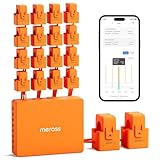
- SAFE & RELIABLE: Meross smart energy consumption monitor is ETL‑certified and compliant with the UL 61010 testing standard, ensuring safe and reliable home energy monitoring. Works with most US homes: single-phase 2-wire systems, single-split phase 3-wire systems, and 3-phase 4-wire Wye systems with earthed (TN or TT) neutral (no Delta). Easy clamp‑on design installs in minutes. Invert CT readings in the app—no physical flipping. PROTECTED BY 2-YEAR WARRANTY for worry-free use.
- TRACK ENERGY & CUT BILLS: Track power, voltage, current, and power factor within ±1% accuracy. Clear power usage and cost charts by minute/hour/day/month/year help you easily understand your energy use. Store up to 5 years of data and export hourly reports for deep analysis. Most users save 10–20% on energy costs by spotting energy hogs and getting accurate insights to cut their bills.
- 24/7 ENERGY MONITORING + SMART ALERTS: Real-time home energy monitoring from anywhere. Set custom alerts for unusual usage spikes and threshold breaches for total peace of mind. Catch issues early with no subscriptions, no cloud lock‑in, and no hidden fees — all built-in. Supports 2 main circuits (200A) + 16 branch circuits (60A), making it perfect for precise, circuit-level energy monitoring.
- MAXIMIZE YOUR SOLAR SAVINGS (HOME ASSISTANT): This solar energy monitor integrates with Home Assistant to detect solar surplus and automatically power EV chargers, water heaters, and other high‑use appliances. Stop wasting solar energy—use it yourself and cut your electricity bill faster. The perfect home energy monitor for solar homes.
- LOCAL DATA, FULL PRIVACY, NO SUBSCRIPTIONS: Connect seamlessly with Home Assistant for advanced energy automation. All energy data stays local—no cloud, no delays, no privacy concerns. Take full control of your home energy, reduce waste, and protect your privacy. Supports Open API and Web Control.
Put headline benchmarks in context
Published averages are useful for orientation, not for predicting your bill. Geography, consumption, taxes, housing type and tariff mix can make an individual result very different.
| Benchmark | What it measures | Qualification |
|---|---|---|
| 38% of UK standard-electricity households and 40% of UK gas households | Share on fixed tariffs at the end of December 2025 | United Kingdom; Department for Energy Security and Net Zero, 2026. |
| £1,819 versus £1,952 | Average 2025 combined annual bill on fixed versus variable tariffs | United Kingdom; £133 difference under the report’s consumption assumptions; Department for Energy Security and Net Zero, 2026. |
| €840 electricity and €1,170 gas | Average household expenditure in 2025 | European Union; ACER, 2026. |
| 7% | EU households on dynamic price contracts in 2025 | European Union; ACER, 2026. |
| 20% or about €120 | Estimated average electricity-bill saving from shifting consumption to cheaper periods | ACER estimate for EU households in 2025; requires the ability to shift usage. |
| 1.2% to 3.9% | Household electricity expenditure as a share of national median income | Range across EU countries in 2025; ACER, 2026. |
These figures are benchmarks rather than quotes for an individual home. Use your own kWh, tariff terms and location when making a decision.
Account for country and utility-territory differences
Tariff names, price caps, taxes, switching timelines, supplier protections and comparison services differ by country and utility territory. A UK cap is not a universal rule, and an indexed-price schedule described for France does not automatically apply elsewhere.
Before selecting a live offer, identify your country, region or network area, meter type and payment method. Use a government or accredited comparison tool where available. The European Commission notes that national authorities provide contact points and that some provide contract-comparison tools. Check the supplier’s reliability record, complaint route, vulnerable-customer protections and switching terms with the local regulator.
A repeatable comparison process
- Record usage: gather 12 months of gas and electricity kWh, monthly seasonality, meter type and payment method.
- Collect complete offers: capture unit rates, standing charges, contract term, renewal rule, exit fee, taxes, discounts, permitted change formula and any meter or payment requirement.
- Calculate each fuel: multiply annual kWh by the relevant unit rate, add 365 days of standing charges, then add taxes and other stated charges.
- Calculate the combined total: add gas and electricity, then apply account-level fees, discounts and expected exit costs consistently.
- Run scenarios: model mild, typical and cold weather plus plausible price increases and decreases.
- Test flexibility: determine whether a smart meter, time-of-use meter, EV, heat pump, solar system or storage is required and whether you can actually shift the load.
- Check protections: verify the supplier’s reliability, complaint route, vulnerable-customer support and switching terms with your local regulator.
- Recheck immediately before signing: live prices, caps and promotional terms can change, so recalculate with the final quote and date.
Common comparison mistakes and how to avoid them
Using the monthly direct-debit figure
Problem: the estimate may include a credit balance or assumed usage that differs from yours.
Fix: compare annual kWh multiplied by the quoted rates, with standing charges and taxes shown separately.
Comparing only unit rates
Problem: standing charges, account fees or taxes can outweigh a small unit-rate difference.
Fix: use the full annual formula for gas and electricity.
Crashes, No Sound, or Screen Glitches?
Random freezes, missing sound and display glitches usually trace back to one bad driver. Find and replace yours safely.Free scan · under a minutePC Slower Than It Used to Be?
A free scan shows the junk files, broken settings and background clutter dragging Windows down - then fixes them in one click.Free scan · Windows 10 & 11Assuming a fixed label means every charge is frozen
Problem: tax or specified regulated components may still change.
Fix: read the permitted-change clause and identify each pass-through component.
Best Value
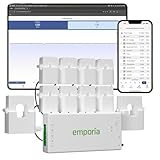
- SAFETY YOU CAN TRUST WITH UL CERTIFICATION: With Emporia Energy, your home energy monitoring is safe, reliable, and certified. The Emporia Vue is UL Listed, meaning it has met rigorous safety standards for electrical products in the U.S. and Canada. This certification ensures that every component has been thoroughly tested to prevent hazards, such as overheating, short-circuiting, or fire, offering you peace of mind as you manage your home’s energy consumption.
- INSTALLS IN CIRCUIT PANEL of most homes with clamp-on sensors. Supports Single phase, Single-split phase, and 2-wire systems. 3-wire systems; 3-phase, 4-wire Wye systems with earthed (TN or TT) neutral (no-Delta) are supported with an additional 200A sensor (sold separately).
- 24/7 ENERGY MANAGEMENT AND MONITORING: Automate, manage and control your home's real power anywhere, anytime to prevent costly repairs, conserve energy, and save costs. Monitor solar / net metering. PROTECTED BY A 1-YEAR WARRANTY.
- LOWER YOUR ELECTRIC BILL: Configure settings in the Emporia Energy App to automate energy management for time of use, peak demand, excess solar, and rewards programs. You can even see live reporting and invaluable savings opportunities instantly. Gauge real-time spending and get actionable notifications and automated energy management to help you reduce costs.
- REAL-TIME ENERGY DATA: REQUIRES 2.4 GHz WIFI WITH AN INTERNET CONNECTION to monitor energy use with iPhone / Android / Web app. Vue sensors collect energy data and are accurate from ±2%. The Vue is UL and CE Listed for your safety. 1 second data is only available in the app (when actively open) and retained 3 hours. Minute and hour data are retained in the cloud. 1 minute data is retained 7 days, 1 hour data is retained indefinitely. Export cloud data whenever you want in the app.
Treating a capped variable plan as a capped bill
Problem: the cap limits rates, not the amount of energy you use.
Fix: stress-test consumption, especially winter heating.
Choosing dynamic pricing without flexible demand
Problem: unavoidable use during expensive periods can erase low-price savings.
Fix: examine interval usage and confirm that the smart meter and controllable loads meet the offer’s requirements.
Assuming dual fuel is automatically cheaper
Problem: one fuel can be overpriced or a discount can have restrictive conditions.
Fix: compare separate gas and electricity totals with the dual-fuel total, including all fees.
Applying another country’s rules
Problem: caps, taxes, indices and switching protections are local.
Fix: identify your territory first and use its regulator or accredited comparison service.
Make the decision using downside as well as expected cost
After calculating the scenarios, consider the consequence of being wrong. A slightly more expensive fixed offer may be rational if a large winter increase would force you to cut essential heating. Conversely, a variable or indexed offer may be reasonable when you have savings, can reduce demand quickly and the tested discount is substantial.
For dynamic electricity, compare the achievable saving with the effort and equipment requirements. If only a small portion of your usage can move, the theoretical off-peak rate may have little effect. If you have a smart meter, an EV, storage or a heat pump and can automate substantial demand, dynamic pricing deserves a detailed interval-data test.
Keep a dated copy of the quote, rate schedule, assumptions and calculations. Revisit the comparison when the fixed term ends, the index formula changes, your household usage changes materially or you install major equipment.
What’s actually slowing this PC down?
Pick the symptom - the matching free tool is one click away.
Quick Recap
Product prices and availability are accurate as of the date/time indicated and are subject to change. Any price and availability information displayed on Amazon at the time of purchase will apply.

